Published: November 11, 2025
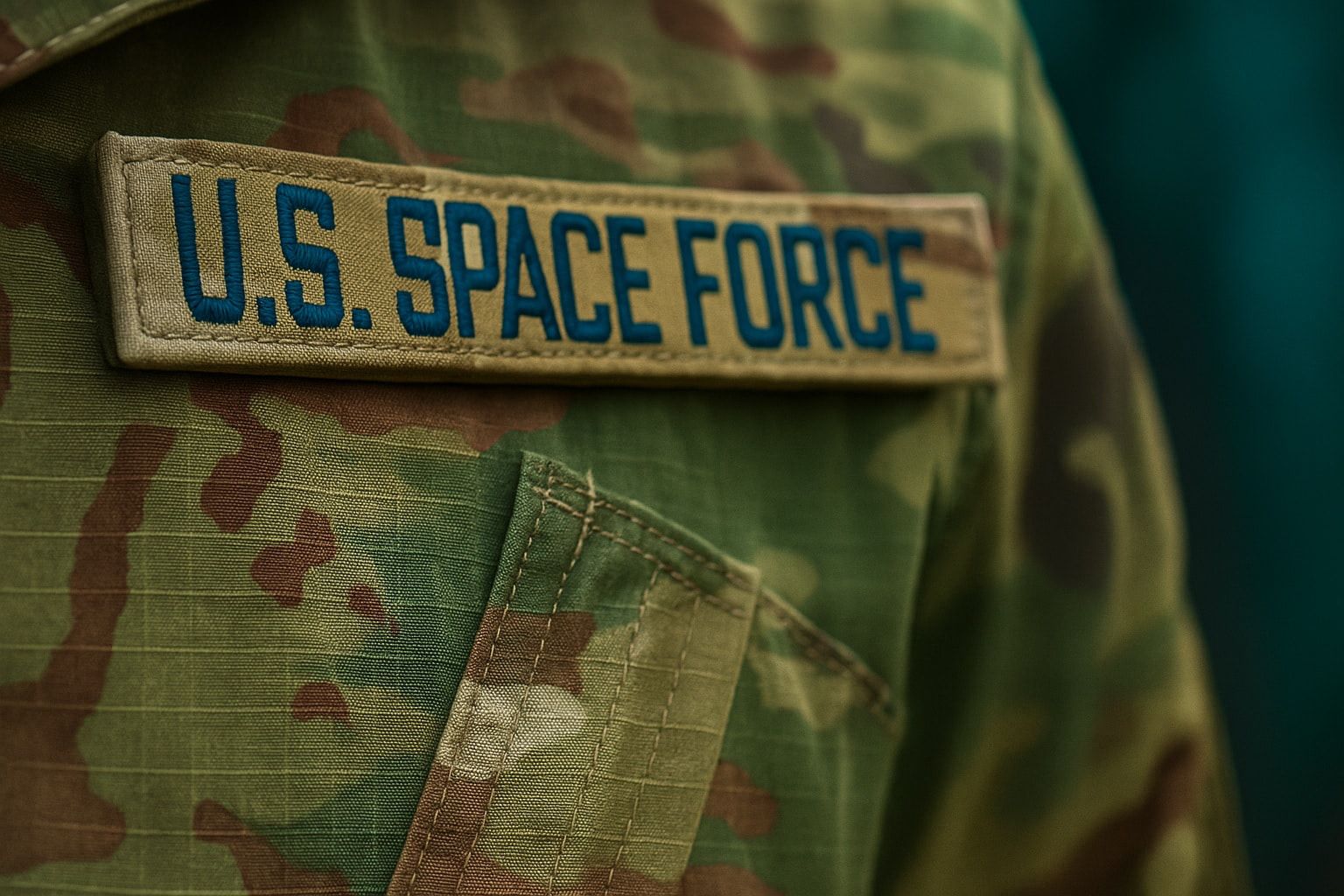
The Space Force Association is scaling a nationwide education push amid persistently low public awareness, while the U.S. Space Force readies two new satellite‑jamming systems—Meadowlands and the Remote Modular Terminal—to join its Counter Communications System. Here’s what changed today and why it matters.
What’s new today
- Public awareness push makes headlines again. Fresh coverage today underscores that fewer than one in ten Americans know the Space Force exists—spurring the Space Force Association (SFA) to expand local chapters and school outreach nationwide. The latest write‑ups build on reporting that the SFA has 26 chapters and aims to open one in every state, with programs tailored to students, lawmakers and communities.
- Jamming capabilities back in the spotlight. New analysis published today recaps the Pentagon’s plan to field two additional ground‑based systems—L3Harris’ “Meadowlands” and the Remote Modular Terminal (RMT) from Northstrat/CACI—to temporarily jam adversary satellites. They will augment the already‑operational Counter Communications System (CCS), giving the U.S. three acknowledged counter‑space jamming options. The National Interest+1
Why the Space Force is campaigning so hard
Public understanding of the Space Force remains thin. At the end of last year, Deputy CSO for Human Capital Katharine Kelley said “less than 8 percent” of the public even knows the service exists—a data point she offered in a public forum and that continues to drive outreach. Air & Space Forces Magazine
In response, the Colorado Springs‑based SFA is multiplying local chapters, hosting events, and speaking directly with students about how often daily life touches space—navigation, weather, traffic, banking and more. The goal: build literacy about space power and the Space Force mission, not just in military communities but across the country.
The SFA has also launched the Space Professional Society to link college students with workshops, scholarships, and early‑career networks—part of building a talent pipeline for the broader space workforce.
Amplifying the effort, the Space Foundation and SFA signed a two‑year memorandum of understanding to jointly bolster education, workforce development, and public awareness—a formal partnership announced October 28.
The jamming triad: CCS + Meadowlands + RMT
What they are:
- Counter Communications System (CCS). The Space Force’s transportable, ground‑based RF jammer that achieved Initial Operating Capability in March 2020. It’s the long‑standing backbone of U.S. satellite communications denial, designed to reversibly disrupt hostile signals.
- Meadowlands (L3Harris). A major CCS upgrade delivering a more deployable and rapidly updatable architecture. The Space Force approved fielding of CCS Meadowlands in May 2025, expanding Space Electromagnetic Warfare options for joint forces.
- Remote Modular Terminal (RMT – Northstrat/CACI). A small‑form‑factor jammer designed for remote, distributed operations. STARCOM tested RMT in 2024 under Space Delta 12’s 4th Test & Evaluation Squadron, demonstrating control from one location with systems operating at two others—validating the concept of dispersed, remotely operated jamming.
What’s changing now:
New Space Force data highlighted in Bloomberg’s reporting shows Meadowlands and RMT will join CCS, creating three acknowledged jamming systems that can be dispersed worldwide and operated remotely when needed—key attributes in a contested electromagnetic environment.
The threat environment driving the upgrade
The Space Force’s latest Space Threat Fact Sheet says that by July 2025China had more than 1,189 satellites on orbit and the PLA benefits from 510+ ISR satellites across optical, multispectral, radar, and RF sensors—dramatically improving its ability to locate U.S. forces. That growth helps explain the Pentagon’s push for agile, distributed counter‑space tools.
Policy momentum you might have missed
- “Legacy Guardian” now law. Section 525 of the FY25 National Defense Authorization Act authorizes the Air Force to designate eligible veterans of earlier space missions as honorary separated members of the Space Force—“Legacy Guardians.” The change strengthens Space Force heritage and broadens the community of educators and advocates who can speak credibly about the mission. Congress.gov
- Next touchpoint: Spacepower Conference (Dec. 10–12). The SFA’s annual Spacepower Conference convenes leaders from the Space Force, industry, and academia in Orlando next month—an ideal venue for updates on education programs and operational capabilities.
Why it matters
Space underpins modern life—PNT/GPS, banking timestamps, weather, logistics, aviation, and emergency response—and the military mission to secure access to space increasingly requires both public understanding and credible, non‑kinetic tools to deter or defeat interference. The education push aims to close the awareness gap; the jamming triad aims to close operational gaps in the electromagnetic spectrum, while remaining reversible and scalable in crisis.
Key facts at a glance
- <10% public awareness: Fresh coverage today reiterates that Americans’ awareness of the Space Force remains in the single digits. The SFA is expanding chapters and youth programs nationwide to change that.
- Three acknowledged U.S. jammers: CCS (operational since 2020), Meadowlands, and RMT—designed for distributed, remotely controlled use.
- Rapid Chinese growth on orbit:>1,189 satellites as of July 2025; 510+ ISR platforms.
- New policy base:Legacy Guardian status codified in law (FY25 NDAA §525).
Frequently asked questions
Is the Space Force “weaponizing space”?
The systems discussed are ground‑based and designed to temporarily deny adversary satellite communications—reversible, non‑kinetic effects consistent with long‑standing electronic warfare practices. U.S. Space Force
What exactly is the SFA?
The Space Force Association is an independent, nonprofit professional association that supports the Space Force and spacepower community through chapters, education, workforce initiatives and its annual Spacepower Conference.
Where can I see near‑term announcements?
Watch the Spacepower Conference (Orlando, Dec. 10–12, 2025) for updates on outreach, workforce programs and operational capabilities.
Reporting notes & sources
- Awareness and SFA initiatives: Colorado Politics’ Nov. 10 report details the <10% awareness figure, SFA’s 26 chapters and student programs; today’s roundup reiterates the push.
- Fresh coverage (Nov. 11): SSBCrack News highlights the SFA education initiative and low awareness; The National Interest recaps the coming Meadowlands/RMT fielding.
- Jammers & fielding: Bloomberg reporting (Nov. 4) on Meadowlands and RMT joining CCS; USSF releases confirm CCS IOC (2020) and Meadowlands fielding approval (May 2025); STARCOM details RMT testing.
- Threat context: USSF Space Threat Fact Sheet (updated 2025) provides current satellite counts and ISR estimates for China.
- Policy: FY25 NDAA Section 525 (Public Law 118‑159) authorizes Legacy Guardian recognition.
- Partnerships & events: Space Foundation–SFA MOU and Spacepower Conference schedule.
Bottom line: On Nov. 11, 2025, the Space Force story has two tracks moving in parallel—public understanding and operational deterrence. The SFA’s education expansion tackles the first; the CCS–Meadowlands–RMT jamming triad addresses the second. Both are accelerating as the space domain grows more contested and more central to daily American life.