
New York, Jan 31, 2026, 11:45 (EST) — Market closed.
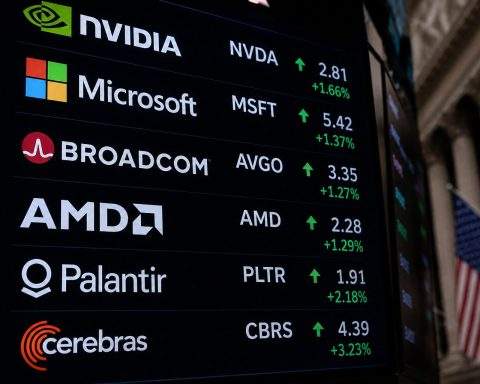
- Palantir shares fell 3.47% on Friday, ending the day at $146.59.
- Options pricing suggests a move of at least 9% following Monday’s close when results come out.
- Traders are eyeing guidance closely, along with any fresh headline risks linked to government work.
Palantir Technologies Inc. shares ended Friday down 3.47%, slipping to $146.59. The company has scheduled its fourth-quarter earnings call for 5 p.m. EST on Feb. 2, right after U.S. markets close.
Options — contracts letting traders wager on future stock moves — suggest Palantir could shift by at least 9% by the end of next week. That translates to a range around $158 on the upside or $133 on the downside from Friday’s close. Shares have tumbled nearly 30% since hitting a record high in November 2025, according to Investopedia. Citing Visible Alpha data, Investopedia also highlights expected fourth-quarter revenue at a record $1.34 billion, with adjusted earnings per share of 23 cents — a figure that strips out certain one-off items.
Palantir’s situation is crucial now, serving as a volatile barometer for whether AI software demand matches the hefty prices investors are shelling out. The recent dip in its stock has heightened the stakes around Monday’s guidance, making it unusually delicate.
Even beating estimates didn’t quiet the debate. Palantir outperformed last quarter, yet shares dropped in the days after, dragged down by lingering valuation concerns.
Risk appetite wavered. On Friday, Wall Street’s key indexes slipped, with the S&P 500 dropping roughly 0.4% and the Nasdaq falling nearly 0.9%. Investors grappled with inflation cues alongside a tough stretch of tech earnings, highlighted by Microsoft’s volatile two-day swing.
Volatility spiked after reports about government tech use. WIRED revealed that U.S. Immigration and Customs Enforcement is deploying an AI-driven Palantir system to sift through tips submitted via its public form, according to a Department of Homeland Security inventory. A DHS spokesperson stated the agency employs the technology to support arrests “while respecting civil liberties and privacy interests.” In an internal post seen by WIRED, Palantir USG chief technology officer and president Akash Jain said the tool boosts “ICE’s operational effectiveness.” WIRED
Nextgov/FCW reported that DHS identified 238 AI use cases agency-wide, highlighting 35 law-enforcement tools as “high impact.” These tools produce outputs that can directly influence decisions tied to rights or safety. Among them was “AI-Enhanced ICE Tip Processing.” Nextgov/FCW
With markets shut, attention turns to Palantir’s outlook—will it justify the premium price? Traders also want to see if management can prove AI demand is driving consistent sales, not just one-off pilots. That divide between hardware hype and software doubt remains key.
The setup works both ways. If guidance falls short on revenue growth or margins, or if valuation remains the main focus, a swift drop could hit—and it won’t be bullish. Added pressure comes from ongoing government scrutiny of its government contracts.
U.S. markets kick off trading on Monday, with Palantir set to release its earnings after the close. Investors will also be watching the 5 p.m. EST earnings call on Feb. 2, the next major event likely to move the stock.
Related articles: NYSE:PLTR