HONG KONG, June 10, 2026, 16:25 HKT
- Tencent ended the day at HK$467.80, adding 3.22%. The stock moved after Tencent priced its dual-currency bond deal above initial plans.
- The company has priced US$2.45 billion in U.S. dollar notes and CNY15 billion in offshore yuan notes. Proceeds will go to general corporate purposes, which may include refinancing.
- Reuters said orders topped US$17 billion for the deal, which let Tencent cut pricing on each of the four tranches.
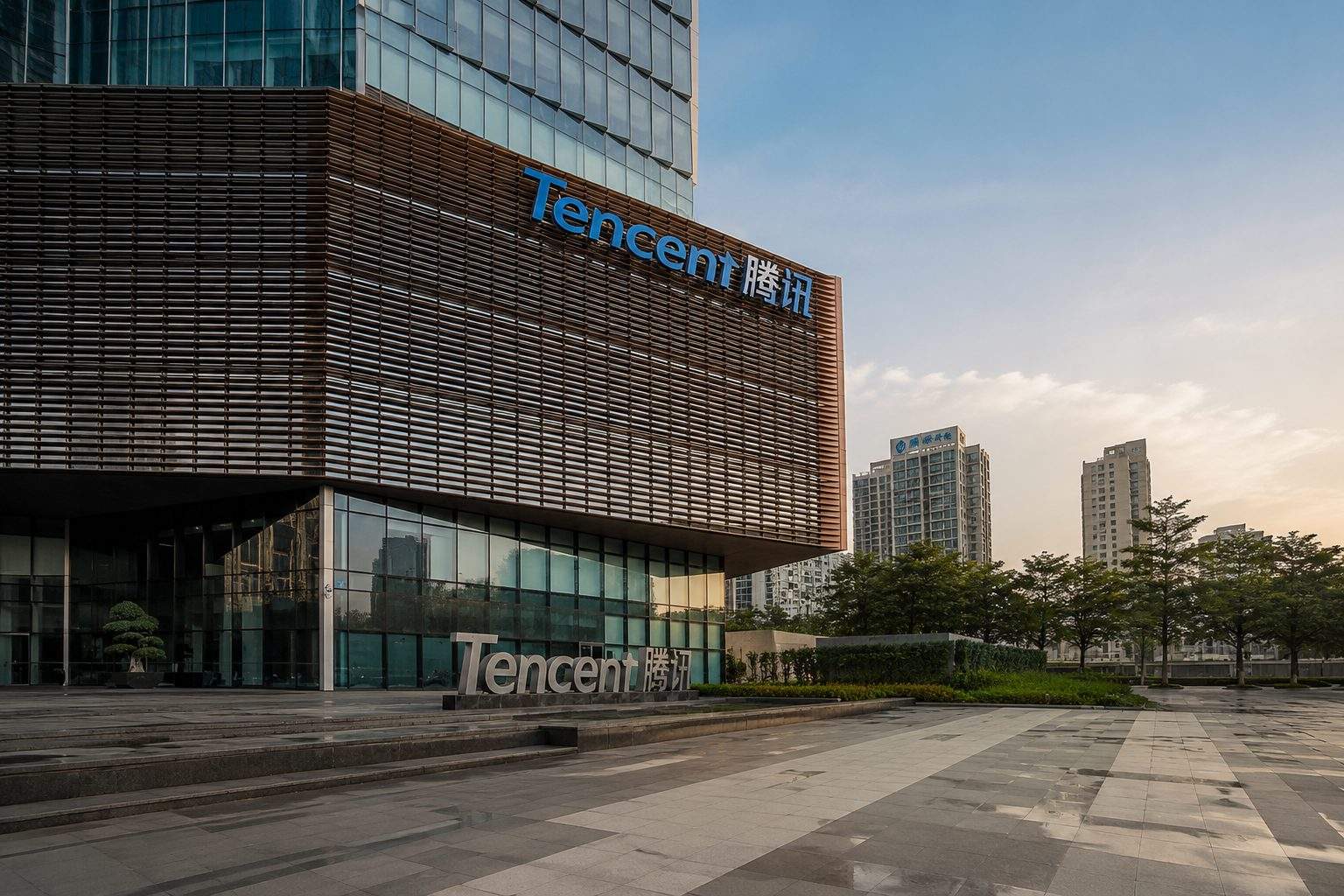
Tencent Holdings Ltd. shares jumped in Hong Kong on Wednesday after the company confirmed it priced a US$4.66 billion dual-currency bond deal. The bond is sold in both U.S. dollars and offshore yuan. The rally wasn’t only linked to the size of new borrowing but also to questions about demand and whether Tencent can keep up AI funding without shaking equity holders.
Tencent shares in Hong Kong finished the session at HK$467.80, gaining HK$14.60, or 3.22%, versus Tuesday’s close at HK$453.20. That’s based on Yahoo Finance data. Google Finance had the stock at HK$465.00, up 2.60%, in late trading, with Tencent swinging from HK$451.60 to HK$471.00 on the day.
Tencent’s latest financing drew attention due to its size and terms. The company said it sold US$1.75 billion in 10-year notes at 5.0%, US$700 million in 20-year notes at 5.6%, CNY11 billion in 10-year notes at 2.5%, and CNY4 billion in 30-year notes at 3.1%. The yuan notes are offshore, traded outside mainland China.
Tencent’s bond sale drew over US$17 billion in orders, Reuters said Tuesday, with books running more than four times bigger than the US$4 billion target. Final pricing on the dollar notes landed at Treasuries plus 50 basis points on the 10-year and 60 basis points on the 20-year, meaning investors were willing to take slimmer spreads. A basis point equals one-hundredth of a percent.
The stock could move because Tencent is taking on debt even as it increases AI spending. In the first quarter, Tencent reported capital expenditures of RMB31.94 billion. The company’s net cash was RMB146.86 billion as of the end of March.
Tencent reported first-quarter free cash flow at RMB56.7 billion, after shelling out RMB37.0 billion in capex, mostly aimed at AI investments. That’s the number equity holders are sizing up: Tencent is generating a lot of cash, but spending on AI is also heading up.
Tencent President Martin Lau said the company was happy with the “positive response to our notes offering.” Chief Financial Officer John Lo called out Tencent’s “robust balance sheet” in a pricing statement. Tencent expects net proceeds of about US$2.43 billion and CNY14.94 billion. The money is earmarked for general corporate use, including refinancing of existing debt. static.www.tencent.com
Tencent’s latest financing comes less than a month after its first-quarter results showed a mixed bag. Revenue was up 9% to RMB196.46 billion. Marketing services grew 20%. Domestic games added 6%; international games gained 13%. Reuters said both revenue and net profit fell short of what analysts expected as the company boosted AI spending.
Tencent’s buybacks helped drive Wednesday’s rally. The company disclosed it bought back 1.09 million shares on June 9 for HK$500.4 million. The buybacks took place on the exchange at prices between HK$443.80 and HK$468.20. Tencent will cancel the repurchased shares.
Tencent is already seen by credit investors as one of China’s stronger corporate borrowers. Its investor page lists ratings of A+ Stable at S&P, A1 Stable at Moody’s and A Stable with Fitch. Reuters said S&P expects Tencent to keep a net cash position for the next two years.
Risks remain. Tencent’s HKEX filing said the note deal is still subject to conditions and “may or may not proceed.” After the deal, Tencent will have about US$22.18 billion in notes outstanding under its global medium-term note programme. The main equity concern is if AI investment leads to enough higher-margin revenue from ads, games, and cloud. Reuters has flagged chip curbs and rivalry from Alibaba and ByteDance as issues for Chinese AI firms. static.www.tencent.com
Investors are looking at June 16 next, the date Tencent plans to issue the notes. If the deal goes smoothly, it would line up with what the stock signal on Wednesday suggested: holders are fine with more AI investment as long as Tencent can still raise cash on good terms, run buybacks, and stick to its story on the balance sheet.