
HAMBURG, August 16, 2026, 16:15 CEST — European and U.S. cash markets are shut for Sunday trading.
- Navigation on the Rhine near Kaub is nearly at a standstill as drought reduces the river’s navigable depth.
- Hapag-Lloyd’s fee for a 40-foot container at 41–50 centimetres can reach €930.
- The average Wall Street price target suggests Hapag-Lloyd shares could fall by roughly 20%.
Hapag-Lloyd AG’s ETR:HLAG Rhine surcharge is being tested as European rivers endure drought. Falling water levels are shifting cargo from barges onto rail and trucks, leading to higher inland freight expenses while the shipping company manages significant disruption in other areas.
The listed tariff allows for partial recovery of direct barge costs. Capacity remains unguaranteed. According to Hapag-Lloyd, shipping becomes unreliable when the water level is at 80 centimetres or lower at Kaub, the main bottleneck on the river.
The difference is significant for investors. A 40-foot container faces a €165 fee at 81–90 centimetres, but this increases 5.6 times to €930 at 41–50 centimetres.
| Kaub gauge | 20-foot box | 40-foot box | 40-foot vs 81–90 cm |
|---|---|---|---|
| 81–90 cm | €120 | €165 | Reference |
| 71–80 cm | €300 | €380 | 2.3x |
| 51–60 cm | €550 | €645 | 3.9x |
| 41–50 cm | €775 | €930 | 5.6x |
Conditions have become critical. Most shipping near Kaub has come to a halt, and German chemical manufacturers caution that logistics capacity is close to being exceeded. Germany’s inland shipping association previously said that single-digit water levels would divide the Rhine into two separate operational sections.
Satellite data expands the alert. Copernicus imagery from July displays sediment bars revealed along the Danube following extended heat and dry conditions. Across Europe, the same low water levels are affecting tourism, freight and energy.
Hapag-Lloyd underscored the importance of cost recovery in its recent quarter. Revenue increased by 10.8%, but net profit dropped 72.9%. Greater demand failed to deliver matching gains in net earnings.
| Hapag-Lloyd Q2 measure | 2026 | 2025 | Change |
|---|---|---|---|
| Revenue | $5.84bn | $5.27bn | +10.8% |
| EBITDA | $829m | $820m | +1.1% |
| Net profit | $83m | $306m | -72.9% |
| H1 group result | -$173m | +$775m | Loss shifts from profit |
Hapag-Lloyd reported a roughly $600 million quarterly impact from the Middle East conflict. The company attributed the loss to additional expenses for bunker fuel, insurance, storage, rerouting and inland transport. “The second quarter was better than the first,” Chief Executive Rolf Habben Jansen said, highlighting stronger demand and increased spot rates. Reuters
Peer earnings highlight the difference. A.P. Møller-Mærsk A/S CPH:MAERSK-B turned congestion into a far greater jump in profits. The company’s chief noted that land-based bottlenecks, rather than disruptions in the Middle East, were the main factor behind rising freight rates.
| Carrier | Q2 EBITDA | Year-ago EBITDA | 2026 EBITDA forecast |
|---|---|---|---|
| Hapag-Lloyd | $829m | $820m | $2.7bn–$3.7bn |
| Maersk | $3.0bn | $2.3bn | $10.5bn–$12.5bn underlying |
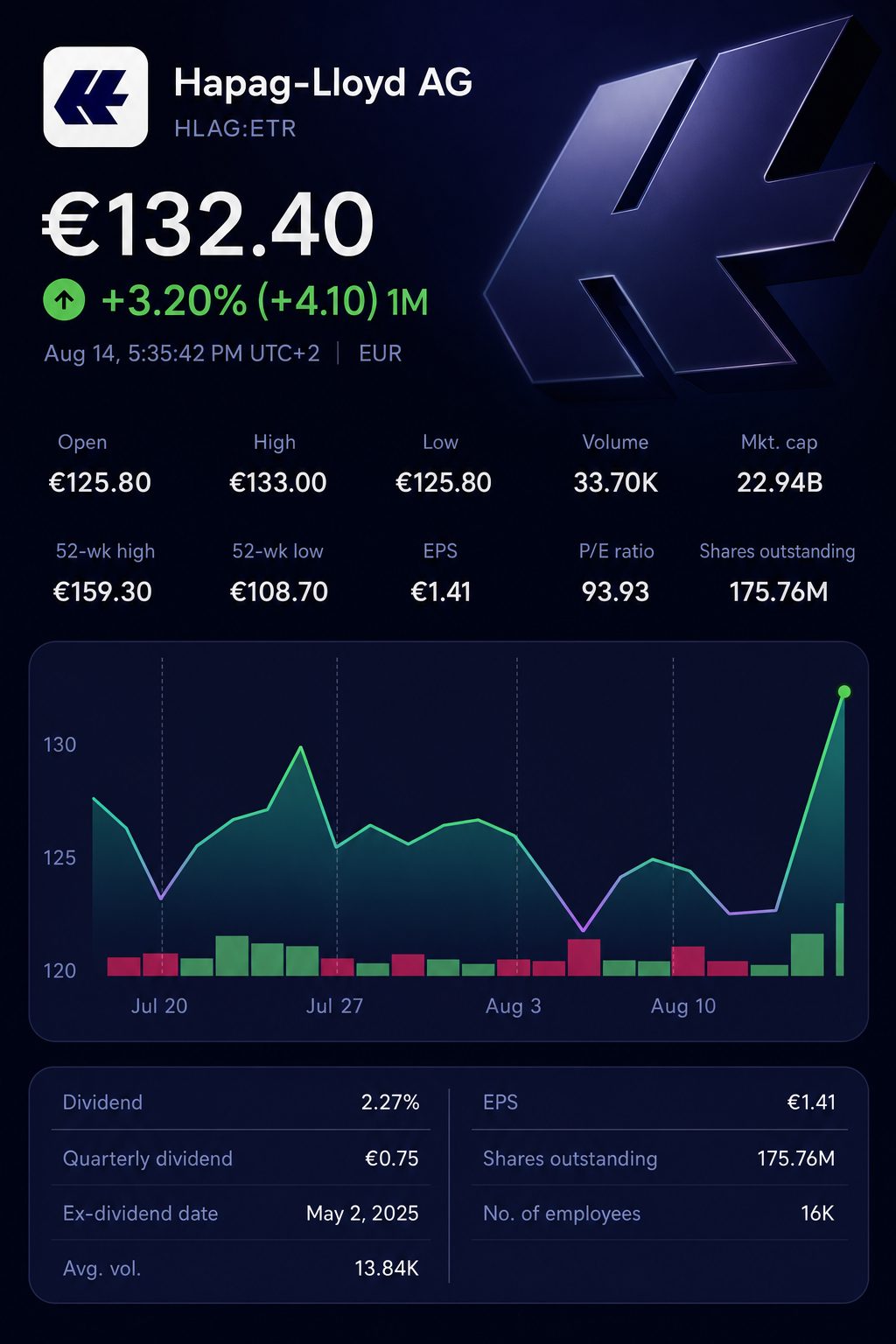
The current valuation offers minimal buffer against further cost increases. None of the ten analysts surveyed recommend buying the stock. The average price target of €100.30 is about 20% lower than the quoted reference price.
| Recommendation | Rating | Target | Date |
|---|---|---|---|
| Consensus from 10 analysts | 0 Buy / 4 Hold / 6 Sell | €100.30 on average | Latest poll |
| UBS | Sell | €102 | July 21 |
| JPMorgan | Sell | €70 | July 1 |
| Citi | Sell | €101 | July 1 |
| Barclays | Sell | €89 | June 30 |
| HSBC | Sell | €90 | June 27 |
The investor signal is thus tied to operations rather than weather. Surcharges maintain unit economics solely as long as shipments continue. If a mode shift is required, it can introduce additional delays, storage fees and customer-service expenses that a tariff alone does not entirely reflect.
Checks this week are definitive. Monitor the Kaub gauge closely, potential continuation of eased German trucking restrictions, and any new carrier information on barge guarantee statuses. If the measurement remains under 80 centimetres, the uppermost surcharge levels are likely to persist.
Risks: Rainfall may allow navigation to resume sooner than anticipated. Increased container demand and elevated spot rates could counterbalance inland transport issues. Conversely, a prolonged drought could turn recoverable costs into lost volumes.