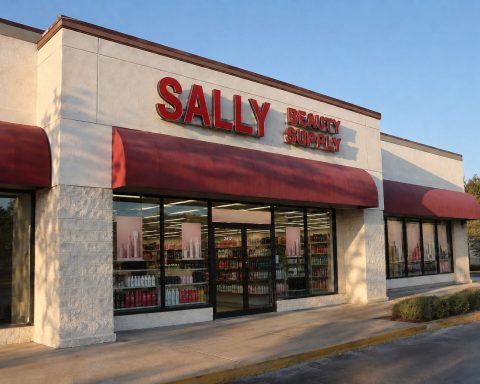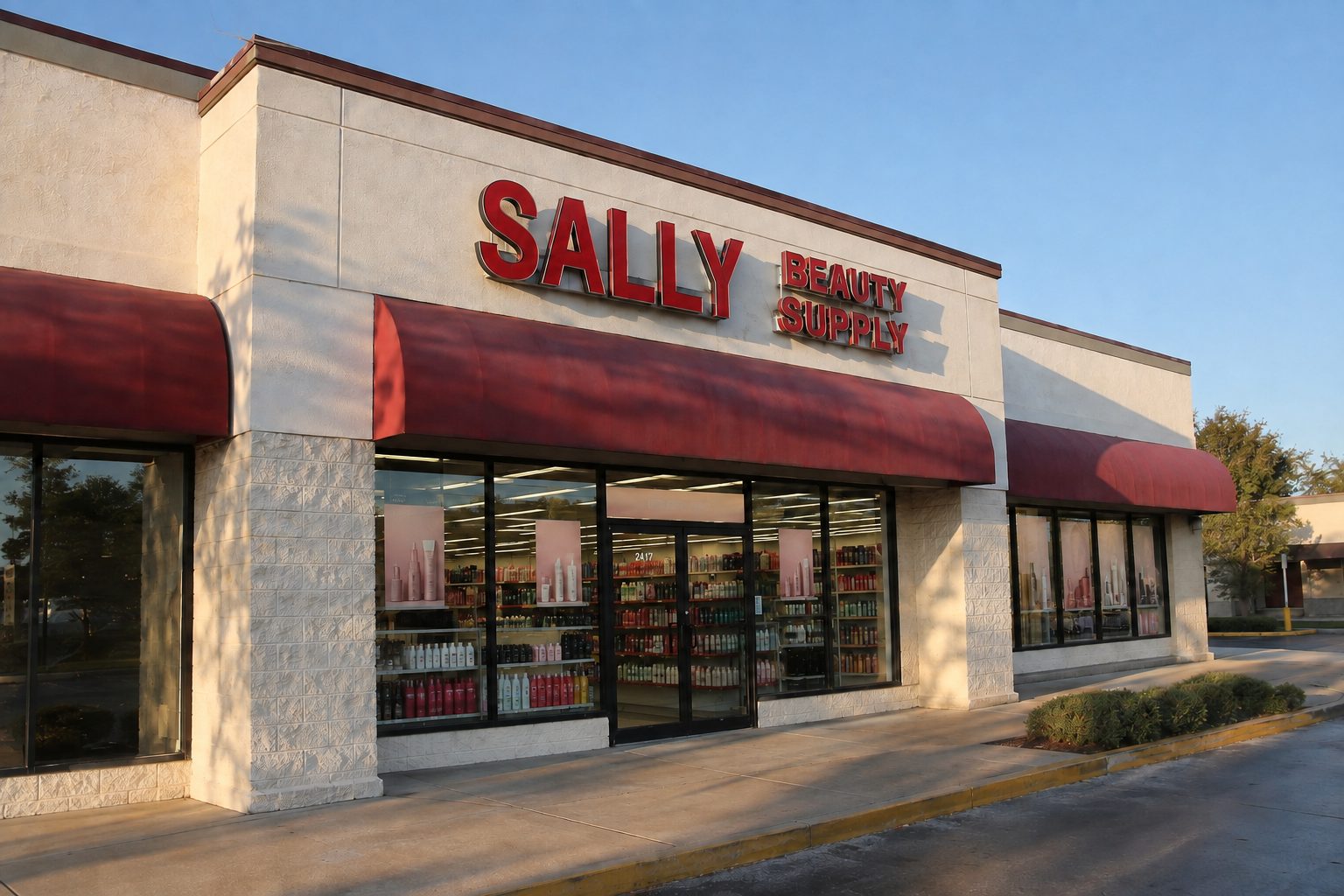

PLANO, Texas, August 18, 2026, 15:05 EDT — US cash markets remained active.
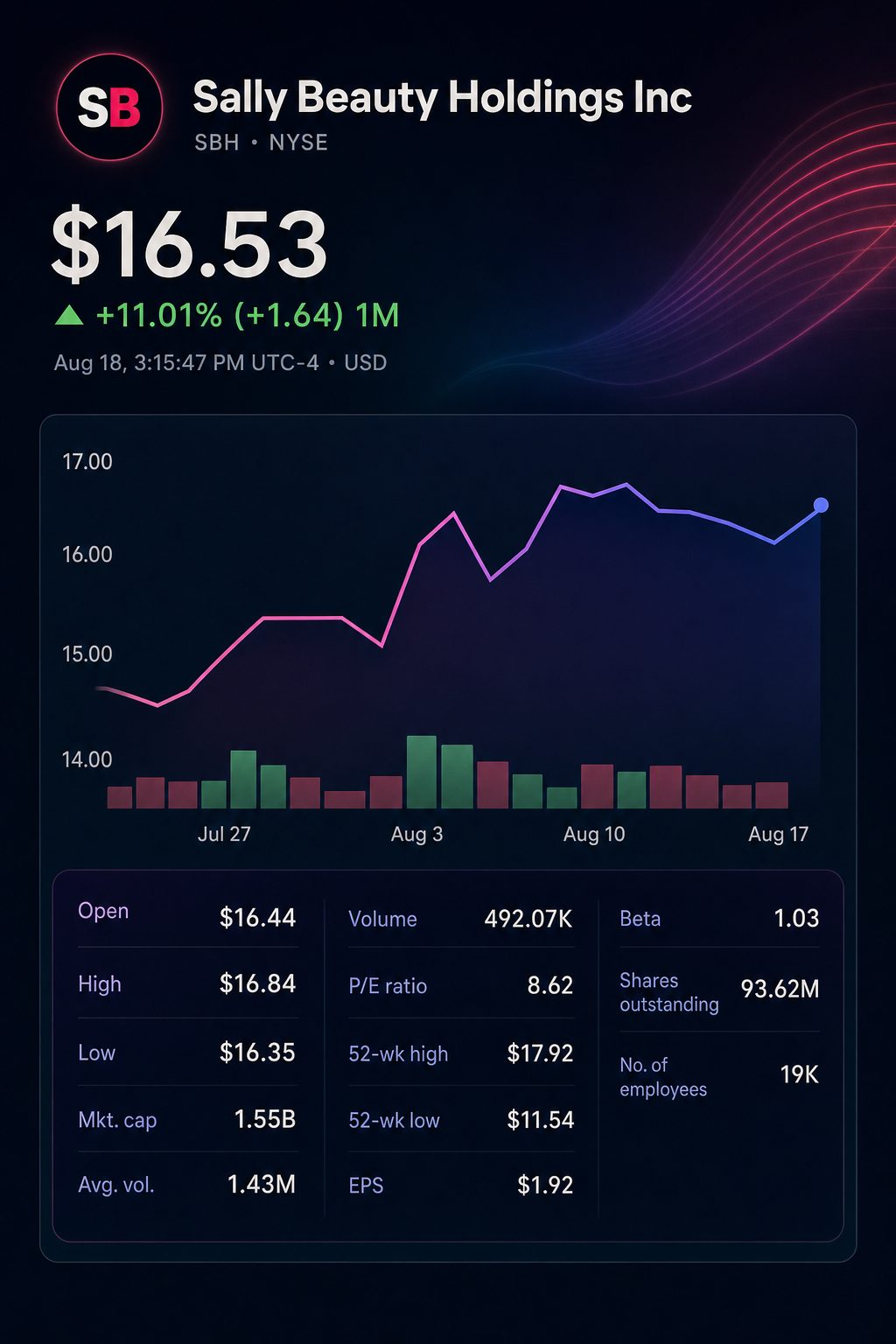
- Sally Beauty shares were up 1.6% at $16.50 as of 15:03 EDT.
- Britain’s TPO regulation covers a portion of the market that accounts for about 4.9% of the retailer’s total stores globally.
- The sell-through window set for February 2027 helps limit near-term inventory risk.
Sally Beauty Holdings NYSE:SBH advanced 1.6% to $16.50 on Tuesday. A new British restriction targeting an ingredient in gel nail products has drawn attention to a minor yet noticeable segment of the company’s overseas operations. The quote was recorded at 15:03 EDT, while trading continued.
Under the regulation, cosmetic products with trimethylbenzoyl diphenylphosphine oxide (TPO) can no longer be newly launched on the Great Britain market after August 15. Items already on shelves may continue to be sold until February 14, 2027, providing a 183-day sell-through window instead of requiring immediate stock removal.
| Regulatory milestone | Date | Operational effect |
|---|---|---|
| Placement of new TPO products prohibited | August 15, 2026 | No additional affected stock will enter the GB market |
| Sell-through period for existing stock concludes | February 14, 2027 | Affected goods are removed from distributor and retail shelves |
| Transition window | 183 days | Duration available for selling legacy compliant inventory and adjusting formulations |
From an investor perspective, the focus is on scale. Sally Beauty had 218 stores in the UK as of September 2025, compared to a total of 4,422 consolidated locations. This means the UK accounted for roughly 4.9% of total stores and 7.0% of the 3,096 stores in the Sally division. Store numbers offer only a partial measure of exposure, since the company does not separately break out UK nail-gel revenue.
| Footprint measure | Stores | Share |
|---|---|---|
| United Kingdom | 218 | 4.9% of consolidated base |
| Sally division worldwide | 3,096 | UK represents 7.0% |
| Consolidated worldwide | 4,422 | 100% |
Sally Beauty offers nail products in addition to its hair, skin, and styling ranges. The company’s official website names OPI as one of its top professional brands. Sally Beauty is also present in other European markets, where TPO has been banned since September 2025.
The company has cut back low-margin full-service operations in Europe. According to its March-quarter filing, the exit had a negative impact on comparable sales and led to an inventory write-off, yet helped boost product margins. The filing did not name TPO as a significant factor.
| Fiscal Q3 metric | 2026 | Year-on-year change |
|---|---|---|
| Net sales | $935.5 million | up 0.2% |
| Adjusted gross margin | 52.4% | increase of 40 basis points |
| Adjusted EPS | $0.55 | rises 7.8% |
| Free cash flow | $61.6 million | up 25.4% |
| Global e-commerce sales | $110 million | gains 11% |
Those margins serve as a clearer gauge for near-term earnings. Sales in the fiscal third quarter saw minimal growth, but adjusted gross margin improved by 40 basis points. Free cash flow increased 25.4% to $61.6 million. A limited UK product transition would need to incur exceptionally high costs to counteract these broader company trends.
Chief Executive Denise Paulonis stated the quarter saw “solid EPS growth and strong cash flow,” as Sally Beauty continued to invest in customer experience and its footprint. The company tightened its adjusted EPS outlook for fiscal 2026 to a range of $2.04-$2.08 and projects roughly $200 million in free cash flow. company release
| Analyst or firm | Rating | Target | Target vs. $16.50 |
|---|---|---|---|
| Morgan Stanley | Underweight | $13 | -21.2% |
| TD Cowen | Buy | $17 | +3.0% |
| Raymond James | Outperform | $18 | +9.1% |
| Canaccord Genuity | Buy | $20 | +21.2% |
| S&P Global poll, five analysts | Buy consensus | $16.40 average | -0.6% |
Wall Street analysts are divided. The average price target of $16.40 is 10 cents under Tuesday’s intraday level. Morgan Stanley’s forecast of $13 suggests a 21% drop, while Canaccord’s $20 target points to a 21% gain. The wide spread indicates that operational execution and cash returns weigh more on valuation than focus on a single product.
The cosmetics industry association stated that the ban on TPO highlights its dangerous characteristics in the context of maximum possible exposure. Caroline Rainsford, science director for the group, noted that TPO concentrations in nail products are over 1,000 times lower than those linked to fertility risks. This differentiation could reduce public concern, even as it compels changes in supply-chain practices.
Risks: Store numbers may downplay sales exposure if UK nail products deliver higher-than-average revenue or margins. Expenses from reformulation, changing suppliers, or markdowns may exceed stated figures. Broad consumer pullback from gel products would have greater impact than the chemical ban alone.
Investors will need to monitor two specific markers ahead. The sell-through window closes on February 14, and Sally Beauty’s fiscal Q4 results will indicate if wording related to European inventory or margins shifts. In the meantime, the 4.9% footprint proxy presents the rule as a localized operational matter rather than a full-scale earnings revision.
Related articles: Stock Market








UK gel-nail rule: contained footprint, real compliance
Market data: August 18, 2026, 15:03:07 EDT (GMT-4), intraday. Financial data: fiscal Q3 ended June 30, 2026.
Open $16.44 · High $16.84 · Low $16.35
218 UK stores ÷ 4,422 consolidated stores, based on September 2025 counts. Revenue exposure is not separately disclosed.
About half is planned for share repurchases. Q3 free cash flow rose 25.4% year over year.
Q3 operating scorecard
Wide valuation range
Average target implies 0.6% downside. The low/high range spans roughly -21% to +21%.
No new TPO-containing cosmetic products may enter the Great Britain market.
Existing compliant stock can still move through retailers and distributors.
Sell-through ends. Reformulation and supplier readiness become the key checks.