Beijing, January 6, 2026, 08:47 CST
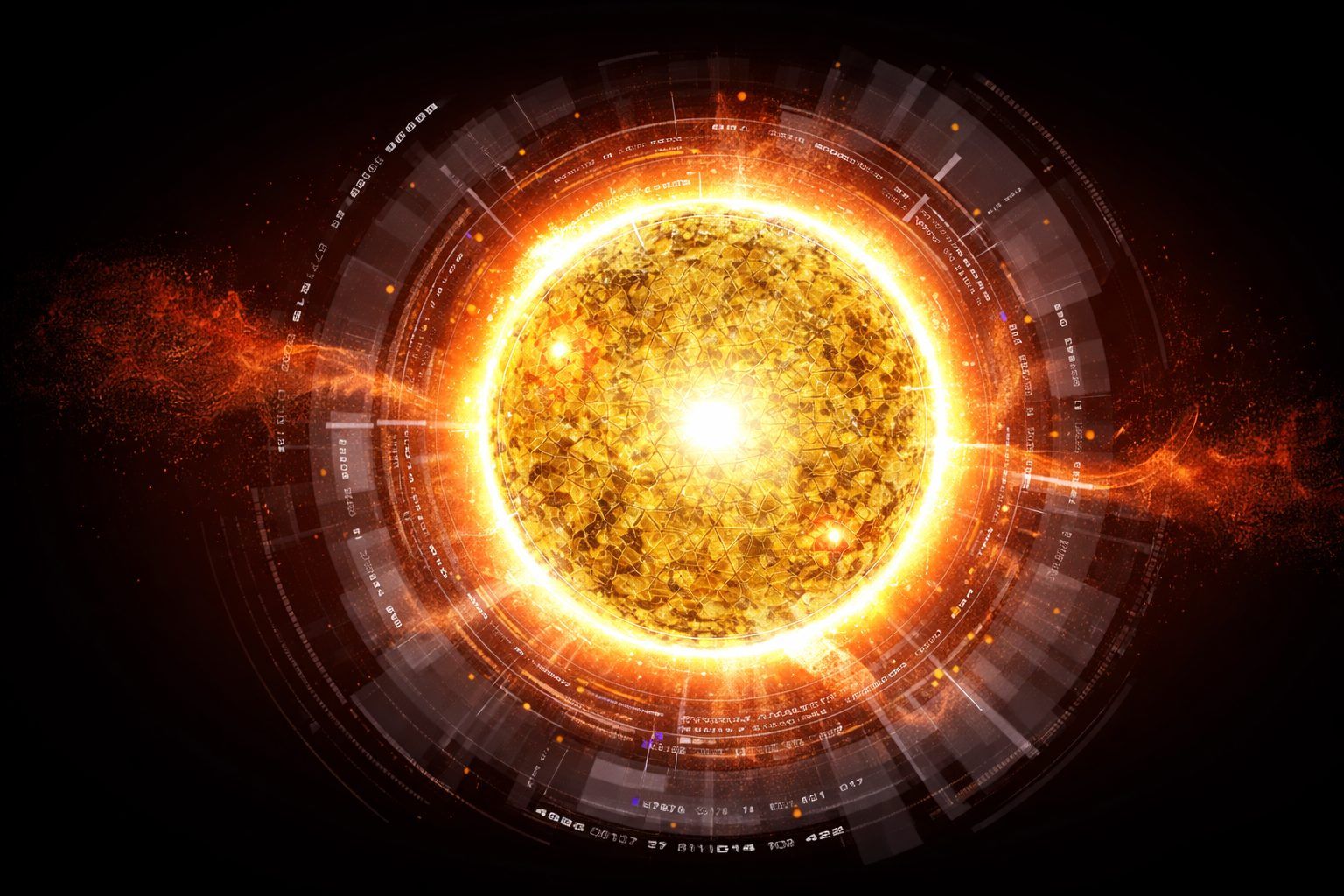
- China’s EAST “artificial sun” tokamak reached a “density-free regime” that kept plasma stable beyond conventional density limits.
- Researchers said controlling plasma–wall interaction during start-up helped curb impurities that can trigger instability.
- The result adds to global efforts to make tokamak fusion reactors run hotter and denser without disruptive shutdowns.
Researchers working on China’s EAST “artificial sun” tokamak have reported a way to operate fusion plasma beyond a long-standing density limit that often forces tokamaks to shut down, according to a report summarising the peer-reviewed work. Spacedaily
The finding matters now because higher plasma density typically boosts fusion reaction rates, and tokamaks need hot, dense fuel to reach “ignition” — the point where fusion reactions help keep the plasma hot. But pushing density too far has repeatedly triggered abrupt instabilities that can end experiments in seconds.
The team said the experiments support an approach that manages plasma–wall interaction early in a discharge so the plasma can climb to higher density without collapsing. That barrier has been a persistent constraint on performance as governments and researchers look to move beyond laboratory demonstrations toward reactor-scale tests. ScienceDaily
Tokamaks are doughnut-shaped machines that confine and heat plasma using powerful magnetic fields so the superheated fuel does not touch the vessel walls. They are the main design being pursued for many large magnetic-confinement fusion programmes. ITER – the way to new energy
In the EAST experiments, researchers combined electron cyclotron resonance heating — a microwave-based method — with an “ohmic” start-up and tighter control of the initial fuel gas pressure, the Hefei Institutes of Physical Science said. Co-lead author Ping Zhu of Huazhong University of Science and Technology said the approach “suggest[s] a practical and scalable pathway” to extend density limits, and researcher Ning Yan said the team plans to try the method in high-confinement operation, a higher-performance mode used in tokamaks. Cas
In the Science Advances paper, the researchers wrote that increasing the prefilled gas pressure and/or heating power lifted the density limit to about 1.3 to 1.65 times the Greenwald limit — an empirical rule-of-thumb used to estimate when a tokamak plasma may become unstable. They reported that the discharges accessed the predicted “density-free” regime without the disruptions normally associated with exceeding the limit. PMC
A Chinese Academy of Sciences summary said the team’s modelling points to radiation instability driven by impurities in the boundary region as a trigger for the density limit, helping explain why the ceiling appears in the first place. It said the work provides a physical basis for operating tokamaks at higher density. Cas
The results land as ITER, a 33-nation project in southern France, builds what it calls the world’s largest tokamak to test fusion at a much larger scale. ITER’s designers and operators face many of the same questions around wall conditions and stable high-performance operation. ITER – the way to new energy
The advance does not mean EAST has produced net power, and it does not settle how easy it will be to sustain the effect when plasmas run hotter, longer and at higher overall performance. Dense operation can still amplify heat loads, impurity risks and control challenges that show up only in tougher regimes.
For now, the result sharpens focus on the plasma edge — where the fuel meets the wall environment — as a lever for improving tokamak performance. Whether the “density-free” regime holds under more demanding conditions will be a key test of how quickly the idea can translate from an experimental start-up scenario into reactor-relevant operation.