
New York, June 3, 2026, 10:04 EDT
- Medtronic shares rose in early New York trading after quarterly revenue and adjusted profit beat Wall Street estimates.
- Cardiac ablation, a treatment area for irregular heart rhythms, was the standout, with global revenue up 78%.
- The rally was checked by a fiscal 2027 profit forecast below analyst expectations and a projected tariff hit.
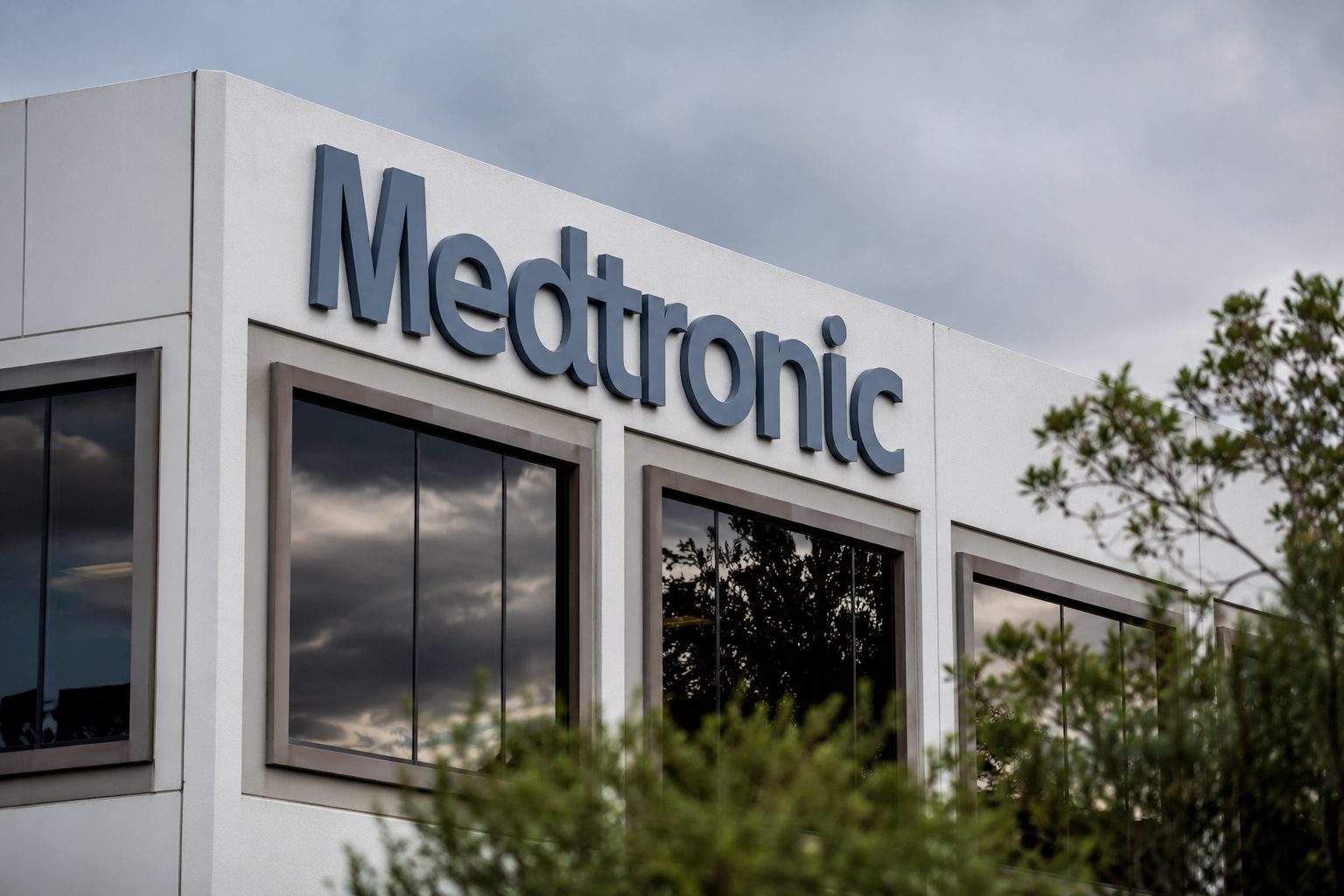
Medtronic plc shares jumped on Wednesday after the medical-device maker beat Wall Street’s fiscal fourth-quarter sales and profit estimates, helped by demand for heart devices used in complex cardiac procedures. The stock was recently up 5.1% at $77.52, outpacing a 0.6% rise in the iShares U.S. Medical Devices ETF.
The move matters because investors have been looking for proof that Medtronic can accelerate growth while it separates diabetes, invests in smaller deals and absorbs tariff costs. The answer, at least for the quarter, came from the heart-device business.
Revenue for the quarter ended April 24 rose 9.9% to $9.807 billion, above the $9.63 billion analysts expected, according to LSEG data cited by Reuters. Adjusted earnings per share, a profit figure that excludes some one-time costs and gains, came in at $1.55, just ahead of the $1.54 consensus.
Organic revenue, which strips out currency swings and some portfolio changes, rose 6.6%. Cardiovascular revenue rose 13.8% to $3.797 billion, while cardiac ablation revenue — devices used to destroy small areas of heart tissue causing abnormal rhythms — rose 78% globally and 124% in the United States.
Chief Executive Geoff Martha said the year marked Medtronic’s strongest annual top-line growth in 10 years, citing gains in cardiac rhythm management, surgical technologies and newer platforms including Affera, Symplicity and Hugo. Chief Financial Officer Thierry Piéton said the company was entering fiscal 2027 with “strong momentum” and a “resilient operating foundation.” Medtronic News
Analysts focused on cardiac ablation. RBC Capital Markets analyst Shagun Singh told Reuters she was “encouraged by Medtronic’s growth initiatives,” led by cardiac ablation and electrophysiology, and said the company’s renal denervation treatment for high blood pressure “remains underappreciated.” Reuters
Medtronic also said it invested in Beluga Medical and CardioACC, two privately held companies developing intracardiac echocardiography, or ICE, catheters. ICE catheters give doctors real-time images inside the heart during electrophysiology procedures. Rebecca Seidel, president of Medtronic’s Cardiac Ablation Solutions business, said the company was “leaning into opportunities” that support its long-term portfolio plan. PR Newswire
Competition is tight. Boston Scientific and Abbott, both active in pulsed-field ablation — a newer heart-rhythm treatment that uses electrical pulses rather than heat or freezing — also rose in early trading, up 1.3% and 0.9%, respectively. Clinical Trials Arena said in April that Medtronic, Boston Scientific and Abbott all posted positive pulsed-field ablation data at the Heart Rhythm Society meeting, keeping pressure on the fast-growing field.
Medtronic’s surgical robotics push added another reason for the stock move. The company said it filed 510(k) submissions with the U.S. Food and Drug Administration to expand its Hugo robotic-assisted surgery system into general and gynecologic surgery; Hugo already had FDA clearance for urologic procedures. Matt Anderson, president of Medtronic’s surgical business, called it part of a broader push to link instruments, data and surgeons into one system.
That puts Medtronic closer to Intuitive Surgical’s core market. Reuters reported in April that Intuitive’s da Vinci robot competes with Hugo, and that Hugo’s late-2025 FDA clearance marked the first significant new competitor for Intuitive in robotic-assisted surgery. Intuitive shares were recently down 0.2%.
But the rally has a clear catch. Medtronic forecast fiscal 2027 adjusted earnings of $5.90 to $6.00 a share, below the $6.06 analysts expected, and said tariffs would cut about $250 million from fiscal 2027 results, including $75 million in the first quarter. The outlook still includes the diabetes business, now a public company called MiniMed, and Medtronic said it would revise guidance if that separation is completed before year-end.
The downside case is simple: cardiac ablation momentum could cool, FDA timing for Hugo could slip, or tariffs could hit margins harder than planned. For now, investors looked past that. The stock move says they wanted growth first, with the bill for 2027 still to be argued over.
Related articles: Stock Market