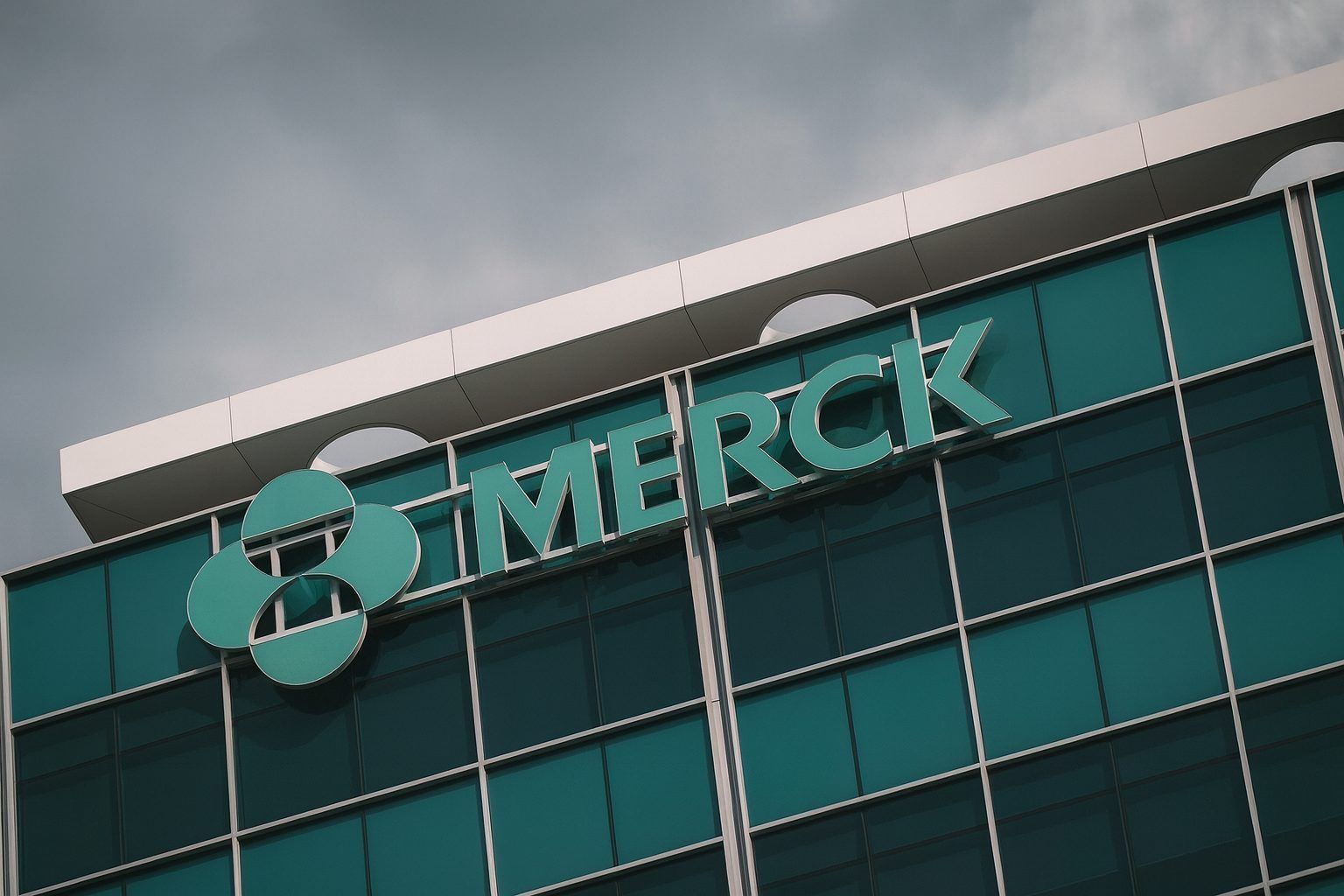

Merck & Co., Inc. NYSE:MRK heads into the Monday, December 1, 2025 market open riding one of the strongest monthly rallies in the S&P 500, powered by upbeat earnings, dividend growth and a string of bullish analyst calls focused on its post‑Keytruda pipeline.
Below is a detailed look at how MRK is positioned before the bell, based on news, forecasts and analysis published between November 28–30, 2025.
Note: This article is for informational and educational purposes only and is not investment advice.
1. Where Merck Stock Stands After November’s Surge
Price and recent performance
- Last close (Friday, November 28, 2025): Merck finished at $104.83, up 0.19% on the day, with an after‑hours quote around $104.74.
- Daily range (Nov 28): Opened at $104.84, traded between $104.12–$105.41 on volume just under 6 million shares.
- 52‑week picture: 52‑week high around $105.84 and low near $73.31, putting Friday’s close just below record territory.
- Volatility: Five‑year beta of 0.32, meaning Merck has been much less volatile than the broader equity market.
One of November’s standout winners
Barron’s ranks Merck among the top S&P 500 performers in November, with a gain of roughly 22% for the month, far outpacing both the index and most large‑cap healthcare peers.
StockAnalysis data confirms the move: MRK has climbed from the mid‑$80s in late October to the mid‑$100s by November 28, with its 50‑day moving average at $88.18 and 200‑day moving average at $84.42, and an RSI near 80 that signals short‑term overbought conditions.
Sector relative strength
Recent coverage on Yahoo Finance notes that Merck has been outperforming the broader healthcare sector, helped by earnings momentum and renewed interest in defensive, dividend‑paying pharma names.
2. Key News and Analysis From November 28–30, 2025
November 28: “Excellence Across the Board” and Dividend Strength
Seeking Alpha: Strong Buy case built on quality and diversification
On November 28, a Seeking Alpha article titled “Merck: Excellence Across The Board” reiterated a Strong Buy stance (based on SA’s Quant rating earlier in November), highlighting three pillars:Seeking Alpha
- A resilient revenue mix anchored by oncology but increasingly diversified.
- Expanding profitability, with industry‑leading margins and disciplined capital allocation.
- A long record of consistent dividend growth, reinforcing Merck’s appeal as a long‑term, lower‑volatility compounder.
The author emphasizes that while Keytruda remains the franchise engine, Merck’s broader portfolio and pipeline help mitigate concentration risk.
ChartMill: High‑quality dividend profile at an attractive valuation
Also on November 28, ChartMill profiled Merck as a dividend stock with strong profitability and financial health:ChartMill
- Dividend yield: About 3.58%, versus an S&P 500 average near 2.4%, placing Merck’s yield ahead of roughly 95% of large pharma peers.
- Dividend growth: Approximate 6.9% annual growth over the past five years, with more than a decade of uninterrupted payments and no cuts.
- Profitability:
- Profit margin around 29.6%
- Operating margin around 38%
- Returns on equity and invested capital well above industry averages
- Balance sheet:
- Strong solvency metrics (solid Altman‑Z score, manageable debt‑to‑free‑cash‑flow)
- Somewhat weaker but still acceptable liquidity metrics vs peers (current/quick ratios in the lower half of the industry distribution).
ChartMill also notes Merck’s low valuation relative to the S&P 500 and pharma peers, with a P/E ratio below sector averages.
MarketBeat: Institutional flows, earnings beat and dividend hike
A November 28 MarketBeat piece on Boston Partners trimming its Merck stake by about 1.2% offers a broader snapshot of fundamentals and Wall Street sentiment:MarketBeat
- Boston Partners sold 9,142 shares but still held 763,993 shares, while numerous other institutions increased or initiated positions.
- Roughly 76% of Merck’s float is held by institutions, underlining strong professional ownership.
- Merck’s recent quarter:
- EPS of $2.58 vs $2.36 expected
- Revenue around $17.28 billion
- FY 2025 EPS guidance narrowed to $8.93–$8.98, close to the Street’s ~$9.01 consensus.
- The company increased its quarterly dividend to $0.85 (up from $0.81), implying a roughly 3.2% yield at current prices.
From a valuation standpoint, the same note cites a P/E near 16, PEG ratio below 1 and a low beta, reinforcing the defensive‑growth narrative.
November 29: Pipeline win and upside debate
Motley Fool/Nasdaq: 3.8% pop tied to pipeline progress
On November 29, a Motley Fool article syndicated on Nasdaq asked whether investors should buy this “blue‑chip pharmaceutical stock that just popped 3.8%.” The piece connects Merck’s recent rally to a key phase 2 win for sotatercept (Winrevair) in patients with combined post‑ and precapillary pulmonary hypertension due to heart failure with preserved ejection fraction (HFpEF).Nasdaq
Key takeaways:
- Winrevair, acquired via Merck’s 2021 purchase of Acceleron Pharma, has already generated $976 million in the first nine months of 2025 and is emerging as a major growth driver.
- The positive phase 2 data in a new PH subset could support label expansions and a broader long‑term revenue opportunity.
- The article also flags Merck’s underperforming vaccine business and mounting competition against Keytruda as ongoing headwinds, framing MRK as a balance of pipeline‑driven upside and execution risk.
November 30: Valuation debate, fresh EPS forecasts and a big analyst upgrade
Simply Wall St: Fair value vs. DCF – is MRK fully priced or deeply undervalued?
Simply Wall St published “A Look at Merck’s (MRK) Valuation as Shares Gain Momentum” on November 30. It captures the tension many investors feel after November’s surge:Simply Wall St
- Over the past month, Merck delivered a 21.9% share‑price return and roughly 7% total shareholder return year‑to‑date.
- A headline “fair value narrative” pegs intrinsic value at about $104.27, almost exactly in line with the latest close of $104.83 – implying Merck is “about right” on conventional assumptions.
- A discounted cash flow (DCF) model, however, produces a dramatically higher fair value estimate near $216, suggesting the stock could be significantly undervalued if long‑term cash‑flow projections prove accurate.
- Key risks highlighted:
- Keytruda’s upcoming patent expiry later this decade.
- Legal and competitive uncertainties across Merck’s oncology portfolio.
The result is a split valuation picture: near fair value on base‑case assumptions, with substantial upside if Merck’s long‑term growth and margins hold up better than conservative models expect.
Zacks / MarketBeat: EPS estimates inch higher
Zacks Research nudged its FY 2025 EPS estimate to $8.96 from $8.87, keeping it aligned with Merck’s own guidance and close to the consensus ~$9 per share. It also lifted out‑year EPS forecasts, citing the recent earnings beat and continued margin strength.
MarketBeat’s analyst roundup (also referenced in institutional‑flow articles) puts the average 12‑month price target at about $107.06, with a “Moderate Buy” consensus and individual targets ranging up to the low‑$130s.MarketBeat+1
Insider flows: some trimming, some buying
On November 30, MarketBeat published two 13F‑based snapshots pointing in opposite directions:MarketBeat+1
- Hamel Associates Inc.
- Increased its Merck position by 8.5%, adding 7,316 shares to reach 93,287 shares (about 2.5% of its portfolio, the firm’s 12th‑largest holding).
- First National Advisers LLC
- Reduced its MRK stake by 54.3%, selling 7,387 shares and ending with 6,213 shares (~$492,000).
Both articles reiterate that around 76% of Merck’s stock is institutionally owned, pointing to broad but not unanimous professional confidence.
InsiderMonkey: Wells Fargo’s big call – Overweight with $125 target
The most market‑moving new analysis over the November 28–30 window is the Wells Fargo upgrade, summarized in a November 30 InsiderMonkey piece:Insider Monkey+2MarketBeat+2
- On November 24, Wells Fargo raised Merck from “Equal Weight” to “Overweight” and boosted its price target from $90 to $125.
- Rationale:
- Recent business development moves, pipeline advances and new product launches.
- The bank believes Merck is well‑positioned to offset the eventual loss of Keytruda exclusivity and grow revenue into the early 2030s.
- Analysts describe Merck as entering a “catalyst‑rich period” over the next 12–18 months, with multiple key trial readouts ahead.
- The article also notes:
- Merck’s planned acquisition of Cidara Therapeutics, an approximately $9.2 billion deal aimed at adding an experimental flu therapy and diversifying beyond oncology.
- Since 2021, Merck has nearly tripled its late‑stage pipeline, helped by deals like the $11.5 billion Acceleron acquisition (Winrevair).
- Management estimates its ~20‑asset late‑stage pipeline could generate up to $50 billion in peak annual revenue by the mid‑2030s.
- The November 18 dividend hike to $0.85 per share marks 15 consecutive years of dividend growth.
Together, these factors underpin Wells Fargo’s more aggressive upside case relative to the broader Street.
3. Fundamentals: Earnings, Margins and Balance Sheet
Earnings and guidance
Merck’s Q3 2025 results (reported October 30) set the stage for November’s rally:Merck.com+1
- Revenue: About $17.28 billion, slightly above expectations.
- Non‑GAAP EPS:$2.58 vs $2.36 consensus.
- 2025 outlook:
- Sales guidance: Now $64.5–$65.0 billion, narrowed from prior ranges.
- Non‑GAAP EPS: Raised and narrowed to $8.93–$8.98, implying mid‑ to high‑single‑digit growth versus 2024.
StockAnalysis’ trailing‑12‑month view shows Merck generating $64.24 billion in revenue and $19.03 billion in net income, with EPS of $7.56 on this look‑back period.
Margins and profitability
Merck stands out for its margin profile:ChartMill+1
- Gross margin: ~78%
- Operating margin: ~42%
- Net margin: ~29–30%
- ROE: ~39–41%
- ROIC: ~19%
Both ChartMill and StockAnalysis rank these figures among the best in big pharma, reinforcing the “quality compounder” thesis that appears in recent Seeking Alpha and Zacks commentary.
Balance sheet and leverage
According to StockAnalysis:StockAnalysis
- Market cap: About $260 billion.
- Current ratio:1.66; quick ratio 1.09, indicating comfortable near‑term liquidity.
- Debt / equity:0.80, with EV/EBITDA of 8.99 and interest coverage over 21x, signaling manageable leverage.
- Altman Z‑Score: Around 3.9, consistent with low bankruptcy risk.
This stacks well with ChartMill’s “9/10” profitability score and generally favorable health metrics.
Dividend profile
Across the latest sources:ChartMill+2MarketBeat+2
- New quarterly dividend:$0.85 per share, or $3.40 annually.
- Indicated yield:
- About 3.24% at $104.83 (StockAnalysis).
- ChartMill calculates around 3.58%, reflecting slightly different price inputs.
- Payout ratio: Around 43–45%, leaving room for reinvestment and future increases.
- Dividend streak:14–15 years of consecutive annual increases, with no cuts in over a decade.
For income‑oriented investors, this makes MRK one of the higher‑yielding, investment‑grade names in big pharma.
4. Pipeline and “Life After Keytruda”
A central theme in nearly every recent analysis is whether Merck can sustain growth after Keytruda, whose key patents begin to expire late this decade.
Keytruda and label expansion
Merck has continued to broaden Keytruda’s reach:
- In November 2025, the FDA approved Keytruda and Keytruda QLEX (a co‑formulation with berahyaluronidase alfa‑pmph), each in combination with Padcev (enfortumab vedotin‑ejfv), as perioperative treatment for cisplatin‑ineligible muscle‑invasive bladder cancer. This marks an important expansion of Merck’s urologic‑oncology presence and deepens its ADC partnership strategy.
- Earlier in 2025, regulators in Europe cleared a subcutaneous formulation of Keytruda for certain indications, aimed at improving patient and provider convenience and defending share as competitors push their own PD‑1/L1 offerings.
These moves support the near‑ to medium‑term Keytruda franchise while Merck invests in next‑generation assets.
Cardiovascular: Enlicitide (oral PCSK9)
On November 8, Merck announced that Enlicitide decanoate, an investigational oral PCSK9 inhibitor, significantly reduced LDL‑C in the phase 3 CORALreef Lipids trial, with a safety profile comparable to placebo.
If approved, Enlicitide could become:
- The first oral PCSK9 inhibitor,
- A strategic foothold in the rapidly growing cholesterol‑management market, and
- A brand with potential to rival today’s injectable PCSK9 therapies in convenience and reach.
Respiratory and infectious disease
Recent corporate moves highlighted in Merck’s Q3 press release and the Wells Fargo upgrade include:Merck.com+1
- The acquisition of Verona Pharma, bringing OHTUVAYRE, a first‑in‑class COPD maintenance therapy.
- The pending acquisition of Cidara Therapeutics, offering an experimental influenza treatment as part of Merck’s strategy to build a broader vaccines and anti‑infective franchise.
Winrevair (sotatercept) and pulmonary hypertension
Merck’s Winrevair story is increasingly central to the long‑term thesis:Nasdaq+1
- Winrevair, acquired with Acceleron, is already generating close to $1 billion in year‑to‑date sales for pulmonary arterial hypertension.
- The November 29 Motley Fool piece underscores new phase 2 success in CpcPH due to HFpEF, hinting at significant label‑expansion potential.
- Wells Fargo and other analysts point to Winrevair as one of several assets that can help bridge revenue as Keytruda’s exclusivity winds down.
Management’s long‑term view
Per InsiderMonkey’s summary of Merck commentary, management believes its 20‑asset developmental pipeline could collectively generate as much as $50 billion in annual revenue at peak, albeit over a time frame extending into the mid‑2030s.
That longer runway underpins the more bullish price targets and the idea that Merck’s current valuation may not fully reflect its pipeline’s eventual contribution.
5. Analyst Ratings and Price Targets Going Into December 1
Across multiple aggregators, Wall Street views on Merck are constructive but not unanimous.
Consensus and dispersion
- StockAnalysis:
- Average target:$108.21 (about 3.2% above Friday’s close).
- Consensus rating:“Buy”, based on 14 analysts.StockAnalysis
- MarketBeat:
- Average target:$107.06,
- Consensus “Moderate Buy”, with a mix of Strong Buy, Buy, Hold and a small number of Sell ratings.MarketBeat
Several recent, notable calls:
- Wells Fargo:Overweight, $125 target, arguing that Merck’s growing pipeline, deal activity and multiple upcoming catalysts should support revenue growth well into the 2030s, even as Keytruda patents expire.
- Deutsche Bank:Hold, target nudged up to $111 (roughly mid‑teens upside), reflecting solid execution but a more cautious stance on valuation and competitive risk.
- Morgan Stanley:Equal Weight, with a $100 target after a small upward revision from $98 earlier in November, positioning the stock as fairly valued relative to its risk‑reward.
Zacks’ latest note, which lifted 2025 EPS estimates, frames Merck as a fundamentally strong pharma name that has re‑rated higher on pipeline progress and M&A, but still trades at a discount to many growth‑oriented peers.
In short, Street sentiment is positive, with upside skewed toward the low‑to‑mid‑teens under base‑case scenarios, and more aggressive bulls (like Wells Fargo) targeting a roughly 19–20% climb from current levels.
6. Valuation Check: Is MRK Still Attractive After the Run?
Using StockAnalysis and ChartMill data as of November 28:ChartMill+1
- Trailing P/E: ~13.9
- Forward P/E: ~12.5
- EV/EBITDA: ~9.0
- Price‑to‑Sales: ~4.1
These multiples are:
- Lower than the broader U.S. equity market,
- Reasonable vs large‑cap pharma peers, and
- Supported by above‑average margins, high ROE, and a mid‑single‑digit revenue growth outlook with high‑single‑digit expected EPS growth (~8.6% 5‑year EPS CAGR forecast).
However, technical indicators hint at a near‑term stretched setup:
- November’s ~22% monthly gain
- RSI close to 80, a level often associated with short‑term overbought conditions.
For traders into the December 1 open, that combination — attractive longer‑term valuation but very strong recent momentum — may argue for watching how the stock digests November’s move, especially if broader markets turn volatile.
7. What to Watch at the December 1, 2025 Market Open
With markets reopening after the weekend, here are the main Merck‑specific themes likely to shape trading sentiment:
- Follow‑through on analyst upgrades
- Does MRK attract additional buying interest on the back of Wells Fargo’s new Overweight/$125 call, or have these catalysts been largely priced in during November’s run?
- Institutional positioning headlines
- Fresh 13F‑driven stories on November 30 showed both buying and selling by mid‑sized institutional investors, even as overall institutional ownership remains high. Watch for whether flows remain net‑supportive or start to normalize after heavy November gains.
- Sector rotation dynamics
- Merck’s low beta and defensive profile have benefited from a late‑year tilt toward quality value and dividend names. If markets shift back toward high‑beta growth, MRK could pause or consolidate despite strong fundamentals.
- Pipeline and regulatory headlines
- Any updates on Keytruda label expansions, Winrevair, Enlicitide, or M&A (e.g., the Cidara deal) can quickly influence the longer‑term narrative, especially with analysts emphasizing a “catalyst‑rich” 12–18 months ahead.Merck.com+3Insider Monkey+3Merck.com+3
- Dividend and income‑investor demand
- With a 3%+ yield and a fresh dividend increase, income‑focused investors may continue to accumulate on dips, providing a potential floor on pullbacks if macro conditions remain supportive.
8. Bottom Line
Heading into the December 1, 2025 market open, Merck stock sits in a sweet spot of strong recent momentum, solid fundamentals and improving Street sentiment:
- The Q3 beat, narrowed 2025 guidance, and double‑digit margins underscore Merck’s financial strength.
- The dividend story — mid‑3% yield, more than a decade of growth and a moderate payout ratio — remains a major attraction in a still‑uncertain macro environment.
- Analysts broadly see moderate upside from current levels, with some high‑conviction calls (like Wells Fargo’s $125 target) arguing that the market still underestimates Merck’s post‑Keytruda pipeline and M&A‑boosted growth runway.
- At the same time, Keytruda patent risk, increased competition in oncology and vaccines, and an overbought technical profile temper the near‑term risk‑reward for new entrants after November’s sharp rally.
For investors and traders watching MRK at the open on December 1, the stock increasingly looks like a long‑term quality and income play whose near‑term path may depend more on how it digests a blockbuster November than on any single new headline.
Related articles: NYSE:MRK