
Date: December 8, 2025
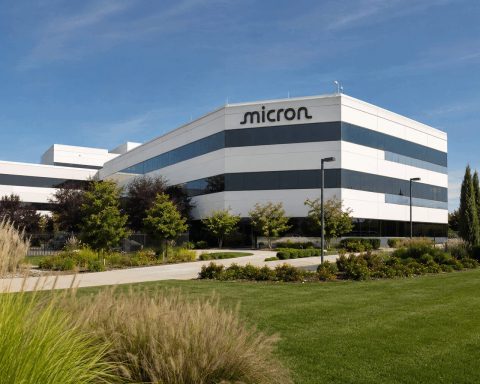
Micron Technology NASDAQ:MU is back in the spotlight as one of Wall Street’s favorite AI infrastructure plays. After a volatile week driven by its decision to kill the long‑running Crucial consumer brand, the memory maker’s shares have rebounded and are once again trading near record territory, powered by record earnings, sold‑out AI memory and a multi‑billion‑dollar expansion in Japan.
Below is a deep dive into today’s Micron stock news, its AI-focused strategic pivot, the latest analyst forecasts, and what investors will be watching into the December 17 earnings report.
Micron stock today: AI trade roars back
Micron last closed at $237.22 on Friday, December 5, up 4.66% on the day, with shares trading between $226.69 and $240.57 during the session. Pre‑market action early Monday points to further gains around the $241–242 range.
Over the past year, Micron has delivered more than 130% share price appreciation, and several recent analyses note a year‑to‑date gain in roughly the 170–180% range, depending on the starting point used. That puts MU among the top‑performing large‑cap semiconductor names in 2025 and a high‑beta way to bet on AI infrastructure.
The latest leg higher is being driven by three intertwined stories:
- A decisive exit from the Crucial consumer memory brand, freeing up capacity for high‑bandwidth memory (HBM) and data‑center DRAM.
- Record fiscal 2025 results and guidance that point to all‑time‑high margins as AI demand keeps memory markets tight.
- A ¥1.5 trillion (~$9.6 billion) HBM fab in Hiroshima, Japan, heavily subsidized by the Japanese government.
At the same time, investors are weighing rich valuations, brisk insider selling and a surge in institutional activity as the stock hovers within striking distance of its record high near $260.58.
Crucial exit: small business, big signal
On December 3, Micron announced that it will exit its Crucial consumer memory and SSD business, ending shipments of Crucial‑branded products worldwide by the end of its fiscal Q2 2026 (February 2026).
Key points of the move:
- Scope: Retail and e‑tail consumer DRAM and SSDs under the Crucial brand will be wound down; support and warranties continue for existing customers.
- Timing: Shipments through consumer channels will continue into early 2026, but the business is effectively being sunset over the next few quarters.
- Rationale: Micron says AI‑driven growth in data centers has created a surge in demand for high‑value memory, and it wants to redirect capacity to “larger, strategic customers in faster‑growing segments” like HBM and enterprise DRAM. Micron Technology+2Tom’s Hardware+2
Crucial was never a major profit center in the Micron portfolio; several analyses describe it as a lower‑margin, non‑core unit compared with leading‑edge data‑center memory.
Still, the market reaction was noisy. On December 4, Micron shares fell 3.21% to $226.65, marking a third straight down day as investors digested the end of a 29‑year‑old consumer brand.
That pullback didn’t last. By Friday’s close, MU had fully reversed those losses as the AI narrative reasserted itself and Wall Street rolled out another round of price‑target increases.
Record Q4 and fiscal 2025: AI turns Micron into a data‑center stock
Under the hood, the case for Micron as an AI infrastructure winner starts with its latest numbers.
For fiscal Q4 2025, Micron reported: Futurum+1
- Revenue: $11.32 billion, up 46% year‑on‑year and ahead of consensus around $11.1 billion.
- Non‑GAAP EPS: $3.03, beating forecasts in the high‑$2 range.
- Non‑GAAP gross margin: About 45–46%, up sharply from the mid‑30s a year earlier.
Fiscal 2025 as a whole was even more striking:
- Full‑year revenue: About $37.4 billion, up roughly 49% from fiscal 2024.
- Non‑GAAP gross margin: Rising from ~22% in 2024 to roughly 41% in 2025, with management guiding to the low‑50% range in fiscal Q1 2026.
- Data‑center revenue: Reached about 56% of total company sales, with HBM alone nearly $2 billion in Q4, implying an $8 billion annual run‑rate.
Micron’s own investor materials emphasize that the data‑center business delivered gross margins above 50% in fiscal 2025, far higher than in prior memory cycles.
The driver is High‑Bandwidth Memory and other AI‑oriented products:
- HBM is stacked DRAM with extremely wide interfaces, ideal for GPUs and accelerators. Analysts estimate HBM’s average selling price per bit is roughly four times higher than standard DRAM and vastly above commodity NAND flash.
- Micron has shipped HBM4 samples with bandwidth above 2.8 TB/s and pin speeds over 11 Gbps, claiming leadership in both performance and power efficiency.
Management says most of its 2026 HBM3E supply is already under pricing agreements, with the remaining HBM4 capacity being negotiated, giving unusually strong visibility for a memory maker.
Guidance for fiscal Q1 2026 underscores the shift:
- Micron expects revenue around $12.5 billion and non‑GAAP EPS in the $3.60–$3.90 range, which would be new records.
- Wall Street consensus currently sits near $3.79 EPS on $12.61 billion in revenue, implying ~45% y/y revenue growth and more than double last year’s EPS for the same quarter.
In other words, Micron is increasingly being treated as a core AI data‑center stock, not just a cyclical commodity DRAM supplier.
¥1.5 trillion Japan fab: a $9.6 billion bet on AI memory
Adding to the AI story, Japan has approved a ¥1.5 trillion (≈$9.6–9.7 billion) Micron factory plan in Hiroshima aimed squarely at HBM and next‑gen DRAM.
Key details from recent coverage:
- The plant will produce advanced EUV‑based DRAM and HBM, designed for AI accelerators and high‑performance data‑center GPUs.
- Mass production is targeted around 2027–2028, aligning with the next wave of AI infrastructure deployments.
- Japan’s government is expected to subsidize roughly ¥500–536 billion (~$3.6 billion), or about 36% of project costs, as part of a national effort to rebuild advanced semiconductor capacity.
Separate analyses frame this as Micron’s “Japan HBM bet”: a long‑dated capital‑intensive project that makes sense only if AI‑driven memory demand remains tight well into the second half of the decade. TechStock²+1
For investors, the Hiroshima fab is less about 2026 earnings and more about Micron’s share of AI memory in 2027–2030, especially as hyperscalers like NVIDIA, AMD, Google and others design chips that require hundreds of gigabytes of HBM per processor.
Wall Street’s Micron forecast: consensus “Buy,” targets from $84 to $338
Analysts are almost universally positive on MU, though they disagree sharply on how much upside is left from today’s price.
According to data compiled by StockAnalysis and MarketBeat:
- About 30–35 covering analysts rate Micron a “Buy” or “Outperform”, with no Sell ratings in the latest tallies. StockAnalysis+2MarketBeat+2
- The average 12‑month price target sits around $206–$222, implying modest downside from the current ~$240 area, as many models assume some normalization in memory pricing.
- The target range is extremely wide: lows near $84 and a Street‑high target of $338.
Some of the most recent calls:
- Mizuho: Maintains Outperform, lifting its target from $265 to $270 on December 4.
- Goldman Sachs: Keeps a Neutral/Hold stance but raises its target from $180 to $205, highlighting strong HBM demand ahead of the December earnings call.
- Morgan Stanley: Reiterates Overweight with a $338 target, explicitly tying the call to an “AI memory supercycle.” TechStock²+3StockAnalysis+3GuruFocus+3
- UBS and Rosenblatt: Both rate the stock a high‑conviction Buy, with targets at $275 and $300, respectively.
Forecasts for Micron’s fundamentals are equally aggressive. Consensus data show:
- Revenue rising from $37.4B in FY25 to about $56.3B in FY26, then toward $65.5B in FY27.
- EPS climbing from $7.59 in FY25 to roughly $17.6 in FY26 and $20.7 in FY27, as high‑margin AI products scale.
That helps explain why some analysts argue that Micron still trades at a reasonable forward P/E, even though simple trailing multiples (like ~31x trailing earnings) look optically high after a rapid rebound from 2023’s downturn.
Institutional flows and insider selling: who’s moving the stock?
Fresh SEC‑based reporting shows heavy institutional involvement in Micron and notable insider selling:
- California Public Employees’ Retirement System (CalPERS) trimmed its Micron stake by 4.2% in Q2, selling about 77,888 shares and ending the quarter with ~1.78 million shares worth roughly $219 million, or 0.16% of the company.
- A separate filing shows Cresset Asset Management also reducing its MU position, while large firms like Charles Schwab Investment Management modestly increased holdings. Overall, institutional investors own about 80.8% of the float.
- Over the last three months, executives including CEO Sanjay Mehrotra, CFO Mark Murphy and CAO Scott Allen have collectively sold around 400,000 shares, worth roughly $84 million, leaving insiders with about 0.24% ownership.
Insider selling at these levels is not unusual after a large run‑up, but it does reinforce the idea that expectations are high heading into 2026.
Next catalyst: December 17 earnings countdown
Micron reports fiscal Q1 2026 results on December 17, 2025, and the setup is unusually binary.
Wall Street currently expects:
- EPS of about $3.79 on $12.61 billion in revenue.
- Revenue up approximately 45% year‑over‑year, and EPS more than doubling versus last year’s $1.79.
Management’s own guidance already points toward record revenue and EPS, so the key questions will be:
- HBM visibility and pricing: How much of 2026 and even 2027 HBM capacity is pre‑sold, and at what margin profile?
- Capex and Japan build‑out: How aggressively will Micron ramp spending on Hiroshima and other advanced nodes, and what does that imply for free cash flow?
- Non‑HBM demand: To what extent are traditional server, PC and mobile memory recovering versus simply benefiting from tight supply?
Several recent articles warn that with Micron trading only a few percent below its all‑time high, even a mild guidance disappointment could trigger sharp volatility.
Key risks in the AI memory supercycle
Despite the bullish narrative, analysts are quick to highlight that memory remains a cyclical, capital‑intensive business. The main risks they flag include:
- Cycle risk: AI may be stretching this upcycle, but history suggests supply eventually catches up, leading to oversupply and price compression in DRAM and NAND.
- Competition: SK hynix currently leads in HBM, while Samsung is investing heavily and Chinese players such as CXMT are pushing into advanced DRAM. Micron’s strategy of keeping bit‑supply growth below demand doesn’t control competitors’ capex.
- Execution risk: Massive projects like the Hiroshima fab introduce multi‑year execution and cost‑overrun risks, especially in a rapidly evolving technology node race (HBM3E, HBM4, HBM4E).
- Geopolitics: Micron sits squarely at the crossroads of U.S. export controls, Japanese industrial policy and Chinese tech retaliation. Sanctions or shifts in subsidies could impact both demand and supply chains.
- Valuation: After more than doubling (and by some counts nearly tripling) from its lows, Micron’s multiple now embeds strong AI assumptions. Some analysts argue price‑to‑book or mid‑cycle earnings are more realistic metrics than frothy peak‑cycle EPS.
Bottom line: a core AI infrastructure trade, still tied to the cycle
As of December 8, 2025, the Micron story is clear:
- The company is exiting low‑margin consumer memory to focus on AI‑driven data‑center products like HBM and server DRAM.
- It has delivered record revenue and margins, with more than half of sales now coming from data‑center customers and HBM running at nearly an $8 billion annual rate.
- Japan has greenlit a nearly $10 billion HBM fab, backed by heavy subsidies and aimed at the late‑decade AI wave.
- Wall Street remains overwhelmingly bullish, with price targets that stretch as high as $338, even though the formal consensus now sits slightly below the current share price.
For investors, MU stock has become a high‑conviction way to express a view on AI memory demand, but it is not a free lunch: it’s still a capital‑heavy, cyclical business operating in a fiercely competitive and politically sensitive industry.
Related articles: NASDAQ:MU