D‑Wave Quantum’s stock (NYSE: QBTS) is back in the spotlight today after the company unveiled a new U.S. government–focused business unit, extending one of 2025’s wildest stock market stories.
By early afternoon on December 2, QBTS was trading around $21.8–$22.0 per share, up roughly 2% on the day, after moving between about $21.4 and $22.9 in intraday trading. That puts D‑Wave’s market cap around the $7.7–7.8 billionmark and leaves the stock sitting in a 52‑week range of roughly $2.50 to $46.75. [1]
Even after a brutal pullback in November, QBTS remains a massive winner: depending on the data provider and date, shares are up about 160–170% year‑to‑date and roughly 8–9x over the last 12 months. [2] At the same time, the stock has fallen close to 50% from its October peak, highlighting just how volatile this quantum computing pure‑play has become. [3]
Below is a deep dive into today’s news (December 2, 2025), the latest earnings, forecasts, valuation metrics and analyst opinions, and what they might mean for QBTS stock going forward.
QBTS Stock Today: Volatile High‑Flyer Gets a Fresh Catalyst
On December 2, D‑Wave announced the formation of a dedicated U.S. Government Business Unit. The unit is led by Jack Sears Jr., a veteran government‑contracting executive with more than 25 years of experience in defense and aerospace. [4]
According to the company and multiple news outlets:
- The new unit is tasked with driving adoption of D‑Wave’s quantum computing products and services across U.S. government agencies, especially in national security, defense, and critical infrastructure. [5]
- Sears will join D‑Wave’s executive team as Vice President of U.S. Government Solutions, overseeing government go‑to‑market strategy, application development and secure, federally compliant product offerings. [6]
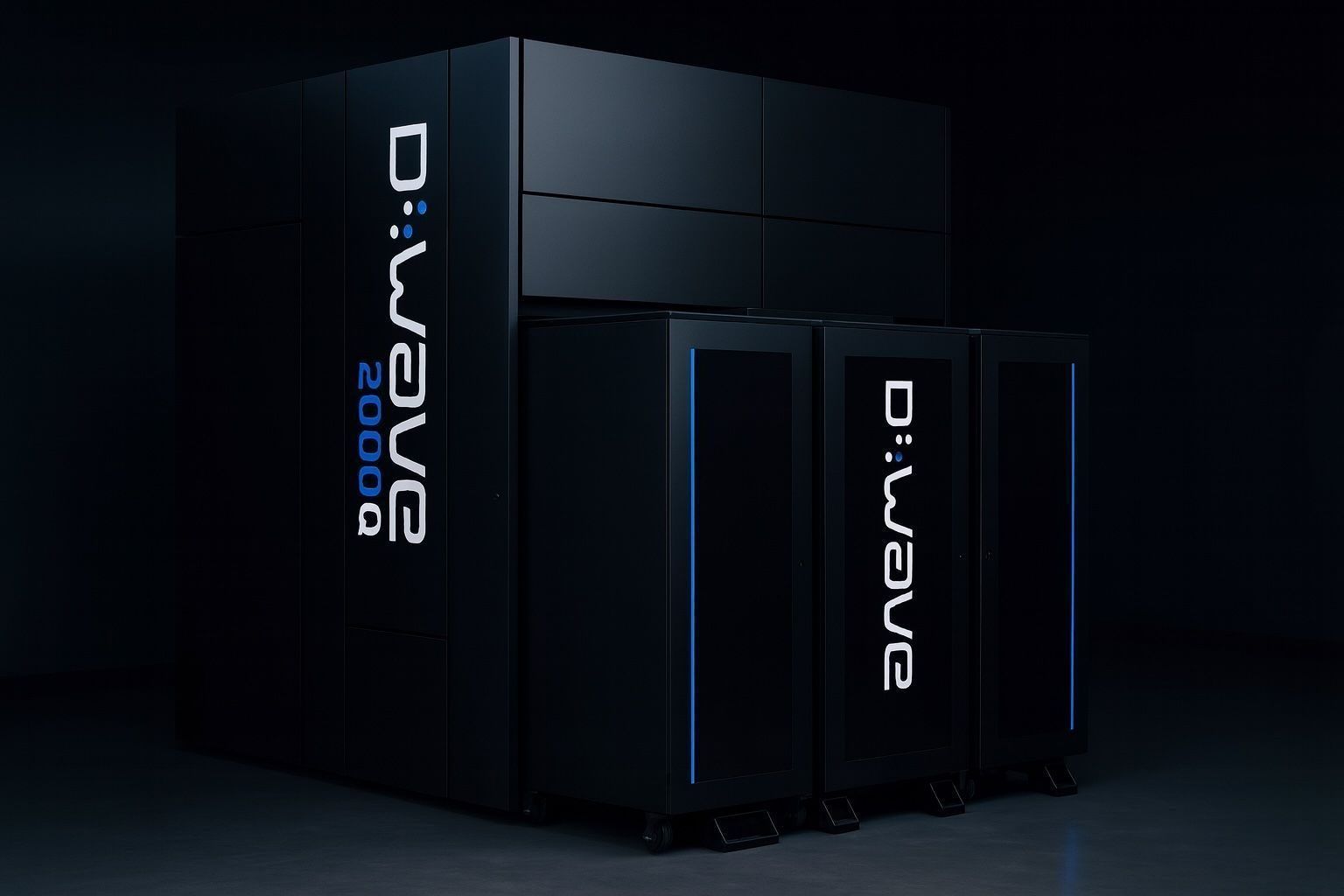
- The announcement follows the recent news that D‑Wave’s Advantage2 quantum computer is now operational at Davidson Technologies’ headquarters in Huntsville, Alabama, where it is expected to support mission‑critical U.S. government problems and eventually run sensitive applications. [7]
TipRanks reports that QBTS shares rose about 1.8% in pre‑market trading on the back of this announcement, as investors reacted to the possibility of deeper, more coordinated engagement with U.S. defense and federal customers. [8]
For a company that has already leaned heavily into defense, aerospace, logistics and optimization use‑cases, formalizing a U.S. government unit is a logical step — and one that could help convert earlier pilots and proofs‑of‑concept into longer‑term, higher‑value contracts.
D‑Wave’s Position in the Quantum Computing Race
D‑Wave bills itself as the world’s first commercial supplier of quantum computers and the only company building both annealing and gate‑model quantum systems. [9]
In practice, that means:
- Today’s core offering is annealing‑based quantum computers and hybrid solvers, tuned for difficult optimization problems in logistics, scheduling, manufacturing, AI inference and financial modeling. [10]
- In parallel, D‑Wave is developing a gate‑model platform, including fluxonium qubits and cryogenic control chips that aim to deliver a scalable, universal gate‑based system over time. [11]
Competitors like IonQ (IONQ) and Rigetti (RGTI) emphasize gate‑model architectures using different physical qubit implementations, while big tech players (Alphabet, Microsoft, IBM and others) integrate quantum capabilities into their cloud stacks. [12]
D‑Wave’s “practical now” pitch — sell annealing systems and cloud access that solve real optimization problems today, while funding the longer‑term gate‑model roadmap — is central to the bull case for QBTS.
Q3 2025 Earnings: Revenue Doubles, Losses Still Large
D‑Wave’s latest reported quarter is Q3 FY2025 (results released November 6, 2025), and the numbers help explain both the excitement and the concern around QBTS. [13]
Key highlights:
- Revenue:
- Bookings:
- Q3 bookings were $2.4 million, with an additional $12+ million in bookings closed after quarter‑end, underscoring ongoing deal flow. [16]
- Customers:
- Over the last four quarters, D‑Wave had more than 100 revenue‑generating customers, including nearly two dozen Forbes Global 2000 companies. [17]
- Margins:
- GAAP gross margin jumped to 71.4% in Q3 (vs. 55.8% a year ago), while non‑GAAP gross margin reached 77.7%, helped by high‑margin system upgrades such as the Advantage2 installation at Germany’s Jülich Supercomputing Centre. [18]
- Losses:
- GAAP net loss in Q3 was a daunting $140 million, largely driven by about $121.9 million in non‑cash warrant‑related remeasurement charges and realized losses as QBTS and its warrants spiked in value. [19]
- Adjusted net loss (excluding warrant revaluation) improved to $18.1 million, or $0.05 per share, from $23.2 million ($0.12 per share) a year earlier. [20]
- Cash and balance sheet:
- As of September 30, 2025, D‑Wave reported $836.2 million in cash, up from just $29.3 million a year earlier, primarily due to multiple capital raises and warrant exercises. [21]
Independent analysis from TechStock² and StockAnalysis estimates that over the last twelve months D‑Wave generated roughly $24 million in revenue but close to $400 million in net losses, leaving the business with losses more than 16× sales on a trailing basis. TechStock²
In plain English: the top line is growing quickly and margins are strong, but the company is still burning substantial cash to fund R&D, sales, and its capital‑intensive roadmap.
Other 2025 Catalysts: Europe, Warrants and a Quantum ETF
Beyond today’s government‑unit news, several key 2025 milestones are still shaping sentiment around QBTS:
€10 Million Advantage2 Deal in Italy
In mid‑October, D‑Wave signed a €10 million multi‑year agreement with Swiss Quantum Technology SA (SQT) to deploy an Advantage2 annealing quantum computer in Lombardy, Italy, supporting the region’s new Q‑Alliance initiative and a state‑of‑the‑art quantum research facility. [22]
The deal gives SQT access to 50% of the system’s capacity for five years, with an option to purchase the full system, and reinforces D‑Wave’s positioning as a key player in Europe’s emerging quantum infrastructure. [23]
Redemption of Public Warrants
On November 21, D‑Wave completed the redemption of all outstanding public QBTS warrants, resulting in: TechStock²
- About 4.75 million warrants exercised at $11.50 per share, generating approximately $54.6 million in cash and adding around 6.9 million new common shares.
- Remaining warrants redeemed for $0.01 each; no public warrants remain outstanding.
This move strengthened the balance sheet and simplified the capital structure, but also introduced meaningful share dilution, one reason the stock has been so volatile into late November. TechStock²
Launch of GraniteShares YieldBoost QBTS ETF (QBY)
Adding a layer of complexity, GraniteShares recently launched the YieldBoost QBTS ETF (ticker: QBY), an options‑driven product explicitly tied to D‑Wave’s stock. The fund writes options on a leveraged QBTS vehicle with the goal of generating income while providing capped upside tied to QBTS’s performance. [24]
Practically, that means more derivatives trading linked to QBTS, which can amplify intraday swings as market makers hedge options exposure — a dynamic that may further intensify the stock’s already extreme volatility.
Quantum Stock Meltdown: November’s Harsh Reality Check
November brought a sharp sector‑wide rewind for quantum computing names:
- A TradingView/GuruFocus recap notes that Rigetti fell ~40%, D‑Wave more than 30%, IonQ about 25%, and Quantum Computing Inc. more than 25% from recent highs during the month. [25]
- The pullback followed heavy gains earlier in 2025 that pushed valuations far ahead of near‑term revenue, as investors refocused on persistent operating losses, ongoing capital needs and dilution risk. [26]
In late November, Motley Fool–syndicated commentary (via Sharewise) highlighted that QBTS shares had plunged close to 50% from early October levels, while still being up more than 170% year‑to‑date, framing D‑Wave as a high‑risk, high‑reward story that may be too speculative for many investors. [27]
Wall Street’s View: Strong Upside Targets, Wide Disagreement
Analyst and blogger coverage of D‑Wave has exploded alongside the stock price. The headline message: most forecasts see upside from today’s levels, but the range of opinion is huge.
TipRanks: Strong Buy, Big Upside
A fresh December 2 article on TipRanks pegs QBTS as a “Strong Buy”: [28]
- Consensus rating: Strong Buy based on nine Buy ratings.
- Average 12‑month price target: about $38.89, implying roughly 80% upside from current prices.
- TipRanks notes that QBTS shares have already gained over 155% year‑to‑date in 2025.
MarketBeat: Moderate Buy, More Conservative Targets
MarketBeat’s forecast page, which aggregates 13 analyst ratings, shows a slightly more cautious stance: [29]
- Consensus rating: “Moderate Buy” – 11 Buy, 1 Hold, 1 Sell.
- Average price target: $28.67, about 31% above the quoted price of $21.84.
- Target range: $9 to $41, underscoring how divisive the stock is.
Other Aggregators & Valuation Screens
Other data providers add further nuance:
- StockAnalysis data (via TechStock²) shows 11 analysts rating QBTS “Strong Buy” with a consensus 12‑month target around $27–28, implying roughly 20–25% upside from the low‑$20s. TechStock²
- GuruFocus calculates a target price near $36.4 and a price‑to‑sales multiple around 258×, versus a historical median P/S near 29× — a sign that shares trade at a very rich valuation by its own history. [30]
- TechStock² and FinViz‑referenced data suggest an enterprise‑value‑to‑sales multiple in the ~250–300× range and a market cap near $7.7–7.8 billion, backed by trailing revenue in the mid‑$20 million area. TechStock²+2StockAnalysis+2
The takeaway: most published price targets are above today’s stock price – sometimes far above – but they disagree wildly on how much upside is realistic.
What the Bulls Like About QBTS
Recent bullish commentary from outlets like The Motley Fool, Nasdaq/24‑7 Wall St., Zacks and TechStock² tends to focus on a few recurring themes: sharewise.com+3TechStock²+324/7 Wall St.+3
- Real customers and real use‑cases today
- Over 100 paying customers, including airlines, semiconductor fabs, banks, chemical companies and police forces, are using D‑Wave’s systems for optimization tasks like workforce scheduling, routing, manufacturing workflows and incident response planning. [31]
- Rapid revenue and margin acceleration
- Revenue doubled year‑over‑year in Q3, nine‑month revenue is up over 200%, and both gross profit and gross margin have improved significantly as cloud and system utilization increase. [32]
- Technological differentiation
- D‑Wave is one of the few companies combining large‑scale annealing systems (over 4,400 qubits on Advantage2) with a serious gate‑model program, giving it both near‑term commercial relevance and long‑term optionality. [33]
- Huge cash war chest, low debt
- With more than $800 million of cash and a relatively low debt‑to‑equity ratio (~0.06), D‑Wave appears well funded for several years of R&D and go‑to‑market investment, especially after warrant exercises and the ETF‑related buzz. [34]
- Growing government and defense interest
- Today’s U.S. government unit, the operational Advantage2 system in Alabama, and deals in Europe signal that quantum optimization is moving from lab experiments into national‑level infrastructure and defense planning. [35]
For bullish investors, QBTS is a way to bet on quantum computing becoming commercially important sooner than many expect — with D‑Wave already showing tangible traction.
What the Bears Worry About
On the other side, more cautious analyses from GuruFocus, Simply Wall St., Seeking Alpha and several Motley Fool pieces emphasize serious risks: [36]
- Extreme Valuation vs. Tiny Revenue
- A P/S multiple in the high‑200s, EV/sales around 250–300×, and trailing revenue in the mid‑$20 million range mean D‑Wave is priced for very aggressive growth and eventual profitability that is far from guaranteed. [37]
- Persistent Losses and Cash Burn
- Even adjusting for warrant noise, adjusted net loss and EBITDA loss remain large. The business still depends heavily on external capital, large contracts and favorable markets to fund operations. [38]
- Dilution and Insider Selling
- The warrant redemption added millions of shares, and a high‑profile CFO sale of roughly $4.6 million worth of stock in late November has been flagged as a potential red flag, even if it may simply reflect diversification after a huge run‑up. TechStock²+1
- Sector Uncertainty and Competition
- Quantum computing timelines are uncertain, and there is no guarantee that annealing or D‑Wave’s approach will dominate. Tech giants with deep pockets might ultimately capture much of the value, leaving smaller pure‑plays with limited long‑term share. TechStock²+224/7 Wall St.+2
- Hyper‑Volatility and High Short Interest
- TechStock² cites short interest near 19% of free float, while November’s “quantum meltdown” demonstrated how quickly sentiment can reverse. TechStock²+1 For risk‑averse investors, such swings can be hard to stomach.
A new Motley Fool piece published today, titled “Down 49%, Should You Buy the Dip on D‑Wave Quantum?”, underscores that even a 50% drawdown from recent highs may not make the stock “cheap” given its valuation and execution risks. [39]
Key Questions for Investors After the U.S. Government Unit Launch
After today’s announcement, here are some of the big questions market participants are likely to focus on:
- Will the new U.S. government unit translate into material, recurring revenue?
It’s one thing to have a dedicated business unit and a mission‑critical system in Alabama; it’s another to show multi‑year, high‑margin contracts across agencies that move the revenue needle. [40] - Can D‑Wave sustain 100%+ growth without proportionally higher losses?
Investors will watch whether future quarters show revenue compounding faster than operating expenses, even if GAAP profitability remains years away. [41] - How will derivatives (like QBY) and high short interest shape price behavior?
New options‑linked ETFs and elevated short interest create a setup where sudden squeezes and sharp sell‑offs are both very possible around news and earnings. TechStock²+1 - What happens if quantum hype cools again?
November’s meltdown showed that when macro risk appetite fades, speculative high‑multiple names like QBTS can reprice quickly. Future sector sentiment will likely hinge on progress not just from D‑Wave, but from the entire quantum ecosystem. [42] - Does the gate‑model program deliver – and how fast?
D‑Wave’s long‑term upside may depend on whether it can successfully commercialize a competitive gate‑model platform while maintaining its lead in annealing‑based optimization. [43]
Bottom Line: QBTS Stock on December 2, 2025
As of December 2, 2025, QBTS sits at a fascinating crossroads:
- The bull story is stronger than ever:
Fast‑growing revenue, improving margins, a massive cash pile, marquee contracts in Europe and the U.S., and now a high‑profile U.S. government business unit signal that D‑Wave is more than just a science experiment. - The bear story is just as loud:
A valuation that prices in years of flawless execution, ongoing heavy losses, complex equity financing, insider selling and intense competition all point to significant downside risk if growth or sentiment wobbles.
Most analyst targets still sit above today’s price, some dramatically so, but they span a huge range — from single‑digit dollars to the low‑$40s — which by itself is a reminder that nobody has a clear crystal ball here. [44]
For market participants, QBTS today looks like a high‑beta, high‑conviction bet on quantum computing commercialization:
- It may appeal to speculative, long‑term investors who are comfortable with sharp drawdowns, complex capital structures and binary‑like technology risk.
- It may be too volatile and richly valued for those seeking predictable cash flows or more traditional valuation anchors.
As always, this article is informational only and not financial advice. Anyone considering an investment in QBTS should carefully review D‑Wave’s SEC filings, earnings transcripts and independent research, and weigh the potential upside of quantum computing against the very real possibility of further volatility and capital losses.

References
1. www.investing.com, 2. www.nasdaq.com, 3. www.sharewise.com, 4. www.dwavequantum.com, 5. www.dwavequantum.com, 6. www.dwavequantum.com, 7. www.dwavequantum.com, 8. www.tipranks.com, 9. www.dwavequantum.com, 10. www.dwavequantum.com, 11. www.dwavequantum.com, 12. www.tradingview.com, 13. www.dwavequantum.com, 14. www.dwavequantum.com, 15. www.dwavequantum.com, 16. www.dwavequantum.com, 17. www.dwavequantum.com, 18. www.dwavequantum.com, 19. www.dwavequantum.com, 20. www.dwavequantum.com, 21. www.dwavequantum.com, 22. www.dwavequantum.com, 23. www.dwavequantum.com, 24. stockanalysis.com, 25. www.tradingview.com, 26. www.tradingview.com, 27. www.sharewise.com, 28. www.tipranks.com, 29. www.marketbeat.com, 30. www.gurufocus.com, 31. www.dwavequantum.com, 32. www.dwavequantum.com, 33. www.dwavequantum.com, 34. www.dwavequantum.com, 35. www.dwavequantum.com, 36. www.gurufocus.com, 37. www.gurufocus.com, 38. www.dwavequantum.com, 39. www.sharewise.com, 40. www.dwavequantum.com, 41. www.dwavequantum.com, 42. www.tradingview.com, 43. www.dwavequantum.com, 44. www.marketbeat.com