
WASHINGTON, June 28, 2026, 09:05 (EDT)
- U.S. agencies sent in letters of interest totalling $1.6 billion, which is about 145% of the project’s estimated $1.1 billion cost
- Skyline is now trading under the Nasdaq ticker KAZR. Its merger with Cove Kaz is still waiting on approvals.
- A report on Sunday said Trump’s and Lutnick’s sons had either investment or banking exposure tied to the deal.
- Policy could help, but investors still face early-stage mine risk
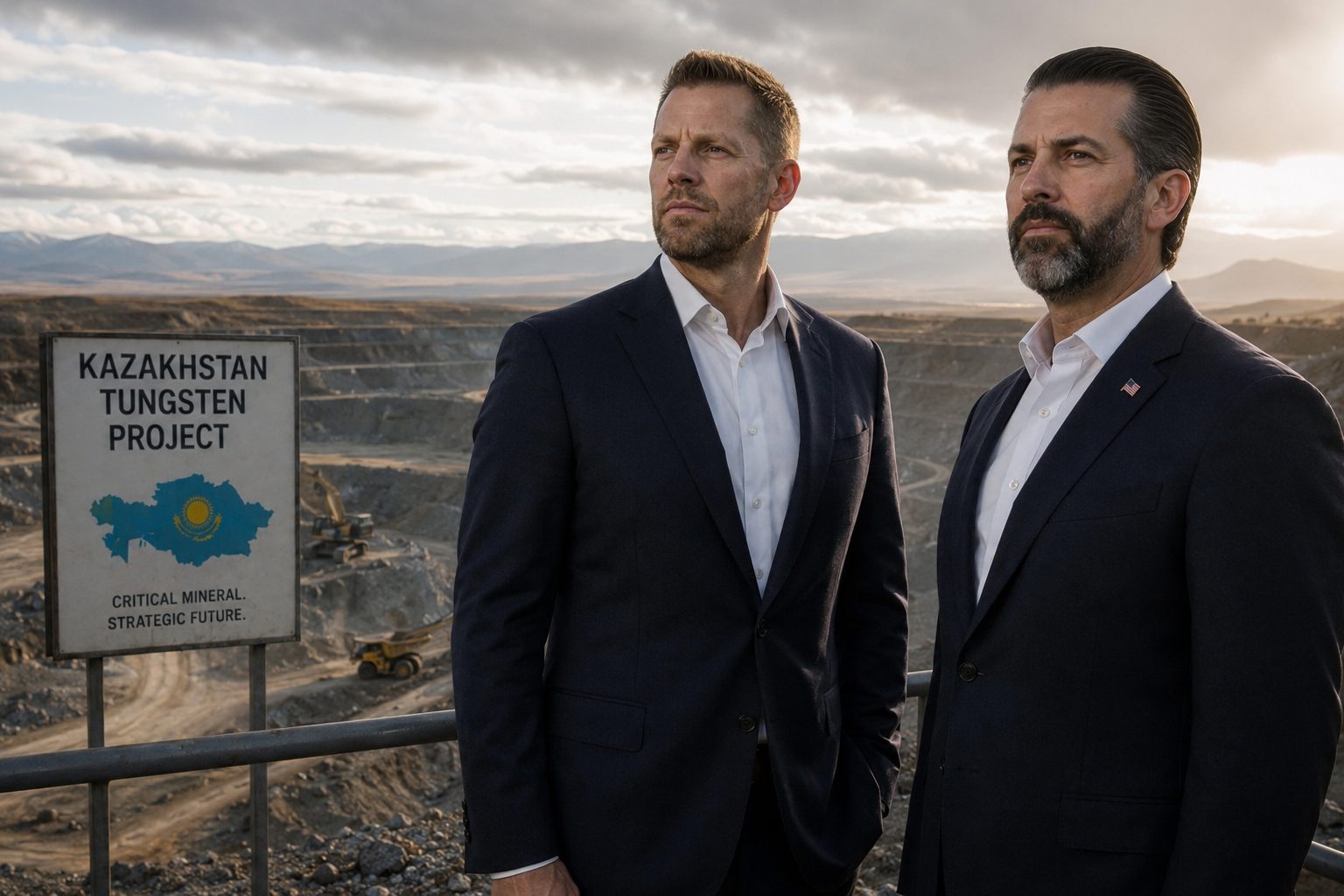
Skyline Builders Group Holding Ltd NASDAQ:KAZR says it has $1.6 billion in letters of interest from the U.S. Export-Import Bank and Development Finance Corporation for its Kazakhstan tungsten project. That’s about 145% of what KAZR estimates the project will cost—around $1.1 billion. There are no signed agreements for loans, guarantees, or equity so far.
The financing deal is still not binding. Investors are watching the size. Company filings put output from the Northern Katpar and Upper Kairakty projects at 12,000 metric tons a year, about 15% of current global tungsten supply. Cove Kaz holds 70%. Kazakhstan’s Tau-Ken Samruk owns 30%.
Trump sons Donald Trump Jr. and Eric Trump put money into the Kazakhstan project via Dominari Securities, per a Sunday OnTimeBrief summary that cited The New York Times and SEC filings. Cantor Fitzgerald, run by Howard Lutnick’s sons Brandon and Kyle, helped ASP Isotopes Inc NASDAQ:ASPI raise $210 million. OnTimeBrief reported the Times found links tying the Trump and Lutnick families to at least 14 mining firms that got or sought more than $8.9 billion in federal funds.
Donald Trump Jr. and Eric Trump don’t show up in public filings as holding a direct 20% stake in Kaz Resources. Dominari Holdings Inc NASDAQ:DOMH lists both as 5.96% beneficial owners, according to a filing. Dominari also reported an investment in American Ventures LLC Series XIX, a fund linked to Skyline Builders Group Holdings.
Skyline changed its Nasdaq ticker from SKBL to KAZR on June 17 as it works to combine with Cove Kaz. The company said the merger still needs approval of a Form S-4, regulators, and some other requirements. The companies expect to close the deal before the end of 2026.
KAZR finished the U.S. session at $3.00. Volume came in at 370,373 shares. U.S. equity markets were already shut for the weekend when the session ended.
Investors are looking for policy support to turn into real project spending. The $1.6 billion deal breaks down to about $133,000 a ton of tungsten a year. Add in the $400 million the company asked from the Pentagon’s Office of Strategic Capital, as the Financial Times wrote last month, and public support could reach $2 billion—roughly 182% of the project cost.
Cove Kaz executive chairman Pini Althaus said in the April merger announcement that the deal will support efforts to “develop and construct mining and processing projects throughout Kazakhstan.” Paul E. Mann, executive chairman at Skyline and ASP Isotopes, said Cove Kaz has expanded its platform with joint ventures and land concessions in Kazakhstan.
In February, Althaus called Northern Katpar and Upper Kairakty “a cornerstone” for U.S.-Kazakhstan industrial work. Dominic Heaton, CEO of Cove Kaz, said the next steps are feasibility studies, engineering, permits, and planning for construction. Business Wire
Kaz Resources says its ore body is large. The company reports 1.4 million tonnes of tungsten trioxide in its listed deposits, claiming that’s about 70% of all Kazakhstan’s tungsten resources. Output targets are 5,000 tonnes a year at Northern Katpar and 7,000 tonnes a year at Upper Kairakty.
Mining analysts say bigger does not always mean better cash flow. Christopher Ecclestone, a mining strategist at Hallgarten & Company, told the FT the Pentagon is willing to pay for tungsten “at all prices.” Quentin Lamarche, CEO of TechMet SCM, said the Kazakh deposits are “very early stage” and will require “a lot of time and money.” Financial Times
Political risk is on the table. In March, Representative Maxine Dexter, the top Democrat on the House Natural Resources Oversight and Investigations Subcommittee, tried to subpoena Donald Trump Jr. over federal backing for Vulcan Elements. Republicans blocked the move.
Donald Trump Jr.’s spokesman told the FT he’s just a passive investor in American Ventures and doesn’t get involved in federal government issues for companies he backs or advises. The Financial Times said it found no sign Donald Trump Jr. or Eric Trump knew Cove was close to winning U.S. support when they put money into Skyline, or that either Trump son had any sway over the decision.
Related articles: Stock Market