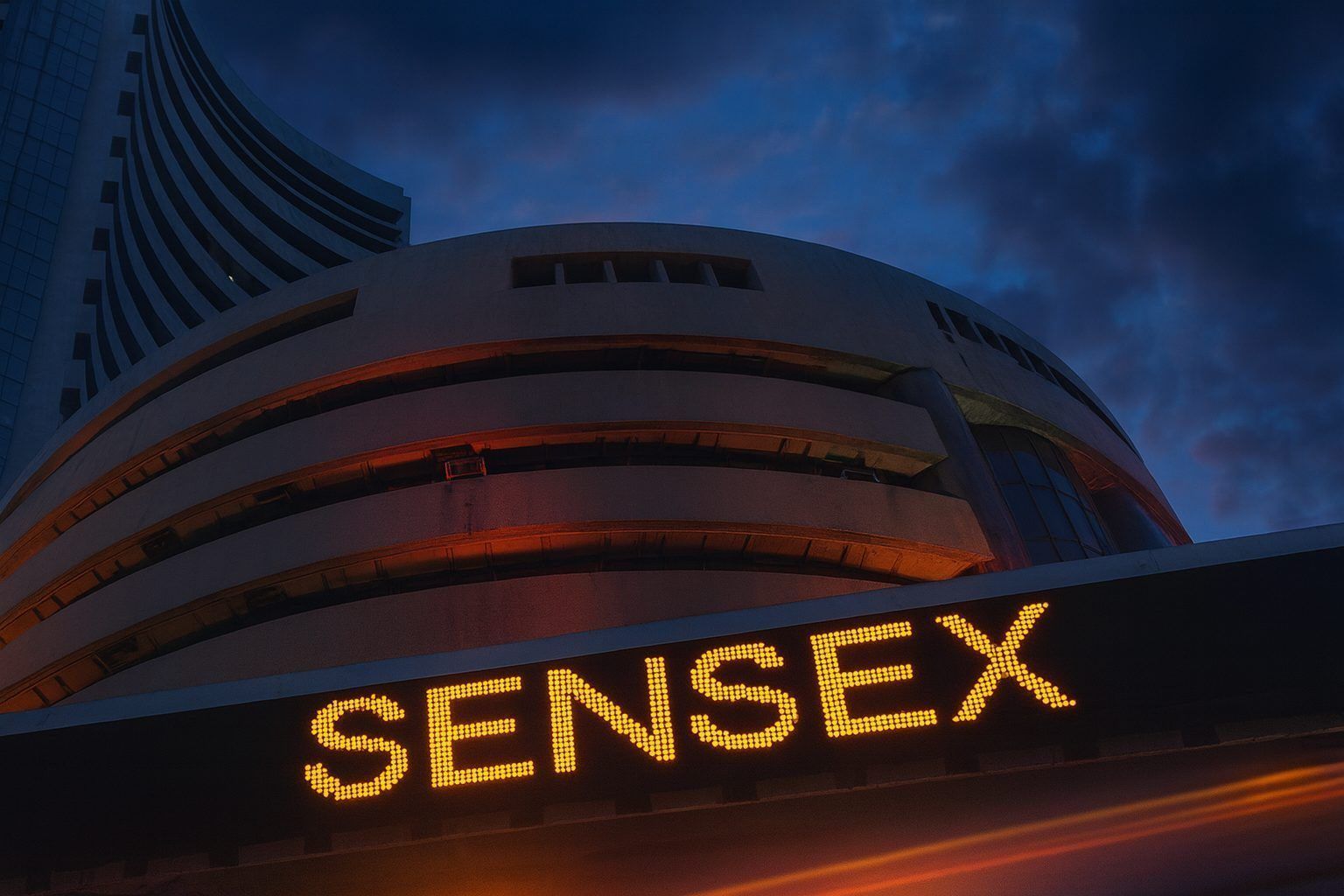
Mumbai, December 3, 2025 — Indian stock markets ended lower for the fourth straight session on Wednesday, but a sharp late‑session rebound in IT and banking stocks helped the Sensex and Nifty claw back a large part of their intraday losses. The relief rally came even as the rupee crashed through the ₹90 per US dollar mark for the first time, foreign investors continued to pull money out of equities, and traders stayed cautious ahead of the RBI’s Monetary Policy Committee (MPC) decision on Friday. [1]
Sensex and Nifty 50 Today: How the Market Closed
By the closing bell on 3 December 2025:
- BSE Sensex slipped 31.46 points (‑0.04%) to 85,106.81, after having fallen as much as 374 points intraday to 84,763.64.
- Nifty 50 fell 46.20 points (‑0.18%) to 25,986, staying just below the psychologically important 26,000 mark. [2]
This marks the fourth consecutive negative session for both benchmarks, which have now retreated roughly 0.9% (Nifty) and 0.7% (Sensex) from their record highs hit on November 27, according to Reuters data. [3]
In the broader market:
- The BSE Midcap index dropped around 1%,
- The BSE Smallcap index slipped about 0.4%,
highlighting that the selling pressure remained more intense outside the frontline blue chips. [4]
Yet, the session was anything but quiet. At one point, benchmark indices were down nearly 0.4–0.5% intraday before short‑covering and value buying narrowed the damage into the close. [5]
How Trade Evolved Through the Day on Dalal Street
Early trade:
The day started on a soft, almost sleepy note. As per The Times of India, the Nifty 50 opened just above the 26,000 mark, while the Sensex hovered near 85,100, with both indices down only about 0.03–0.08% around 9:16 am amid weak global cues. [6]
Mid‑session sell‑off:
- As the rupee began sliding deeper into record territory and concerns intensified about delays in the India–US trade deal, selling pressure intensified across rate‑sensitive sectors and cyclicals. [7]
- Reuters reported that, at one point, the Nifty was down around 0.45% and the Sensex about 0.39%, underscoring the extent of mid‑day risk‑off sentiment. [8]
Late rebound:
The recovery in the last hour of trade was sharp enough that Moneycontrol described the Sensex as closing roughly 350 points above its intraday low, with the Nifty climbing back to just under the 26,000 mark. [9]
Despite that bounce, the headline indices still finished in the red — a classic “bad day, good close” kind of session, where the tape looked ugly for most of the day but the final prints were substantially less alarming than intraday lows suggested.
Three Main Drivers Behind the Intraday Rebound
Moneycontrol highlighted three key forces that helped Dalal Street pull back from the brink. [10]
1. IT Stocks Rally on Rupee Crash
The surprise hero of the day was the Nifty IT index, which turned into the top sectoral gainer:
- The Nifty IT index climbed about 1% to around 37,885 in late morning trade.
- Wipro jumped over 2%,
- TCS gained nearly 2%,
- Infosys, Mphasis and Tech Mahindra were all up around 1%, while most other large IT names traded in the green. [11]
The trigger: the rupee’s plunge beyond 90 per dollar. A weaker rupee boosts dollar‑denominated revenues of IT exporters when translated back into rupees, and currency experts cited persistent equity outflows and uncertainty around the India–US trade deal as a key reason for the latest leg of depreciation. [12]
Brokerage commentary picked up by Moneycontrol suggested that IT services may be near an “inflection point” over the next 6–9 months, with some houses upgrading names like Infosys, Mphasis, Zensar Tech and Wipro, arguing that the sector is trading at relatively attractive valuations after a tough couple of years. [13]
2. Value Buying After Four Down Days
With the indices having drifted lower for days from record highs, bargain hunters finally showed up:
- Analysts quoted by Moneycontrol noted that investors used the intraday dip to accumulate beaten‑down banking and IT names, particularly high‑quality large caps. [14]
- Some domestic institutions and retail investors appeared to be stepping in where foreign portfolio investors (FPIs) have been exiting, as systematic investment flows continue into equity funds. [15]
This “buy the dip” appetite wasn’t strong enough to reverse the day’s losses, but it did help prevent a more severe correction.
3. Banking Stocks Stabilise After Earlier Pounding
Banking stocks, which had been under sustained pressure in recent sessions, finally found some footing:
- The Bank Nifty index ended the day higher, snapping a two‑day losing streak, according to Moneycontrol’s closing wrap. [16]
- Public sector banks (PSBs) had been hit earlier in the week after the government clarified that it has no current proposal to raise the foreign direct investment (FDI) cap in state‑owned banks from 20% to 49%, undercutting previous media speculation that had fuelled a sharp rally in PSU bank shares. [17]
As selling eventually exhausted, short‑covering and bottom‑fishing in both private lenders and PSBs helped the indices climb off their lows, even if overall sentiment toward financials remains fragile.
Rupee Breaches 90/USD: Why Currency Moves are Spooking Equity Investors
If there was a single macro variable haunting Dalal Street today, it was the rupee.
Record‑Low Rupee and India–US Trade Jitters
The Indian rupee:
- Opened near 89.96,
- Slipped past the ₹90 per US dollar mark,
- Briefly traded around 90.20–90.25 intraday,
- And was last seen closing just above 90.15–90.20 against the greenback. [18]
A Times of India explainer stressed the significance of the ₹90 level as a major psychological barrier:
- Traders see a cluster of buy‑stop orders above 90, meaning a sustained break could quickly accelerate the move toward 91 or higher.
- Forex strategists warned that if the RBI allows speculators to feel too confident about a one‑way move, rupee volatility could spike. [19]
The rupee has already lost more than 4% year‑to‑date, with around 0.8% of that slide occurring in November alone, despite the US dollar index actually weakening in that period — a sign that India‑specific factors such as trade‑deal uncertainty, weak portfolio inflows and an elevated trade deficit are playing a big role. [20]
Foreign Outflows and the “Darling No More” Narrative
Reuters data show FPIs have pulled out roughly ₹98.6 billion (about $1.1 billion) from Indian equities over the last four sessions alone, coinciding with the rupee’s latest breakdown. [21]
A separate analysis in the Financial Times notes that in 2025, Indian equities (measured by the MSCI India index) are up only about 2.5% in dollar terms, sharply lagging the MSCI Emerging Markets index, which has surged nearly 27.7%, making this the worst relative performance versus EM peers in over three decades. The FT attributes this underperformance to: [22]
- $16 billion‑plus FPI outflows,
- High valuations versus peers,
- Weaker‑than‑hoped earnings and growth at times,
- Limited participation in the global AI‑driven tech rally,
- And the rupee being one of Asia’s weakest major currencies this year.
Despite that, big global houses like Goldman Sachs and HSBC have reportedly upgraded Indian equities to “overweight” for 2026, expecting a return of foreign capital as earnings and reforms kick in. [23]
For now, though, the combination of a sliding rupee and sustained FPI selling is a toxic cocktail for sentiment, especially in financials, consumption and import‑heavy sectors.
Macro Backdrop: From 8.2% GDP Growth to RBI Policy Nerves
Curiously, the latest bout of volatility comes just days after impressive GDP data.
Strong GDP, Narrow Equity Rally
On 1 December, the Times of India reported that better‑than‑expected Q2 FY25 GDP growth of 8.2% — driven by robust manufacturing, services and consumption — helped push the Nifty 50 above 26,250 and the Sensex close to 86,000, extending what had then been a three‑week winning streak and a series of lifetime highs. [24]
However, analysts highlighted several important nuances:
- The rally has been narrow, heavily concentrated in about eight heavyweight stocks — including HDFC Bank, Reliance Industries, ICICI Bank, Bharti Airtel, L&T, ITC, Infosys and SBI — which together make up roughly half of the Nifty’s weight.
- Around 330 stocks in the NSE 500 were still below their September 2024 peaks, meaning many retail portfolios haven’t fully participated in the index’s headline records. [25]
This narrow leadership explains why even modest profit‑taking and FPI selling can quickly drag down the benchmarks, particularly when the rupee is under pressure.
RBI MPC: Will the Central Bank Blink?
The RBI’s three‑day MPC meet began today, with the decision due on Friday, 5 December. [26]
Market expectations are finely balanced:
- The strong GDP print has reduced the perceived urgency for a rate cut, as several economists argue the economy is “firing on all cylinders” and doesn’t need extra monetary stimulus. [27]
- On the flip side, slowing industrial output, softer GST collections for October and a weak rupee mean a more dovish tone — or even a small cut — could be justified to support growth and address currency‑driven financial conditions. [28]
Currency strategists quoted by TOI warn that an RBI rate cut this week could invite further selling of the rupee, possibly pushing it closer to ₹91 per dollar if not accompanied by other stabilising measures. [29]
For now, traders appear to be hedging their bets, staying light on risk and using intraday rallies more to book profits than aggressively chase fresh highs.
Sector and Stock Movers: IT Shines, Financials Try to Stabilise, Midcaps Struggle
IT: Beneficiary of a Weak Currency
As noted earlier:
- Nifty IT +≈1%,
- Wipro rallied over 2%,
- TCS gained close to 2%,
- Infosys, Mphasis, Tech Mahindra and several others added around 1%. [30]
Analysts argue that with IT sector valuations now near multi‑year lows relative to history, and with brokerages like Motilal Oswal expecting an earnings upcycle by FY27–FY28 as enterprise AI and cloud spending broadens, the space offers asymmetric upside if global growth remains supportive. [31]
Banks and Financials: From Pain to Mild Relief
The picture in financials remains mixed:
- On Tuesday (2 December), Indian benchmarks had fallen about 0.45–0.46%, led by selling in major private lenders like HDFC Bank and ICICI Bank, both down around 1.3–1.4%, as investors booked profits near record highs. [32]
- Today, some of that pressure eased as value buyers stepped in and Bank Nifty turned positive by close, even as overall indices ended lower. [33]
Public sector banks remain in the spotlight after the government refuted talk of a near‑term FDI limit hike or major PSB mergers, cooling earlier excitement that had driven PSU bank stocks sharply higher. [34]
Broader Market: Risk‑Off in Mid and Small Caps
Both mid‑cap and small‑cap indices underperformed the frontline benchmarks:
- Reuters and Moneycontrol data point to declines of around 0.8–1% in mid‑ and small‑cap indices at various points in the session, reflecting broader risk‑off outside high‑quality blue chips. [35]
- Several experts, including those cited by TOI’s morning market note, emphasised that smallcaps as a segment remain richly valued, advising investors to favour large‑ and quality mid‑cap names in the current environment. [36]
Technical Picture: Key Nifty and Sensex Levels to Watch
Technical analysts remain cautious but not outright bearish.
Moneycontrol cited Sudeep Shah of SBI Securities, who highlighted the following Nifty 50 zones: [37]
- Support:
- Immediate support is seen in the 25,830–25,800 area.
- A decisive break below 25,800 could open the door to deeper declines toward 25,650 and then 25,500.
- Resistance:
- On the upside, resistance is placed in the 26,050–26,100 range.
- TOI’s morning note also flagged a broader resistance near 26,325, suggesting any bounce toward that zone may be used by traders to book profits rather than initiate fresh longs. [38]
In short, the index is currently sandwiched between strong support just below current levels and stiff resistance slightly above, with Thursday’s trade likely to be heavily influenced by:
- RBI policy expectations,
- Currency moves, and
- Incoming headlines on the India–US trade deal.
Standard reminder: these levels are used by traders as reference zones and are not guaranteed turning points or investment advice.
What It All Means for Investors
Putting all the pieces together, today’s session tells a nuanced story:
- Trend still up, but momentum has faded:
Even after four straight down days, the Sensex and Nifty remain not far from their all‑time highs, but upside momentum has clearly weakened as valuations, currency risk and global uncertainty catch up with the rally. [39] - Currency and foreign flows matter more than ever:
The rupee’s slide beyond 90/USD and nearly ₹100 billion of FPI outflows in just four sessions have become central to market psychology. Equity investors are watching USD/INR as closely as they watch the Nifty chart. [40] - IT is back on the radar, banks remain a swing factor:
With the rupee helping exporters and valuations turning more reasonable, IT stocks are emerging as a relative safe harbour. At the same time, banks — especially large private lenders and PSBs — remain the key swing sector that can make or break any near‑term recovery rally. [41] - RBI and the India–US trade deal are the next big catalysts:
- A status‑quo RBI with a balanced tone on inflation, growth and the rupee could stabilise sentiment.
- Any clarity around the bilateral trade agreement with the US that reduces tariff uncertainty could help both the currency and equities. [42]
- 2026 narrative may still be constructive, even if 2025 feels underwhelming:
While 2025 is shaping up to be one of the weakest years for India relative to EM peers in three decades, major global strategists cited by the FT expect earnings and reforms to support a re‑rating in 2026, especially if the rupee stabilises and foreign flows return. [43]

References
1. www.moneycontrol.com, 2. www.moneycontrol.com, 3. www.reuters.com, 4. www.moneycontrol.com, 5. www.reuters.com, 6. timesofindia.indiatimes.com, 7. www.reuters.com, 8. www.reuters.com, 9. www.moneycontrol.com, 10. www.moneycontrol.com, 11. www.moneycontrol.com, 12. www.moneycontrol.com, 13. www.moneycontrol.com, 14. www.moneycontrol.com, 15. www.ft.com, 16. www.moneycontrol.com, 17. www.moneycontrol.com, 18. www.moneycontrol.com, 19. timesofindia.indiatimes.com, 20. timesofindia.indiatimes.com, 21. www.reuters.com, 22. www.ft.com, 23. www.ft.com, 24. timesofindia.indiatimes.com, 25. timesofindia.indiatimes.com, 26. timesofindia.indiatimes.com, 27. timesofindia.indiatimes.com, 28. www.reuters.com, 29. timesofindia.indiatimes.com, 30. www.moneycontrol.com, 31. www.moneycontrol.com, 32. www.reuters.com, 33. www.moneycontrol.com, 34. www.business-standard.com, 35. www.reuters.com, 36. timesofindia.indiatimes.com, 37. www.moneycontrol.com, 38. timesofindia.indiatimes.com, 39. www.reuters.com, 40. www.reuters.com, 41. www.moneycontrol.com, 42. www.reuters.com, 43. www.ft.com