
YOKOTA AIR BASE, Japan, June 21, 2026, 23:06 (JST)
- The U.S. Air Force said its seasonal Global Hawk deployment at Yokota is now permanent.
- Washington and Tokyo now get a steadier ISR platform near contested Pacific air and sea lanes.
- Local resistance to permanent drone operations is the main risk, despite the drones being unarmed.
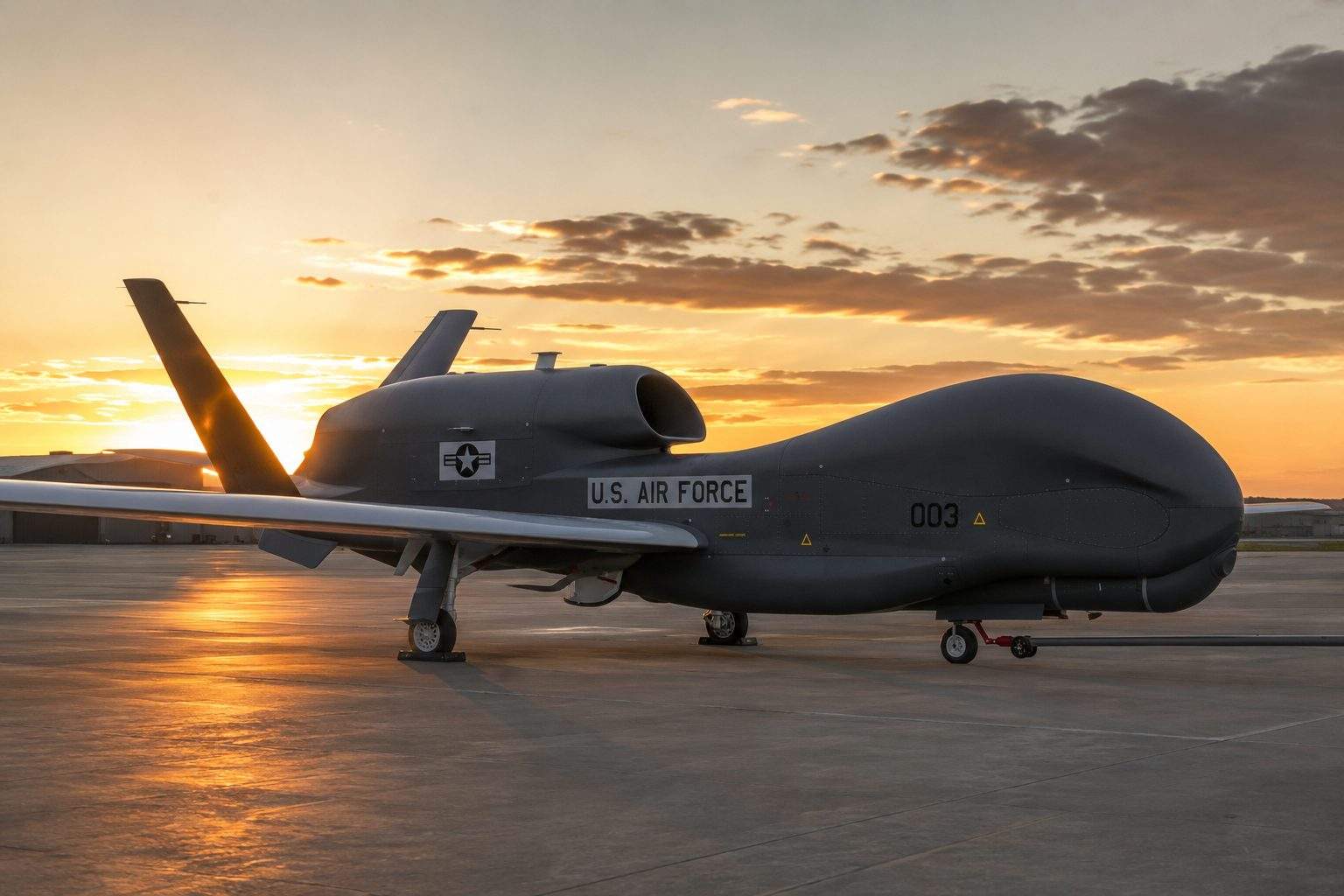
Global Hawk drones get permanent base in Japan as Air Force shifts deployment from GuamThe U.S. Air Force now has three RQ-4B Global Hawk surveillance drones based at Yokota Air Base near Tokyo after moving them from Andersen Air Force Base in Guam. The shift makes what was a seasonal rotation into a permanent reconnaissance mission in Japan, according to Task & Purpose. The 4th Reconnaissance Squadron started the process in late May, and the first Global Hawk arrived at Yokota on May 27.
ISR, or intelligence, surveillance and reconnaissance, is now at the center of U.S. and Japanese planning for the western Pacific. Japan’s Defense and Foreign ministries said ISR was taking on new weight as they see security near Japan worsening and more military activity in the region. They said ISR activity was getting more important.
U.S. Pacific Air Forces said there’s a practical side as well. Basing the aircraft at Yokota means the unit gets better weather in Japan’s Kanto region when typhoon season hits, which should help keep theater-wide operations running.
Lt. Col. Adam Otten, who commands the 4th Reconnaissance Squadron, said in an Air Force statement that Yokota is “the right location to support current and future RQ-4 operations” and that his unit will “thrive alongside Team Yokota.” Yokota Air Base
The Global Hawk isn’t a strike drone. The Air Force calls the RQ-4 an unarmed, high-altitude surveillance aircraft. It’s remotely piloted and built for long endurance, with sensors meant to handle all-weather and day-and-night operations. The drone flies around 60,000 feet and can stay up for over 34 hours.
Long endurance is what matters here. The Global Hawk isn’t about speed—it’s about staying in position for hours, giving commanders more info on ships, planes and ground movement over wide zones.
The move is part of a wider U.S. effort to deploy more unmanned surveillance in East Asia. Task & Purpose points to recent action with Air Force MQ-9 Reaper drones in South Korea and Marine MQ-9As in the Philippines. Both have been used for recon in or near disputed zones.
Janes said the U.S. aircraft will probably work alongside Japan’s Global Hawk fleet, which the Japan Air Self-Defense Force operates out of Misawa in northeast Japan. The defense-intelligence group also pointed to increased Chinese military moves in the region.
Northrop Grumman, which is the Global Hawk’s main contractor, says the drone collects high-res images in almost any weather, day or night, and covers wide ground fast. According to the company, Global Hawk drones have flown in Iraq, Afghanistan, North Africa, and Asia-Pacific.
Yokota is getting a permanent mission in a move that keeps the aircraft closer to the first island chain—Japan, Taiwan, and the Philippines—which is a key area for U.S.-China military planning. The decision doesn’t shift many aircraft from Guam, still a big U.S. military base, but it cuts seasonal rotations and sends a signal.
The step brings local and operational risk. According to Stars and Stripes, Tokyo’s metropolitan government has asked U.S. and Japanese officials for stronger safety steps and quicker disclosure, while Japan’s Defense Ministry said it will keep urging U.S. forces to stick to noise-abatement measures and try to limit effects on people living nearby.
Japan’s ministries said the move affects about 150 staff, with around 100 of those already connected to current temporary deployments. There are no plans to expand Yokota’s land or build new facilities, but current buildings will get upgrades.
The core trade-off is still there: more ongoing surveillance benefits for the alliance, but more U.S. air traffic over Yokota communities. For now, Washington and Tokyo are willing to accept that, betting the ISR boost matters more.