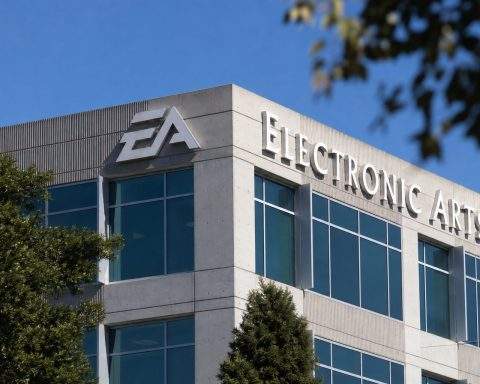

- EA Stock Soars: Electronic Arts (EA) shares surged nearly 15% on Friday, Sept 26, 2025, closing around $193 – a new all-time high – after reports of a possible $50 billion take-private buyout deal benzinga.com. The stock was hovering in the low-$170s earlier in the week, then jumped from about $168 at Thursday’s close to the high-$190s on Friday’s news stockanalysis.com. Year-to-date, EA is now up roughly 32%, far outpacing the broader market finviz.com, and is roughly 45% higher than five years ago (a $1,000 investment in 2020 would be worth ~$1,454 today) finviz.com.
- Massive Buyout Rumor: The Wall Street Journal and Reuters report that a group led by Silver Lake (a tech-focused private equity firm) and Saudi Arabia’s Public Investment Fund (PIF) is in advanced talks to take EA private at around a $50 billion valuation reuters.com. An announcement could come as soon as next week. This valuation implies a significant premium over EA’s pre-rumor market cap (~$42–43 billion) reuters.com benzinga.com. If finalized, it would be the largest leveraged buyout in history (surpassing the ~$32 billion TXU energy deal of 2007) benzinga.com. EA’s stock immediately spiked ~14–15% on the news reuters.com, reflecting investor optimism that a buyout could fetch a high price per share.
- Key Franchises & Upcoming Games: EA is a gaming powerhouse known for blockbuster franchises like FIFA (rebranded EA Sports FC), Madden NFL, Battlefield, The Sims, and Apex Legends. Its sports titles are a cornerstone – EA holds exclusive rights to the most popular soccer and American football video games, which “makes results steadier and less risky” compared to peers, according to Morningstar analyst Matthew Dolgin esportsinsider.com. This year, EA has a packed pipeline: the company just launched EA Sports FC 26 (the second iteration of its soccer series since the FIFA license split), NHL 26, and even revived its college football franchise. A new Battlefield shooter is slated to launch within the fiscal year, aiming to challenge Activision’s dominant Call of Duty series reuters.com. CEO Andrew Wilson recently boasted that EA is entering “the most exciting launch slate in EA’s history,” citing a deep lineup of upcoming games driving confidence in future growth benzinga.com.
- Recent Financial Performance: EA’s latest earnings have been solid. In its fiscal Q1 2026 (quarter ended June 30, 2025), the company reported net bookings of $1.298 billion, beating Wall Street’s $1.25 B estimate benzinga.com. EA credited broad strength across its portfolio – from sports titles to Apex Legends – for the better-than-expected results benzinga.com. For the full FY2025 (ended March 2025), EA’s net revenue was $7.46 billion with net bookings of $7.36 B ea.com, and it earned roughly $1.1 billion in net income esportsinsider.com. The company has been generous with shareholder returns – in FY2025 EA repurchased $2.5 billion worth of its stock and pays a quarterly dividend of $0.19 per share ea.com ea.com. Despite heavy investments, EA projected modest growth ahead: for FY2026 management forecast net bookings of $7.6–8.0 B and revenue $7.1–7.5 B ea.com ea.com. Notably, net income is expected to dip to $795–974 million in FY2026 ea.com as the company ramps up spending (e.g. big marketing for the new Battlefield launch). In other words, EA anticipates ~3–8% bookings growth but somewhat lower profits in the near term as it invests in its upcoming titles.
- Analyst Sentiment & Forecasts: Wall Street’s view on EA has evolved over the year. After a rocky spell early in 2025, some analysts grew cautious. In January, EA’s flagship soccer game (EA Sports FC 25) saw a surprisingly weak reception, leading to a cut in EA’s annual forecast and a one-day 15% stock plunge reuters.com reuters.com. Following that disappointment, BMO Capital Markets downgraded EA, citing “diminished visibility” and cut its price target to $145 finviz.com. Bank of America also trimmed its rating to Neutral, doubting EA’s ability to defend market share after the stumble finviz.com. However, not all analysts turned bearish. Some emphasize EA’s strong fundamentals – for example, the consistency of its sports franchises and live services. “Ultimate Team has come to be viewed as a near Swiss clock of interactive media bookings growth,” noted analysts at MoffettNathanson, referring to the lucrative in-game purchase mode in EA’s sports titles, though they warned that if its growth stalls, EA faces “enormous pressure” to find new revenue streams reuters.com. Prior to the buyout rumor, the consensus 12-month target price for EA was around the mid-$150s, implying only modest upside from pre-rumor levels esportsinsider.com. In fact, as of late April, a MarketBeat survey of 23 analysts forecasted the stock to reach about $154 in the next year esportsinsider.com – a target EA has now blown past with the latest rally. Going forward, analyst opinions in the short-term will hinge on the buyout: if a $50 B deal materializes, it likely caps the stock around the rumored deal price; if talks fall through, analysts will refocus on EA’s fundamentals and pipeline. Longer-term, many analysts still see growth potential in EA’s digital sales, new game launches, and improving cost control, though there is debate about just how fast a mature gaming company like EA can grow in a competitive market.
- Valuation & Metrics: Even before the recent spike, EA’s valuation was considered reasonable compared to peers. The stock trades around 6.5× annual revenue and, on a forward basis, roughly 17–20× earnings, which is lower than some competitors reuters.com. (For context, rival Take-Two Interactive has been valued nearer 25–30× forward earnings reuters.com, reflecting higher growth expectations for titles like Grand Theft Auto.) EA’s relatively lower multiple partly reflects its steady-but-slower growth profile – its bread-and-butter sports franchises provide reliable cash flow, but the company hasn’t launched a breakout new franchise in recent years. Still, EA’s ability to generate recurring revenue (through in-game purchases, subscriptions, and annual sports game releases) and its substantial shareholder returns (buybacks and dividends) make it attractive to value-oriented investors. Notably, at ~$193 per share, EA’s market capitalization is roughly $48–49 billion, and its enterprise value/EBITDA and P/E metrics will be in focus if buyout firms are valuing the company for a leveraged deal. Compared to historical levels, EA’s stock price is the highest it’s ever been – surpassing prior peaks around $175–180 from late 2021 and Aug 2025 finviz.com – indicating the market is quite optimistic either about the rumored acquisition or EA’s prospects (or both).
- Competitive & Industry Landscape: EA operates in a $200+ billion global video game industry that has seen significant shifts in recent years. The pandemic-era gaming boom has cooled, and companies are grappling with soaring development costs and pressure to deliver constant content updates to keep players engaged reuters.com. Consumer spending on games has become choppier in 2024–2025 amid broader economic uncertainty reuters.com. In this environment, scale and strong IP (intellectual property) are increasingly important – fueling a wave of consolidation. EA’s closest U.S. peer, Activision Blizzard, was acquired by Microsoft in 2023 for ~$69 billion, removing a major competitor from the public markets. Activision’s merger means franchises like Call of Duty, Warcraft, and Candy Crush now reside inside a tech giant, potentially raising the competitive bar. Take-Two Interactive (maker of NBA 2K, Red Dead Redemption, and the upcoming GTA VI) remains an independent rival; its stock also jumped ~3% on EA’s buyout rumor benzinga.com, as investors speculate on further M&A in the sector. Other players such as Ubisoft, Epic Games (Fortnite), and console makers (Sony, Nintendo, Microsoft) add to the competitive mix – from big-budget console/PC games to free-to-play online hits. EA’s strategy to stay competitive has included focusing on its dependable sports franchises (it renewed its NFL license through 2026 and transitioned from FIFA to its own EA Sports FC branding successfully) and expanding into new areas like mobile gaming and subscription services (the EA Play subscription and partnerships to put its games on services like Xbox Game Pass). The company is also betting on new content: for instance, it launched “College Football 26” this summer, reviving a college sports title that became one of 2024’s best-sellers in its debut year reuters.com. Meanwhile, Battlefield 6 (working title) is highly anticipated as a chance for EA to regain ground in the shooter genre reuters.com. Industry-wide, merger talk is rampant – as Reuters noted, 2025 has seen a rebound in mega-deal activity with boards and private equity firms “stepping out” after a lull reuters.com. The interest in EA from Silver Lake and PIF underscores the notion that interactive entertainment assets have “increasing strategic value” (as BMO’s analysts put it) finviz.com. In short, video gaming is no longer just about selling games – it’s about huge ecosystems, recurring monetization, and even alignment with trending technologies (e.g. esports, metaverse concepts, and streaming). EA sits in a strong position with its portfolio, but it must execute on upcoming releases and keep players engaged to fend off competition in this fast-evolving landscape.
Conclusion and Outlook
Electronic Arts finds itself at a pivotal moment. On one hand, the company’s fundamentals are solid – it has globally popular franchises, a growing stream of digital and recurring revenues, and a history of profitability and shareholder returns. Its stock performance has reflected that steady strength, with significant gains over the past year and hitting new records. On the other hand, the sudden buyout talks signal that outside investors see even more value (or untapped potential) in EA than the public markets have recognized. A $50 billion deal, if it comes, could reward current shareholders with a rapid payoff at a premium. If no deal materializes, EA will need to justify its now-elevated share price the old-fashioned way: by delivering on upcoming game launches and financial targets. Key things to watch in the coming months will be whether Battlefield’s new installment and the next slate of EA Sports titles live up to the hype (driving revenue growth), and whether EA can navigate the cost pressures that have been squeezing margins.
Analysts generally believe EA’s entrenched franchises give it a stable base, but long-term growth will require innovation and possibly new hits beyond the annual sports updates. Investors will also monitor the broader industry trends – will more deals follow? With Activision in Microsoft’s fold and now EA possibly going to private hands, the traditional landscape of standalone game publishers is shrinking. Competitors like Take-Two (and smaller studios) might become acquisition targets as well, and big-tech players are increasingly involved in gaming. For now, EA’s shareholders are enjoying the ride: the stock’s dramatic rise in late September 2025 highlights both the company’s resilience (bouncing back from setbacks earlier in the year) and the market’s confidence in its value. As one analyst summed up, EA’s combination of reliable sports franchises and deep pockets makes it a unique asset in the gaming world esportsinsider.com – and now a centerpiece of one of the year’s biggest Wall Street stories. Investors should stay tuned in the weeks ahead for confirmation of the buyout news, EA’s next earnings report, and the performance of its new game releases, as each could significantly sway the stock’s trajectory from here.
Sources: Yahoo Finance; Reuters; MarketWatch; Benzinga; Electronic Arts investor reports; Investor’s Business Daily; Wall Street Journal.
Related articles: NASDAQ:EA