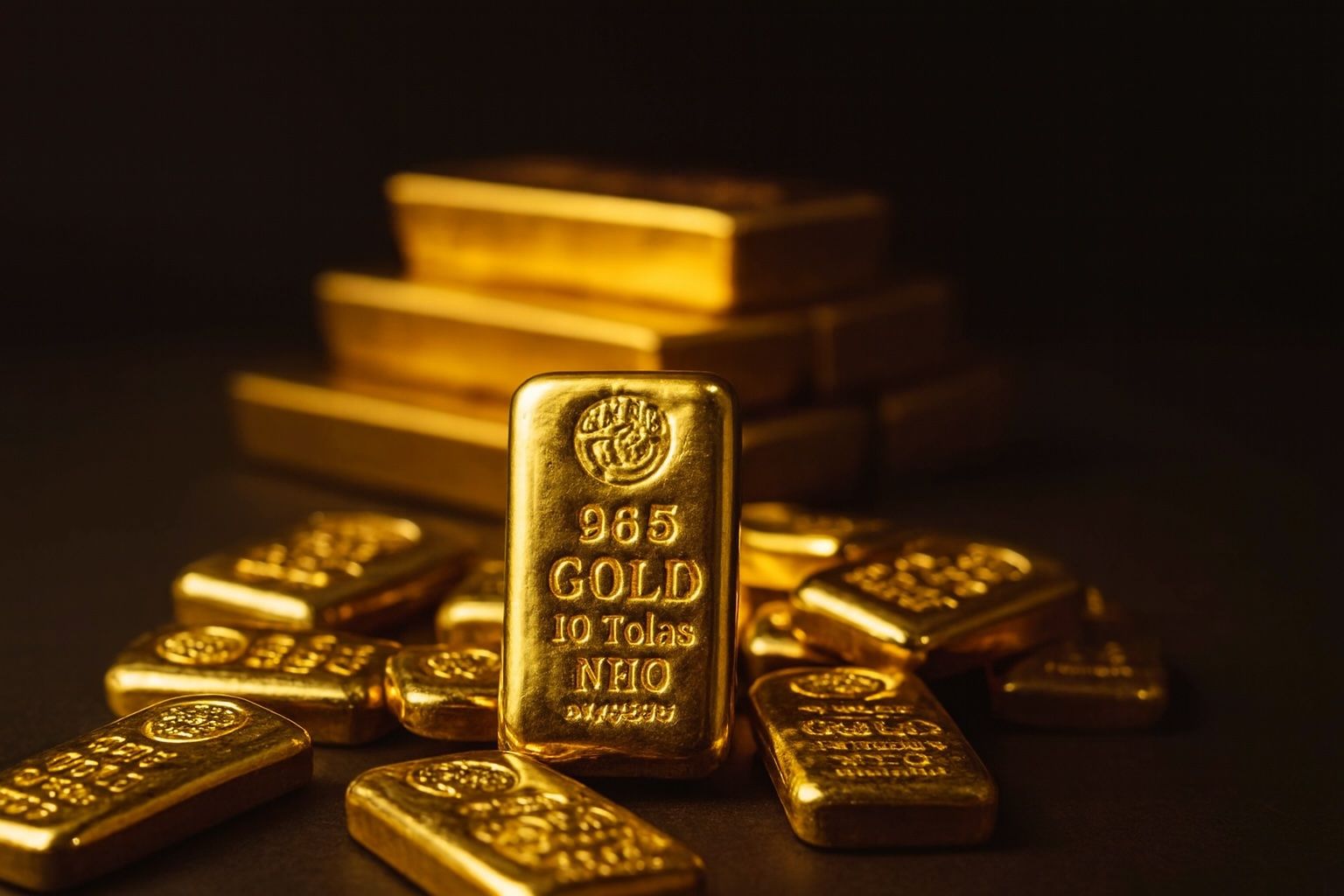

- Current Price: Gold is trading around $4,010 per ounce on Oct 31, 2025reuters.com, near its recent record levels.
- Year-to-Date Performance: Gold has surged roughly 50–60% in 2025, on track for its best annual gain since 1979ts2.techreuters.com.
- Recent Volatility: After peaking near $4,381/oz on Oct. 20reuters.com, gold sold off about 10% by Oct. 27 (briefly dipping below $4,000ts2.tech) before rebounding late October. It bounced on Oct. 29–30 (closing around $4,004ts2.tech) and was about $4,011 by Oct. 31reuters.com.
- Market Drivers: The rally has been fueled by a “perfect storm” of inflation and Fed policy (expectations of rate cuts) and geopolitical/economic uncertainty (wars in Ukraine and the Middle East, U.S. political risks, trade tensions)ts2.techreuters.com.
- Investor Flows: Central banks and investors are hoarding gold. Official buyers (e.g. China’s PBOC) are adding to reserves, and gold ETFs have seen record inflows (~$64 billion in 2025ts2.tech). By contrast, US stocks are up “only” mid-teens percent this yearts2.tech.
- Mining Stocks: Gold-mining shares have soared. The S&P Gold Miners index roughly doubled in 2025, even after recent pullbacksts2.tech, and major miners’ stocks hit new highs.
- Analyst Forecasts: Many big banks are bullish, targeting $4,600–5,000/oz by 2026 (HSBC, BofA, JPMorgan)ts2.tech. JP Morgan’s Natasha Kaneva calls gold her “highest conviction long”ts2.tech. By contrast, cautious strategists (Capital Economics, Goldilocks Research) warn of profit-taking and have lowered targets (~$3,500–3,800 by end-2026)ts2.tech.
Current Price and Recent Trend
As of Oct. 31, spot gold stands around $4,010 per ounce (London/NY PM fix)reuters.com. This follows a volatile week: gold had plunged from its mid-Oct peak (around $4,381 on Oct. 20reuters.com) back below $4,000 by Oct. 27ts2.techreuters.com, then rebounded into the week’s end. For example, gold jumped ~2% on Oct. 29 to roughly $4,028ts2.tech (after falling to ~$3,970 on Oct. 28) and traded near $4,004 by Oct. 30ts2.tech. On Oct. 31, it was about $4,012/ozreuters.com.
Over the past few days, the swings have largely reflected Fed actions and trade news. After the U.S. Fed cut rates by 25 bps on Oct. 29, gold initially jumped, but Fed Chair Powell’s cautious tone (saying a December cut was “not a foregone conclusion”reuters.com) trimmed expectations. This lifted the dollar and nudged gold down slightlyreuters.comreuters.com. Thus far in October, gold remains comfortably above $4,000, reversing part of last week’s declinets2.techreuters.com. Overall, the technical picture is extraordinary: bullion is up roughly 50–60% year-to-date (from about $2,650 in Jan. 2025 to above $4,000 now)ts2.techreuters.com, dwarfing most other assets. Even after last week’s selloff, gold is still far above where it began 2025, confirming a historic bull run.
Drivers: Fed Policy, Inflation and Safe-Haven Demand
Several macroeconomic factors have underpinned the rally. Inflation remains above central-bank targets (U.S. CPI was ~3.0% year-over-year by Septemberbls.gov), so investors have been betting on rate cuts, which typically support non-yielding gold. After inflation showed tentative signs of cooling, markets almost fully priced in Fed easing: before the Oct. 29 meeting, traders saw a 97% chance of a quarter-point cutreuters.com. That cut materialized, but Powell’s remarks curbing December-cut expectations quickly boosted the dollar, “which didn’t do gold any favours”reuters.comreuters.com. In other words, gold is caught between lower yields (bullish) and a suddenly stronger dollar (bearish).
On inflation and growth, TS2 summarizes that markets see a “Goldilocks backdrop” – moderate growth, easing inflation, and a Fed pivot – which makes real rates negative and gold attractivets2.tech. JP Morgan’s Natasha Kaneva argues that in this environment, “Gold remains our highest conviction long for the year”ts2.tech, expecting continued upside in a Fed-cutting cycle. By contrast, when Fed signals turned hawkish, metals traders noted gold’s “logical reaction” to Powell dialing back cutsreuters.com. Overall, current policy uncertainty (Fed votes split, rate cut odds now ~75% for Dec vs 91% a week agoreuters.com) is likely to keep gold volatile but generally well-supported.
Geopolitical and political factors are also critical. Ongoing wars and conflicts have fueled safe-haven flows. For example, tensions in Ukraine and renewed Middle East flare-ups kept investors nervousts2.tech. A brief ceasefire in Gaza on Oct. 9 actually triggered a short gold pullback as risk premiums easedts2.tech, but broader political instability (e.g. concerns over supply chains or regional risks) remains. Meanwhile, U.S. political drama has added to risk: the late-September U.S. government shutdown and President Trump’s statements (about firing a Fed governor and threatening new tariffs on China) “drove demand for gold as a hedge against policy risk”ts2.tech.
Trade tensions with China also matter. In late October, reports of progress on a U.S.–China trade “mini-deal” led some investors to temporarily reduce their gold holdingsts2.tech. High Ridge’s David Meger notes that news of a trade accord “portends a little less need for safe-haven assets such as gold”reuters.com. Indeed, between Oct. 24–27, gold slid about 10% as trade optimism and a firmer dollar reduced its lurets2.techts2.tech. However, TS2 emphasizes that these pullbacks reflected “profit-taking and easing fears” rather than a shift in fundamentalsts2.tech.
Central Banks and Demand
Fundamental demand for gold remains extremely strong. Central banks worldwide are net buyers: China’s central bank reportedly added gold for the 11th straight month through Septemberts2.tech, and global official purchases are near multi-decade highsts2.tech. This is part of a longer-term strategy to diversify reserves away from the dollar. JPMorgan notes foreign holders of U.S. assets are “gradually redirecting small allocations into gold”ts2.tech.
Investment demand has also been historic. Gold-backed ETFs saw record inflows in 2025 (about $64 billion through September)ts2.tech, as institutional and retail investors piled in. Record flows reflect an “insatiable appetite” for bullionts2.tech. The World Gold Council reports fund holdings at all-time highs. Analysts point out that recent sell-offs have often been met by bargain-hunting. For instance, Peter Fertig of Quantitative Commodity Research observes that buyers emerge once gold “has lost a bit more than 10% of its value”ts2.tech. ANZ economists similarly note that dips could “provide an opportunity for central banks to ramp up purchases”ts2.tech. In short, both official and private demand seem poised to soak up any oversupply, underpinning prices.
In Asian consumer markets, demand trends are mixed. India’s festival season (Dhanteras/Diwali) saw gold buying at full pace even at record prices. Yet once prices pulled back, buying slowed. Indian dealers recently had to offer discounts on gold (up to $12/oz) for the first time in seven weeksreuters.com. Retailers in Mumbai report that some investors are “cashing in by selling coins they bought for a profit” after the price swingsreuters.com. On the other hand, when prices dipped, other buyers re-emerged. Singapore-based gold dealer Brian Lan notes, “We’ve seen investors coming to buy, especially when prices came down this week”reuters.com. Chinese buying remains cautious too; local traders report “little evidence of offloading” amid uncertaintyts2.tech. Overall, Asian consumers and investors appear ready to buy dips, supporting prices.
Investor Sentiment and Related Markets
Investor sentiment toward gold remains generally bullish. Fund managers and traders see gold as “one of the best-performing assets” of 2025. JP Morgan’s Kaneva notes that despite recent volatility, there are “a lot of buyers and no sellers” in goldts2.tech, indicating strong underlying demand. After all, gold’s YTD gain (~+50–60%) far exceeds the S&P 500’s rise (~15%)ts2.techreuters.com, and even outpaces crypto’s early-2025 rally (Bitcoin ~+30% this yearts2.tech). The divergence highlights gold’s safe-haven strength; for example, silver and other metals have also hit multi-year highs alongside goldts2.techreuters.com.
Gold mining stocks have mirrored the rally. The S&P Gold Miners Index roughly doubled in 2025, even after last week’s pullbackts2.tech. Individual miner shares (e.g. Gold Fields, Newmont) hit fresh peaks in Octoberreuters.com. Analysts attribute this to higher bullion prices boosting earnings and valuations. Indeed, on Oct. 8 Reuters reported U.S.-listed gold miners all rising (Gold Fields up 3.7%) as the broader market also hit recordsreuters.comreuters.com.
Expert Forecasts and Outlook
Looking ahead, analysts are divided. Many large banks and strategists remain bullish on gold’s long-term uptrend. HSBC recently lifted its price target, and along with Bank of America, SocGen and Standard Chartered sees gold reaching roughly $4,500–5,000 by 2026ts2.techreuters.com. JP Morgan projects an average of about $5,055 by late 2026 and even $6,000 by 2028, on bets of continued Fed easing and currency concernsts2.tech. Blue Line Futures’ Phillip Streible likewise says “Gold could easily continue its upward momentum. We could see prices north of $5,000 by the end of 2026”reuters.com. OANDA’s Zain Vawda adds that if a U.S.–China trade truce falters, it “could be the spark gold needs to cross the $5,000/oz barrier”ts2.tech.
Others urge caution. Goldilocks Research’s Gautam Shah warns that “the rally was too aggressive” and now “this is a good time to convert paper profit into real profit”ts2.tech. Capital Economics cut its end-2026 forecast to about $3,500, arguing that the recent 25% surge is “much more difficult to justify” than previous movesreuters.comts2.tech. ActivTrades analysts note that last week’s pullback was driven by a stronger dollar and profit-taking, “not a change in gold’s long-term story”ts2.tech. In their view, the dip was a healthy consolidation rather than a trend reversal.
Technical indicators suggest gold is overbought in the near term: for instance, the Relative Strength Index (RSI) for gold hit ~80 in mid-Octreuters.com. This has prompted some strategists to expect more choppiness ahead. However, most agree that the bullish bias will persist as long as uncertainty remains high. “Gold remains our highest conviction long for the year,” says Kanevats2.tech, and many expect money managers to redeploy cash into bullion on any setbacks. Standard Chartered’s Suki Cooper summarizes the consensus: the rally “has legs in our view, but a near-term correction would be healthier for a longer-term uptrend”reuters.com.
In summary, as of Oct. 31, 2025, gold prices are historically high – buoyed by inflation concerns, Fed easing expectations, and global risks. The past week’s swings illustrate gold’s sensitivity to evolving news, yet its long-term momentum remains strong. Market watchers will be watching closely whether $5,000 is in sight, while carefully monitoring Fed decisions, geopolitical developments, and fund flows for clues to gold’s next move.
Sources: Data and analysis are drawn from market reports and news outlets, including TechStock² (TS2.tech) summaries and financial news servicesreuters.comts2.techts2.techreuters.com, with real-time pricing from Reuters and expert commentary.
Related articles: LSE:HSBA