Germany’s newly listed naval champion has gone from IPO high‑flyer to a more volatile defence pure play. Here’s what investors need to know about TKMS stock right now.
Snapshot: TKMS stock on 1 December 2025
As of 1 December 2025, TKMS AG & Co. KGaA – the spun‑off warship and submarine builder formerly known as Thyssenkrupp Marine Systems – is trading in the low €60s, roughly €62–64 per share, on German exchanges. That’s well below the intraday peak of €107 reached during its 20 October 2025 Frankfurt debut but still above its initial listing price of €60.
Key numbers investors are watching:
- Market cap: about €4.1–4.2 billion
- 12‑month range (since listing): roughly €57–107
- Trailing revenue (ttm): ~€2.16 billion
- Net income (ttm): ~€97 million
- Trailing P/E: ~43x, forward P/E just over 40x
- Order backlog:€18.6 billion as of 30 June 2025 – more than triple five years ago
In short, TKMS combines defensive growth (huge backlog, long‑cycle contracts) with a premium valuation and the political complexity that comes with sensitive defence assets.
From Thyssenkrupp unit to pure‑play naval defence stock
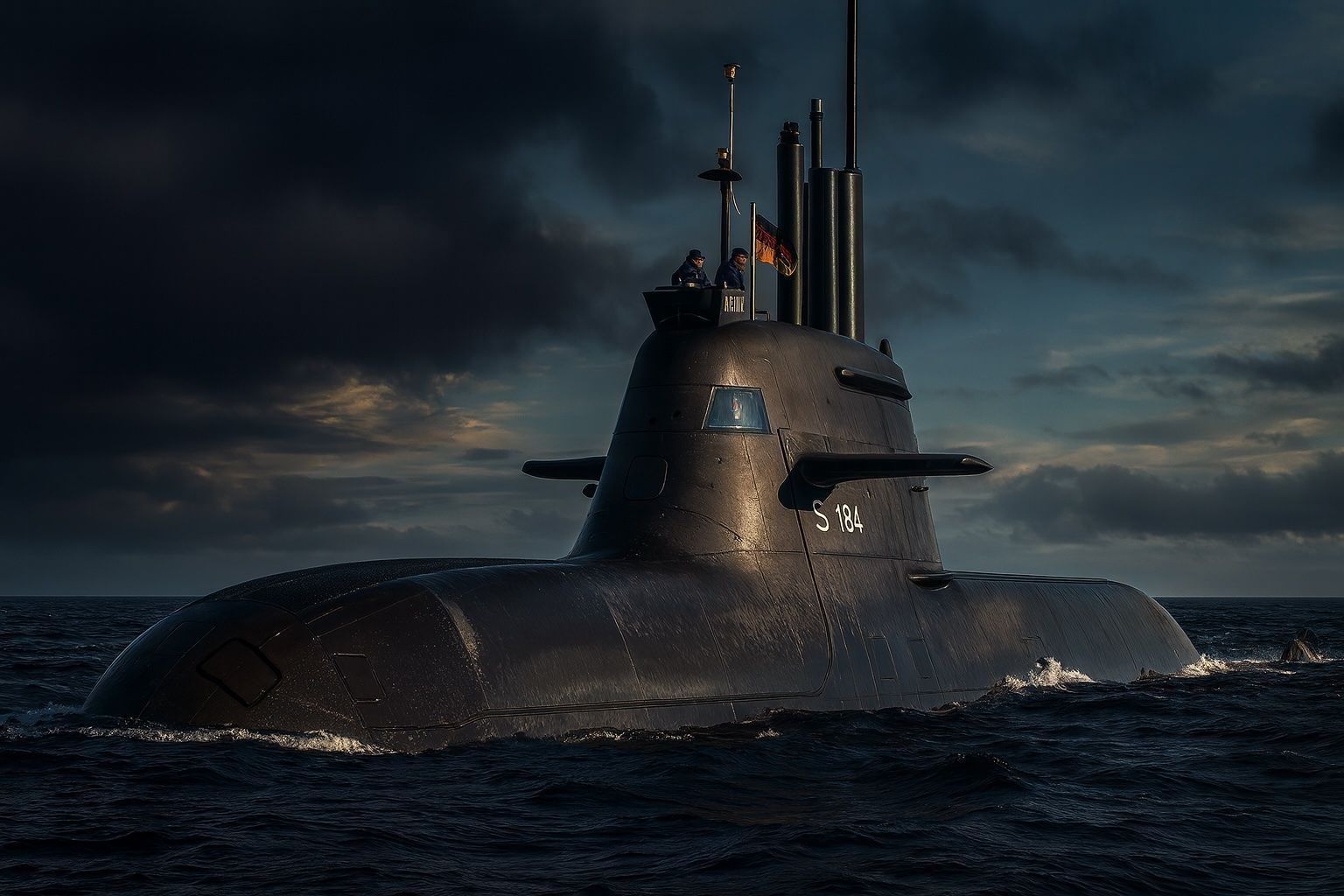
TKMS is Europe’s largest builder of non‑nuclear submarines and also produces frigates, corvettes, mine‑hunting systems and naval electronics.
The company operates across three main segments:
- Submarines – conventional boats such as the Type 212CD and export variants
- Surface vessels – frigates, corvettes, offshore patrol vessels and other naval ships
- Atlas Electronics – sonar, weapons, communication and maritime security systems
On 20 October 2025, TKMS shares began trading on the Frankfurt Stock Exchange (Prime Standard) after a spin‑off from Thyssenkrupp AG.
- Thyssenkrupp transferred 49% of TKMS to its own shareholders (one TKMS share for every 20 Thyssenkrupp shares).
- Thyssenkrupp retains a 51% majority stake, positioning TKMS as an independently listed but strategically controlled subsidiary.
The spin‑off is part of Thyssenkrupp’s broader shift towards a holding‑company model, joining earlier moves such as the listing of hydrogen unit Nucera.
Share price performance: from euphoric debut to consolidation
TKMS’s IPO was one of Germany’s standout listings of 2025:
- On debut, the stock opened at €60 and closed at €81.10, valuing the group at around €5.15 billion, roughly double pre‑IPO analyst estimates.
- During the first session, TKMS briefly traded as high as €107, underscoring intense investor appetite for defence assets.
Since then, the share has retracted to the low €60s:
- Real‑time quotes on 1 December show last trades around €63 on German venues such as Xetra, Tradegate and Vienna’s global market segment.
- That leaves the stock roughly 20–25% below its first‑day close and well off the early triple‑digit spike, but still above the spin‑off reference value.
Several factors seem to be behind the consolidation:
- Valuation digestion: At over 40x forward earnings, investors appear to be reassessing how much future growth is already priced in.
- Sector volatility: European defence stocks have been choppy as markets absorb budget cycles and shifting geopolitical headlines.
- Contract news mix: While TKMS has reported progress on several programmes, it has also lost out on at least one high‑profile tender (Poland’s Orka submarines), which tempers near‑term optimism.
Fundamentals: order backlog, growth targets and profitability
Financially, TKMS is a classic long‑cycle defence contractor:
- Revenue (ttm): approx. €2.16 billion
- Net income (ttm): ~€96–97 million
- EPS (ttm): about €1.51 per share
That implies a net margin in the mid‑single digits and a trailing EBIT margin around 4–4.5%, in line with the 4.3% operating margin TKMS reported for FY 2023/24.
What excites many investors is not current earnings, but future visibility:
- The company’s order backlog stands at €18.6 billion, triple its level five years ago.
- Management targets average annual revenue growth of about 10% and an EBIT margin “above 7%” in the medium term, according to its September capital markets day and IPO documentation.Reuters+1
- TKMS expects its addressable market to grow from €31 billion in 2024 to €61 billion by 2033, driven by rearmament in NATO countries, Asia‑Pacific partners and export customers.
The company also signalled plans to introduce a dividend policy from 2027, aiming for a 30–50% payout ratio of net profit once leverage and investment priorities allow.
Latest news on TKMS: contracts, tenders and strategy (as of 1 Dec 2025)
Submarines: Turkish milestone, Canadian opportunity, Polish disappointment
Turkey – NTSP project on track
On 28 November 2025, TKMS announced the handover of the second HDW Class NTSP submarine, TCG Hızırreis, to the Turkish Navy, as part of a six‑boat programme built in cooperation with Gölcük Naval Shipyard (GNSY). TKMS provides design, material packages and technical supervision, while local yards handle construction – a model that could be replicated in future export deals.
Remaining boats are in various stages of construction, with the third submarine scheduled for delivery in about a year, underscoring execution capability on complex export contracts.
Poland – Orka contract lost to Sweden
In late November, Poland confirmed it will order three A26 submarines from Sweden’s Saab for its Orka programme, choosing the Swedish design over competing bids from TKMS, Hanwha, Fincantieri, Naval Group and others.
TKMS had pitched its Type 212CD design, already ordered by Germany and Norway, but price, Baltic suitability and delivery schedule tipped the scales toward Sweden. While TKMS remains heavily engaged in NATO submarine programmes, losing Orka removes one potential growth plank that some investors had hoped for.
Canada – multi‑billion‑euro upside still in play
By contrast, Canada’s Patrol Submarine Project remains a major opportunity:
- Ottawa named TKMS and South Korea’s Hanwha as “qualified suppliers” in August 2025, moving them to the next stage of procurement for up to a dozen next‑generation submarines worth an estimated C$60 billion.Breaking Defense+1
- Recent reporting shows TKMS and Norwegian defence firm Kongsberg teaming up to pitch an Arctic‑capable submarine solution and local industrial cooperation, highlighting Canada’s desire for domestic jobs and technology transfer.
Winning even part of this programme would be transformative for TKMS’s order book and long‑term cash flows. For now, it remains an option, not a certainty.
Surface vessels: F126 reboot and Saudi interest in MEKO frigates
German F126 frigate programme
After years of delays and disputes, Germany’s troubled F126 frigate project may shift more firmly into TKMS’s orbit. German maritime outlet HANSA reports that construction of the frigates is likely to move away from Dutch shipyard Damen Naval, with TKMS’s Kiel yard expected to take over as lead builder and potentially supply ships based on its MEKO A‑200 design.
While a final Bundestag budget decision is still pending, TKMS’s deeper involvement would reinforce its central role in Germany’s naval modernisation.
Saudi Arabia – early‑stage talks
In November, defence media reported that Saudi Arabia is holding preliminary discussions with TKMS about acquiring MEKO A‑200 frigates as part of its Vision 2030 naval expansion plan.
These talks are early and subject to German export‑control politics, but they illustrate TKMS’s positioning in future Middle Eastern surface‑fleet tenders.
Corporate strategy: Kiel consolidation talks
Domestically, TKMS is exploring shipyard consolidation in its home port of Kiel. According to German press reports, the company is in talks with neighbour German Naval Yards (GNY), owned by France’s CMN group, about potential closer cooperation or integration.
Such a move could:
- Strengthen TKMS’s capacity to deliver large surface programs (F126, future Type 127 air‑defence frigates)
- Rationalise overlapping infrastructure in Kiel
- Reinforce Germany’s position as a core European naval hub
No binding deal has been announced yet, but investors are watching closely, as consolidation could have capital‑expenditure implications and potentially unlock cost synergies over time.
TKMS stock forecast: what analysts currently expect
Because TKMS has only been public for a few weeks, coverage is still relatively thin – but initial analyst opinions skew constructive.
According to MarketScreener’s aggregation of four analysts as of 1 December 2025:
- Mean recommendation: Outperform
- Average 12‑month price target:€83.50
- High target:€100
- Low target:€74
- Based on a last close around €65.55, this implies ~27% upside to the average target.
Recent rating actions include:
- Deutsche Bank upgrading TKMS to “Buy” with a target price of €80 in late November.MarketScreener
- MWB Research initiating coverage with “Buy”, citing “exceptional revenue visibility” from the large backlog.Reuters+1
- Bernstein maintaining a more cautious “Underperform/Sell” stance with a €74 target, arguing that margins and execution risks justify a discount to peers.MarketScreener
Other data providers show similar, slightly higher averages in the mid‑80s, based on around five ratings.
Valuation in context
At around 43x trailing earnings and ~40x forward earnings, TKMS trades at a premium to traditional European shipbuilders, but more in line with high‑growth defence electronics and missile makers.
Bulls argue that:
- The 18.6bn backlog – nearly nine times annual revenue – provides unusual visibility.
- Management’s >7% margin target still leaves room to surprise positively if execution improves towards peers like BAE Systems and Naval Group, both already around 7–8%.
Bears counter that:
- The margin ambition may be too modest, especially given TKMS’s complex yard network and heavy capital needs.
- Political oversight, export permits and government influence – including Berlin’s veto rights over large stake sales – could constrain strategic flexibility.
Macro backdrop: why TKMS is a pure play on European rearmament
The core investment case for TKMS stock is straightforward:
- Russia’s invasion of Ukraine has fundamentally reshaped European defence policy, pushing NATO members to boost spending and invest in naval deterrence after decades of underfunding.
- TKMS is one of the few companies capable of delivering advanced conventional submarines and large frigates at scale, with a track record across Germany, Norway, Egypt, Israel, Turkey, Brazil and others.
- Analysts and TKMS itself expect NATO and EU procurement budgets to more than double by 2030, driving a sustained wave of orders.
If these trends continue, TKMS could enjoy years of high single‑ to low double‑digit revenue growth and significant operating leverage as its yards run at high utilisation.
Key risks for TKMS shareholders
Despite the favourable backdrop, TKMS is far from a risk‑free bet:
- Programme risk and overruns
- Large naval projects (F126, Type 127, export frigates) are notorious for schedule slips and cost inflation. Any major overrun could erode margins and damage reputation.
- Contract concentration
- A handful of large programmes (Germany, Norway, Turkey, potential Canada deal) drive a significant portion of the backlog. Losing or restructuring one of these could hit long‑term earnings.
- Political and export‑control risk
- German and EU export controls can delay or block deals, particularly with countries like Saudi Arabia, where discussions over MEKO A‑200 frigates are still exploratory.
- Competition
- TKMS faces stiff competition from Saab (Sweden), Hanwha (Korea), Fincantieri (Italy), Naval Group (France) and others, as illustrated by the loss of Poland’s Orka contract.
- Execution on margin targets
- Achieving >7% EBIT margins will require productivity improvements and tight cost control. Investors are watching closely to see whether TKMS can close the gap to peers without sacrificing growth.
- High starting valuation
- With the stock still trading at a substantial multiple of earnings, any disappointment on growth, margins or contracts could trigger outsized share price reactions.
Bottom line: how TKMS stock looks on 1 December 2025
On the first day of December 2025, TKMS sits at an interesting crossroads:
- The euphoria of its October IPO has cooled, pulling the stock back from triple‑digit peaks to the low €60s.
- The company has validated elements of its growth story with progress in Turkey, movement on German surface programmes and an enhanced role in Canada’s submarine competition – even as it swallowed a visible setback in Poland.
- Analysts’ consensus view of “Outperform” with mid‑80s price targets suggests meaningful upside if TKMS delivers on its 10% growth and >7% margin ambitions.MarketScreener+2MarketWatch+2
For investors, TKMS is best thought of as a high‑beta, long‑duration play on European naval rearmament:
- Those comfortable with defence‑sector risk and political complexity may see the current consolidation as an entry point ahead of decisions on Canada, F126/F127 and further export deals.
- More conservative investors may prefer to wait for one or two earnings cycles to see how orders convert into cash, how margins trend, and whether management sticks to its 2027 dividend timeline.
Either way, TKMS has quickly become one of Germany’s most closely watched new stocks – and its trajectory in 2026 will be a key test of how public markets price the new era of European defence spending.
Disclaimer: This article is for informational and journalistic purposes only and does not constitute investment advice. Always do your own research or consult a licensed financial adviser before making investment decisions.