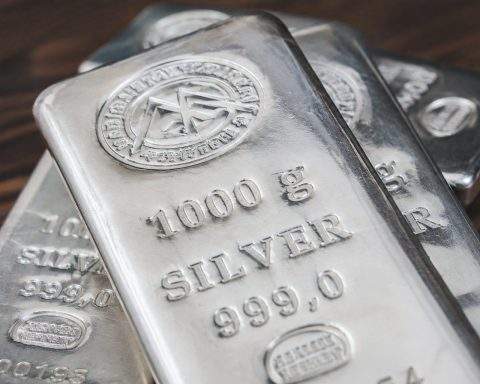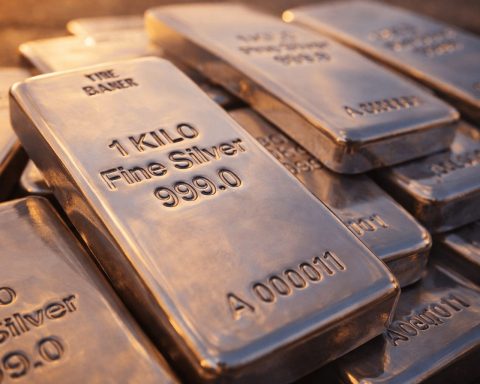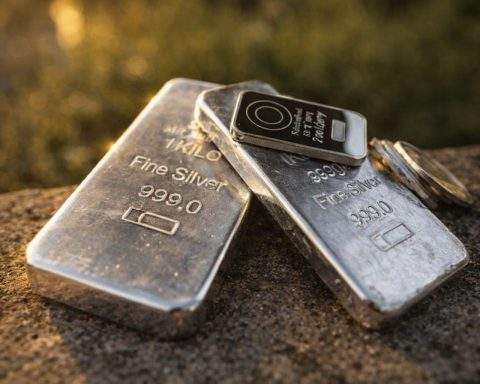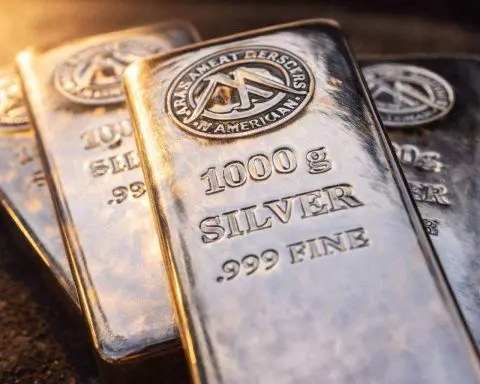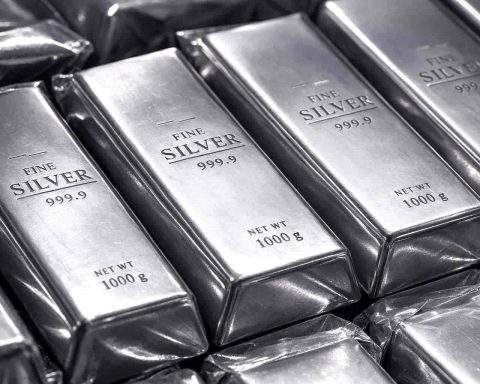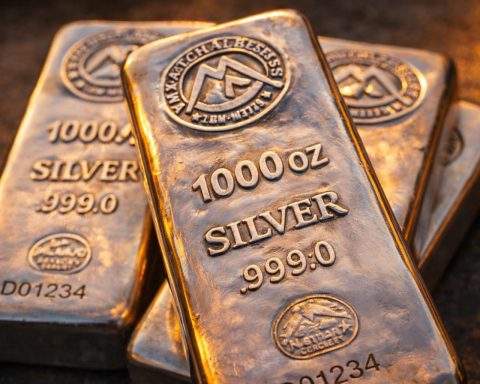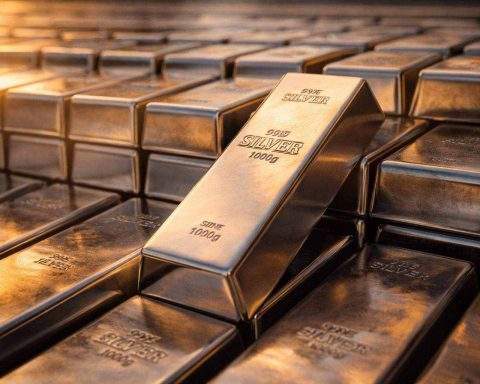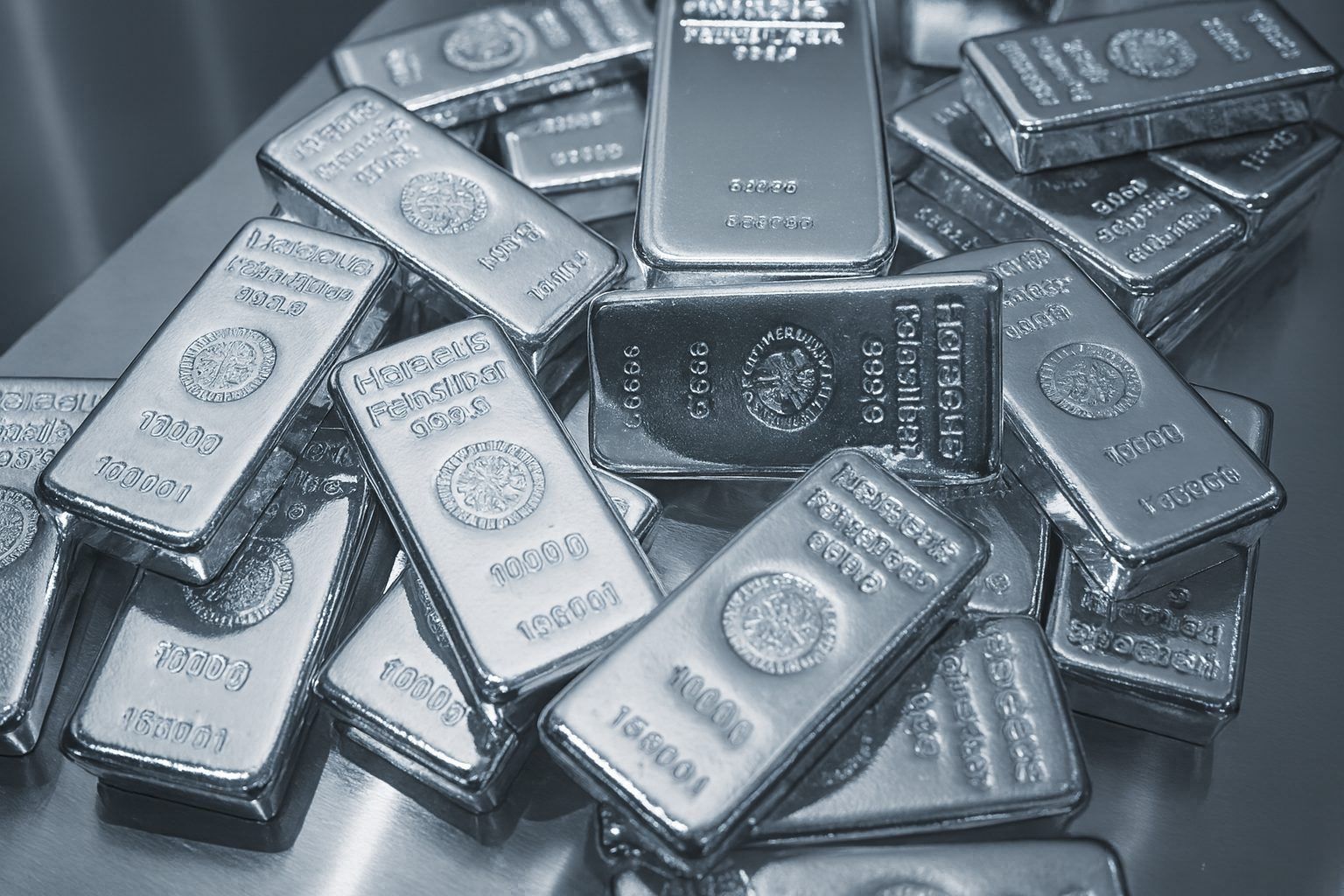

As of December 1, 2025, silver is trading at all‑time highs, capping one of the most dramatic precious‑metal rallies in decades and igniting a global debate about whether prices can hold above $50 – or even make a run at $60–$70 and beyond.
On Monday, spot silver jumped as much as $58.83 per ounce, and was last seen around $58.6, more than 100% higher year‑to‑date, according to Reuters. Reuters That follows a surge that saw futures briefly surpass $59 per ounce earlier in the U.S. session, Investopedia reports.
India’s Economic Times highlights a similar picture in intraday trading: spot silver hit a new high near $57.86 and front‑month futures spiked to about $58.60, extending a six‑day rally of almost 15%.
Behind the headline numbers is a potent mix of rate‑cut expectations, a weaker dollar, structural supply deficits and surging industrial demand—all reinforced by technical breakouts and occasional market disruptions.
Key Takeaways
- Silver has doubled in 2025, hitting fresh records above $58–59/oz and massively outperforming even record‑breaking gold.
- A multi‑year supply deficit, shrinking London vault inventories and sky‑high lease rates point to a physically tight market.
- Industrial demand from solar, EVs and electronics is at or near record highs and projected to grow further into 2030.
- Technical resistance now sits near $60 and the 1980 peak around $67, with analysts split on whether this zone caps the move or launches the next leg higher.
- Institutional forecasts for 2026 cluster around $40–$65/oz, with a few high‑profile bulls floating scenarios as high as $75–$100—but calling them “possible, not base case.” TS2 Tech+1
How Silver Got Here: The Anatomy of a Record‑Breaking 2025 Rally
From “bridesmaid metal” to top performer
Silver started this cycle in the shadows of gold. Yet from an October 2023 low near $20.67, spot prices have rocketed more than 160% to peaks above $54 in mid‑November, Reuters notes. Reuters Over the same period, gold – despite its headlines – has actually delivered slightly smaller percentage gains.
This year’s milestones have come in waves:
- October 8, 2025 – Silver briefly hit an all‑time high around $49.57, powered by gold’s surge above $4,000/oz and strong safe‑haven flows amid geopolitical and economic risks.
- Mid‑October – A CNBC report (summarised via Swedish Credit) highlighted a new record near $54.47/oz, a roughly 71% year‑on‑year jump and only the third major silver “spike” in 50 years, alongside the January 1980 and 2011 peaks. Swedish Credit
- November 28 – As the CME’s Comex futures and options market suffered a 10‑hour outage due to a data‑centre cooling problem, BullionVault reports that London spot silver leapt to about $55.30/oz, a fresh record, once Comex trading resumed.
- Late November – Kitco chronicled a “precious metals power surge” as silver futures hit records and “reawakened gold bulls,” emphasising how silver’s breakout helped reignite broader precious‑metals risk appetite. Kitco
- December 1 – Economic Times, Investopedia and Reuters all track new all‑time highs between roughly $57.8 and $59.0/oz, confirming that silver has now doubled in price in 2025 alone.
In other words, silver has graduated from being gold’s “bridesmaid” to the best‑performing major precious metal on the board.
Macro Tailwinds: Rates, the Dollar and Politics
Fed cuts in focus
The immediate macro backdrop is straightforward: markets are betting heavily on U.S. interest‑rate cuts, which weakens the dollar and boosts non‑yielding assets like gold and silver.
- Reuters says traders see about an 87% probability of a December Fed cut, following softer U.S. data and dovish comments from Fed officials such as Christopher Waller and John Williams.
- Economic Times pegs that probability at 88%, linking the latest leg of the silver breakout directly to Fed expectations and a dollar index at two‑week lows.
Lower real rates reduce the opportunity cost of holding metals and often coincide with investors rotating towards hard assets as insurance against policy mistakes, inflation and financial‑system stress.
A more dovish Fed chair?
Politics are amplifying the move. President Donald Trump has signalled he has chosen the next Federal Reserve chair, with National Economic Council director Kevin Hassett widely seen as the front‑runner.
BullionVault notes that markets perceive a Hassett‑led Fed as more likely to deliver “cheaper car loans and easier access to mortgages at lower rates”, and rate‑futures pricing now implies policy rates in 2026 will sit well below the Fed’s own dot‑plot projections. BullionVault
That perception of a more dovish central bank is one reason Deutsche Bank recently lifted its 2026 gold forecast to $4,450/oz, while also highlighting physical tightness in silver and other precious metals.
The Supply Crunch: Five Straight Years of Silver Deficits
Silver’s rally is not just about macro hopes; it is rooted in old‑fashioned scarcity.
Deficits for the fifth year running
The Silver Institute expects the global silver market to remain in deficit for the fifth consecutive year in 2025:
- A January outlook projected demand around 1.20 billion ounces vs. 1.05 billion ounces of supply, implying a 149‑million‑ounce shortfall.
- Updated figures presented in November estimate a still‑sizeable deficit near 95 million ounces in 2025, leaving the cumulative shortage since 2021 at roughly 820 million ounces.
Even as high prices cool some categories of demand (like jewelry and retail bars/coins), the Institute notes that investment flows and industrial usage remain strong enough to keep the market in the red.
London vaults draining, lease rates exploding
The physical tightness is visible in wholesale markets:
- According to data highlighted in the CNBC report, silver holdings in London vaults run by the LBMA have fallen from about 31,023 tonnes in June 2022 to 22,126 tonnes by March 2025—a drop of roughly one‑third.
- At the height of the squeeze in October, overnight lease rates reportedly spiked to around 200% on an annualised basis, making it extremely expensive for traders to roll short positions.
- Deutsche Bank’s latest precious‑metals outlook, cited by Investopedia, says silver lease costs have climbed to their highest levels since 2002, signalling an “extraordinary shortage” of readily available metal—especially for industrial users. Investopedia+1
ETF flows add another layer. BullionVault notes that in the week of the CME outage, the iShares Silver Trust (SLV) alone added 324 tonnes of bullion, while recent Silver Institute data show silver‑backed exchange‑traded products have increased their holdings by about 18% year‑to‑date, or roughly 187 million ounces.
India, the Dollar and the “Devil’s Metal”
The CNBC piece also underscored how India has become a crucial driver of this cycle.
- India is now the world’s largest silver consumer, using roughly 4,000 tonnes per year, largely for jewelry, utensils and ornaments.
- On October 17, local silver prices in India reportedly hit a record 170,415 rupees per kilogram, an 85% rise since the start of the year, prompting both buying frenzies and profit‑taking.
- Because about 80% of India’s silver is imported, surging demand there has been one more straw on an already strained global supply chain.
Traders interviewed by CNBC described a market so tight that some shipments had to move by air rather than by sea just to meet delivery commitments.
The result: the metal long nicknamed the “Devil’s metal” for its volatility is now living up to the name—producing violent short squeezes, multi‑dollar intraday swings and rapid whipsaws that catch both longs and shorts off guard.
Industrial Demand: Solar, EVs and the Clean‑Energy Super‑Cycle
Silver’s 2025 rally might have remained a speculative spike if it were not backed by structurally rising industrial demand.
Solar panels and the green transition
A key driver is the global push toward decarbonisation and electrification:
- Reuters analysis using LSEG data shows industrial demand reached 689.1 million ounces in 2024, up from 644 million the previous year. Of that, 243.7 million ounces went into solar panels—up 158% versus 2020.
- The International Energy Agency expects around 4,000 gigawatts of new solar capacity to be installed between 2024 and 2030, implying solar alone could add roughly 150 million ounces of extra annual silver demand by the end of the decade.
A CarbonCredits.com overview, citing World Silver Survey data, similarly notes that industrial fabrication hit a record 680.5 million ounces in 2024 and that the market is facing “persistent supply deficits through the end of the decade.” Carbon Credits
In CNBC’s coverage, analysts estimate that:
- A typical EV currently uses around 25–50 grams of silver,
- Future solid‑state battery designs could require up to a kilogram of silver per vehicle in high‑end scenarios.
Add in 5G networks, AI data centres and advanced electronics, and the case for silver as a quasi‑strategic “green tech” metal becomes clearer.
The CME Outage and Short‑Term Volatility
The late‑November outage at the CME’s Comex division was a reminder of how quickly silver can move when liquidity disappears.
BullionVault details how, after an approximately 10‑hour halt in Comex futures and options trading on Thanksgiving Friday, London spot silver:
- Fixed around $53.88/oz at the midday auction, matching mid‑November’s second‑highest benchmark ever;
- Then jumped by 2.6% in roughly 80 minutes once U.S. trading resumed, setting a new record near $55.30/oz.
Some commentators argue this episode underscores that silver’s bull run didn’t break—the exchange did, and that the market remains prone to sudden spikes when key hedging venues go offline or when margin requirements are adjusted.
Regardless of interpretation, the event reinforced silver’s reputation as one of the most volatile major commodities, capable of making or breaking trades in hours rather than weeks.
The Technical Picture: $60 and the 1980 Peak in Sight
Technical analysts are now laser‑focused on a handful of historic levels.
A fresh ChartWatch Markets report on MarketIndex, dated December 1, notes that front‑month COMEX silver has: Market Index
- Cleared prior supply zones near $54.43 and $55.08,
- Printed a powerful “long white candle” showing aggressive demand,
- Left only two major historical resistance points overhead:
- The April 25, 2011 high around $59.02, and
- The January 21, 1980 peak near $67.31 (on the back‑adjusted futures series).
The same analysis concludes that demand‑side control is “a clean sheet”, but emphasises that digesting supply around the 2011 high could take time.
Short‑term momentum indicators, however, flash warning signs:
- Economic Times reports a 4‑hour RSI above 80, with prices stretched far above the 50‑day and 200‑day moving averages (around $48 and $38 respectively). Support sits near $56.45, $54.45 and $52.75, while resistance is first at $58 and then at the $60 psychological level.
Put simply: the medium‑term trend is firmly up, but the market is extremely overbought, and even a “normal” correction could mean $5–$10/oz swings.
What the Forecasts Say: Consensus, Bulls and Outliers
With silver at record levels, investors are asking the obvious question: what happens next?
A recent synthesis of 2026 forecasts from banks and research houses, compiled by TS2, shows a surprisingly tight institutional consensus despite the wild price action.
Mainstream banks: $40–$65 in 2026
According to that survey and related reports:
- Bank of America – Sees silver averaging around the mid‑$50s in 2026, with potential highs near $65/oz, driven by persistent deficits and green‑energy demand.
- UBS – Recently raised its outlook and explicitly “favours being long silver,” targeting about $60/oz in 2026 with possible spikes toward $65, assuming gold around $4,500/oz and a gold‑silver ratio near 75. TS2 Tech+1
- WisdomTree & CME futures curve – Expect prices to hold in the low‑ to mid‑$50s, with the futures curve implying a year‑end 2026 level near $52.50/oz.
- Deutsche Bank – Via its gold outlook and subsequent silver commentary, projects average silver prices around the mid‑$50s in 2026, up from roughly $38 so far this year, as ETF holdings approach 1.1 billion ounces.
- HSBC and Citigroup – More cautious, seeing consolidation rather than another vertical spike, with Citi, for example, pencilling in $40–$43/oz over a 6–12‑month horizon after the 2025 blow‑off, allowing for pullbacks before any renewed advance.
DeVere Group’s review of these upgrades summarises the mainstream stance succinctly: most major houses now expect silver to stabilise in a broad $50–$65 band through 2026, with triple‑digit calls treated as speculative outliers rather than base‑case scenarios.
Structural‑deficit bulls and $75–$100 scenarios
Not everyone is so restrained:
- Investor Larry Lepard and other structural‑deficit bulls have floated potential paths to $75–$90/oz by late 2026, arguing that multi‑year deficits and relatively low production costs at many mines could justify significantly higher prices.
- Some strategists, including BNP Paribas’ Philippe Gijsels in comments relayed via DeVere, say a move toward $100/oz by 2026 is “certainly possible” in a continued bull market with aggressive Fed easing, a weaker dollar and persistent supply shortfalls—but they stress this is not their central forecast. deVere Group+1
The common thread in these bullish scenarios is a compound effect:
- Ongoing structural deficits,
- A gold price drifting toward or beyond $5,000/oz,
- Compression of the gold‑silver ratio, and
- A new wave of ETF and speculative inflows.
Any break in that chain—stronger dollar, faster substitution in solar, faster mine‑supply response—could keep silver pinned closer to the $40–$60 range instead.
World Bank: Higher in 2026, weaker in 2027
Adding a macro‑policy perspective, the World Bank has suggested that gold and silver could hit new highs in 2026 but see their rallies fade in 2027 as monetary conditions normalise and growth concerns ease.
That view broadly aligns with the idea that much of the easy upside may already be behind us unless the global economy heads into a significantly more inflationary or financially unstable environment.
What This Means for Investors and Traders
Nothing in this article is investment advice, but several themes stand out for anyone considering silver exposure:
- Volatility is the feature, not a bug
Silver has a long history of overshooting in both directions. Reuters notes that in past cycles the metal delivered multi‑hundred‑percent rallies followed by brutal drawdowns, often far more violent than gold. - Fundamentals support elevated prices… but not necessarily a straight line up
Multi‑year deficits, record industrial demand and tight inventories justify higher equilibrium prices than in the 2010s, yet institutional forecasts still cluster below $70, reflecting the risk that high prices trigger thrifting, substitution and new supply. - Macro “regime risk” cuts both ways
If the Fed delivers multiple cuts, inflation proves sticky and the dollar weakens, silver’s “monetary metal” side could keep attracting capital. A surprise return to higher real yields or a stronger dollar, by contrast, could trigger sharp mean‑reversion toward the $40s. - Technical signals warn of overextension
With RSI readings deep in overbought territory and prices stretched far above key moving averages, even bulls acknowledge the risk of steep corrections within a broader uptrend. - Position sizing and time horizon matter more than the exact price target
Whether you subscribe to the $40–$65 consensus or the $75–$100 bull case, silver at current levels is not a low‑volatility asset. Short‑term traders face the prospect of multi‑percent daily moves, while long‑term holders must be prepared to sit through deep drawdowns.
Bottom Line: A New Era for the “Devil’s Metal”
Silver’s 2025 performance has transformed it from an under‑owned afterthought into a headline‑grabbing macro asset.
- Prices have smashed through prior records,
- The market has logged five consecutive years of deficits,
- Industrial demand from solar, EVs and electronics is reshaping silver into a strategic material for the energy transition, and
- Central‑bank and fiscal policies are fuelling fresh demand for hard‑asset hedges.
From here, the debate is less about whether silver is important and more about what “fair value” looks like in a world of persistent deficits and shifting monetary regimes.
For now, the only thing most analysts agree on is this: silver’s story doesn’t end at $58–$60/oz – it just gets more complicated from here.
Related articles: Silver Price