
LONDON — The UK stock market is poised for a cautious start on Tuesday, 2 December 2025, with futures pointing to a modestly lower open for the FTSE 100 as investors digest softer Wall Street trading, rising global bond yields, fresh UK housing and inflation data, and a big set of signals from the Bank of England on financial stability and bank capital.
1. Futures Point to a Softer FTSE 100 Open
London is expected to open in the red, extending Monday’s mild risk-off mood:
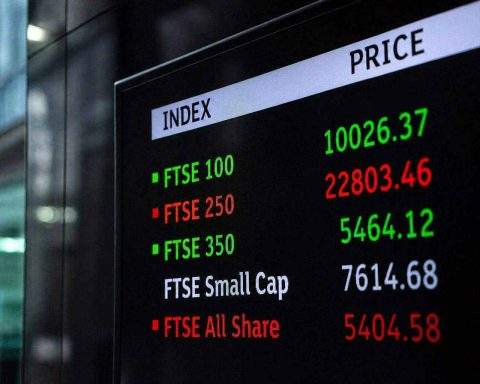
- IG’s futures indicate the FTSE 100 will open about 17–18 points lower, or roughly 0.2%, around 9,684, after closing down 0.2% at 9,702.53 on Monday.
- Sharecast likewise reports that the blue-chip index is “called to open down around 15 points” following a weak US close.London South East
The pressure comes after a strong run: IG notes the FTSE 100 has delivered five consecutive months of gains, briefly hitting record territory and coming close to the 10,000-point milestone before slipping back to sit around 2% below its all‑time high. Defensive heavyweights in consumer staples, pharma and precious metals miners have done much of the lifting in recent months.
For traders going into the open, that backdrop matters: the FTSE is still near record highs, but the easy “defensive grind higher” is giving way to a more volatile, data‑driven phase.
2. Global Backdrop: Japan Rate Jitters, Bond Selloff and Crypto Volatility
Wall Street: Weak Close, Strong Fed Cut Bets
US stocks set a downbeat tone for Europe:
- On Monday, the Dow Jones fell about 0.9%, the S&P 500 lost around 0.5%, and the Nasdaq slipped roughly 0.4%.
- A key driver was a rise in US Treasury yields as investors reassessed the path of Federal Reserve policy and digested weak US factory data. The ISM manufacturing gauge contracted for a ninth straight month, with new orders falling at the steepest pace in months and employment shrinking again, reinforcing expectations of a Fed rate cut in December.
Analysts at Swissquote, quoted by Sharecast, say the data underline economic weakness “beyond AI hype” and argue that, given the combination of softer manufacturing and mixed consumer signals, a rate cut at the upcoming Fed meeting now looks highly likely, even if the inflation backdrop remains complicated.London South East
Japan and the Global Bond Selloff
Overnight, the biggest macro story is still Japan:
- Expectations of a Bank of Japan rate hike later this month have triggered a sharp global bond selloff. Ten‑year JGB yields briefly hit a 17‑year high around 1.88% before easing slightly to about 1.865% after a solid government bond auction.
- The move has rattled global fixed income because a sustained rise in Japanese yields could tempt capital back home, putting pressure on other bond markets. US 10‑year Treasury yields were pushed above 4.09% on Monday before edging back in Asian trading.
The equity reaction so far is cautious rather than panicky:
- MSCI Asia ex‑Japan is up around 0.3%,
- Tokyo’s Nikkei is marginally higher after a sharp drop on Monday,
- South Korea’s Kospi leads with gains of around 1.6%,
- While China’s CSI 300 is down about 0.8%.
For London investors, the key point is that global risk sentiment is fragile but not collapsing: a shaky bond market, but equities still trying to find their footing.
Crypto and Safe Havens
Cryptocurrencies have added another layer of volatility:
- Bitcoin dropped more than 5% on Monday and is now about 30% below its October peak, though it has bounced back towards $87,000 in Asian trading.
- Gold is holding above $4,200 an ounce, while Brent crude trades in the low $60s per barrel (around $62–63).
That combination — firmer gold, softer risk assets, and a still‑elevated oil price — underpins the “cautious but not capitulating” tone as London prepares to open.
3. Europe Yesterday and Today: Risk-Off Mood, Data Ahead
On Monday, European equity markets were already tilting risk‑off:
- The Stoxx 600 slipped about 0.2%,
- Germany’s DAX fell close to 1%,
- France’s CAC 40 lost around 0.3%,
- And the FTSE 100 finished down about 0.2%.
Defence and industrial names were notable laggards in London, reflecting both global growth worries and hopes for progress on Ukraine peace efforts, according to Sharecast’s close report.
Later today, Europe will get fresh macro catalysts:
- At 10:00 CET, the euro area releases flash CPI for November, with consensus looking for 2.1% year‑on‑year headline inflation and 2.4% core, alongside unemployment at 6.3%.
These numbers will matter for UK equities via the currency and rates channel: a softer‑than‑expected CPI print could reinforce ECB‑cut expectations, weigh on the euro and support dollar‑earners and exporters.
4. UK Macro: Housing Firm, Shop Price Inflation Cools
Two key domestic data sets landed just before the open: Nationwide house prices and the British Retail Consortium shop price monitor.
Housing: Prices Beat Expectations but Growth Slows
Nationwide’s November figures show a housing market that is more resilient than feared:
- House prices rose 0.3% month‑on‑month (seasonally adjusted), beating a 0.1% consensus forecast.
- On an annual basis, prices are up 1.8% year‑on‑year, down from 2.4% in October but still ahead of the expected 1.4%.
- The average UK home now costs about £272,998, Nationwide says.
Nationwide’s chief economist argues that affordability is likely to improve modestly if wage growth continues to outpace house prices and if borrowing costs ease further. The lender also notes that the Bank of England is widely expected to trim Bank Rate from 4.0% to 3.75% in December, which would offer incremental relief to mortgage holders.
Market angle:
- Housebuilders and building materials stocks could find some support from better‑than‑expected price data, even though the annual growth rate is cooling.
- UK‑focused banks and specialist lenders may also benefit from a slightly more benign credit outlook if arrears remain contained.
Shop Price Inflation: Down, but 2026 Headwinds Loom
The BRC–NIQ shop price index continues to move in the right direction for consumers:
- Annual shop price inflation slowed to 0.6% in November from 1.0% in October.
- Food inflation eased to 3.0% from 3.7%, with fresh food seeing its biggest price drop since late 2020.
- Non‑food prices actually fell 0.6% year‑on‑year as retailers launched Black Friday discounts early.
However, the BRC warns that higher labour costs, taxes and regulatory burdens in 2026 could make it difficult to keep inflation on this downward trajectory, particularly in food retail. Finance minister Rachel Reeves’ budget included more than £26 billion of tax rises, which retailers say will continue to filter through to prices and margins.
Market angle:
- Supermarkets and food producers face a squeeze between easing retail price growth and rising cost pressure.
- Non‑food retailers may get some relief from discount‑driven volumes over Christmas, but margins will be in focus when they update the market in January.
5. Bank of England: “Risks Higher, Banks Stronger”
The Bank of England is at the heart of today’s domestic market narrative, publishing both its Financial Stability Report and the results of its latest bank stress tests, alongside a shake‑up of capital requirements.
Financial Stability Report: AI, Private Credit and Gilt Repo Under the Microscope
In its half‑yearly Financial Stability Report, the BoE says “risks to financial stability have increased during 2025”, citing:Reuters
- Stretched equity valuations, especially among companies linked to the artificial intelligence boom — with US stocks at their richest levels since the dot‑com era and UK AI plays at their highest valuations since the global financial crisis.
- The rapid growth of private credit and risky lending to large corporates, which the BoE plans to probe further via a dedicated stress test of the private market ecosystem.
- Rising hedge‑fund leverage in the gilt repo market, where borrowing has climbed close to £100 billion, concentrated among a small number of funds. The BoE warns that a sharp move in correlations or yields could amplify market stress.
Despite those worries, the central bank judges that UK banks remain well capitalised and that overall household and corporate indebtedness is relatively low by historical standards.
Stress Tests: Seven Big Lenders Pass a Harsh Scenario
The BoE’s stress tests covered Barclays, HSBC, Lloyds, NatWest, Santander UK, Standard Chartered and Nationwide, which together account for around 75% of lending to the UK real economy.
The scenario was severe, including:Reuters
- A 5% contraction in UK GDP and a 2% drop in world GDP,
- A 28% fall in UK house prices,
- A 300% spike in wholesale gas prices, and
- Bank Rate rising to 8%.
Results:
- Banks entered the test with an aggregate Tier 1 capital ratio of 14%, which fell to a low of 11% under stress, still leaving around £60 billion of capital above minimum buffer requirements.
- All seven institutions remained above regulatory minima, and none is required to strengthen its capital position as a result of the exercise.
Data published by the BoE show Standard Chartered and Barclays at the weaker end of the distribution post‑stress, while Nationwide emerged as the strongest.
Market angle:
- The overarching message is supportive for UK banks: they’re profitable, well‑capitalised, and seen as able to withstand a deep downturn.
- That may help HSBC, Lloyds, NatWest, Barclays and Standard Chartered hold on to recent share‑price gains, even if broader risk sentiment is shaky.
Capital Requirements: FPC Delivers a 1‑Point Cut
In a move that should cheer bank shareholders, the Financial Policy Committee has decided to cut its benchmark Tier 1 capital requirement by 1 percentage point, from 14% to 13%.
The new benchmark is built from:
- An “underlying optimal” capital level of 11%,
- Plus 2 percentage points to account for measurement risks in risk‑weighted assets.
The BoE argues that the shift strikes a better balance between crisis resilience and the economic costs of locking up capital, and should give banks “greater certainty and confidence” in using their buffers to support lending.Reuters
Market angle:
- UK‑listed banks could see modest support today as investors price in slightly more regulatory flexibility and potential for higher payouts over time.
- Longer term, the BoE’s focus on AI and leverage risks implies that future macro‑prudential action may be more targeted at specific pockets of exuberance rather than broad‑brush capital hikes.
6. Fiscal and Political Backdrop: OBR Turmoil
On the fiscal side, markets are still digesting a serious governance wobble at the UK’s budget watchdog:
- Richard Hughes, chair of the Office for Budget Responsibility (OBR), has resigned after the OBR accidentally published key budget documents early — including details of £26 billion in tax rises and economic forecasts — ahead of Rachel Reeves’ Autumn Budget speech on 26 November.
- An investigation found long‑standing IT weaknesses and called the episode “the worst failure in the 15‑year history of the OBR”.Reuters
The leak briefly moved markets at the time, with gilt yields and sterling reacting as traders digested the details earlier than planned.
Market angle:
- In the near term, the OBR saga is more about institutional credibility than immediate pricing, but gilts and sterling will remain sensitive to any signs that independent oversight of fiscal policy is weakening.
- For equities, the bigger issue is the tax and regulatory mix laid out in Reeves’ budget — including those 2026 cost headwinds flagged by the BRC — rather than the leak itself.
7. Stock and Sector Stories to Watch at the Open
Beyond the macro, several corporate and sector‑specific stories could shape the open.
7.1 UK Consumer and Housing-Linked Names
Topps Tiles:
- The tile retailer reported a 46% rise in adjusted pre‑tax profit to £9.2 million for the year to 27 September, up from £6.3 million a year earlier.
- However, trading in the first nine weeks of the new financial year has “moderated”, with management citing weak consumer confidence and a pressured home‑improvement market.
- Excluding recently acquired CTD Tiles, group sales rose 3.3% year‑on‑year, and like‑for‑like sales at core Topps stores gained 2%. The company still expects CTD to generate profit in FY26.
Market angle:
- The message is mixed: profits strong, near‑term demand softer. That pattern may echo across other discretionary and DIY‑exposed names as higher wages clash with lingering caution about the economic outlook.
More broadly, today’s Nationwide and BRC data will influence sentiment in:
- Housebuilders and real estate (via house prices and affordability),
- Supermarkets and food producers (via cooling food inflation and 2026 cost risks),
- High‑street and online retailers, where discount‑driven volumes may be strong but margin pressure remains intense.
7.2 Investment Trusts and Shareholder Activism
A notable corporate governance story is playing out in London’s investment trust sector:
- Saba Capital, the US activist fund run by Boaz Weinstein, has blocked a proposed merger between Baillie Gifford US Growth Trust and Edinburgh Worldwide Investment Trust.
- The deal would have offered shareholders a 40% cash exit at net asset value and created a larger US‑focused growth trust, but Saba — which holds about 29% of Baillie Gifford US Growth Trust — vetoed the plan.
Market angle:
- Expect Baillie Gifford‑managed trusts involved in the saga to be active early in the session as investors reprice the odds of future restructurings or buy‑backs.
- The episode also highlights broader discount‑to‑NAV and governance themes in London’s listed trust universe, which have been under pressure from activists for several years.
7.3 Pharmaceuticals and Trade Policy
Internationally, there is fresh support for the UK’s life‑sciences narrative:
- The United States has agreed to zero out tariffs on British pharmaceuticals under a new trade arrangement that will see the UK increase spending on US‑made drugs by 25%, according to reports from London.
Market angle:
- While details are still emerging, the move reinforces the strategic importance of UK‑US pharma ties and could be a mild positive for big UK‑listed drugmakers with significant US exposure, as well as for the broader trade relationship backdrop.
8. FX, Rates and Commodities: What London Traders Are Watching
Currencies
Sterling is softer against the dollar ahead of the open:
- GBP/USD trades around 1.32, down slightly from Monday’s close near 1.3227.
- The euro is around $1.16, while dollar/yen sits in the mid‑155s, reflecting both Fed‑cut expectations and the BoJ shift that has powered the recent bond move.
FX strategists point out that:
- A December Fed cut and the prospect of further easing in 2026 could pressure the dollar into year‑end — December has historically been the weakest month for the greenback over the last decade.
- For sterling, downbeat growth forecasts for 2026 and tight fiscal policy are offset by improving inflation trends and a likely BoE cut this month, leaving GBP somewhat range‑bound against both the euro and dollar.
Commodities
- Gold near $4,200/oz signals ongoing demand for safety amid bond and equity volatility.
- Brent crude around $62–63 a barrel reflects a balance between geopolitical risks (including attacks on Russian supply) and concerns about oversupply and slower global growth.
Energy prices remain critical for:
- UK oil majors (BP, Shell) whose cash flows are tightly tied to the Brent curve, and
- The BoE’s inflation outlook, given the persistent role of energy in headline CPI.
9. Key Themes for UK Equity Investors Before the Bell
Bringing it all together, here are the main narratives to keep in mind as the UK market opens:
- Cautious Risk Tone, Not Capitulation
- Weak US equities, a global bond selloff tied to Japan, and crypto volatility weigh on sentiment, but Asian stocks are broadly higher, and gold/oil moves are orderly rather than extreme.
- Domestic Macro: Better Housing, Softer Shop Inflation
- Nationwide and BRC data paint a picture of a slow‑growth, mildly healing consumer economy: house prices edging up, real incomes helped by cooling shop inflation, but 2026 cost headwinds looming.
- BoE: Strong Banks, Targeted Warnings
- Stress tests and capital moves are broadly positive for bank stocks, but the Financial Stability Report’s focus on AI valuations, private credit and leveraged gilt trades is a reminder that this is not an “all clear” for risk assets.Reuters+2Reuters+2
- Fiscal Governance Questions, but Policy Path Known
- The OBR leak and resignation saga raises institutional eyebrows but doesn’t change the core fiscal path: Reeves’ tax‑raising budget is in place, and markets are already pricing tighter policy and slower medium‑term growth.
- Sector Focus at the Open
- Banks: Supported by stress test results and lower capital benchmarks.
- Housebuilders and property: Watching Nationwide data and BoE rate‑cut expectations.
- Retailers and consumer discretionary: Balancing softer shop inflation against weak confidence and heavy discounting.
- Investment trusts: Baillie Gifford‑managed vehicles in the spotlight after Saba’s veto.
- Pharma and health‑care: Potentially buoyed by the zero‑tariff US trade deal headlines.
10. What to Watch for the Rest of the Day
After the opening auction, attention is likely to gravitate towards:
- BoE press commentary and any further detail on its planned private‑market stress test.
- Eurozone CPI and unemployment at 10:00 CET, which will shape European rate‑cut expectations and the EUR/GBP cross.
- US data and Fed communication later in the day, which will either confirm or challenge the market’s conviction in a December cut.
As always, this preview is for information only and is not investment advice. Market conditions can change quickly once cash trading begins and new headlines hit the tape.
Related articles: FTSE 100