
Walmart Inc. NYSE:WMT is trading near record levels as investors digest a powerful mix of Nasdaq re-listing news, strong holiday demand, aggressive AI investment and fresh capital spending announcements.
Key takeaways for Walmart (WMT) investors
- Share price near record highs: Walmart stock is trading around $111 on December 2, 2025, less than 1% below its 52‑week high of about $111.76 and well above its 52‑week low near $79.81. Over the last year, WMT has gained roughly 20–21% with year‑to‑date returns around 23%.
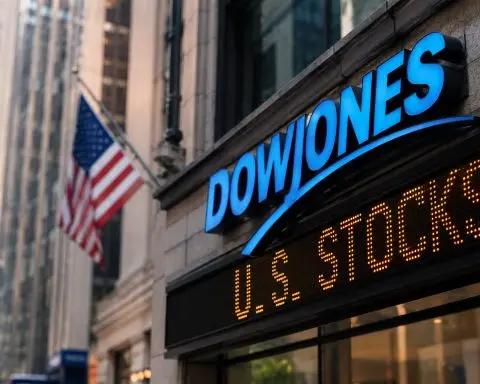
- Historic switch to Nasdaq on December 9: Walmart will transfer its listing from the New York Stock Exchange to the Nasdaq Global Select Market on December 9, 2025, keeping the ticker WMT. The move is described as a “technology‑forward” signal and is one of the largest exchange transfers ever by market value. Business Wire+2Reuters+2
- Beat‑and‑raise Q3 FY26 earnings: For Q3 FY26 (reported November 20), Walmart delivered $179.5 billion in revenue (up 5.8%, or 6.0% in constant currency) and adjusted EPS of $0.62, slightly above Wall Street estimates, while global e‑commerce sales jumped 27%. Management raised FY26 guidance for net sales growth to 4.8–5.1% and adjusted EPS to $2.58–2.63.
- Holiday season off to a record start: Over the Black Friday–Cyber Monday period, Walmart reported 57% more orders fulfilled from stores and 44% more deliveries completed in under three hours compared with last year, with nearly 10 million shoppers using the Walmart app in stores—and those in‑app shoppers spending about 25% more on average.
- Fresh capital investment in food supply chain: On December 2, Walmart announced a $350 million investment in a new 300,000‑square‑foot milk processing plant in Valdosta, Georgia, expected to create 400+ jobs and supply more than 650 Walmart and Sam’s Club stores across the U.S. Southeast.
- AI and automation now central to the story: Walmart is rolling out AI “super agents” for shoppers, associates, suppliers and developers, aiming for online sales to reach 50% of total revenue within five years, and has launched an AI‑first shopping partnership with OpenAI so customers can shop Walmart directly inside ChatGPT. Reuters+2Walmart News & Leadership+2
- Wall Street still firmly bullish, but valuation is rich: Most analyst firms rate WMT a “Strong Buy”, with 12‑month average price targets clustered around $118–$122, implying roughly 5–10% upside from current levels. At the same time, Walmart trades at about 39–43× trailing earnings, near a 20‑year high and above many peers, leading some valuation models to call the stock overvalued by 40%+. Seeking Alpha+6MarketBeat+6StockAnalysis+6
1. Where Walmart stock stands today
As of intraday trading on December 2, 2025, Walmart shares are hovering around $111, putting the company’s market capitalization close to $885–$890 billion, making it one of the ~15 most valuable public companies in the world.
Over the past 12 months, WMT has climbed roughly 20%, with year‑to‑date gains in the mid‑20% range—comfortably ahead of many consumer‑staples peers.
From a technical and risk‑reward standpoint:
- 52‑week range: roughly $79.81–$111.76, with the current price only about 0.6% below the high and almost 40% above the low.
- Valuation:
- Trailing P/E in the high‑30s to low‑40s depending on the data provider (around 39× on some platforms and ~43× on others).
- Price‑to‑sales (P/S) near 1.25–1.30, at or near the top of its 10‑year range.
- Price‑to‑book (P/B) above 9×, again near multi‑year highs.
Several independent valuation services note that, versus their discounted cash flow and relative value models, WMT trades at a significant premium. AlphaSpread, for example, estimates a base‑case intrinsic value around $64 per share, implying roughly 40%+ overvaluation versus current prices.
In short: the market is treating Walmart less like a sleepy discounter and more like a high‑growth, tech‑enabled platform—and is pricing it accordingly.
2. Nasdaq switch: Walmart leans hard into its “tech‑powered” identity
One of the biggest storyline drivers for Walmart stock right now is its upcoming move from the NYSE to the Nasdaq.
On November 20, 2025, Walmart announced it will transfer its stock listing from the New York Stock Exchange to the Nasdaq Global Select Market, with trading expected to begin on December 9, 2025 under the same ticker, “WMT.” Business Wire+1
Reuters and other outlets highlighted that this is one of the largest exchange transfers on record, both by market value and by the symbolic blow to the NYSE. Walmart framed the move as aligned with its “technology‑forward approach” and its ambition to be viewed as a people‑led, tech‑powered company rather than a traditional brick‑and‑mortar retailer. Reuters+2Reuters+2
Commentary from Barchart and others suggests several likely impacts for WMT shareholders: inkl+1
- Branding & perception: Listing alongside mega‑cap tech names on Nasdaq reinforces Walmart’s positioning as an AI‑driven omnichannel platform rather than a low‑growth consumer staples name.
- Investor base: Growth‑oriented funds and tech‑tilted ETFs that focus heavily on Nasdaq‑listed stocks may find it easier—or more politically palatable—to own WMT, potentially supporting demand.
- Story coherence: The Nasdaq move dovetails with Walmart’s heavy focus on automation, AI agents, digital advertising and marketplace expansion.
Financial media also notes that the switch comes at the end of a transformational era under CEO Doug McMillon, whose 12‑year tenure saw higher wages, revamped stores and a doubling of capital spending to build out omnichannel and digital capabilities.
At the same time, Walmart has confirmed that John Furner, currently CEO of Walmart U.S., will succeed McMillon as group CEO on February 1, 2026, signaling continuity but also giving investors a clear leadership transition to track heading into the next phase of growth.
3. Fundamentals: Q3 FY26 earnings beat and raised guidance
Walmart’s latest quarterly report, released on November 20, underpins much of the current optimism around the stock.
Q3 FY26 headline numbers
For the quarter ended October 31, 2025 (Walmart’s Q3 FY26), the company reported: briefing.com+3SEC+3Investing.com+3
- Revenue: $179.5 billion, up 5.8% year‑on‑year (or 6.0% in constant currency).
- Walmart U.S. net sales: $120.7 billion, up 5.1%.
- Comparable sales (U.S., ex‑fuel): +4.5%, driven by both higher transactions (+1.8%) and higher average ticket (+2.7%).
- Global e‑commerce: +27%, with each major business segment delivering >20% growth.
- Global advertising: +53%, with Walmart Connect U.S. up 33%.
- Operating income: down 0.2%, but adjusted operating income up 8.0% in constant currency.
- GAAP EPS: $0.77; adjusted EPS: $0.62, slightly above consensus (~$0.60).
Walmart simultaneously raised its FY26 outlook: SEC+2Yahoo Finance+2
- Net sales growth (constant currency): now 4.8–5.1% (up from 3.75–4.75%).
- Adjusted operating income growth (constant currency):4.8–5.5%.
- Adjusted EPS:$2.58–$2.63, up from a prior range of $2.52–$2.62.
Analysts and market commentary generally framed the quarter as a “beat‑and‑raise” report driven by value positioning, strong grocery and health categories, and accelerating digital sales. briefing.com+1
Omnichannel model gaining momentum
The investor‑facing materials and follow‑on analysis highlight several structural positives: Yahoo Finance+3Walmart News & Leadership+3Investing.com+3
- Store‑fulfilled e‑commerce remains the key engine: about 35% of store‑fulfilled orders are delivered in under three hours, and those expedited channels saw nearly 70% sales growth in Q3.
- International strength: Sales in Walmart International grew roughly 11% in constant currency, led by Flipkart (India), China, and Walmex, with e‑commerce in International up 26%.
- Membership & ecosystem: Membership and other income rose 9%, with membership income up 16.7%, aided by Walmart+ and Sam’s Club membership growth.
This combination—global scale, fast digital growth and rising membership and ad revenue—helps explain why the market is starting to price WMT more like a hybrid of retail + cloud‑style platform economics than a traditional grocer‑discounter.
4. Holiday season 2025: Black Friday and Cyber Monday blowout
The latest December 2 corporate update shows that the holiday season is off to a blistering start.
According to Walmart’s own release: GuruFocus+3Walmart News & Leadership+3Axios+3
- During the period from November 25 to December 1, the company saw “consistently strong” sales growth, led by digital channels, across electronics, toys, apparel, home and key holiday essentials.
- On Black Friday, store‑fulfilled delivery volume rose 57% versus last year, with 44% more orders delivered in under three hours.
- Walmart’s same‑day delivery network, powered by roughly 4,600 U.S. stores, now reaches about 95% of the U.S. population.
- The fastest Black Friday delivery this year reportedly arrived in just 10 minutes.
- The Marketplace (third‑party sellers) set new records for conversions and sales, with high demand for items like game consoles and consumer electronics.
- Nearly 10 million shoppers used the Walmart app while in stores during Black Friday; those app‑assisted trips generated around 25% higher spend than in‑store trips without app usage.
Axios and other outlets note that these results confirm U.S. consumers are still willing to spend, especially when presented with convenience, fast delivery and compelling deals, even against a backdrop of elevated inflation and macro uncertainty.
GuruFocus and other analyst platforms have responded by highlighting that Walmart’s record store‑fulfilled deliveries and strong digital engagement are reinforcing the “premium” valuation the market is currently assigning to WMT. GuruFocus
5. Strategic moves: AI, automation and vertical integration
5.1 AI “super agents” and OpenAI partnership
In July 2025, Walmart unveiled plans to roll out four AI “super agents” designed for its main stakeholder groups—customers, associates, suppliers/sellers and developers. These agents, built on “agentic AI,” are intended to become the primary interface for nearly all AI interactions with Walmart. Reuters
Key elements from the Reuters coverage and Walmart commentary: Reuters+2Reuters+2
- Walmart aims for online sales to reach roughly 50% of total revenue within five years, with AI agents streamlining everything from product discovery and returns to delivery routing.
- One agent—“Sparky”—already helps customers with personalized product suggestions, and is being expanded to handle re‑orders, event planning and even computer‑vision‑assisted recommendations based on what’s in a shopper’s fridge.
- Other agents will focus on associates (HR requests, schedule and policy questions), and on suppliers and advertisers (onboarding, order management, campaign creation).
On October 14, 2025, Walmart deepened this AI story by announcing a strategic partnership with OpenAI to create “AI‑first shopping experiences.” Customers will soon be able to shop Walmart directly inside ChatGPT using “Instant Checkout,” planning meals, restocking essentials and discovering products by conversation rather than search. Walmart News & Leadership+2Process Excellence Network+2
Walmart emphasizes that this is about moving from a search‑box‑and‑scroll paradigm to agentic commerce—a proactive, personalized shopping journey powered by generative AI.
5.2 AI tools for associates and operations
Beyond the customer‑facing features, Walmart is embedding AI deeply into its workforce and operations: Walmart News & Leadership+1
- AI‑driven task management tools are cutting shift‑planning time for team leads from about 90 minutes to 30 minutes, freeing managers to spend more time on the floor.
- A real‑time translation tool supports 44 languages, enabling smoother communication between associates and customers and recognizing Walmart‑specific brands and terms.
- Walmart’s internal conversational AI, used for years to answer routine questions from associates, is being upgraded with generative AI to turn long process documents into concise, step‑by‑step guidance.
- The company’s proprietary ML platform, Element, underpins many of these tools, allowing rapid, secure deployment at massive scale.
Management has also disclosed that over 40% of new software code is now AI‑generated or AI‑assisted, and more than 60% of freight is handled through automated distribution centers, underlining how central automation has become to Walmart’s cost and speed advantages.
5.3 Vertical integration in groceries and advertising
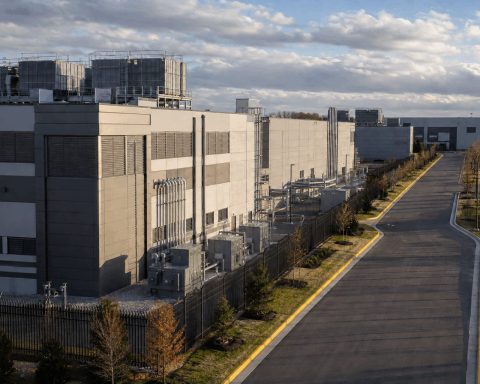
On December 2, Walmart added another brick to its vertical‑integration strategy by opening its second U.S. milk processing plant: a $350 million facility in Valdosta, Georgia.
- Size: about 300,000 square feet.
- Jobs: more than 400.
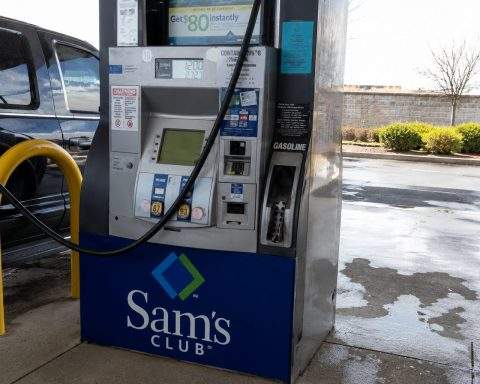
- Reach: supplying milk for Walmart and Sam’s Club private brands (Great Value and Member’s Mark) to over 650 stores across the Southeast.
- Strategy: the plant sources from local dairy farmers, helping Walmart control costs, improve supply reliability and support its push toward higher‑margin private‑label staples.
The company already runs a milk plant in Fort Wayne, Indiana, as well as case‑ready beef facilities in Georgia and Kansas, and plans a third milk facility in Texas by 2026, further tightening its grip on key grocery categories.
On the digital media side, Walmart has also moved into connected‑TV advertising with its acquisition of smart‑TV maker Vizio for about $2.3 billion, broadening its ability to sell ads inside streaming environments as part of its rapidly growing global advertising business.
Together, AI, automation and vertical integration are central to the thesis that Walmart’s margins can expand over time—even in low‑ticket categories—by blending retail, logistics, data and advertising economics.
6. Analyst ratings, price targets and quantitative forecasts
6.1 Wall Street consensus
Across major research aggregators, Walmart currently enjoys a “Strong Buy” consensus rating:
- MarketBeat: 32 analysts, average 12‑month price target $118.55 (high $130, low $91), implying about 6–7% upside from the recent price around $111.
- StockAnalysis: 30 covering analysts, consensus rating “Strong Buy” with average target around $118.10, again implying mid‑single‑digit upside. StockAnalysis
- TipRanks: 26 analysts over the last three months, average target $121.92 (range $108–$130), suggesting roughly 10% upside.
- Investing.com: average target approximately $118.66, with 39 analysts collectively rating WMT as a Strong Buy and estimating ~6.6% upside.
Put simply, most traditional equity analysts see moderate further upside over the next year, not a moonshot—consistent with a large, mature but still growing mega‑cap.
6.2 Quant and algorithmic forecasts
Algorithm‑driven platforms paint a similar picture of modest upside and relatively low volatility:
- CoinCodex expects WMT to rise about 3% to $113.89 by December 29, 2025, and roughly 6% to $118.07 by January 1, 2026, with a bullish technical sentiment and recent 30‑day volatility around 2.5%.
However, valuation‑oriented models are more skeptical:
- AlphaSpread’s intrinsic value model puts fair value near $64 per share, implying WMT is overvalued by about 42% at current prices.
- GuruFocus notes that Walmart’s P/E (~39), P/S (~1.28) and P/B (~9.25) are all near multi‑year highs, flagging the stock as trading at a premium valuation even relative to its own history.
- A widely read Seeking Alpha piece points out that Walmart is now, on some metrics, more expensive than Amazon, calling this a “mispriced Wall Street extreme” and warning that expectations may have run ahead of fundamentals. Seeking Alpha
This split—bullish fundamentals vs. stretched valuation—is at the core of the WMT debate heading into 2026.
7. Dividend, income profile and shareholder base
Walmart is not just a growth‑and‑tech story; it also remains a stalwart dividend compounder:
- WMT is recognized as a Dividend King, with 50+ consecutive years of dividend increases, and is listed among a select group of mega‑cap Dividend Kings like Coca‑Cola, Procter & Gamble and Abbott.
- While the exact yield fluctuates with the share price, the forward dividend yield today is relatively modest (roughly in the low‑1% range), reflecting the high valuation and the stock’s strong price appreciation.
- The next ex‑dividend date is slated for December 12, 2025, according to recent quote pages.
On the ownership front, recent filings and institutional news show continued interest from hedge funds and long‑term investors. MarketBeat reports new or increased positions from firms such as Quantbot Technologies and Westerkirk Capital, underscoring WMT’s status as an institutional favorite.
8. Bull vs. bear case: How to think about Walmart stock now
Not investment advice. The following is an informational framework, not a recommendation to buy or sell any security.
8.1 Bull case: Why some investors see more upside
Supporters of WMT here tend to emphasize:
- Resilient demand & trade‑down tailwind
In a choppy macro environment, Walmart benefits when budget‑conscious consumers trade down from more expensive retailers and grocery chains. Q3 comps and Black Friday data suggest Walmart is attracting both lower‑income shoppers (for essentials) and higher‑income households (for value and convenience). - Omnichannel moat and same‑day logistics
With 4,600+ U.S. stores functioning as mini‑fulfillment centers and same‑day options covering roughly 95% of the U.S. population, Walmart has built a logistics network that is difficult for rivals to replicate. Fast, store‑fulfilled delivery is increasingly a differentiator, especially as consumer expectations for speed rise. - High‑margin growth engines: ads, membership, marketplace
Walmart’s global advertising business grew over 50% in Q3, membership income is rising double digits, and marketplace growth is accelerating. These asset‑light, higher‑margin revenue streams can lift profitability even as headline sales grow “only” mid‑single‑digits. SEC+2Investing.com+2 - AI leadership and Nasdaq re‑rating
Between AI super agents, OpenAI integration and internal AI tools, Walmart is positioning itself as a “stealth tech” stock. The upcoming Nasdaq listing could broaden its investor base and sustain a higher earnings multiple if AI‑driven efficiencies and sales growth continue to show up in the numbers. TS2 Tech+4Reuters+4Walmart News & Leadership+4 - Dividend King plus growth
For long‑term investors, the combination of durable dividend growth, a global footprint and structural advantages in logistics and data is compelling—especially when paired with high‑single‑digit EPS growth guidance and potential operating leverage from automation.
8.2 Bear case: Why others see limited upside or downside risk
Skeptics tend to focus on:
- Valuation risk
With trailing P/E around 39–43× and multi‑decade‑high P/S and P/B ratios, Walmart is priced at a substantial premium to its historical norms and to many consumer‑staples peers—and in some frameworks, even richer than Amazon. If growth slows or AI-driven efficiencies disappoint, the multiple could compress. - Macro & consumer headwinds
While Walmart has done well so far, ongoing inflation, higher rates and a softening job market could pressure lower‑income shoppers and shift mix toward lower‑margin items. Even modest margin compression can have a big impact at Walmart’s scale. - Execution risk in AI and automation
AI super agents, OpenAI integrations and heavily automated fulfillment networks require massive investment and flawless execution. The payoff is promising but not guaranteed; missteps could weigh on returns or invite regulatory scrutiny around data and labor. - Competition from Amazon, Target, Costco and hard discounters
Amazon is also racing ahead in AI‑driven commerce, while Target and Costco continue to respond with aggressive promotions, membership perks and in‑house brands. In international markets, local champions and discounters remain fierce competitors.
9. What to watch next for Walmart stock
For investors tracking WMT into 2026, several upcoming catalysts and data points stand out:
- December 9, 2025 – First trading day on Nasdaq
- Watch how WMT trades around and after the listing transfer—any changes in volume, ETF flows or relative performance versus Nasdaq peers may hint at how new investor cohorts are engaging with the stock.
- Holiday quarter (Q4 FY26) performance
- The magnitude of Q4 comp growth, e‑commerce expansion and margin trends will either validate or challenge the current premium valuation, especially after record Black Friday/Cyber Monday numbers.
- AI adoption metrics
- Any disclosure on customer usage of ChatGPT shopping, Sparky and AI super agents, plus incremental ad revenue or conversion uplift, will help investors quantify the payoff from AI initiatives.
- Progress on vertical integration and supply chain investments
- Updates on the new Valdosta milk facility, the planned Texas plant and other food‑processing or logistics projects will reveal how quickly Walmart can translate these investments into cost savings and margin support.
- Leadership transition to John Furner
- Any strategic updates or capital allocation tweaks as Furner prepares to take over as CEO on February 1, 2026 will be closely scrutinized, especially around AI priorities, international growth and store investments.
10. Bottom line
As of December 2, 2025, Walmart stock sits at the intersection of three powerful narratives:
- A dominant global retailer delivering steady mid‑single‑digit sales growth and robust e‑commerce momentum.
- A tech‑powered platform leaning hard into AI, automation, digital advertising and marketplace economics—and signaling that shift with a historic move to Nasdaq.
- A richly valued Dividend King, where much of the good news may already be reflected in the share price, leaving less margin of safety if growth or margins wobble.
For investors searching today for “Walmart stock forecast 2025–2026”, the consensus picture is clear: moderate upside with above‑average quality—but also above‑average expectations. Whether WMT still offers attractive long‑term returns from here depends largely on your view of its AI and omnichannel strategy, and how comfortable you are owning a consumer giant priced like a growth‑tech hybrid.
Related articles: NYSE:WMT