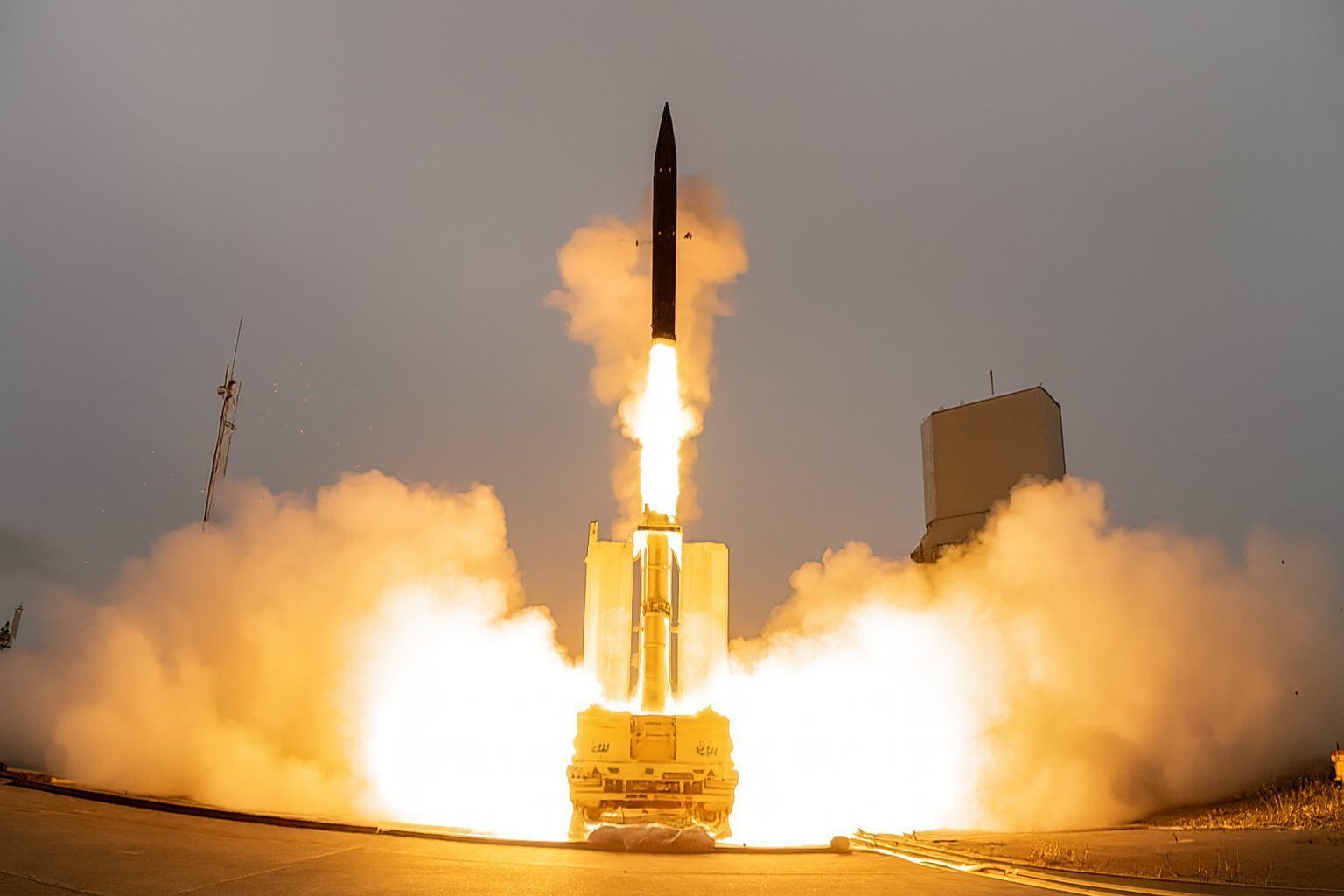

Germany has formally begun commissioning its new Arrow 3 missile defence system, turning the Holzdorf air base south of Berlin into the heart of a future long‑range protective shield for much of Europe. On 3 December 2025, the Bundeswehr declared the “initial operational capability” of the first Arrow 3 battery at Schönewalde/Holzdorf, a site straddling the border between Brandenburg and Saxony‑Anhalt.DIE WELT+1
The step marks more than just a technical upgrade. It is:
- Europe’s first exo‑atmospheric ballistic missile interceptor on duty,
- the first deployment of Arrow 3 outside Israel,Defense News+1
- and a key building block in Germany’s ambition to become a central provider of air and missile defence within NATO and the European Sky Shield Initiative.
Arrow 3 goes live at Holzdorf
At midday on 3 December, senior military leaders including Inspector General Carsten Breuer and Air Force Inspector Lieutenant General Holger Neumann gathered at Fliegerhorst Holzdorf to declare what NATO calls Initial Operational Capability (IOC) for Arrow 3.
IOC does not mean the system is fully deployed, but that:
- the first radar,
- launchers with ready missiles, and
- trained personnel
are in place and able to provide a limited protective function against long‑range ballistic missiles.
Holzdorf/Schönewalde is the first of three planned Arrow 3 locations in Germany. Additional batteries are slated for northern Germany (Schleswig‑Holstein) and Bavaria by the end of the decade, creating a north–south belt of long‑range missile defence coverage.
The choice of Holzdorf is strategic:
- roughly 70–80 kilometres south of Berlin,
- close to the intersection of three federal states (Brandenburg, Saxony‑Anhalt, Saxony),
- and already home to important Luftwaffe helicopter units.
What is the Arrow 3 missile defence system?
Arrow 3 is an exo‑atmospheric anti‑ballistic missile system jointly developed by Israel Aerospace Industries (IAI) and the United States, with Boeing as a major industrial partner.
Key technical features
According to public technical data and German government briefings, Arrow 3:
- intercepts ballistic missiles outside the Earth’s atmosphere, at altitudes above 100 kilometres,Wikipedia+1
- can engage threats launched from up to around 2,400 kilometres away,Wikipedia+1
- uses a “hit‑to‑kill” warhead – it carries no explosive charge but destroys its target through sheer impact energy,DIE ZEIT+1
- is optimized to counter missiles that may carry weapons of mass destruction, by breaking them up high enough that any remaining material burns up as it falls back through the atmosphere.
Arrow 3 forms the top layer of a multi‑tiered defence architecture:
- IRIS‑T SLM and Patriot batteries handle aircraft, cruise missiles and shorter‑range ballistic threats in the lower and mid‑altitudes.
- Arrow 3 deals with long‑range ballistic missiles in space, giving more time and more distance to defeat incoming warheads.
This layered approach is central to both NATO’s ballistic missile defence planning and Germany’s own concept of national “air defence of the future”.
Why Germany is investing billions in Arrow 3
The Arrow 3 purchase is one of the largest defence projects in modern German history. The contract, signed in late 2023 after U.S. approval, is valued at roughly €3.6–4 billion and is being financed from the €100‑billion special fund created after Russia’s full‑scale invasion of Ukraine.
For Israel, the deal is widely described as the largest defence export in the country’s history; for Germany, Arrow 3 offers a capability it simply did not have before: the ability to detect and intercept ballistic missiles thousands of kilometres away, before they ever enter German airspace.
German Defence Minister Boris Pistorius argues that Arrow 3:
- provides early warning and protection for the population and critical infrastructure from long‑range missiles,
- is a “strategic capability” unique among European partners,
- and strengthens both Germany’s central role in NATO and the European pillar of the alliance.
The timing is no accident. Russia’s missile and drone attacks against Ukraine, and repeated Western warnings about Moscow’s modernizing arsenal of long‑range weapons, have dramatically exposed Europe’s vulnerabilities. NATO planners now estimate that European air‑defence capacity may need to expand by several hundred percent to meet future threat scenarios.
Holzdorf: from endangered base to strategic hub
For the region around Holzdorf and Schönewalde, Arrow 3 is as much an economic and structural policy story as a military one.
The air base – once repeatedly threatened with closure – is being transformed into the largest Luftwaffe site in eastern Germany.
According to regional leaders and Bundeswehr planning documents:
- Holzdorf is becoming a central hub for Germany’s air force, combining missile defence and air transport.
- Alongside Arrow 3, 47 of 60 planned CH‑47F Chinook heavy transport helicopters will be stationed there later this decade.
- Military investment at the base is expected to reach around €700 million.
- Brandenburg is channeling roughly €100 million in structural funds into local infrastructure – roads, rail links, childcare, schools and other public services.
The number of soldiers and civilian employees is set to rise from about 2,000 today to between 2,500 and 3,000, with an estimated 1,000–1,200 additional residents moving into the area.
Local governments hail Holzdorf’s expansion as a lifeline for a former coal‑mining region searching for new economic opportunities. But the transformation also brings familiar tensions: more noise, more traffic – and a high‑profile military target in the event of crisis.
Combat‑proven technology – but not a magic shield
Arrow 3 is not an untested prototype. It has already been used operationally in the Middle East, where Israeli forces have employed Arrow missiles against ballistic attacks from Iran and the Iran‑backed Houthi movement in Yemen.
In April and October 2024, Arrow interceptors were reported to have destroyed a large share of ballistic missiles launched at Israel during intense exchanges with Iran. Yet even in those engagements, some missiles still penetrated the defensive screen – a reminder that no system can guarantee hermetic protection, especially against saturation attacks or evolving missile designs.
For Germany, Arrow 3 therefore:
- closes a major capability gap,
- but does not create an impenetrable “iron dome” over the country.
Its real value lies in buying time – for decision‑makers, for civil protection, and for other layers of air defence to engage any threats that slip through.
Arrow 3 inside NATO and the European Sky Shield Initiative
Arrow 3 fits into a broader effort to reshape Europe’s air and missile defence architecture.
Germany launched the European Sky Shield Initiative (ESSI) in 2022, a voluntary project that now includes over 20 partner countries (23–24, depending on source).
ESSI aims to create an interoperable mix of systems across Europe, typically built around three broad layers:
- Short‑range and point defence – such as IRIS‑T and similar systems.
- Medium‑range protection – Patriot and comparable interceptors.
- Long‑range ballistic missile defence – where Arrow 3 becomes the key European node.
Germany plans to integrate its Arrow 3 batteries into NATO’s command-and-control structure, complementing existing U.S. radar installations in Turkey and missile sites in Romania.
Supporters argue this not only protects German territory, but also extends coverage to neighbouring EU and NATO states, particularly in Central and Eastern Europe.
Political debate: security, sovereignty and Israel ties
Despite broad cross‑party support for strengthening air defence, Arrow 3 has not arrived without controversy.
Cost and NATO planning
Security experts like Lydia Wachs and others have pointed out that Arrow 3 does not precisely match existing NATO capability targets and that Germany is buying a sophisticated system that many allies did not explicitly prioritize.
French President Emmanuel Macron has also warned that choosing non‑European hardware on this scale risks undermining Europe’s defence‑industrial sovereignty, arguing that there are domestic options for many air‑defence roles.
Criticism from the political left
In the states hosting Holzdorf, left‑wing parties and peace groups have criticized the project as a symbol of militarisation and arms‑race logic.
- The Left Party (Die Linke) has protested Arrow 3 during Easter marches and warned of an “arms spiral”.
- Within Brandenburg’s SPD–BSW coalition, the SPD backs the base expansion, while BSW leaders have called Arrow 3 a “very expensive mistake.”DIE WELT
The Israel connection and German public opinion
Because Arrow 3 is Israeli‑made, the deal is entangled with a broader debate over Germany’s arms exports to Israel during and after the Gaza war.
A national poll earlier in 2025 found that around three quarters of Germans favour stricter controls on arms exports to Israel, and a significant minority supports an outright ban.
While the Arrow 3 sale predates many of these debates – negotiations started soon after Russia’s 2022 invasion – critics argue that large, long‑term projects deepen Germany’s dependence on and complicity with Israeli military policy. Supporters counter that Arrow 3 is a purely defensive system, protecting European civilians rather than projecting force abroad.
How Arrow 3 works in a crisis scenario
In simplified terms, a potential attack would unfold like this:
- Early detection
Powerful radar systems detect a ballistic missile shortly after launch and begin tracking its trajectory. - Fire control and engagement decision
A command centre calculates the missile’s path and decides whether and when to launch Arrow 3 interceptors. - Launch and space intercept
Arrow 3 rockets leave their silos, accelerate to hypersonic speed, exit the atmosphere and manoeuvre toward the incoming warhead. Using its “hit‑to‑kill” guidance, the interceptor aims to collide directly with the target in space.Wikipedia+2Army Recognition+2 - Debris burn‑up
Because the interception happens above the atmosphere, most debris burns up on re‑entry, reducing the risk to people on the ground.
If an intercept fails, lower‑layer systems such as Patriot could still attempt to destroy the warhead closer to the ground.
What happens next?
The 3 December IOC declaration is only the first chapter of Germany’s Arrow 3 story.
Over the coming years, the Bundeswehr and its Israeli and American partners will:
- Deliver more batteries and missiles, expanding the number of launchers and interceptors at Holzdorf and future sites.
- Complete major infrastructure projects at Holzdorf, with construction extending into the late 2020s.
- Integrate Arrow 3 into NATO’s broader missile defence network, including data links to allied sensors.
- Train hundreds of German soldiers both in Germany and with Israeli counterparts, who have combat experience operating Arrow systems.
Full operational capability for the German Arrow 3 shield is currently expected around 2030.
Why this matters for Europe
The activation of Arrow 3 at Holzdorf on 3 December 2025 is a genuine turning point:
- It closes a long‑criticised gap in European defences against long‑range ballistic missiles.
- It cements Germany’s role as a core provider of high‑end air and missile defence within NATO.
- It sends a signal to potential adversaries – above all Russia, but also states like Iran – that Europe is investing seriously in protecting its populations and critical infrastructure.
At the same time, Arrow 3 crystallises big strategic questions:
- How much should Europe rely on non‑European defence technology?
- How far can missile defence really go in neutralising nuclear and ballistic threats?
- And how will societies balance the desire for security with concerns about cost, escalation and the moral complexity of arms deals?
Those debates will continue. But after years of discussion, studies and parliamentary votes, one fact is now tangible: Germany’s long‑range missile shield has moved from PowerPoint slides to concrete, steel and armed launchers in the forests of eastern Germany.
Related articles: NYSE:BA