
London stocks traded broadly sideways on Thursday, 4 December 2025, with the FTSE 100 edging lower while mid‑caps and smaller companies outperformed on a busy day for corporate results.
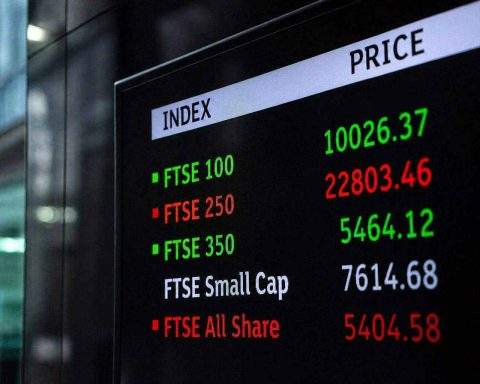
By mid‑morning, the blue‑chip index was down around 0.1% near 9,680–9,690, a touch below Wednesday’s close at 9,692 and still just shy of last month’s record high around 9,787. London South East+2San Mateo Daily Journal+2 The FTSE 250 mid‑cap index and the AIM All‑Share both traded about 0.1% higher, reflecting stronger appetite for domestically focused and growth names.
Continental Europe outpaced London: Germany’s DAX gained around 0.8–0.9% and France’s CAC 40 rose about 0.3–0.4% as the UK benchmark lagged its regional peers for another session.
Index snapshot: FTSE 100, FTSE 250 and AIM on 4 December 2025
- FTSE 100: Opened at 9,680.30, down 0.1%.
- FTSE 250: Around 22,013, up 0.1% at the open.
- AIM All‑Share: Also up 0.1% in early trade.
- As of around 08:22 GMT, the FTSE 100 was still off about 0.1%, with GBP/USD trading near 1.33 and European indices firmly in the green.
Despite today’s softness, it has been a powerful year for UK equities: Britain’s FTSE 100 is up almost 20% year‑to‑date, broadly in line with Germany’s DAX and ahead of the S&P 500 in local‑currency terms.
Why London is lagging Europe today: utilities and regulation bite
The main drag on the FTSE 100 came from regulated utilities, after energy watchdog Ofgem signed off on a major investment package for UK networks:
- Ofgem approved £28 billion of spending on gas and electricity infrastructure over the next five years, lifting its earlier provisional figure of £24 billion.
- The regulator warned that network charges on household bills are set to rise by about £108 by 2031, slightly more than previously estimated.
That decision hit the two large listed network operators:
- SSE fell about 1.8%, as investors digested the trade‑off between higher allowed investment and political risk around rising bills.
- National Grid slipped roughly 0.8% on similar concerns.
Both firms insisted they “welcomed” the recognition of the need for heavy investment but signalled they would examine whether the final package is sufficiently investable. London South East+1
Utilities’ weakness more than offset support from miners, energy names and select industrials, leaving the FTSE 100 flat‑to‑lower even as the rest of Europe rallies.
FTSE reshuffle: WPP out, British Land in
Today’s trade is also being shaped by the latest FTSE index review, confirmed after Wednesday’s close and effective from 22 December:
- Advertising giant WPP is being relegated from the FTSE 100 after nearly 30 years, following a collapse in its market value from around £24bn in 2017 to about £3.1bn and a share price slide of roughly two‑thirds in 2025 alone.
- British Land, previously the largest stock in the FTSE 250 and now valued at over £4bn, is promoted to the FTSE 100 after a strong year with shares up about 17%.
Index‑tracking funds and ETFs will need to rebalance around these changes, adding to flows between property and advertising stocks and contributing to intraday volatility in WPP and British Land.
The reshuffle comes against a backdrop of rising concentration risk in UK equities: recent analysis in the Financial Times notes that an unusually large part of the FTSE 100’s 2025 gains has been driven by banks and defence stocks, with names like Lloyds Banking Group and Rolls‑Royce having an outsized impact on overall returns.
Corporate winners and losers: SSP soars, AJ Bell sinks, Rio Tinto updates
A dense earnings calendar made mid‑caps the main story of the day, with several high‑profile UK names reporting results or guidance updates.
Travel & consumer: SSP, Frasers and Watches of Switzerland
SSP Group (SSPG) – the owner of Upper Crust and other travel‑hub food outlets – was one of the day’s standout gainers:
- Full‑year revenue rose 6% to £3.64bn, with underlying operating profit up about 8% to £223m and EPS up 19%.
- Like‑for‑like sales grew 3.7%, and the dividend was raised by 20% to 4.2p per share.
- The stock jumped around 15–16%, as investors welcomed resilient trading, improving cash flow and management’s upbeat tone on travel demand.
In retail:
- Frasers Group kept its full‑year profit guidance in the £550m–£600m range, even as half‑year adjusted profit dipped 2.8% due to higher impairments and interest costs. Retail trading profit rose over 12%, but the shares traded about 2% lower as investors focused on the drag from one‑off items and higher financing costs.
- Luxury retailer Watches of Switzerland reported a jump in first‑half pretax profit to £61m from £41m, and revenue growth of 10% at constant currency, helped by stronger demand and a reduction in tariffs hitting watch imports.
These updates provided important read‑throughs for UK consumer and travel demand heading into Christmas and 2026.
Financials and platforms: AJ Bell under pressure
Investment platform AJ Bell delivered record annual results:
- Revenue climbed 18% to £317.8m.
- Profit before tax rose 22% to £137.8m, slightly ahead of consensus, with PBT margins improving to 43.4% and EPS reaching 25.6p.
Despite the strong numbers, AJ Bell’s shares fell more than 6% in early trade, suggesting profit‑taking after a strong run and some nerves about future retail investment flows after months of outflows from UK equity funds.
Infrastructure and construction: Balfour Beatty and Baltic Classifieds
Balfour Beatty added to the positive tone in infrastructure:
- The company expects its order book to rise by around 20% in 2025 to £22.1bn, up from £18.4bn in 2024, driven heavily by UK energy projects.
- Management also guided average monthly net cash to the top end of its previous range, underlining balance sheet strength.
The stock rose over 1% as investors priced in multi‑year visibility from energy and infrastructure spending.
In contrast, Baltic Classifieds Group reported 7% revenue growth and a 22% jump in profit, with an EBITDA margin around 78%, but the shares slumped more than 15–20%, suggesting expectations were even higher or that investors are wary of slowing growth and lofty margins.
Commodities and miners: Rio Tinto’s copper pivot
On the commodity side, Rio Tinto helped underpin the mining sector even as the broader index drifted:
- The miner raised its 2025 copper production guidance to 860–875kt, up from 780–850kt, and cut its unit cost guidance meaningfully.
- At its capital markets day, Rio outlined a restructuring into three core businesses – Iron Ore, Copper, and Aluminium & Lithium – aimed at simplifying operations and lifting returns.
Copper prices remain near record highs, supporting the FTSE 100’s heavyweight miners, which were already among yesterday’s strongest performers.
Sector themes: utilities, banks, miners and aerospace
Utilities in the political spotlight
Today’s sell‑off in SSE and National Grid came on top of ongoing scrutiny of UK utilities, intensified by recent headlines around Thames Water’s fragile finances and the risk of special administration. Analysts warn that this environment reinforces a “political risk premium” for water and energy networks, even when regulators allow more investment. TechStock²+1
Banks still digesting motor‑finance compensation
Banks were muted to softer after sharp falls earlier in the week. On Wednesday, the FCA confirmed it will lift the pause on motor‑finance mis‑selling complaints on 31 May 2026, two months earlier than initially proposed, raising the prospect of an £11bn‑plus compensation bill for lenders like Lloyds, Close Brothers and Barclays.
That announcement drove bank indices down about 1.7% yesterday, even as miners and energy stocks rallied, and the sector remains under pressure.
Rolls‑Royce and defence stocks still carry the FTSE
One of the biggest stories behind the FTSE 100’s 2025 surge has been Rolls‑Royce. As of today:
- The shares closed at 1,067.5p, around 10–12% below their late‑September peak near £11.96 but still up roughly 80% year‑to‑date.
- Civil aerospace flying hours are now above pre‑pandemic levels, defence order books are swelling, and the Power Systems division is increasingly tied to data‑centre power and energy‑transition projects.
Analyst consensus still leans “Buy”, with average 12‑month price targets around 1,200p, though several commentators argue that valuation now embeds very optimistic earnings expectations and may be vulnerable to any execution slip‑ups. TechStock²
Defence and banking, alongside a handful of other large caps, explain much of the return concentration in the FTSE 100 this year, leaving the index more exposed if those sectors stumble.
Macro backdrop: services slowdown, UK Budget and interest‑rate expectations
Slower services growth but no recession signal (yet)
Fresh data this week showed UK services activity slowing but still expanding:
- The S&P Global UK Services PMI slipped to 51.3 in November from 52.3 in October, remaining above the 50 level that separates expansion from contraction.
- New orders fell for the first time since July, exports weakened and services employment recorded its sharpest drop since February, with many firms citing pre‑Budget uncertainty and softer demand.
This backdrop of “slow but positive” growth helps explain why the FTSE 100 – packed with global cyclicals, energy, miners and defensive consumer names – has outperformed the more domestically sensitive FTSE 250 in 2025.
Reeves’s Budget, gilts and the Bank of England
Last week’s autumn budget from Chancellor Rachel Reeves continues to shape sentiment across UK assets:
- Economists at Goldman Sachs estimate the new measures will lift UK GDP by about 0.1 percentage points and shave 0.4 points off inflation in the 2026 fiscal year, a modest but helpful tweak to the outlook.
- They expect the Bank of England to deliver a rate cut in December, followed by three more cuts in 2026, taking Bank Rate down to around 3% by summer 2026, assuming inflation trends continue to improve.
- On gilts, Goldman argues that the risk premium baked into long‑dated UK yields remains too high and sees scope for 10‑year gilt yields to fall from roughly 4.45% in late November to about 4% by end‑2026, provided the BoE delivers steady easing.
This combination of slower inflation, gradual BoE cuts and a calmer gilt market is one reason strategists describe the UK large‑cap index as a “defensive but still discounted” way to gain global equity exposure. J.P. Morgan+2UK+2
Fund flows: £10bn+ exodus from UK equity funds shows sentiment still fragile
Under the surface, domestic investor sentiment towards UK stocks remains cautious:
- Data from Calastone show that British investors were net sellers of equity funds for a sixth straight month in November, pulling £3bn in the second‑worst month for outflows on record.
- Over the last six months, net equity outflows total £10.4bn (about $13.9bn), as savers rotated towards money‑market and bond funds amid political and tax worries.
Interestingly, Calastone’s daily data show that outflows abruptly stopped on 26 November, the day Reeves delivered her budget, and turned into modest inflows over the final three trading days of the month, suggesting that fears about harsher tax changes had been partly priced in and may now be easing.
The flows picture helps explain why UK valuations remain cheap even after a strong year for prices: global and UK‑domiciled funds have been net sellers of UK equities for years, leading to a persistent valuation discount relative to other markets.
Strategists’ outlook: cautious optimism and talk of a “Santa rally”
Several major houses updated their UK equity outlooks into year‑end and 2026:
- UBS expects UK corporate earnings to contract about 3% in 2025 before rebounding with 5% growth in 2026 and accelerating further in 2027, supporting a FTSE 100 target around 9,600 by end‑2025 and 9,800 by mid‑2026.
- An Invesco webinar recently argued that both global and UK equities are “reasonably well set up” for 2026, with gradual Fed and BoE rate cuts pointing to a “Goldilocks” soft‑landing scenario rather than a deep recession. TechStock²
- Multiple fund managers highlight that the UK market still trades at a meaningful valuation discount to global peers, even after narrowing slightly in 2025, with healthy dividend yields and buybacks adding to total‑return potential.
Seasonality is also in focus:
- Fidelity’s analysis of three decades of data shows the FTSE 100 has delivered positive December total returns in 24 of the last 30 years, with average gains around 2.1%, versus roughly 0.3% for other months.
However, strategists warn that “Santa rallies” are never guaranteed. Softer services data, lingering political noise and the over‑reliance on a handful of banks and defence names mean any negative surprise in rates, regulation or geopolitics could quickly derail year‑end optimism. Financial Times+1
What today’s session means for UK investors
Three big messages stand out from today’s UK stock market action:
- Defensives vs growth remains a live tug‑of‑war
Utilities sold off on regulatory headlines, while infrastructure, travel and luxury names – SSP, Balfour Beatty, Watches of Switzerland – were rewarded for credible, cash‑generative growth stories. That supports the case for balanced exposure across defensives and cyclicals rather than an all‑or‑nothing stance on “risk‑on” sectors. London South East+1 - Mid‑caps are doing a lot of heavy lifting
Even as the FTSE 100 drifted lower, the FTSE 250 and AIM inched higher, backed by upbeat earnings and order‑book news. This fits a broader 2025 pattern of domestic cyclicals and quality mid‑caps recovering from years of underperformance, especially when the macro news is merely “not bad”. London South East+2Investing.com Canada+2 - Valuations and flows still tell a contrarian story
UK stocks have doubled in value over the last five years and the FTSE 100 is near record highs, yet UK equity funds have haemorrhaged more than £100bn over the long term and over £10bn in just the last six months. Morningstar+2LSEG+2
For long‑term investors, that combination of strong performance, persistent discounts and ongoing scepticism continues to frame the UK as a “cheap but unloved” market – one where stock‑picking and sector allocation may matter more than ever.
This article is for informational purposes only and does not constitute investment advice. Investors should conduct their own research or consult a regulated adviser before making investment decisions.
Related articles: FTSE 100