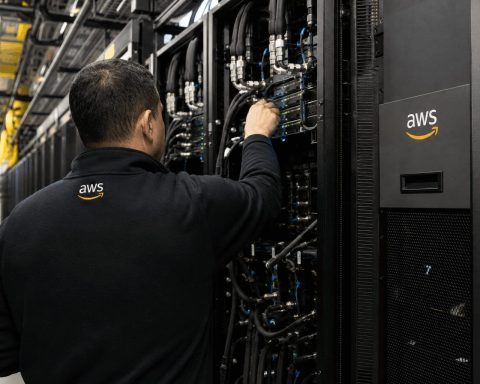

Amazon.com, Inc. NASDAQ:AMZN is in a classic “strong business, tired stock” phase. After setting fresh all‑time highs in early November, the share price has slipped around 9% over the past month, even as Wall Street doubles down on bullish price targets and Amazon ramps up its AI and cloud ambitions. SwingTradeBot+1
Below is a full rundown of Amazon stock news, forecasts, and expert analysis as of December 4, 2025, suitable for Google News and Discover.
Amazon stock today: price, performance and context
As of around midday on December 4, 2025, Amazon stock is trading near $232 per share, down less than 1% on the session. The latest data show a price of $232.38, implying a small daily decline from the prior close.
Key snapshot metrics:
- Market cap: about $2.48 trillion
- P/E ratio: ~32.8
- PEG ratio: ~1.6
- 52‑week range: roughly $161.38–$258.60 MarketBeat
Over the past month, AMZN shares have fallen roughly 9%, sliding from about $249.32 in early November to the mid‑$230s. SwingTradeBot Yet that weakness comes after a massive multi‑year run:
- Simply Wall St notes a three‑year total shareholder return of about 157%, highlighting the long‑term strength behind the recent pullback.
- A December 1 analysis from 24/7 Wall St. reported the stock was up ~5.9% year‑to‑date and ~10.7% over the prior 12 months at that point.
In short, Amazon stock today looks like a high‑quality name undergoing a healthy correction, not a broken story.
Q3 2025 earnings: AWS reaccelerates, AI spending surges
Amazon’s recent fundamentals help explain why analysts remain positive despite the share‑price wobble.
Double‑digit revenue growth and Anthropic gains
For Q3 2025, Amazon reported:
- Net sales: $180.2 billion, up 13% year‑on‑year (12% excluding FX).
- Net income: $21.2 billion, or $1.95 per diluted share, up from $15.3 billion and $1.43 a year earlier.
- That net income includes about $9.5 billion in pre‑tax gains tied to Amazon’s investment in Anthropic.
- Operating cash flow (TTM):$130.7 billion, up 16% from $112.7 billion a year earlier.
Segment performance was broad‑based:
- North America: $106.3 billion in sales, up 11% YoY
- International: $40.9 billion, up 14% YoY
- AWS: $33.0 billion, up 20% YoY Amazon+1
Operating income came in at $17.4 billion, flat year‑on‑year, but this includes $4.3 billion in special charges (a $2.5 billion FTC settlement plus $1.8 billion of severance tied to planned role eliminations). Excluding those items, operating income would have been about $21.7 billion, implying underlying margin improvement.
AWS: reacceleration and a massive AI infrastructure build‑out
Independent research firm Futurum describes Q3 FY 2025 as a clear reacceleration quarter for AWS: Futurum
- AWS revenue grew 20% YoY to $33.0 billion, with an annualized run‑rate near $132 billion.
- AWS has added more than 3.8 gigawatts of power capacity over the last 12 months and plans at least another 1 GW in Q4, with total capacity expected to double again by FY 2027.
- Backlog reached roughly $200 billion, and management highlighted that October alone brought in new AI and cloud deals exceeding Q3’s deal volume.
CEO Andy Jassy emphasized that AI is now driving “meaningful improvements in every corner of the business,” with particular focus on: Futurum
- Trainium custom AI chips
- Bedrock as a unified inference platform
- New agentic AI tools designed to keep customers on AWS for training and inference workloads
Retail, ads and Rufus: the AI flywheel
Beyond AWS, Amazon’s consumer and advertising engines continue to fire:
- Q3 advertising revenue reached $17.7 billion, up about 22% YoY, powered by Amazon’s DSP and new media partnerships (including premium streaming inventory).
- Rufus, Amazon’s AI shopping assistant, has served around 250 million customers this year; users who interact with Rufus are around 60% more likely to complete a purchase, and management believes Rufus could drive over $10 billion in incremental annualized sales.
- Same‑day grocery delivery is now available in 1,000+ U.S. cities and towns, with a plan to more than double that coverage, reinforcing Amazon’s logistics edge.
Guidance underscores the company’s confidence:
- Q4 2025 revenue guidance:$206–213 billion
- Q4 operating income guidance:$21–26 billion
- CapEx: roughly $125 billion expected in FY 2025, with even higher spending anticipated in 2026, largely aimed at AI and data center infrastructure.
The bottom line: Amazon is spending heavily on AI infrastructure, but those investments are supported by double‑digit revenue and EPS growth and a swelling AWS backlog.
Trainium3 and the AI chip arms race
One of the biggest new‑news drivers for Amazon stock this week is its latest AI chip.
At re:Invent 2025, Amazon unveiled Trainium3, an upgraded in‑house AI chip designed to train and run large AI models more efficiently than off‑the‑shelf GPUs.
Key points from recent coverage:
- Trainium is already a multibillion‑dollar business inside AWS, according to AWS leadership.
- Amazon executives say customers can save 30–40% on some AI workloads by using Trainium‑based instances instead of Nvidia GPUs, potentially reducing both AWS’s cost base and customers’ bills.
- The more workloads Amazon moves to its own chips, the less it has to spend on Nvidia hardware—a meaningful lever given Amazon is estimated to account for about 7.5% of Nvidia’s revenue.
A widely shared 24/7 Wall St. piece notes that despite the roughly 9% pullback in Amazon’s share price over the past month, sentiment on Reddit and prediction markets remains broadly bullish as investors look past near‑term volatility and focus on Trainium3’s potential to challenge Nvidia in AI infrastructure.
For shareholders, Trainium3 is less about competing directly with chipmakers and more about protecting AWS margins and deepening lock‑in for AI workloads.
Layoffs, automation and cost discipline
Amazon’s AI expansion is happening alongside one of its largest corporate restructurings to date.
In early November, Amazon announced layoffs affecting around 14,000 corporate roles, targeting divisions such as People Experience & Technology, Devices & Services, and Operations.
According to reporting from CoinCentral:
- Affected employees were notified via text and email, then offered 90 days of full pay and benefits plus severance and job‑placement support.
- CEO Andy Jassy framed the cuts as part of a broader push to simplify internal structures and accelerate automation and AI integration across the business.
- Despite the human cost, the market reaction was muted to positive: Amazon stock closed at $244.22, up about 9.6% on October 31, and edged higher in pre‑market trading after the announcement.
Separately, 24/7 Wall St. reported on leaked internal documents suggesting Amazon aims to replace up to 600,000 jobs with robots by 2027, potentially reducing per‑item costs by around $0.30 as automation expands across warehouses and logistics.
Taken together, these moves show Amazon leaning hard into automation and AI‑driven efficiency, a theme investors often reward over the long term, even when it creates short‑term headlines and workforce upheaval.
Analyst sentiment: strong buy consensus and fresh target hikes
Despite the recent pullback, Wall Street remains firmly bullish on Amazon stock.
Consensus ratings and 12‑month price targets
According to StockAnalysis, based on 46 covering analysts: StockAnalysis
- Consensus rating:“Strong Buy”
- Average 12‑month price target:$283.85
- Implied upside: about 22% from current levels
- Target range:
- Low: $195
- Median: $295
- High: $340
GuruFocus aggregates a slightly larger group of analysts and finds: GuruFocus
- Average 1‑year target:$290.22
- High estimate:$360.00
- Low estimate:$227.10
- Implied upside of roughly 25% versus a recent price near $232
- An average brokerage recommendation of 1.8, corresponding to an “Outperform” rating on its 1–5 scale
Fintel data summarized by Nasdaq shows that as of November 17, the average one‑year price target for AMZN is $294.40, with a range from $229.37 to $369.46, implying ~25.6% upside from a closing price of $234.42.
Fresh calls this week: Wedbush, BofA, Oppenheimer and more
Several high‑profile analysts have reiterated or raised their targets in the last few days: StockAnalysis+2Finviz+2
- Wedbush (Scott Devitt): Reiterated Buy with a $340 target (~46% upside) on December 3.
- Citizens (Andrew Boone): Reiterated Buy / Market Outperform with a $300 target (~29% upside).
- Bank of America (Justin Post): Lifted his target from $272 to $303 and kept a “Strong Buy” stance after meetings around AWS and re:Invent.
- Wells Fargo (Ken Gawrelski): Nudged its target from $292 to $295, retaining an Overweight/Buy rating.
- Oppenheimer (Jason Helfstein): Raised its target from $290 to $305, citing AWS capacity expansion and AI demand as drivers of multi‑year upside.
A Finviz/Insider Monkey write‑up on the Oppenheimer note highlights that AWS plans to double capacity again by 2027, after already doubling since 2022, and expects at least 1 gigawatt of additional capacity in Q4. The firm estimates roughly $3 billion in revenue per incremental gigawatt, implying mid‑teens upside to Street AWS revenue estimates by 2026–2027 and potential stock value in the “mid‑$300s” under a more optimistic scenario. Finviz
Meanwhile, a GuruFocus alert notes that Citizens has reiterated its Market Outperform rating with a $300 target, and also recaps recent moves by other banks including Wells Fargo, Oppenheimer, Rosenblatt, Rothschild & Co, and Mizuho, most of which maintain bullish ratings and higher price objectives.
Long‑term scenario forecasts through 2030
For investors looking beyond the usual 12‑month window:
- A December 3 24/7 Wall St. forecast models Amazon’s share price rising from about today’s levels to $250.85 in 2025, $262.90 in 2026, $305.66 in 2027, and ultimately $524.67 by 2030, implying more than 120% upside over five years in their scenario.
- That same model assumes revenue growing about 10% annually through 2030 but with some margin compression as competition in AWS intensifies.
These projections are only one house view, but they illustrate how many analysts see Amazon as a long‑duration compounder rather than a short‑term trading story.
Institutional flows and insider activity
Recent regulatory filings show both accumulation and modest profit‑taking among institutional investors, alongside notable insider sales.
From a series of December 4 MarketBeat filings: MarketBeat+4MarketBeat+4MarketBeat+4
- Sustainable Insight Capital Management
- Increased its Amazon position by 18% in Q2, adding 10,459 shares to reach 68,423 shares worth about $15.0 million.
- AMZN is now roughly 6.8% of the fund’s portfolio and its fourth‑largest holding.
- Pekin Hardy Strauss Inc.
- Boosted its stake by 9.5% to 26,706 shares (about $5.86 million).
- Middleton & Co. Inc. MA
- Trimmed its stake by 2.2% to 253,044 shares, but Amazon still accounts for ~6.2% of its portfolio and remains its single largest holding at roughly $55.5 million.
- Horizon Investment Services LLC
- Reduced its stake by 10.4% to 23,544 shares, worth around $5.17 million, still its 12th‑largest position.
Across these reports, MarketBeat notes that about 72.2% of Amazon’s float is held by institutions, reinforcing AMZN’s status as a core institutional holding.
On the insider side:
- Over the last 90 days, insiders have sold roughly 82,234 shares, worth about $19.1 million, including sales by CEO Andy Jassy, AWS CEO Matthew Garman, and director Daniel Huttenlocher.
- Despite the selling, insiders still own around 9.7% of the company, a relatively high figure for a mega‑cap tech name.
Insider sales at these scale levels are often interpreted as routine diversification when a stock is near all‑time highs, rather than a direct negative signal, but they are worth monitoring.
Valuation check: is Amazon stock cheap after the pullback?
Valuation is where opinions start to diverge.
A fresh December 4 analysis from Simply Wall St frames Amazon’s recent weakness as a potential opportunity: Simply Wall St
- Their narrative assigns a fair value of about $234.75 per share, just above the latest close, and flags AMZN as slightly undervalued at current levels.
- They estimate Amazon trades around 32.5× earnings, above the global multi‑line retail average of 20.1×, but slightly below close peers at 34.9× and under what they consider a “fair” premium multiple of about 40.2×.
MarketBeat’s snapshot similarly shows: MarketBeat
- P/E: ~32.8
- P/E/G: ~1.61
- Beta: ~1.37
In other words, Amazon still commands a premium valuation, but that premium has narrowed somewhat during the recent slide. Whether that is “cheap enough” depends on your confidence that:
- AWS can sustain mid‑teens to 20%+ growth,
- AI and advertising can continue to expand margins over time, and
- Massive CapEx on data centers and custom silicon ultimately earns an attractive return.
Other current news shaping the AMZN narrative
Several additional headlines over the last 24–48 hours help fill out the picture:
- Amazon stock down 9% on Trainium3 narrative: 24/7 Wall St.’s widely circulated note emphasizes that the recent drop comes amid continued bullish sentiment in online communities, with investors viewing Trainium3 as a long‑term positive despite near‑term volatility.
- AI chip ambitions and Nvidia: A detailed Motley Fool article (via Finviz) argues that Trainium3 could reduce Amazon’s reliance on Nvidia and improve AI economics for AWS customers, while raising the question of how much pressure this puts on Nvidia’s pricing power.
- Prime Video’s new news tab: Reuters reports that Amazon is adding a free news tab to Prime Video for U.S. customers in a push to increase engagement and ad inventory—another small but notable driver for the ads business.
- USPS relationship under review: The same MarketBeat news feed flags a Reuters story noting Amazon is exploring changes to its USPS partnership, which could affect delivery economics if it shifts more volume in‑house or to alternative carriers.
- Macro concerns about hyperscaler spending: Fortune highlighted comments from IBM’s CEO warning there is “no way” hyperscalers like Amazon and Google can sustain current data‑center CapEx and still earn adequate profits without higher pricing or better efficiency—underscoring a key risk to the AWS/AI thesis. MarketBeat
These stories all point to the same tension: Amazon is spending heavily to secure an AI and cloud advantage, and investors are deciding how much near‑term earnings pressure they are willing to tolerate in exchange for potentially dominant long‑term positioning.
Key risks to the bullish Amazon stock thesis
Even with overwhelming “Strong Buy” ratings, Amazon is not risk‑free. Major downside factors include:
- AI and data‑center CapEx risk
- With roughly $125 billion in CapEx planned for 2025 and even more in 2026, Amazon must maintain high utilization and pricing power to avoid long‑term margin compression.
- Regulatory and legal exposure
- The Q3 FTC settlement alone cost $2.5 billion, and the company faces antitrust scrutiny and labor‑related challenges globally.
- Labor and automation backlash
- Large layoffs and plans to automate hundreds of thousands of jobs could trigger reputational, political and regulatory pushback, potentially raising costs or limiting flexibility.
- Competition in cloud and retail
- Microsoft, Google and others are fighting hard for AI workloads, while retailers like Walmart and Alibaba are investing heavily in e‑commerce, logistics and advertising.
- Valuation risk
- Even after the pullback, Amazon trades at a premium multiple. If growth slows more than expected—especially in AWS—multiples could compress, limiting returns even if earnings rise.
Bottom line: how Amazon stock looks on December 4, 2025
Putting it all together:
- The business: Q3 results show double‑digit revenue and EPS growth, AWS reaccelerating to 20% YoY, and a powerful ads and retail flywheel increasingly infused with AI.
- The strategy: Amazon is all‑in on AI—from Trainium3 chips and Bedrock to Rufus and automation in logistics—backed by enormous CapEx and a growing AI‑focused backlog.
- The stock: After a ~9% pullback from recent highs, AMZN trades around $232 with most Wall Street targets clustered between $280 and $305 over 12 months and some long‑term scenarios pointing above $500 by 2030.
- The valuation: Premium, but not extreme relative to mega‑cap tech peers, with some models (like Simply Wall St’s) calling the stock modestly undervalued based on fair‑value estimates near today’s price.
For investors and readers tracking Amazon stock news today, the core story is that fundamentals remain strong, AI investment is ramping aggressively, and Wall Street still expects meaningful upside, even as the market digests the implications of huge CapEx, layoffs and a crowded AI race.
Disclaimer: This article is for informational and educational purposes only and does not constitute financial advice, investment recommendation or an offer to buy or sell any security. Always do your own research and consider consulting a licensed financial advisor before making investment decisions.
Related articles: NASDAQ:AMZN