
As of the afternoon on December 4, 2025, D‑Wave Quantum Inc. NYSE:QBTS is trading around $28.37, up roughly 13% on the day, after hitting an intraday high of about $28.52 on heavy volume of more than 31 million shares. Over the last year, the stock has swung between $2.88 and $46.75, underscoring just how volatile this quantum computing pure‑play has become.
Year to date, various analyses put QBTS up roughly 170%–200% in 2025, even after sharp pullbacks from its October peak near $46.75.Investors.com+1 That explosive move has pushed D‑Wave into the center of speculative tech trading, but it’s also being underpinned by real business developments:
- Q3 2025 revenue doubled year over year
- The company raised $54.6 million by redeeming public warrants
- It reported record cash of more than $836 million
- It formed a dedicated U.S. government business unit aimed at defense and federal workloads D-Wave Quantum+2Stock Titan+2
Layer in fresh Wall Street “outperform” ratings and bold long‑term forecasts, and you have one of 2025’s most talked‑about high‑risk growth stocks.
This article pulls together the latest news, forecasts and analyses as of December 4, 2025, to give a structured picture of where D‑Wave stands now—and what could come next.
1. D‑Wave Quantum Stock Today: Price Action and Volatility
- Current price (intraday, Dec 4, 2025): ~$28.37, up about 13% vs. the prior close
- Day’s range: ~$24.73 – $28.52
- Opening price: ~$25.00
- Volume: ~31.9M shares traded intraday, far above many small caps
- 52‑week range:$2.88 – $46.75 MarketBeat
Much of today’s jump is tied to follow‑through buying after a series of catalysts:
- A new U.S. government business unit announcement on December 2
- Fresh institutional buying disclosures
- A high‑profile Evercore ISI “Outperform” initiation with a $44 price target D-Wave Quantum+2MarketBeat+2
Recent commentary from Zacks notes that QBTS has soared about 168% in 2025, while other coverage (including Evercore‑linked analysis) refers to a roughly 206% surge, depending on the starting date used.Nasdaq+1 Either way, this is a triple‑digit winner in 2025—but one that has already experienced a drawdown of nearly 50% from its highs before bouncing again.
For investors and traders, that combination—huge upside, huge volatility—is the defining feature of QBTS right now.
2. New U.S. Government Business Unit: The Latest Big Catalyst
On December 2, 2025, D‑Wave announced the creation of a U.S. Government Business Unit focused exclusively on accelerating adoption of its quantum computing products and services across federal agencies and defense customers.
Key points from the company’s announcement:
- The unit is led by Jack Sears Jr., a veteran government‑contracting and aerospace executive, who joins as Vice President of U.S. Government Solutions.
- The group will drive go‑to‑market strategy, application development and federal‑grade product requirements, targeting sensitive, mission‑critical workloads.
- The move follows rising demand from U.S. defense and government leadership for quantum technology to tackle logistics, transportation and national‑security challenges.
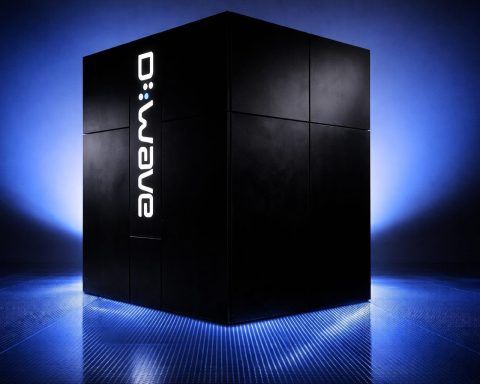
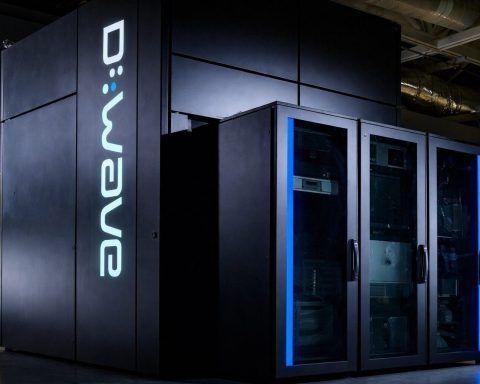
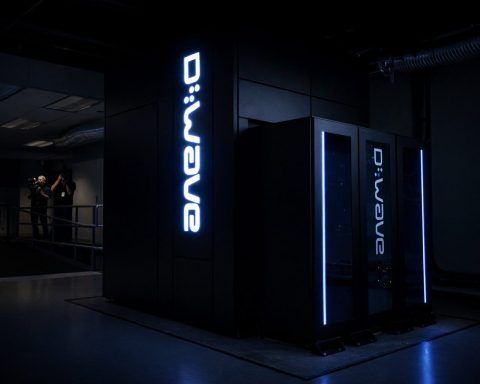
- D‑Wave’s Advantage2™ system is already operational at Davidson Technologies in Alabama, aimed at defense‑focused applications for U.S. government customers.
A same‑day summary on Finviz/Insider Monkey highlighted that QBTS jumped about 11.5% as investors reacted to the potential for long‑term government deals and recurring defense workloads.
This development fits neatly into a broader macro theme: a Zacks analyst blog published on December 2 argued that government policy and quantum‑related federal budgets could make 2026 a breakout year for leading quantum names IONQ, RGTI, QBTS and QUBT.
Why it matters for the stock:
- Federal contracts tend to be multi‑year and sticky, which could help smooth out D‑Wave’s lumpy revenue.
- A dedicated unit led by a seasoned federal‑markets executive signals that D‑Wave intends to compete seriously in defense and public‑sector tenders, not just pilot projects.
- Government validation can also de‑risk the technology in the eyes of commercial customers.
3. Q3 2025 Earnings: Revenue Doubles, Losses Remain Heavy
D‑Wave’s Q3 2025 results, released on November 6, are one of the central pillars of today’s bullish narrative—and a clear reminder of the risks.
Growth metrics
For the quarter ended September 30, 2025, D‑Wave reported:
- Revenue:$3.7 million, up 100% year over year and up 8% quarter over quarter from $3.1 million in Q2.
- Bookings:$2.4 million in Q3, up 80% sequentially; the company also closed over $12 million of additional bookings after quarter‑end, largely tied to a large Advantage2 system in Italy.
- Customers: More than 100 revenue‑generating customers over the last four quarters, including nearly two dozen Forbes Global 2000 companies.
For the first nine months of 2025, D‑Wave generated:
- Revenue of $21.8 million, up 235% from $6.5 million a year earlier.
- GAAP gross profit of $18.5 million, up 353%, with GAAP gross margin of 84.8% (boosted by a high‑margin system sale).
These numbers show that D‑Wave is transitioning from pure R&D story to early commercial adoption, with meaningful revenue growth and strong gross margins on system sales and cloud access.
Profitability and cash
The flip side is that losses remain substantial:
- GAAP net loss in Q3 2025:$140 million (‑$0.41 per share), driven largely by a $121.9 million non‑cash warrant remeasurement and related items.
- Adjusted net loss in Q3:$18.1 million (‑$0.05 per share), an improvement from a $23.2 million adjusted loss a year earlier.
- For the first nine months of 2025, D‑Wave posted a GAAP net loss of $312.7 million (‑$1.01 per share), but an adjusted net loss of $52.8 million, narrower than the prior year.
On the balance sheet, D‑Wave reported cash and cash equivalents of over $836 million—the highest in the company’s history—thanks in part to warrant exercises and financing activity.
Takeaway: Revenue is growing rapidly and gross margins are strong, but the business still runs a significant operating and cash loss, albeit with a large cash cushion to fund R&D and commercialization.
4. Warrant Redemption: $54.6M in Cash and One Overhang Removed
On November 21, 2025, D‑Wave announced it had completed the redemption of all outstanding public warrants.
Highlights:
- About 4.75 million warrants were exercised into roughly 6.9 million shares at $11.50 per warrant, generating $54.6 million in cash proceeds for the company.
- Roughly 270,820 warrants went unexercised and were redeemed for $0.01 each.
- The public warrants have ceased trading and will be delisted, meaning no public warrants remain outstanding.
This move:
- Provides incremental cash (on top of the already large balance), extending runway for R&D and commercialization.
- Removes a structural overhang where warrant holders could dump shares into rallies.
- Simplifies the capital structure, which many institutional investors prefer.
The warrant revaluation charges tied to this process are a major factor behind D‑Wave’s large GAAP net loss figures.
5. Analyst Ratings and Price Targets: Wide, But Mostly Bullish
Consensus metrics
MarketBeat’s consolidated view of Wall Street coverage (14 analysts) shows: MarketBeat+1
- Consensus rating:“Moderate Buy”
- 12 Buy
- 1 Hold
- 1 Sell
- Average 12‑month price target:$29.85
- High: $44.00
- Low: $9.00
From that same data set, the average target implies only about 5% upside from a recent reference price around $28.35—suggesting that, for some analysts, QBTS is already close to “fair value” after its big run. MarketBeat
More aggressive targets: TipRanks and Evercore ISI
TipRanks, which tracks a slightly different analyst universe, reports: TipRanks
- Strong Buy consensus
- Nine unanimous Buy ratings
- Average target price:$38.89, implying about 70%+ upside from levels at the time of the report.
The most attention‑grabbing call comes from Evercore ISI, which just initiated coverage with an “Outperform” rating and a $44 price target.Investing.com+1
According to Evercore’s analysis:
- The $44 target is based on projected 2035 EPS of $2.61, applying a 40× P/E and discounting back nine years to today.
- They assume D‑Wave captures around 12% of the global quantum computing market, especially the 15–25% slice of workloads that its annealing‑plus‑gate approach can uniquely serve.
- They highlight D‑Wave as the first quantum firm with commercial revenue, a full‑stack hardware‑plus‑software ecosystem, and roughly $800+ million in cash to fund R&D and commercialization.
An AI‑generated but editor‑reviewed analysis on AInvest echoes this thesis, emphasizing that:
- QBTS has surged about 206% in 2025
- Evercore’s $44 target implies roughly 96% upside from the article’s reference price
- D‑Wave aims to capture 12% of an estimated $15–$30 billion quantum market by 2035, or roughly $1.8–$3.6 billion in annual revenue if all goes to plan.
More cautious and bearish takes
Not all voices are bullish:
- A Nasdaq/Zacks piece titled “QBTS Soars 168% in 2025: Should You Buy for 2026 or Wait for Pullback?” notes that QBTS is trading below its 50‑day moving average but above its 200‑day, signalling a cooling of short‑term momentum within a still‑intact uptrend and recommending patience given the lack of operating leverage. Nasdaq
- Seeking Alpha commentary has stressed that commercial adoption is still limited, losses are significant, and the path to gate‑model systems remains uncertain.
- A high‑profile Motley Fool article warns that quantum computing stocks—including D‑Wave—could see drawdowns of 80% or more, citing historical precedents from other tech bubbles and extremely high price‑to‑sales ratios.
- Another Motley Fool comparison piece argues that IBM may be the better long‑term quantum play, noting D‑Wave’s rapid revenue growth from $6.5 million in 2024 to $21.8 million over the first three quarters of 2025, but also pointing out operating expenses of $84.1 million and a $65.5 million operating loss over the same period, alongside a much higher valuation multiple than IBM.
Bottom line on Wall Street sentiment:
- The majority of covering analysts rate QBTS positively and see substantial long‑term upside in a successful execution scenario.
- A vocal minority argues the stock is already priced for perfection—and that history suggests a painful correction is likely before the long‑term opportunity can play out.
6. Institutional Buying vs. Insider Selling
Fresh 13F filings show rising institutional interest in D‑Wave:
- Trek Financial LLC disclosed a new Q2 position of 143,989 shares (about $2.1M).
- Vanguard boosted its stake by nearly 60% to about 11.3 million shares (~$85.8M).
- Geode, Arrowstreet, Northern Trust and JPMorgan also significantly increased holdings.
- In total, roughly 42.5% of QBTS shares are now held by institutional investors and hedge funds.
At the same time, insider selling has been heavy:
- CEO Alan Baratz has sold over 800,000 shares in recent months, for proceeds north of $23 million.
- The CFO sold 200,000 shares (~$4.6M), and other directors have also trimmed stakes, with total insider sales around 1.38 million shares (~$36.9M) over three months.
- After this, insiders own roughly 3.2% of the company.
How to interpret this contrast:
- Rising institutional stakes show that big funds are willing to underwrite the high‑risk, high‑reward thesis around D‑Wave.
- Insider sales don’t automatically mean trouble—founders and executives often diversify after big run‑ups—but the scale of selling does raise questions about management’s risk perception and the current valuation.
7. Business Model and Technology: Annealing Today, Gate‑Model Tomorrow
D‑Wave’s strategy rests on combining:
- Quantum annealing systems (its historic specialty) for optimization problems
- Emerging gate‑model systems to broaden its addressable market
Annealing advantage (today)
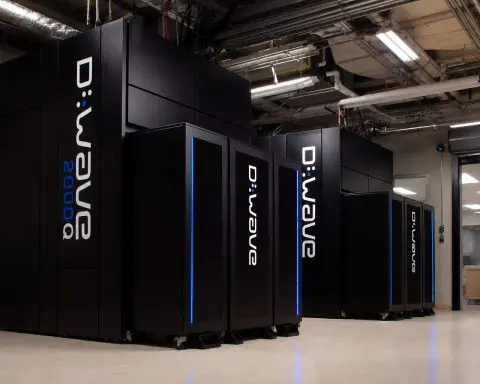
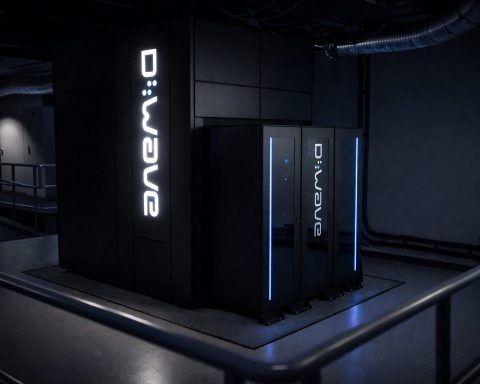
D‑Wave sells access to its Advantage and Advantage2 systems via its Leap™ quantum cloud, supported by the Ocean™ open‑source toolset and hybrid solvers.
Use cases highlighted in recent releases include:
- BASF proof of concept: D‑Wave and BASF completed a project at a liquid‑filling facility where a hybrid‑quantum application cut projected scheduling time from about 10 hours using a high‑end classical solver to just five seconds—a dramatic efficiency gain that showcases optimization potential.
- Italian government and Q‑Alliance: D‑Wave booked a €10 million Q4 2025 order for 50% of an Advantage2 system’s capacity over five years to support a new quantum research facility in Lombardy, with an option to purchase the full system.
- Other customers include a major U.S. airline, SkyWater (a semiconductor foundry), Japan Tobacco’s pharma division, Yapi Kredi in Turkey, and several universities, primarily for optimization and scheduling problems.
A recent Motley Fool/Nasdaq piece notes that D‑Wave has demonstrated annealing systems solving specific optimization problems orders of magnitude faster than classical supercomputers, but also stresses that annealing is not well‑suited for general‑purpose algorithms, limiting use cases vs. universal gate‑model machines.
Gate‑model ambition (tomorrow)
D‑Wave is investing heavily in gate‑model qubits and control electronics:
- It has fabricated fluxonium qubit chips and superconducting control chips, now being bonded to demonstrate scalable control of gate‑model qubits.
- Management says this work should enable the first scalable gate‑model system with cryogenic control, positioning D‑Wave uniquely as a company building both annealing and gate‑model platforms.
If successful, that could allow D‑Wave to:
- Compete more directly with companies like IBM, IonQ and Rigetti on universal gate‑model workloads
- Maintain its lead in optimization while expanding into broader simulation and quantum‑AI applications
However, this is a multi‑year, technically demanding roadmap, and there is no firm timeline for a commercial, fault‑tolerant gate‑model machine.
8. Key Risks Highlighted by Analysts
Across the latest coverage, several recurrent risk themes emerge:
- Valuation and bubble risk
- Multiple authors argue that quantum stocks, including QBTS, are trading at price‑to‑sales multiples reminiscent of prior tech bubbles, leaving room for 80%+ drawdowns if sentiment turns.
- Execution and commercialization
- Despite rapid growth, D‑Wave’s nine‑month revenue of $21.8M still comes from a relatively small base. Monetizing hundreds of proof‑of‑concepts into repeat, large‑scale deployments remains the central challenge.
- Competition
- Incumbents like IBM (with strong profit, steady growth and its Nighthawk processor roadmap) may ultimately dominate, especially if gate‑model approaches win the day. Some analyses explicitly prefer IBM over D‑Wave on risk‑adjusted grounds.
- Financial profile
- D‑Wave’s Adjusted EBITDA loss of $46.7M for the first nine months of 2025 and GAAP net loss of $312.7M highlight a business still far from breakeven, even after adjusting for warrant accounting.
- The large cash balance provides breathing room, but also creates pressure to deploy that capital effectively without destroying shareholder value.
- Policy and concentration risk
- Bullish forecasts assume continued government and corporate quantum spending. If budgets tighten or strategic priorities shift, D‑Wave’s pipeline could be affected, especially with its growing tilt toward defense and public‑sector contracts.
9. QBTS Stock Forecast: What to Watch Heading Into 2026
Putting it all together, the quantitative forecasts on the street break roughly into three bands:
- Conservative band:
- Targets in the $20–$30 range imply either limited upside or even modest downside from current prices, assuming continued volatility and execution risk.
- Base/bullish band:
- Targets around $30–$40 (e.g., from firms like B. Riley, Benchmark, Canaccord) assume D‑Wave can keep growing revenue triple digits, land more large system deals, and progress on gate‑model efforts.
- High‑conviction bull case:
- Evercore’s $44 target and similar analyses that extrapolate out to 2035 assume D‑Wave secures low‑double‑digit market share of a $15–$30B quantum market, delivers >$2.60 EPS, and is rewarded with a growth‑stock multiple.
From a fundamental “watch list” perspective, the milestones that seem most likely to influence QBTS over the next 12–24 months are:
- Government contracts: Concrete, multi‑year deals from U.S. federal agencies or allied governments that move the needle on revenue.
- Commercial scale‑ups: Follow‑on projects at customers like BASF, large airlines, banks and semiconductor companies, showing D‑Wave is moving from pilots to embedded workflows.
- Gate‑model milestones: Demonstrated progress toward scalable gate‑model systems, potentially with early customer access.
- Path to operating leverage: Evidence that operating expenses are growing more slowly than gross profit, bending the loss curve in a sustainable way.
If these break positively, the bull cases and higher price targets gain credibility. If they disappoint—or if the quantum “mini‑bubble” deflates—then the bear scenarios (including deep drawdowns) become more likely.
10. Bottom Line: High‑Beta Quantum Pure‑Play With Real Momentum and Real Risk
As of December 4, 2025, D‑Wave Quantum sits at an unusual crossroads:
- It has real technology, real customers, triple‑digit revenue growth and hundreds of millions in cash.
- It is deeply unprofitable, with heavy operating and adjusted EBITDA losses and a valuation many commentators describe as stretched.
- New catalysts—a U.S. government business unit, warrant cleanup, big bookings in Italy, and Evercore’s “Outperform” call—have reignited bullish interest. Investing.com+3D-Wave Quantum+3Stock Titan+3
- At the same time, prominent analysts and commentators are openly warning that quantum computing stocks could face dot‑com‑style corrections before the long‑term opportunity is realized.
For aggressive growth investors, QBTS is likely to stay on the radar as one of the purest plays on commercial quantum computing today, particularly for those focused on optimization, government, and industrial applications.
For more conservative investors, recent articles repeatedly suggest either waiting for a better entry, using diversified quantum or AI ETFs, or favoring large, profitable incumbents like IBM for quantum exposure.
Important disclaimer:
This article is for informational and educational purposes only and reflects publicly available information as of December 4, 2025. It is not investment, legal or tax advice, and it is not a recommendation to buy, sell or hold any security. Quantum‑computing stocks such as QBTS are highly volatile and speculative. Always do your own research and consider consulting a licensed financial adviser before making investment decisions.
Related articles: NYSE:QBTS