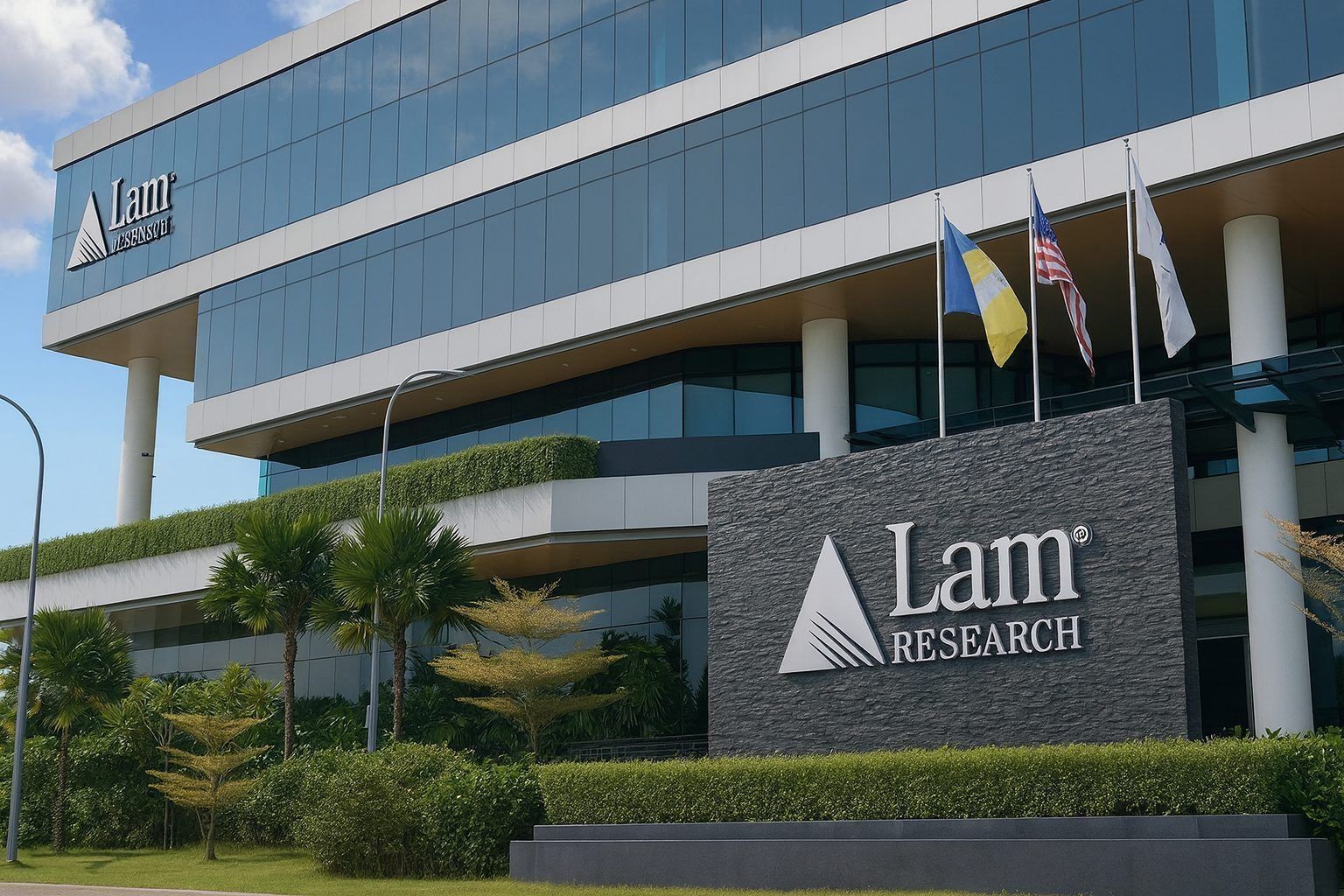

Lam Research Corporation NASDAQ:LRCX remains one of the most closely watched names in the semiconductor equipment space, as investors weigh a record AI‑driven upcycle against increasingly stretched valuations and fresh caution from some fundamental models.
After closing at $159.75 on Wednesday, December 3, 2025, shares were trading back in the mid‑$150s on Thursday, still only a few points below their recent 52‑week high in the mid‑$160s.
At the same time, new research notes, institutional filings and valuation reports published on December 4 paint a nuanced picture: Wall Street’s ratings remain broadly bullish, but several models now argue that Lam Research stock is priced for perfection—or beyond it.
Lam Research stock performance in 2025: a huge run into the AI cycle
According to fresh analysis from Simply Wall St, Lam Research’s share price has:Simply Wall St
- Gained about 3% over the last week
- Eased roughly 0.9% over the past month
- Soared 120.5% year‑to‑date in 2025
- Returned 106.6% over the past 12 months
StockStory, which tracks big daily moves, notes that LRCX is up around 116% since the start of the year and recently traded near $156–$157 per share, close to a 52‑week high around $166–$167 set in November.
Data from Investing.com puts Thursday afternoon’s price near $156.80, with a day’s range of roughly $155–$158 and a 52‑week range of $56.32 to $167.15, underlining how far the stock has run in this cycle.
Even after Thursday’s modest pullback, Lam Research is still trading close to the top of that range, reflecting exceptional optimism around AI‑related wafer fabrication equipment (WFE) demand.
Earnings recap: record quarter powered by AI chip demand
Lam’s recent fundamentals go a long way toward explaining the share price:
- For the quarter ended September 28, 2025 (fiscal Q1 2026), Lam reported revenue of about $5.32 billion, beating analyst estimates of roughly $5.23 billion.
- Non‑GAAP EPS came in around $1.26, ahead of the roughly $1.22 consensus, while GAAP EPS was about $1.24.
- A summary from StockTitan and other sources highlights gross margin near 50.4% and operating margin in the mid‑30% range, both around record levels for the company.
Lam’s Customer Support Business Group (CSBG)—the high‑margin installed‑base services business—generated roughly $1.78 billion in revenue in the quarter, only slightly up year‑on‑year but remarkably steady, underscoring how recurring service revenue cushions the cyclical systems side.
AI data centers, memory and foundry lead the mix
Recent analysis based on Lam’s earnings call and slide deck shows the September quarter system revenue split roughly as:TS2 Tech+1
- Foundry/logic: ~60% – driven by advanced logic and AI data‑center chips
- NAND (non‑volatile memory): ~18%
- DRAM: ~16%
- Other logic/segments: ~6%
Geographically, the company remains heavily exposed to Asia, with China accounting for about 43% of total revenue, followed by Taiwan (~19%) and Korea (~15%).
Management has flagged that China’s share is likely to fall below 30% over time as new U.S. export rules tighten, an issue that will remain central to any long‑term LRCX stock thesis.
Guidance still strong, but off the peak
For the December 2025 quarter, Lam guided to:TS2 Tech+2Reuters+2
- Revenue: around $5.2 billion ± $300 million
- Gross margin: roughly 48.5% ± 1 percentage point
- Operating margin: roughly 33% ± 1 point
- Non‑GAAP EPS: about $1.15 ± $0.10
That’s a modest step down from the record September quarter, but still well ahead of earlier trough levels and above the Street’s pre‑guidance expectations. Reuters noted that Lam’s outlook topped analysts’ consensus for both revenue and earnings, driven by robust AI‑related chipmaking demand.
Lam has also laid out a broader framework tying its fate directly to AI infrastructure:
- For every $100 billion of incremental AI data‑center investment, management estimates about $8 billion of additional WFE demand.
- The company expects calendar‑year 2025 WFE to come in slightly above its prior ~$105 billion estimate, helped by high‑bandwidth memory (HBM) spending.
- It sees a “robust setup” for 2026, with AI‑related investment spreading across foundry, DRAM and NAND.TS2 Tech
What analysts are saying today: bullish ratings, mixed targets
Zacks: ABR and earnings revisions point to a Buy
A fresh Zacks research note published December 4 and syndicated via Finviz argues that Wall Street’s brokerage community is decisively bullish on Lam Research:Finviz+1
- Lam currently has an Average Brokerage Recommendation (ABR) of 1.69 on a 1–5 scale (1 = Strong Buy), based on 32 firm‑level recommendations.
- Of those, 20 are Strong Buy and 2 are Buy, with the rest in Hold territory and no outright Sells.
- Zacks highlights that its own consensus EPS estimate for the current year has been revised up by about 1.5% over the last month to roughly $4.79, leading to a Zacks Rank #2 (Buy) for LRCX.
Zacks stresses that, while the ABR is tilted toward positive recommendations, earnings estimate revisions are the more powerful short‑term driver of stock prices—and on that front, Lam’s trend remains favorable.
Consensus ratings: lots of Buys, not much upside
A comprehensive roundup of analyst data compiled by TechStock² on December 2, drawing from MarketBeat, GuruFocus, StocksGuide, StockAnalysis and others, underscores just how skewed the sell‑side remains in Lam’s favor:TS2 Tech
- MarketBeat:
- Consensus rating: “Moderate Buy”
- Breakdown: 26 Buy, 10 Hold, 0 Sell
- Average 12‑month price target: $152.87, actually a few percent below recent prices in the mid‑$150s to high‑$150s.
- StockAnalysis.com:
- Labels Lam a “Strong Buy” based on its analyst universe
- Puts the average target around $148, which also sits slightly under the current price.
- StocksGuide & other aggregators:
- Some datasets show average targets closer to $165–$168, implying high‑single‑digit upside from recent levels.
In other words, the rating language (“Buy”, “Strong Buy”) remains bullish, but many price targets have not fully kept up with the stock’s 2025 rally, leaving LRCX trading at or above a number of published 12‑month objectives.
Morgan Stanley and other big banks
The near‑term catalyst for the latest round of attention was Morgan Stanley’s December 2 move, which:StockStory+1
- Raised its price target from $137 to $158
- Maintained an “Equal‑Weight” rating (effectively, a market‑perform stance)
The upgrade helped push shares up about 2–3% intraday on December 2 before they settled back, leaving Lam up roughly 116% year‑to‑date and trading just below its highs.
According to the TechStock² compilation, other firms—including UBS, Citi, B. Riley and Stifel—have also bumped up their targets into a broad $160–$190 range as they build more aggressive AI and memory assumptions into their models.
Insider Monkey “Bull Case Theory”: great business, fully valued
Insider Monkey today highlighted a bullish fundamental thesis on Lam Research sourced from Rijnberk InvestInsights, but with a surprisingly cautious conclusion:Insider Monkey
- Lam is described as one of the world’s most essential semiconductor equipment players, supplying etch and deposition tools to leading foundries such as TSMC, Intel, Samsung and GlobalFoundries.
- Structurally, it’s framed as a capital‑light “quiet compounder” with roughly 29% free‑cash‑flow margins, 35%+ ROIC and 50%+ ROE, while returning nearly all free cash flow via dividends and aggressive buybacks.
- Over the past decade, the note estimates revenue and EPS CAGRs of about 14% and 24%, respectively.
- However, after a roughly 90% share‑price appreciation in 2025, the analyst argues the stock now looks “fully valued”, maintaining a Hold rating, suggesting accumulation only on deeper pullbacks (around or below $110) and floating a FY27 fair value of about $155.
The message from that camp: Lam Research may be an outstanding business, but the entry price matters when expectations and multiples are this high.
Institutional and insider activity: big money mostly adding, some taking profits
Several new 13F‑related articles published December 4 on MarketBeat detail how large investors have been repositioning around Lam Research:MarketBeat+3MarketBeat+3MarketBeat+3
- First Trust Advisors LP increased its position by 19.8% in Q2, adding more than 635,000 shares to reach about 3.84 million shares, or roughly 0.30% of the company, valued near $374 million at the time of the filing.
- Guggenheim Capital LLC lifted its stake by 4.1% to 833,227 shares (about $81 million), and the article notes that Vanguard, JPMorgan and others also added, with Norges Bank initiating a large new position.
- Groupe La Francaise raised its stake by 21.2% to 52,053 shares, valued around $5.05 million in the most recent quarter.
- Across these reports, institutional investors and hedge funds are estimated to own roughly 80–85% of Lam’s outstanding shares, confirming that LRCX is very much an institutionally dominated name.
Not everyone is buying more:
- M&T Bank Corp disclosed that it trimmed its LRCX position by about 7.7% in Q2, selling 8,300 shares and ending the period with 100,150 shares worth just under $9.8 million.
The same Guggenheim‑focused note highlights notable insider selling:
- Company insiders sold roughly 102,608 shares (about $14.9 million) over the last quarter, including transactions by Director Bethany Mayer and SVP Vahid Vahedi, leaving insiders with around 0.31% ownership.
That pattern—net buying by institutions, modest trimming and diversification by insiders—is consistent with a stock that has had a very strong run and now sits in a mature stage of the current rally.
Strategic expansion and product roadmap: betting big on the “Silicon Forest” and advanced packaging
Beyond quarterly numbers, Lam has been making strategic moves that reinforce its position in the AI hardware supply chain.
$65 million “Silicon Forest” expansion in Oregon
On November 21, 2025, Lam opened a new $65 million, four‑story, 120,000‑square‑foot building (“Building G”) at its Tualatin, Oregon campus. The facility can house up to 700 employees and is part of a multi‑year plan to expand R&D and lab capacity near key customers in the Pacific Northwest “Silicon Forest.”Lam Research Newsroom+2PR Newswire+2
Company statements and local officials at the ribbon‑cutting emphasized that:
- The expansion deepens Lam’s decades‑long presence across Tualatin, Hillsboro and Sherwood, where the company operates multiple manufacturing and R&D sites.
- The project is designed to keep Lam “future‑ready” for a semiconductor industry widely expected to reach roughly $1 trillion in annual revenue in the coming years, with Lam’s tools at the heart of AI‑class chip production.PR Newswire+1
New tools and collaborations for the AI and advanced‑packaging era
Recent press releases highlighted several technology initiatives:Stock Titan
- VECTOR® TEOS 3D – a deposition tool designed for next‑generation advanced packaging and heterogeneous integration, enabling ultra‑thick dielectric films for 3D chip stacking and AI/high‑performance computing applications.
- A cross‑licensing and collaboration agreement with JSR Corporation/Inpria to integrate Lam’s etch and dry‑resist technology (including its Aether® platform) with novel resists and films for high‑NA EUV patterning.
- Participation of Lam’s corporate venture arm in funding Fabric8Labs, a metal additive manufacturing company whose electrochemical 3D printing could support advanced thermal‑management and packaging components for AI and HPC use cases.
These moves reinforce the thesis that Lam is not just a cyclical equipment vendor, but a core enabler of the shift to 3D architectures, gate‑all‑around transistors and advanced chip packaging.
Capital returns: bigger dividend and buybacks
Lam’s board has also been returning substantial cash to shareholders:
- The company raised its quarterly dividend by 13% in 2025, from $0.23 to $0.26 per share, and in early November declared another $0.26 dividend payable on January 7, 2026 to shareholders of record as of December 3, 2025.
- TechStock² notes that Lam has a $10 billion share repurchase authorization and returned approximately $4.5 billion to shareholders in fiscal 2025 through dividends and buybacks, including roughly $990 million repurchased in the September quarter alone, under a policy of returning at least 85% of free cash flow over time.
At current prices, the dividend yield remains modest (around 0.6–0.7%), but the combination of buybacks plus a growing payout gives Lam meaningful flexibility to manage its capital structure through the cycle.
Valuation: premium multiples and a growing “overvalued” chorus
The heart of the December 4 debate is valuation.
Market multiples
Based on recent data compiled by StockAnalysis and TechStock², Lam trades at roughly:TS2 Tech+1
- Trailing P/E: around 34–35x
- Forward P/E: roughly 31–32x
- Price‑to‑sales: about 10x
- Price‑to‑book: around 19x
- PEG ratio (P/E to growth): approximately 1.6–1.9x
Those numbers reflect a premium but not unprecedented set of multiples for a high‑margin, high‑growth semiconductor equipment leader—especially one as central to AI infrastructure as Lam.
Consensus forecasts compiled by StockAnalysis point to continued double‑digit growth, with analysts expecting revenue to rise from around $18–19 billion in fiscal 2025 to more than $24 billion by 2027, and EPS progressing from roughly $4.15 in 2025 to around $4.9–5.0 in 2026 and nearly $5.8 in 2027.
Simply Wall St and DCF models flash red
Not all models are comfortable with today’s price:
- Simply Wall St’s new December 4 report gives Lam just 2/6 on its valuation checklist and estimates a DCF‑based fair value of about $66.93 per share, implying the stock is roughly 138.7% overvalued versus the current market price.
- The same piece notes that Lam trades on a P/E of about 34.5x, below some peers but above the firm’s calculated “fair P/E” of about 31x, again supporting an “overvalued” conclusion.Simply Wall St
TechStock² also cites AlphaSpread, which places Lam’s intrinsic value near $99 per share, suggesting the stock may be 35–40% overvalued at recent prices in the mid‑$150s.
On the other hand, an Intellectia‑style narrative model referenced in the same analysis points to a fair‑value band of roughly $116–$166, with Lam currently trading near the upper end of that range—expensive, but arguably still within a “fair” zone if AI growth assumptions pan out.TS2 Tech
The upshot: quantitative valuation tools are increasingly split, with some flagging extreme overvaluation and others allowing that today’s price might be justified by long‑term AI and memory growth.
Technical picture: neutral short term, strong long term
From a purely technical standpoint, Lam’s chart also reflects a powerful uptrend with some near‑term fatigue.
Investing.com’s real‑time technical summary for LRCX as of the evening of December 4 shows:Investing.com
- Price: about $156.80, down ~1.8% on the day
- Technical summary: overall “Neutral”
- Moving averages: Buy (7 Buy vs 5 Sell signals)
- Technical indicators: Sell (5 Sell vs 2 Buy, 4 Neutral)
- RSI (14): around 50.8, essentially neutral
- Daily, weekly and monthly timeframes on the site’s dashboard still lean “Strong Buy”, reflecting the longer‑term trend.
In short, momentum has cooled slightly after a huge 2025 run, but the broader trend remains firmly upward.
Key risks: China, export controls and the next cycle turn
While most of today’s commentary is upbeat, several recurring risk themes show up across the latest research:
- China exposure and export controls
- With around 43% of revenue coming from China in the latest quarter, Lam is more exposed than many peers to U.S. export restrictions and policy changes.
- Management has warned that new U.S. rules—particularly those tightening control over equipment shipped to Chinese fabs and tweaking “affiliate” definitions—could shave hundreds of millions of dollars off revenue over the coming quarters, even as non‑China demand strengthens.TS2 Tech
- Policy and CHIPS‑related constraints
- A new CHIPS Act‑related bill discussed in late November could limit access to U.S. subsidies for chipmakers that continue buying Chinese wafer‑equipment, a double‑edged sword that might help Lam versus Chinese rivals but could also slow global capex if customers hesitate to commit.
- Cyclicality of WFE spending
- While Lam now benefits from AI‑driven structural growth, wafer‑equipment spending has historically been highly cyclical, and the company is currently operating near a peak combination of growth, margins and investor expectations. Even a small reset in AI enthusiasm or memory pricing could trigger multiple compression.
- Valuation and expectations risk
- Between Simply Wall St’s 138% overvaluation flag, AlphaSpread’s ~35–40% downside to intrinsic value and Insider Monkey’s “great business, fully valued” framing, there is a growing narrative that Lam is priced for near‑flawless execution.Insider Monkey+3Simply Wall St+3Simply Wall St+3
What today’s news flow means for LRCX stock
Putting the December 4 news, forecasts and analyses together, a few themes stand out:
- Fundamentals remain very strong.
Lam is coming off a record quarter of revenue, margins and EPS, with December‑quarter guidance still comfortably above prior Street expectations and a multi‑year AI‑driven WFE thesis that management continues to reinforce. - Street sentiment is bullish, but upside in targets is limited.
Most analysts rate LRCX Buy or Strong Buy, and Zacks’ rank sits at #2 (Buy), yet many consensus price targets now cluster close to, or even below, the current share price, suggesting the easy re‑rating phase may be behind it. - Institutional ownership is high and still rising overall.
New filings from Guggenheim, First Trust and others show large funds adding to positions, even as some like M&T Bank take profits and insiders modestly trim their holdings. - Valuation is the main point of tension.
Between premium multiples, DCF models implying steep overvaluation and long‑only analysts warning about entry price, investors looking at LRCX today are increasingly asking not “Is this a good company?” but “How much of that goodness is already in the price?”Simply Wall St+2TS2 Tech+2 - Macro and policy risks are real but manageable—for now.
AI‑related demand and diversified geographic exposure beyond China provide cushions, but the combination of export controls, CHIPS‑linked rules and cyclical WFE spending could quickly change the earnings trajectory if conditions shift.
For readers following Lam Research stock on Google News or Discover, today’s takeaway is clear:
LRCX remains a high‑quality, AI‑leveraged semiconductor equipment leader, enjoying record fundamentals and strong institutional support—but trading at valuations that a growing number of models and commentators now describe as stretched.
As always, this article is for informational and journalistic purposes only and does not constitute investment advice. Anyone considering an investment in Lam Research—or any stock—should carefully assess their own financial situation, risk tolerance and time horizon, and, if needed, consult a qualified financial professional.
Related articles: NASDAQ:LRCX