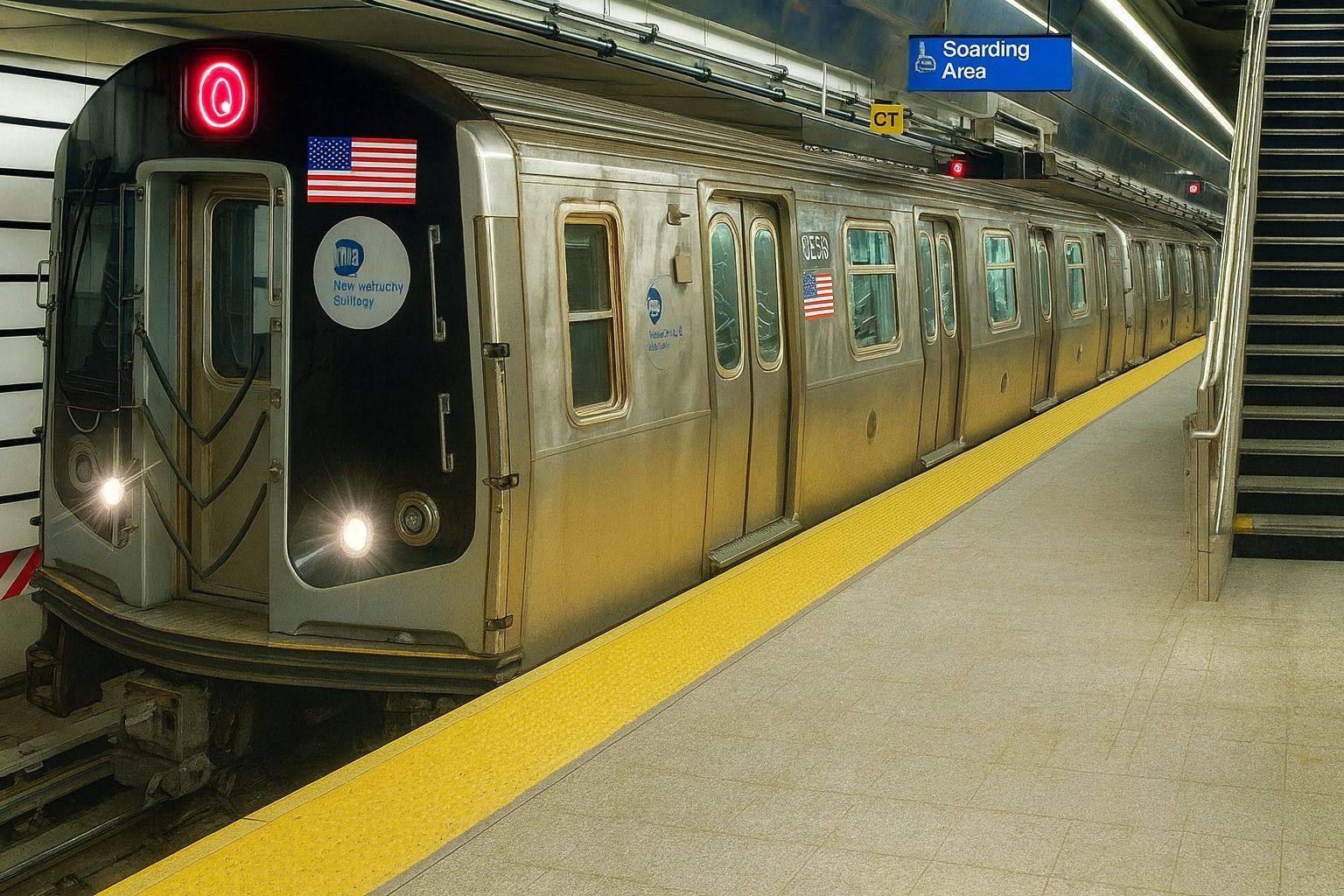
Beginning Monday, December 8, 2025, New York City’s F and M subway lines will undergo a major weekday shake‑up between Queens and Manhattan. On weekdays from about 6:00 a.m. to 9:30 p.m., the Metropolitan Transportation Authority (MTA) will permanently swap the routes the F and M take between the Queens Boulevard line and Midtown tunnels, changing which trains stop at eight key stations and affecting an estimated 1.2 million daily riders.
The change, dubbed the “F/M swap,” is designed to untangle a notorious track merge near Queens Plaza that has been responsible for a significant share of rush‑hour delays on the E, F, M and R lines. Officials say that by simplifying how lines share tracks, riders should see fewer bottlenecks, more consistent running times and less crowding—though many commuters are bracing for confusion and potential longer trips, especially at Roosevelt Island and along the 63rd Street corridor. New York Post+3NY1+3NBC New York+3
Key facts about the F/M subway swap
- Start date: Monday, December 8, 2025
- When it applies: Weekdays only, from ~6:00 a.m. to 9:30 p.m.
- What’s happening:
- F and M trains swap routes between Queens Plaza and Midtown.
- The swap affects eight stations in western Queens, Roosevelt Island and Midtown Manhattan.
- New weekday pattern:
- F trains move to the 53rd Street tunnel.
- M trains move to the 63rd Street tunnel.
- Weekends & late nights:No service changes—routes stay as they are today.
- Goal: Reduce delays at the Queens Plaza chokepoint, improve reliability on the E, F, M and R lines, and ease crowding on the Queens Boulevard corridor.
What exactly is changing on the F and M lines?
Right now, on weekdays:
- The F runs between Queens and Manhattan via the 63rd Street tunnel, serving stations like 21 St–Queensbridge, Roosevelt Island, and Lexington Av/63 St.
- The M uses the 53rd Street tunnel, stopping at Queens Plaza, Court Sq–23 St, and Lexington Av/53 St.
Starting December 8, that flips during weekday daytimes:
New weekday F train stops between Queens and Midtown
From roughly 6 a.m. to 9:30 p.m. on weekdays, F trains will now serve:
- Queens Plaza
- Court Sq–23 St
- Lexington Av/53 St
- 5 Av/53 St
The F will share the 53rd Street tunnel with the E, giving Queens riders two express options (E and F) through 53rd Street.
New weekday M train stops between Queens and Midtown
During the same weekday daytime window, M trains will instead serve:
- 21 St–Queensbridge
- Roosevelt Island
- Lexington Av/63 St
- 57 St (6 Av)
That moves the M into the 63rd Street tunnel, currently used by the F, and makes the M the primary Midtown link for Roosevelt Island and Queensbridge riders during the day.
What stays the same
- South of Rockefeller Center: Both lines rejoin their existing routes, so riders on the Sixth Avenue trunk in Midtown and Lower Manhattan will see the same letters as before.
- Nights and weekends: The MTA stresses there are no changes to overnight or weekend service. The complex weekday swap disappears, and the F and M follow their current off‑peak patterns.
For riders, that means one critical thing: your line may behave differently depending on the time of day. The letter on the train won’t always guarantee the same Midtown/Queens pattern you’re used to, especially at 63rd Street and Queens Plaza.
Why the MTA is doing this: Fixing the Queens Plaza chokepoint
At the heart of the change is a single messy merge near Queens Plaza where multiple lines currently cross paths.
Right now, the E, F, M and R all interact around Queens Plaza and the Queens Boulevard line. Trains must wait for others to clear switches, which can cascade into delays across the entire corridor.
According to the MTA, that merge is responsible for roughly 15–20% of rush‑hour delays on the Queens Boulevard lines.
The agency’s fix is essentially a “de‑interlining” move—reducing how many lines share the same tracks:
- After the swap, the F will share tracks with two lines instead of three.
- The M will share with three instead of four.
By removing the worst merge conflicts:
- Trains should experience fewer forced stops waiting for other lines to cross.
- The MTA expects more consistent running times and better on‑time performance for all riders on E, F, M and R trains.
MTA Chair and CEO Janno Lieber has repeatedly framed the swap as a targeted, data‑driven fix to a “known chokepoint,” arguing that “everybody’s train is more likely to be on time” once the merge is untangled. NBC New York+3NY1+3NBC New York+3
NYC Transit President Demetrius Crichlow has also emphasized that running the F via 53rd Street and the M via 63rd Street will make trips “faster, less crowded, and more direct” between the 63rd Street line and Queens Boulevard local stations. ABC7 New York+1
Station‑by‑station impact: Who gains, who may lose
Western Queens: Queens Plaza & Court Square
If your weekday commute involves Queens Plaza or Court Sq–23 St, you’ll see F trains instead of M trains during the day:
- These stations will now be served by the E and F (and the R in Queens Plaza’s case), consolidating express service through the 53rd Street tunnel.
- Transit planners and advocates note that giving express riders two strong options at 53rd Street—E and F—should spread crowding more evenly and reduce platform chaos at Lexington Av/53 St, where many riders currently cluster for express trains.
For riders coming from eastern Queens into Midtown, this is likely a net win: they keep express service but with fewer unpredictable slowdowns around Queens Plaza.
Roosevelt Island & 21 St–Queensbridge
The biggest psychological shift is for Roosevelt Island and 21 St–Queensbridge riders:
- On weekdays during the day, those stations will lose the F and gain the M.
- Nights and weekends, the F will still serve them as it does today.
The M typically runs slightly less frequently than the F, which has sparked anxiety that weekday service through the 63rd Street tunnel will feel thinner.
To counter that, the MTA says it will increase peak‑hour M service so wait times at stations shifting from F to M stay close to what riders are used to.
Officials also argue that, because the M will hit fewer merge points, trains should arrive more evenly spaced, which can matter as much as raw frequency.
Midtown Manhattan: 53rd St vs. 63rd St
In Midtown, the swap reshuffles which lines serve two key corridors:
- 53rd Street corridor (Lexington Av/53 St and 5 Av/53 St):
- Gains the F alongside the E; loses the M during weekday days.
- Riders heading to Queens Boulevard local stations gain two express options (E and F) through 53rd Street.
- 63rd Street corridor (Lexington Av/63 St and 57 St–6 Av):
- Gains the M; loses the F during the weekday daytime window.
Some 63rd Street riders who relied on a frequent F may find themselves waiting a bit longer for an M—but benefiting from more predictable arrivals and less cascading delay from Queens Plaza.
Transfers: New habits to learn
The MTA’s official guidance highlights a few key transfer points riders may want to lean on:
- Jackson Hts–Roosevelt Av: Major hub to switch between express and local Queens Boulevard services.
- 47–50 Sts Rockefeller Center: Useful for moving between lines that now diverge into different tunnels.
- 34 St–Herald Sq and Lexington/59 St area: Important transfer points if you’re switching between 63rd Street and 53rd Street routings.
The message from the agency: expect to adjust your habits, but there should still be a clear path to your usual destination—even if it involves one extra transfer.
Rider reaction: Relief, frustration and a lot of confusion
As of December 5, media outlets and social feeds are full of very mixed reactions.
Concerns: Longer commutes and crowding
Coverage in outlets like the New York Post, Queens Daily Eagle, and local TV has captured a core set of worries:
- Some riders expect their commute to increase by 10–15 minutes, especially those who lose a one‑seat ride and must transfer.
- Frequent riders describe the F as already “packed to the brim” at rush hour, and worry that pushing more riders onto the F at Queens Plaza and Court Square will intensify crowding. New York Post+2NY1+2
- Roosevelt Island residents, who depend heavily on subway and tram, fear that relying on the M could mean fewer trains and less flexibility.
Some critics argue the MTA should focus on issues like safety and station conditions before tinkering with routes, or worry that riders will only discover the change once they’re already on the platform.
MTA’s response: “No one is being hurt by this”
MTA leadership has pushed back against the idea that this is a zero‑sum shuffle:
- Lieber has said the swap is a permanent fix to a long‑studied operational problem and insists there is “nobody being hurt” because higher throughput on Queens Boulevard helps the entire corridor. Queens Daily Eagle+2MTA+2
- The agency estimates 1.2 million riders will benefit from more reliable trips, and its models suggest most riders will see travel time savings, not losses.
Transit officials also stress that riders at Roosevelt Island and 21 St–Queensbridge should see less crowding as the swap allows them to rebalance train loads and adjust frequency.
What transit experts and advocates are saying
Beyond official statements and raw rider frustration, transit‑focused blogs and advocates have mostly greeted the F/M swap as a smart technical fix—even if it’s confusing at first.
One widely shared explainer from urbanism writer David William Rosales breaks the change down as a textbook case of “de‑interlining”: separating lines that share too many track junctions so that delays don’t ripple across half the system. David William Rosales
Key points from that analysis and similar commentary:
- Reducing merge conflicts at Queens Plaza should cut the share of delayed rush‑hour trains, aligning with the MTA’s own number that about 15–20% of trains are currently held up there.
- With fewer conflicts, the MTA can potentially restore the 53rd Street tunnel to around 30 trains per hour, up from roughly 27 after the 2001 connection that created today’s complex junction.
- The F line, a long route with multiple merge points, may see noticeably improved reliability, with less bunching and fewer big gaps, even if the schedule numbers don’t change dramatically.
At the same time, experts acknowledge trade‑offs:
- Some riders will lose a direct one‑seat ride and have to transfer.
- The 63rd Street corridor will likely see fewer scheduled trains (M instead of F), though potentially more even spacing.
- The weekday‑only nature of the swap means riders must mentally juggle two different patterns—one for weekdays, another for nights and weekends.
Many advocates frame the F/M swap as a “small but meaningful win” in a system that still needs much larger investments—like full signal modernisation, expansion projects such as QueensLink, and a strong follow‑through on congestion pricing revenue. David William Rosales+1
How to prepare before Monday
If you ride any of the E, F, M or R lines—especially in western Queens, Roosevelt Island, or Midtown—you’ll want to do a bit of homework before December 8.
1. Check your specific stations and route
- the MTA’s dedicated F/M swap page and map to see how your exact station pairing changes.
- Look up whether your go‑to station will show F trains where you used to see M, or vice versa, during weekday days.
2. Plan transfers in advance
Identify at least one backup transfer point in case your usual path feels too crowded or confusing:
- Queens riders: Jackson Hts–Roosevelt Av and Queens Plaza remain key hubs to switch between express and local services.
- Midtown riders: Rockefeller Center, 34 St–Herald Sq and the Lexington/59 St/63 St complex are your main anchors for switching between the 53rd Street and 63rd Street corridors.
3. Allow extra time during the first week
Given the scale of the change and the partial‑time nature of the swap, it’s reasonable for riders to budget a little extra time for their commute during the first few weekdays:
- Some riders simply won’t have seen the signage or press coverage.
- Confusion over which line uses which tunnel at what time is likely to cause last‑minute platform scrambles, especially at Roosevelt Island, Queens Plaza and Midtown transfer hubs.
The MTA says it has deployed nearly 500 customer‑ambassador shifts and distributed around 300,000 brochures, along with new maps, digital screens and onboard announcements to get the word out.
4. Follow real‑time updates
- Keep an eye on the MTA app, third‑party transit apps, and the @NYCTSubway account on X for live updates and reminders as the swap kicks in Monday morning.
Longer‑term outlook: What to watch after the swap
Once the dust settles, the real test of the F/M swap will be whether it delivers on its promises.
Metrics that will matter
Over the coming weeks and months, riders and advocates will be watching:
- On‑time performance and delay metrics on the E, F, M and R, particularly through Queens Plaza and Roosevelt Avenue.
- Crowding levels on:
- F trains through 53rd Street
- M trains through 63rd Street
- Platforms at Lexington Av/53 St, Lexington Av/63 St and Roosevelt Island.
- Rider surveys and anecdotal reports about trip times and transfer pain points.
The MTA has pledged that the “majority of riders will see travel time savings” and that trains at Roosevelt Island and 21 St–Queensbridge will be less crowded under the new pattern. MTA+1
If those claims hold—while keeping confusion manageable and transfers reasonable—the F/M swap could become a model for other low‑cost, high‑impact changes on the NYC subway.
If not, pressure will grow on the agency to tweak schedules, add frequency, or provide additional clarity around nights and weekends.
Bottom line for NYC subway riders
As of December 5, 2025, the picture is clear even if emotions are not:
- The F/M subway swap is definitely happening Monday, and it’s here to stay on weekdays.
- It’s a technical fix aimed at reducing delays on one of the busiest corridors in the system, with 1.2 million riders in the balance.
- Most riders on Queens Boulevard are expected to gain in reliability—though some will pay for it with new transfers or slightly longer waits, especially along the 63rd Street line.
For now, the safest move is simple: learn how your specific trip changes, give yourself a margin for error next week, and then judge the swap by what matters most—whether your train actually shows up when it’s supposed to.