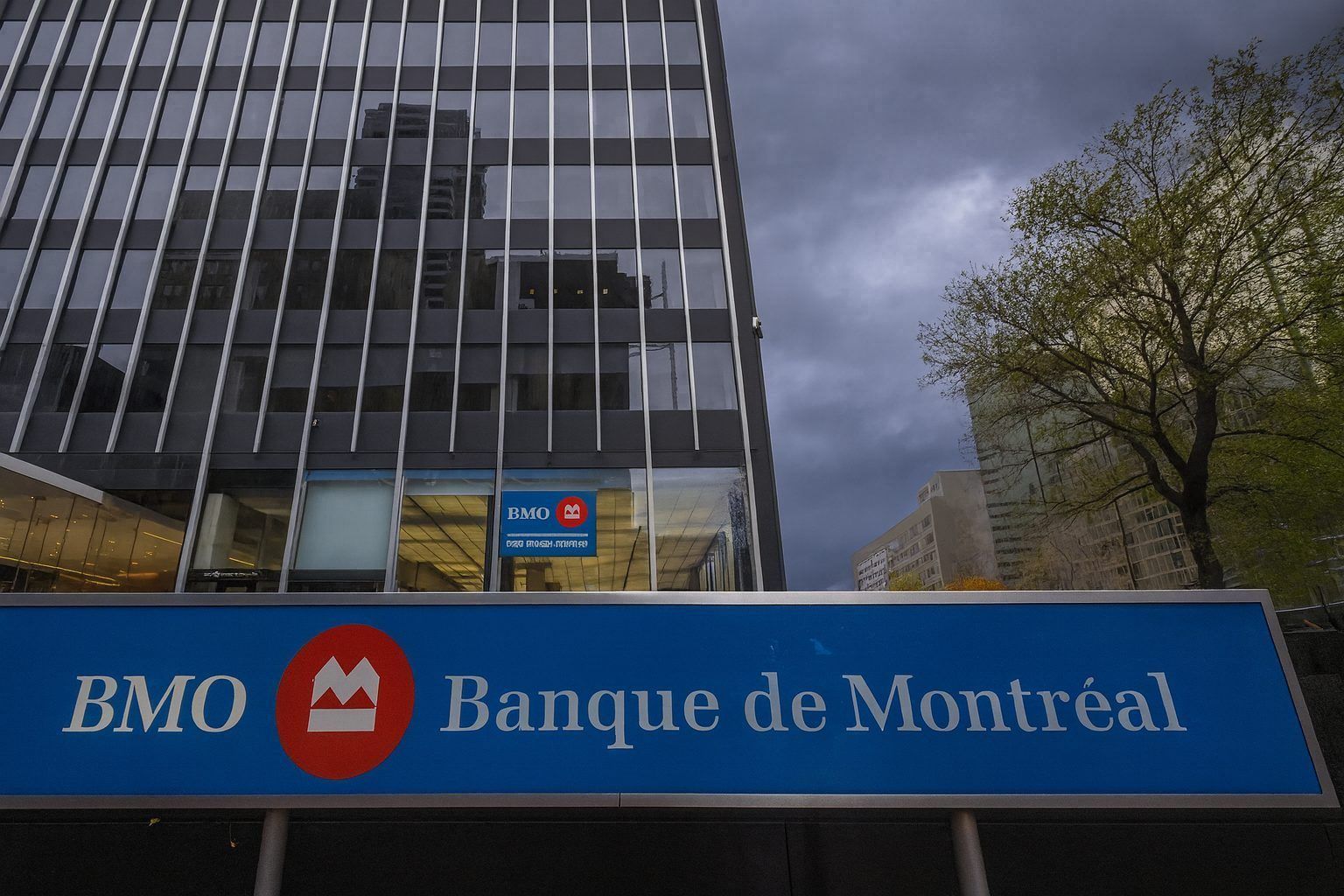

BMO Financial Group has closed out 2025 with a powerful combination that dividend and bank‑stock investors love to see: strong profit growth, a higher payout, and a solid capital cushion.
On Thursday, Bank of Montreal (TSX: BMO, NYSE: BMO) reported a fourth‑quarter profit of C$2.30 billion, essentially flat year‑on‑year, while adjusted earnings jumped as credit costs fell and capital markets roared back. Full‑year profit climbed double‑digits, and the board approved another increase to the bank’s common share dividend.
Below is a breakdown of the numbers, the strategy behind them, and how analysts see BMO stock heading into 2026.
Q4 2025 Results at a Glance
For the quarter ended 31 October 2025, BMO reported: BMO+2PR Newswire+2
- Reported net income: C$2.295 billion (vs. C$2.304 billion a year earlier)
- Adjusted net income: C$2.514 billion, up about 63% from C$1.542 billion
- Reported EPS: C$2.97, slightly above last year’s C$2.94
- Adjusted EPS: C$3.28, up roughly 73% from C$1.90
- Revenue: C$9.34 billion, about 4% higher year‑on‑year
- Adjusted revenue growth: Low double‑digit percentage, helped by stronger capital markets and wealth management
- Provision for credit losses (PCL): C$755 million, roughly half the C$1.52 billion booked a year earlier
- CET1 capital ratio: 13.3%, down only modestly from 13.6% despite heavy shareholder returns
The adjusted EPS figure easily topped the consensus of about C$3.03 per share compiled by LSEG, underlining how far credit trends and market‑sensitive businesses have improved over the past year.
On a full‑year basis, BMO delivered: BMO+1
- 2025 reported net income: C$8.73 billion, up about 19%
- Adjusted net income: C$9.25 billion, up roughly 24%
- Reported EPS: C$11.44 vs. C$9.51 last year
- Adjusted EPS: C$12.16 vs. C$9.68
- Adjusted return on equity: 11.3%, up from 9.8%
Chief executive Darryl White called 2025 “a strong year” in which the bank expanded pre‑provision, pre‑tax earnings, boosted ROE and delivered positive operating leverage across its diversified businesses. BMO+2PR Newswire+2
Dividend Hike and Shareholder Returns
BMO’s board declared a quarterly common share dividend of C$1.67, an increase of C$0.04 (about 2%) from the previous quarter and C$0.08 (5%) year‑on‑year. On an annualized basis, the payout now stands at C$6.68 per share.
The bank also bought back 8 million common shares during the quarter under its normal course issuer bid, returning capital on top of dividends while keeping its CET1 ratio comfortably above its internal 12.5% target.
According to MarketBeat, BMO’s new payout equates to a dividend yield of roughly 3.7% at recent prices, with a payout ratio around 56% on trailing earnings—levels generally considered sustainable for a large, mature bank.
The combination of higher dividends and ongoing buybacks has meant substantial cash back to shareholders. On the earnings call, management said BMO returned more than C$8 billion through dividends and repurchases over fiscal 2025.
Where the Growth Came From: Segment Performance
Capital Markets Leads the Charge
The standout this quarter was BMO Capital Markets. Net income in the segment almost doubled year‑on‑year to about C$521 million, with adjusted net income up nearly 100%. Higher revenue from global markets, investment banking and corporate banking more than offset additional expenses, while credit provisions declined.
Reuters notes that the rebound in dealmaking and rallying equity markets were key drivers, echoing a broader recovery across Canadian capital markets as volatility and trading volumes improved.
U.S. Banking Delivers, After a Tough 2024
BMO’s U.S. banking business—bolstered by its Bank of the West acquisition and subsequent restructuring—also saw a big turnaround. Reported net income jumped by more than C$500 million to C$807 million, with adjusted net income rising to C$871 million. On a U.S.‑dollar basis, earnings rose on higher non‑interest revenue, modest net interest income growth, lower expenses and lower provisions.
That recovery is particularly important because BMO now has the largest U.S. exposure among Canada’s big six banks. Pre‑earnings analysis from Reuters highlighted that investors would be watching BMO’s cross‑border operations especially closely as a source of growth outside the more saturated Canadian market.
Canadian P&C Steady but Pressured by Credit
In Canadian personal and commercial banking, results were more subdued. Reported net income was roughly unchanged at C$752 million, while adjusted profit grew about 5% to C$800 million. Revenue increased about 7% thanks to higher net interest income driven by both margin and balance growth, but that was partly offset by higher expenses and a heavier credit charge.
With mortgage renewals and household debt still in focus, rising impaired provisions in consumer lending will remain an area for investors to monitor in 2026.
Wealth Management and Insurance Benefit from Market Tailwinds
Wealth Management, BMO’s highest‑ROE business, continued to benefit from strong markets and client inflows. Net income in the segment climbed around 27% to C$383 million, while assets under management and administration rose mid‑teens percentages on higher client assets and positive markets. Insurance also posted robust growth owing to favourable market movements and business expansion.
White highlighted wealth as a critical growth engine, noting that the acquisition of Burgundy Asset Management on 1 November should further enhance BMO’s offering in private wealth and high‑net‑worth solutions.
Credit Quality, Capital and Risk
The sharp drop in provisions for credit losses—to C$755 million from C$1.52 billion a year earlier—was central to the improvement in adjusted earnings.
Earlier in the year, analysts expected BMO to be an outlier among the big banks, with loan‑loss charges forecast to decline roughly 46% versus increases at peers. Reuters The Q4 numbers largely validated that expectation as earlier build‑ups in allowances gave way to a more normalized run‑rate.
On the call, Chief Risk Officer Piyush Agrawal noted that impaired provisions have eased from their 2024 peak and that BMO believes it is well reserved for a still‑uncertain macroeconomic backdrop.
The bank’s CET1 ratio of 13.3% remains comfortably above its 12.5% management target even after buybacks, giving BMO room to keep returning capital while funding growth and absorbing regulatory changes.
That capital strength is important given ongoing concerns around banks’ exposures to private credit and non‑bank financial institutions. RBC analysts have flagged the sector’s limited disclosure and rapid growth in this area as key risks, especially for banks like BMO with larger U.S. footprints.
Strategy, Technology and the ROE Rebuild
A recurring theme in BMO’s 2025 story is what management calls the “ROE rebuild.”
On the call, CEO Darryl White emphasized that raising return on equity and growing earnings go hand‑in‑hand. BMO lifted adjusted ROE by about 150 basis points to 11.3% in 2025 and exited Q4 with adjusted ROE close to 11.8%.
Looking ahead, the bank is targeting a medium‑term ROE of 15%, and executives reiterated that this will be driven primarily by organic growth, with acquisitions considered opportunistically rather than as a central strategy.
A big plank in that plan is technology and automation:
- BMO has rolled out generative‑AI productivity tools to its entire workforce, with uptake reportedly above 80%.
- Digital assistants such as “Lumi” and “Rover” are being used by frontline staff to speed up customer advice and deepen relationships.
- The bank is also part of the IBM Quantum Network, and is experimenting with machine learning in credit, capital markets and risk management.
White argues that these investments are already supporting positive operating leverage—BMO achieved about 4% positive operating leverage in 2025 and improved its efficiency ratio by over two percentage points to the mid‑50s.
How the Market and Analysts Are Reacting
Despite the earnings beat and dividend hike, BMO’s shares slipped about 1.5% in pre‑market U.S. trading after the release, with the NYSE‑listed stock trading around US$126–127 on Friday morning.
On the Toronto Stock Exchange, BMO closed Thursday near C$176.82, roughly 27% higher than at the start of 2025—outpacing the broader TSX and mirroring a strong run for Canadian bank stocks overall.
That rally means valuations are no longer cheap. Reuters recently noted that Canada’s big six banks are trading at around 12.9 times forward earnings, a premium of more than 20% to their 10‑year average, leaving little room for disappointment.
Consensus: Solid Bank, Limited Near‑Term Upside
Analyst sentiment on BMO is now best described as cautiously constructive:
- MarketBeat shows a consensus “Hold” rating, based on 12 analysts, with nine holds and three buys. The average 12‑month price target around C$173–174 actually sits slightly below the current share price, implying modest downside after the recent rally. MarketBeat+1
- Data compiled by Investing.com similarly point to an average target close to the current level, with recommendations roughly balanced between buy and sell, for an overall Neutral stance.
- Some brokers have tweaked targets higher after the earnings beat. A recent TipRanks summary indicated TD Cowen’s Mario Mendonca maintained a Hold but nudged his price target to C$184, while Barclays has reportedly raised its target to around C$181, also with a neutral stance.
- Others have grown more cautious after the stock’s strong run: National Bank recently cut its rating from “strong‑buy” to “hold,” even as CIBC and its capital markets arm have upgraded BMO at various points earlier in the year. MarketBeat
Put simply, the Street acknowledges BMO’s execution and capital strength but sees the current share price as largely reflecting that progress.
Sector Backdrop: Banks Are Winning, But Valuations Are Stretched
BMO’s results land in the middle of a very good earnings season for Canadian banks. Analysts were already expecting strong Q4 numbers across the Big Six, driven by improving investment banking, wealth management, and stabilizing credit costs.
Those expectations have so far been met or exceeded:
- TD Bank and CIBC also reported better‑than‑expected earnings and raised dividends this week.
- Sector‑wide, shares of Canadian banks have climbed roughly 30% year‑to‑date, outpacing the broader market as concerns over a potential credit crunch faded.
But high valuations and macro uncertainties—ranging from trade tensions to elevated unemployment and still‑tight monetary policy—mean investors are increasingly focused on 2026 and 2027 earnings power rather than just the latest quarter.
BMO’s Outlook for 2026
On the outlook portion of the call, management struck a tone that mixed confidence with caution: Investing.com+1
- Loan Growth: BMO expects low single‑digit loan growth in Canada and mid‑single‑digit growth in the U.S. through the end of fiscal 2026.
- Economic Conditions: The bank is preparing for a softer first half of 2026 in Canada, with unemployment projected to stay above 7% and consumer sentiment subdued before improving as rate cuts take hold.
- Operating Leverage: Executives still expect positive operating leverage for 2026 as revenue growth outpaces expense increases, supported by tech and efficiency initiatives.
- Tax Rate: The effective tax rate is projected in the 25–26% range.
- Capital Deployment: BMO plans to continue share buybacks “at a steady pace” while funding business growth and maintaining capital above its target CET1 ratio.
White reiterated that the bank’s medium‑term ambition remains a 15% ROE, but he emphasized that achieving this will be a multi‑year journey rather than a one‑year leap.
What It Means for Investors
For current and prospective BMO investors, a few key takeaways stand out:
- Earnings momentum is real. Adjusted profit growth north of 60% in Q4, driven by lower credit costs and strong capital markets, shows the bank has moved well past the turbulence of 2024.
- The dividend story remains attractive. With a 5% year‑over‑year dividend increase, a yield close to 4% and a sustainable payout ratio, BMO continues to appeal to income‑focused investors—especially those seeking exposure to the Canadian financial sector.
- Valuation is less of a bargain. After a strong 2025 rally, consensus price targets suggest limited near‑term upside for BMO stock unless earnings estimates for 2026 and 2027 move higher.
- Credit and U.S. exposure are swing factors. BMO’s lower provisions are encouraging, but investors will be watching closely for any cracks in consumer credit, commercial real estate or private credit exposures—especially south of the border.
- Technology and wealth are the growth engines to watch. If BMO can continue scaling AI‑enabled efficiency gains and leverage the Burgundy acquisition to deepen wealth relationships, those businesses could support higher ROE and justify today’s richer multiples.
Bottom Line
As of early December 2025, Bank of Montreal looks like a classic high‑quality bank stock that has already been rewarded by the market for a strong year. The Q4 numbers confirm that the ROE rebuild is on track, credit is stabilizing, and the board is comfortable enough to keep lifting the dividend and buying back shares.
For long‑term investors, especially those focused on dividends and exposure to North American banking, BMO’s latest results strengthen the case for owning the stock. For those hunting for big near‑term upside, however, much of the good news now appears embedded in the price—making the bank’s 2026 execution, credit discipline and ROE trajectory the key catalysts to watch next.
Related articles: NYSE:BMO