
CoreWeave, Inc. (Nasdaq: CRWV) has become one of the most closely watched AI infrastructure stocks of 2025. After a spectacular run to an all‑time high near $187 in June and a brutal 40–50% drawdown in the autumn, the Nvidia‑backed GPU cloud provider is again in the spotlight thanks to new financing, fresh analyst coverage and ongoing debate about its heavy debt load and “neocloud” risk profile. TradingView+1
Below is a news‑ready, SEO‑optimized deep dive into the latest CoreWeave stock news, forecasts and analyses as of December 5, 2025, along with the key numbers long‑term investors are watching.
1. CoreWeave stock snapshot on December 5, 2025
Listing and basic facts
- Ticker: CRWV
- Exchange: Nasdaq
- Public since: March 2025 IPO CoreWeave
- Business: GPU‑focused AI cloud (“AI hyperscaler”) serving leading AI labs, hyperscalers and enterprises. CoreWeave+1
Price action & volatility
- Recent close (Dec 4, 2025): Around $87–88 per share, up strongly from about $79 the prior day, with an intraday range roughly $78–88.
- 52‑week range:
- Low near $33.5 (April 2025)
- High of $187 (June 2025) MarketBeat+1
- Volatility: TradingView estimates daily volatility around 8%, with a beta just under 1 vs the broader market.
Even after the pullback, CoreWeave shares remain well above their post‑IPO lows, but more than 50% below the summer peak – a pattern that perfectly captures investor excitement about AI data centers and anxiety over leverage, execution and valuations.
Valuation & balance sheet snapshot
Recent MarketBeat data (based on prices this week) show: MarketBeat
- Market cap: ≈ $30–33 billion
- GAAP P/E: Negative (around ‑53 to ‑59 depending on the day)
- 50‑day moving average: ≈ $110–115
- 200‑day moving average: ≈ $120
- Current & quick ratio:0.49, indicating limited short‑term liquidity
- Debt‑to‑equity: About 2.66, underscoring a highly leveraged capital structure
An in‑depth TS² Tech review estimates CoreWeave’s 2025 price‑to‑sales multiple around 7× based on a market cap in the mid‑$30 billions and revenue guidance discussed below – elevated for a company that still posts GAAP net losses and carries substantial debt.
2. Breaking news: $555M loan and another mega data center project
The biggest new headline as of December 5, 2025 is a fresh $555 million loan that sent CoreWeave stock up more than 8% in recent trading.
According to CoinCentral and company credit filings: CoinCentral
- The loan is arranged via GLAS USA and is part of a roughly $1.8 billion project to convert a former Merck campus in Kenilworth, New Jersey, into a 250 MW AI data center.
- The facility is expected online around 2027 and is backed by significant local incentives, including hundreds of millions in tax credits.
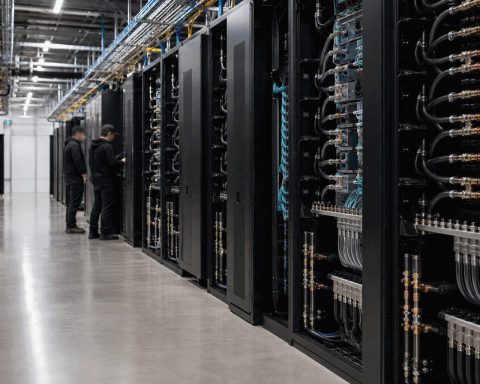
- CoreWeave already operates around 41 data centers with approximately 590 MW of active power as of Q3 and is simultaneously planning a separate $6 billion data‑center campus in Lancaster, Pennsylvania, with up to 300 MW of capacity.
The new loan bolsters CoreWeave’s ability to meet rapidly growing AI compute demand but adds yet more leverage to a balance sheet that already features multi‑billion‑dollar senior notes and delayed‑draw term loan (DDTL) facilities. In Q3, the company raised $1.75 billion in 9% notes due 2031 and expanded its DDTL facilities to a combined $5.6 billion at SOFR‑plus spreads.
Strategic upside vs. debt risk
Upside:
- The Kenilworth facility should deepen CoreWeave’s U.S. East Coast footprint and support long‑term contracts with hyperscale AI customers.
- The project leverages existing infrastructure (a former pharma campus), which can shorten timelines vs. fully greenfield builds.
Risks:
- The 555M loan adds to GPU‑backed and data‑center backed borrowing that already exceeds $14 billion by some estimates, raising questions about debt sustainability if AI demand ever slows.
- Rising interest expense is already pressuring GAAP results (see next section).
3. Q3 2025 earnings: explosive growth, thin GAAP margins
CoreWeave’s Q3 2025 results (reported November 10) show why the stock attracts so much attention – and controversy.
Headline numbers (Q3 2025 vs. Q3 2024): CoreWeave
- Revenue:
- 2025: $1.36 billion
- 2024: $584 million
- Growth: ≈ 134% year‑over‑year
- Operating income:
- 2025: $51.9 million
- 2024: $117.1 million
- Operating margin: compressed from 20% to 4%
- Interest expense (net):
- Q3 2025: ~$311 million
- Q3 2024: ~$104 million
- Net loss:
- Q3 2025: ~$110 million (‑8% net margin)
- Q3 2024: ~$360 million (‑62% margin)
On a non‑GAAP basis, CoreWeave reported: CoreWeave
- Adjusted EBITDA: ≈ $838 million, a 61% margin
- Adjusted operating income: ≈ $217 million, 16% margin
The gap between strong adjusted profitability and negative GAAP net income comes down largely to:
- Heavy interest expense from data‑center and GPU financing
- Depreciation on rapidly expanding infrastructure
- Ongoing stock‑based compensation and other adjustments
Massive backlog and mega‑contracts
Arguably the most important number in the Q3 release is revenue backlog: CoreWeave+1
- Backlog:$55.6 billion in contracted future revenue as of Sept. 30, 2025
- Key deals include:
- Up to $14.2 billion multi‑year agreement with Meta Platforms for Nvidia GB300 systems
- Expanded partnership with OpenAI, lifting total commitments to about $22.4 billion
- A new $6.3 billioncapacity order from Nvidia, under which Nvidia commits to buy any AI cloud capacity that CoreWeave cannot sell through April 2032
These contracts underpin the bull case that CoreWeave is one of the core “picks‑and‑shovels” providers for the generative AI boom.
4. Today’s analyst buzz: new Buy rating and wide target spread
Roth MKM / Roth Capital: “Top 4 market share winner”
On December 5, 2025, TipRanks and AskTraders reported that Roth MKM analyst Rohit Kulkarni initiated CoreWeave with a Buy rating and a $110 price target – implying roughly 25–30% upside from recent trading levels.
Key points from this bullish thesis:
- CoreWeave is expected to become one of the top four AI cloud providers by market share, benefiting from surging demand for GPU‑accelerated workloads.
- The analyst highlights “proven scale,” fast time‑to‑market and strong price‑performance vs. both AI‑specialist rivals and large hyperscalers like AWS, Azure and Google Cloud. TipRanks
- With the stock down over 40% since early October, the report frames CRWV as having a “highly asymmetric” risk‑reward profile – that is, potential upside seen as much larger than additional downside if execution remains solid. TipRanks
The same coverage notes that another analyst, Paul Meeks at Freedom Capital, also started CoreWeave at Buy with a $100 target, while TipRanks’ compiled consensus puts the average price target near $146.65, implying ~70% upside from current levels.
MarketBeat: “Moderate Buy” but with extreme dispersion
A December 1 MarketBeat piece gives a good snapshot of Wall Street’s split view: MarketBeat
- Around 26 analysts cover CRWV.
- Consensus rating: “Moderate Buy.”
- Average 12‑month target: about $130.
- Target range: from about $36 on the low end to $180 at the high end.
In other words, analysts broadly see upside from here, but they disagree wildly about just how profitable and durable CoreWeave’s growth will be.
Fresh long‑form opinions from today and this week
Several major analyses and opinion pieces have hit in the last 48 hours:
- Seeking Alpha (“This Sell‑Off Cannot Be Justified”) – Dec 4
- Labels CoreWeave a “Strong Buy” despite a roughly 40% share‑price decline driven by data‑center delays.
- Emphasizes the 134% revenue growth and argues that supply‑chain bottlenecks – particularly around “power shell” data‑center infrastructure – are temporary.
- Sets a price target around $131, implying ~60–70% upside.
- Zacks: “Is it Time to Buy the Dip in CoreWeave Stock?” – Dec 5
- Notes the stock is still up roughly 90% since the IPO but has fallen over 50% from its high.
- Flags concerns about slowing growth, heavy debt and weaker‑than‑expected guidance, even as long‑term AI demand remains strong.
- TS² Tech deep dive (Dec 1)
- Describes CoreWeave as an “AI cloud darling” caught between a huge backlog and heavy debt, with new investor worries about the structure of GPU‑backed financing and Nvidia’s role as both supplier and backstop customer. TechStock²
- MarketBeat: Barclays Issues Pessimistic Forecast (Nov 12)
- Barclays cut its target from $140 to $120 and maintained an “equal weight” rating, signaling caution despite still‑lofty long‑term AI demand assumptions. MarketBeat
5. Insider selling, hedge funds and billionaire switches
Heavy insider selling from co‑founders
MarketBeat has published multiple alerts over the past week detailing significant insider sales: MarketBeat+1
- Brannin McBee, co‑founder and executive, sold:
- 34,335 shares on Dec 2 at an average price of $78.61 (≈ $2.7 million).
- An additional 102,835+ shares the same day at the same price (≈ $8.1 million).
- Multiple giant blocks (150k–375k shares) during September at prices between roughly $99 and $138, generating tens of millions in proceeds.
- Over the last several months, insiders collectively have sold more than 32 million shares, worth roughly $4.1 billion, including large sales by co‑founder Brian Venturo and CEO Michael Intrator.
While core executives still own substantial stakes, this pattern of frequent, high‑dollar insider selling is one of the main red flags cited by skeptics.
Big‑name investors: ARK buying, Laffont selling
The TS² Tech roundup and recent news flow highlight a split among institutional investors: TechStock²+1
- Cathie Wood’s ARK Invest has repeatedly bought the dip, adding roughly $24 million of CRWV after a sharp post‑earnings sell‑off, framing CoreWeave as a high‑conviction AI infrastructure play.
- Other institutional holders, including hedge fund Coatue Management, have trimmed positions after locking in significant post‑IPO gains.
- A fresh Motley Fool piece notes that billionaire Philippe Laffont has been selling CoreWeave and rotating into a different AI leader, underscoring that even bulls on the AI theme are re‑balancing their exposure away from CRWV’s more leveraged profile.
6. Federal market push: NASA, public‑sector AI and new demand
A new Zacks commentary dated December 5 asks whether CoreWeave’s move into the U.S. federal market could strengthen its competitive edge. Though the full text is behind a bot‑protection wall, public filings and the company’s Q3 update confirm: Zacks+1
- CoreWeave counts NASA’s Jet Propulsion Laboratory (JPL) among its reference customers for AI workloads.
- Government workloads (defense, intelligence, scientific research) are expected to be a fast‑growing vertical for GPU clouds due to strict data‑sovereignty and security requirements.
If CoreWeave can build a repeatable federal/government sales motion, it could diversify away from today’s heavy concentration in a handful of mega‑tech customers – another key bear complaint (see below).
7. Structural risks: debt, “neoclouds” and governance
High leverage and GPU‑backed financing
The balance sheet is one of the most hotly debated aspects of the CoreWeave story.
A detailed TS² Tech explainer, drawing on company filings and short‑seller commentary, highlights that: TechStock²
- CoreWeave and peers such as Lambda and Crusoe make up what short‑seller Jim Chanos calls the “neoclouds” – AI clouds that rely heavily on GPU‑backed debt to finance infrastructure.
- Chanos estimates over $20 billion of such debt across the group, with CoreWeave alone accounting for roughly half.
- If GPU prices or useful lifetimes end up lower than assumed, this could pressure collateral values and increase default risk across the ecosystem.
CoreWeave’s own filings show large interest expense and a highly leveraged capital structure, consistent with the Q3 numbers discussed earlier.
IPO‑era criticisms: valuation and internal controls
Before the March 2025 IPO, research firm New Constructs published a highly skeptical report titled “Valuation Rotten to the Core” that remains relevant to today’s bear case. Key concerns included: New Constructs
- Huge gap between adjusted EBITDA and GAAP/economic earnings:
- Reported 2024 adjusted EBITDA of about $1.2 billion, vs GAAP net income of roughly ‑$863 million and even lower “economic earnings.”
- Material weaknesses in internal controls over financial reporting, including IT controls, segregation of duties and staffing depth in finance.
- Dual‑class share structure that leaves public investors with minimal voting power; post‑IPO, the three co‑founders collectively control the vast majority of votes.
- A “reverse DCF” that implies very aggressive assumptions (≈27% long‑term margins and 30% compound annual revenue growth to 2032) to justify IPO pricing, with New Constructs estimating 40%+ downside if margins normalize.
While some of these concerns may ease as CoreWeave matures and remediates its control issues, they illustrate why many value‑oriented and governance‑focused investors remain cautious or outright bearish.
8. How strong is the bull case? Backlog, tech lead and AI capex
Despite the above, a sizeable camp of analysts and growth investors still sees CoreWeave as a potential long‑term winner.
Bullish themes repeated across Seeking Alpha, Motley Fool, TipRanks and TS² Tech include: CoreWeave+3Seeking Alpha+3TechStock²+3
- Huge AI compute backlog
- The $55.6B backlog is more than 10× current annualized revenue, pointing to multi‑year visibility if CoreWeave can deliver capacity on schedule.
- Deep ties to Nvidia and AI leaders
- Multi‑billion‑dollar contracts with OpenAI and Meta, plus the $6.3B Nvidia capacity order, position CoreWeave at the center of the GPU supply chain.
- Being first to offer Nvidia Blackwell‑based RTX PRO 6000 GPU instances at scale, along with GB200 NVL72 systems, reinforces its claim to cutting‑edge hardware and performance.
- Strong non‑GAAP profitability today
- Adjusted EBITDA margins above 60% suggest CoreWeave can generate substantial cash once the heaviest build‑out phase is behind it and debt is refinanced at more normal levels.
- Favorable AI capex cycle
- Big Tech is expected to invest hundreds of billions of dollars in AI data centers through the late 2020s, a tide that may lift specialized AI clouds even if hyperscalers build more capacity in‑house.
In this view, the recent 40–50% drawdown simply brought CRWV back to a more reasonable (though still premium) valuation – with bullish analysts pointing to potential multi‑year multibagger returns if AI demand and CoreWeave’s execution both remain strong.
9. Bear case: customer concentration, execution risk and “bubble” worries
Bearish analysts and short‑sellers, including those featured in TS² Tech and New Constructs, highlight a different set of concerns: TechStock²+1
- Extreme customer concentration
- Nasdaq‑sourced data suggest that in 2024, CoreWeave’s top two customers accounted for roughly 77% of revenue, with the largest single customer representing about 62%.
- Any change in purchasing plans from OpenAI, Microsoft, Meta or Nvidia could have an outsized impact on revenue.
- Massive capital needs and execution complexity
- Building GPU‑dense data centers on aggressive timelines has already led to project delays and a 2025 revenue guidance cut to about $5.05–5.15B.
- A single third‑party partner delay in Q3 was enough to spook the market and trigger a multi‑week sell‑off of roughly 30–45%.
- Debt‑funded growth during a possibly frothy AI cycle
- Short‑seller commentary argues that GPU‑backed loans and circular financing between Nvidia and its AI‑cloud customers could exaggerate both demand and valuations, leaving investors exposed if the AI boom cools.
- Governance and control issues
- Dual‑class shares and lingering internal‑control weaknesses mean public shareholders have limited influence and must trust management to balance growth vs. risk.
- Insider selling and hedge‑fund rotations
- The combination of large insider sales, cautious notes from firms like Barclays and profit‑taking by high‑profile investors (e.g., Philippe Laffont) is seen as a vote of “good trade, but time to de‑risk.” MarketBeat+2The Motley Fool+2
10. CoreWeave stock forecast: what 2026–2030 could look like
No one can predict CoreWeave’s exact share price in five years, and nothing here is personalized investment advice. But the current range of published forecasts lets us outline three broad scenarios investors are debating.
1. Bullish scenario (what optimists are thinking)
Based on the most bullish research notes from TipRanks, Seeking Alpha and some Motley Fool analysis: TipRanks+2Seeking Alpha+2
- CoreWeave successfully delivers its major data‑center projects (Lancaster, Kenilworth, UK expansion) on time and on budget.
- Backlog conversion stays robust, with revenue growing 30%+ annually into the late 2020s.
- Adjusted EBITDA margins remain high and gradually translate into meaningfully positive GAAP earnings as interest expense normalizes.
- AI capex from Big Tech continues at a torrid pace, and CoreWeave maintains “top four” AI cloud status with durable contracts.
In this world, the average price targets around $130–150 could prove conservative, and some bulls talk about 150%+ upside by 2026–2027 if sentiment and growth both stay favorable.
2. Base‑case scenario (what many “Moderate Buy” analysts imply)
The consensus from MarketBeat and TS² Tech looks more balanced: MarketBeat+1
- Revenue lands near the current guidance band (~$5.1B for 2025) and grows at a strong but declining rate thereafter.
- The company continues to post impressive adjusted metrics but only slowly closes the gap to GAAP profitability due to sustained high capital spending and interest.
- Debt remains high but manageable thanks to ongoing access to capital markets and long‑duration contracts.
Under this scenario, mid‑double‑digit annual returns from today’s price could be possible, but the stock is unlikely to revisit the most aggressive early‑2025 valuations unless AI demand massively beats expectations.
3. Bearish scenario (what skeptics worry about)
New Constructs and short‑seller commentary outline a more pessimistic path: New Constructs+1
- Execution stumbles – repeated data‑center delays, cost overruns or contract renegotiations – cause the market to discount the backlog.
- AI data‑center spending decelerates or shifts toward in‑house builds at hyperscalers, leaving CoreWeave with excess capacity and pricing pressure.
- Debt‑to‑equity remains high while credit spreads widen, causing interest expense to eat most of the cash flow.
- Investors re‑rate CRWV more like a capital‑intensive data‑center REIT than a high‑growth AI SaaS, compressing valuation multiples.
In this world, bearish models see substantial downside from IPO‑era prices and meaningful risk even from today’s reduced levels, especially if AI enthusiasm proves cyclical or over‑hyped.
11. Key things to watch after December 5, 2025
For traders and long‑term investors following CoreWeave stock, the most important catalysts over the next 12–24 months include: TechStock²+2CoreWeave+2
- Backlog conversion vs. delays
- Are future quarters free of major data‑center construction hiccups?
- Do Meta, OpenAI, Nvidia and other big customers ramp usage in line with expectations?
- Debt and refinancing strategy
- How quickly can CoreWeave reduce its effective cost of capital and extend maturities?
- Does management continue to lean on GPU‑backed loans, or shift to more traditional financing?
- Customer concentration and federal/government diversification
- Evidence that public‑sector and enterprise customers are becoming a larger share of revenue would directly address one of the biggest bear arguments.
- Regulatory and systemic risk around “neoclouds”
- Any regulatory scrutiny of GPU financing structures, or of Nvidia’s deep interlinking with its cloud customers, could affect funding costs and sentiment.
- Insider and institutional flows
- Continued heavy insider selling – or a notable pause – will be watched closely.
- Moves by bellwether investors like ARK and Coatue will likely remain a directional signal for many retail traders.
12. Bottom line: high‑beta AI infrastructure play with real upside and real fragility
As of December 5, 2025, CoreWeave (CRWV) sits at the crossroads of three powerful forces:
- A genuine, still‑accelerating AI compute boom
- A highly leveraged, capital‑intensive business model
- A rapidly evolving debate over valuation, governance and systemic risk
The stock has bounced on news of a $555M data‑center loan and a fresh bullish initiation from Roth MKM / Roth Capital, but it remains well below its 2025 highs and subject to sharp moves whenever new information hits the tape. Investors considering CoreWeave today are effectively choosing whether – and how much – they want to bet on a debt‑funded, high‑risk/high‑reward AI infrastructure story rather than on more diversified large‑cap tech.
As always, this article is for information and education only. It is not financial advice or a recommendation to buy or sell any security. Before investing in a volatile stock like CoreWeave, it’s wise to review the company’s SEC filings, listen to the most recent earnings call, and consider speaking with a licensed financial adviser who understands your specific goals, time horizon and risk tolerance.
Related articles: NASDAQ:CRWV