
The battle for “picks-and-shovels” leadership in next‑generation tech is unfolding in two very different arenas: LiDAR sensors for physical autonomy and AI cloud infrastructure for model training and inference. On one side is Ouster, Inc. (OUST), a fast‑growing LiDAR specialist; on the other is Nebius Group N.V. (NBIS), a hypergrowth AI cloud and “neocloud” provider.
As of December 5, 2025, both stocks are volatile, richly valued and heavily covered by Wall Street analysts. Below is a deep dive into the latest news, forecasts and key metrics investors are watching right now.
1. Ouster (OUST): LiDAR and the “Physical AI” Theme
1.1 What Ouster Does
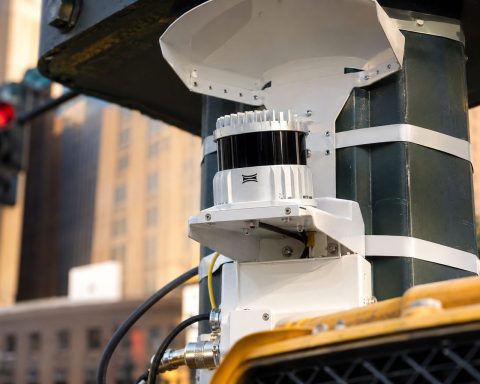
Ouster develops digital LiDAR sensors and increasingly software‑enabled perception solutions for automotive, industrial, robotics and smart infrastructure markets. Its merger with Velodyne created a large installed base and customer roster (over 850 customers), positioning the company as a major player in the LiDAR space.
The company is pushing a “Physical AI” narrative: LiDAR plus software that converts 3D data into actionable intelligence. Its Gemini perception platform and BlueCity analytics suite illustrate the move from pure hardware to recurring software and services revenue.Nasdaq
The broader LiDAR market is forecast to reach roughly $19 billion by 2030, underscoring the long‑term growth story if autonomous systems and smart infrastructure reach scale.
1.2 Ouster Stock Today (December 5, 2025)
- Recent price: around $25–26 per share (roughly $25.37 at the close).
- Market cap: about $1.5–1.6 billion.
- 52‑week range: roughly $6.34 (low) to $41.65 (high), with shares up almost 200% year‑on‑year and more than 100% year‑to‑date, despite sitting ~38% below the 52‑week high.
From a fundamentals snapshot (trailing‑12‑month):
- Revenue: ~$137.3 million (TTM).
- Net margin: about ‑64%; operating margin ~‑61%.
- Price‑to‑sales (P/S): about 10–11x, far above industry averages around 2–3x.
So Ouster is still loss‑making and trading at a premium growth multiple.
1.3 Fresh News on December 5, 2025
Two key December 5 items stand out for OUST:
1. New York State Common Retirement Fund trims stake
A MarketBeat filing update shows the New York State Common Retirement Fund cut its Ouster stake by about 39.3% in Q2, selling almost 299,000 shares and ending with 461,050 shares worth roughly $11.18 million, or 0.86% of the company.
The same filing notes recent insider selling:
- CTO Mark Frichtl sold 25,329 shares.
- COO Darien Spencer sold 18,274 shares.
- Total insider sales over 90 days: 106,310 shares (~$3.0 million), leaving insiders with about 6.6% of the company.
The article also cites a consensus Wall Street target of ~$32.17 while the stock trades near $26, implying moderate upside from that particular dataset.
2. Analyst forecast update (TickerNerd, last updated December 5, 2025)
TickerNerd’s forecast page, updated on the morning of December 5, aggregates 12 Wall Street analysts:Ticker Nerd
- Median 12‑month price target:$38.50
- Range:$33.00 (low) to $50.00 (high)
- Implied upside from ~$26: about 48% to the median, >90% to the high end
- Ratings mix:6 Buy, 0 Hold, 0 Sell, suggesting a Strong Buy consensus in that sample
The same dataset shows:
- 1‑year share price change: about +191%.
- Year‑to‑date gain: about +113%.
1.4 Recent Earnings and “Physical AI” Narrative
Ouster’s Q3 2025 report and subsequent analyst commentary frame the story:
- Q3 EPS of ‑$0.37, significantly worse than the ‑$0.16 consensus estimate.
- Revenue of $39.5 million, beating expectations of $36.9 million.
- Management highlighted record shipments of over 7,200 sensors and the 11th consecutive quarter of revenue growth.
After investor meetings with Ouster’s CFO and finance leadership, Oppenheimer reiterated an Outperform rating with a $39 target, emphasizing:Investing.com UK
- Ouster as a “critical technology partner” in Physical AI.
- A customer base of 1,000+ clients, providing multi‑year visibility on adoption.
- Underappreciated sensor‑fusion and software capabilities that could boost margin and retention.
Meanwhile, Zacks (via a Nasdaq feature) stresses that:
- Ouster’s growth is tightly tied to customers’ ability to sell their own LiDAR‑equipped products.
- The stock trades at a P/S multiple above 10x, versus an industry average around 2x, suggesting an expensive valuation on sales alone.
- OUST shares are up more than 200% year‑to‑date, outpacing its peer group.
1.5 Valuation Debates and Cash‑Flow Outlook
Simply Wall St offers a nuanced view using multiple valuation lenses:Simply Wall St+1
- A DCF model (based on current free cash flow of ‑$18 million) projects FCF of ‑$20.8 million in 2026, $1.4 million in 2027, and up to $60.9 million by 2029.
- That DCF suggests an intrinsic value of about $42.80 per share, implying roughly 35% upside versus current levels – hence an “undervalued” conclusion on DCF.
- On the other hand, Ouster’s price‑to‑sales ratio around 12.7x versus its “fair” sales multiple of 5.3x yields an “overvalued” conclusion on that metric.
In short: cash‑flow models see upside if growth targets are met, but traditional multiples flag a high‑risk, high‑expectation story.
1.6 OUST: Key Bull and Bear Points
Bull case highlights
- Exposure to a $19B LiDAR market by 2030 with secular tailwinds in AVs, robotics and smart infrastructure.
- Strong top‑line momentum and record sensor shipments; 11 straight quarters of revenue growth.
- Growing software and perception platform revenues may improve margins and drive recurring income over time.
- Consensus analyst upside of roughly 45–50% over the next 12 months in several datasets.
Bear case / risks
- Persistent losses and negative FCF, with profitability not expected until at least 2027 under optimistic projections.
- Rich valuation versus peers (P/S well above LiDAR and electronics averages) leaves little room for execution missteps.
- End‑markets are themselves cyclical and dependent on broader capex trends in auto, industrial and infrastructure.
- Recent insider selling and institutional trimming (e.g., New York State Common Retirement Fund’s 39% reduction) may signal some investors are locking in gains.
2. Nebius Group (NBIS): Hypergrowth “Neocloud” for AI
2.1 What Nebius Does
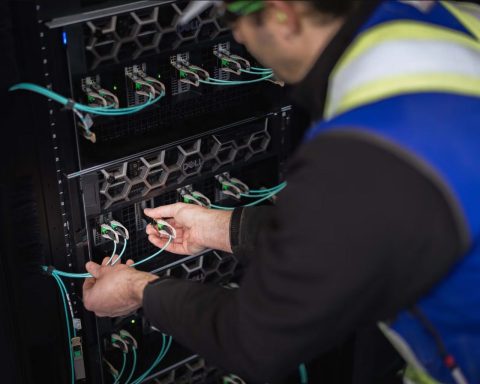
Nebius Group N.V. (NBIS) is a full‑stack AI infrastructure provider – effectively an AI‑first cloud company that offers:
- Large‑scale GPU clusters across Europe and the U.S.
- A full‑stack AI cloud platform with tools, software and services tailored to training and deploying advanced AI models.
Alongside the core AI cloud, Nebius also owns or incubates several businesses:
- Toloka – data and evaluation partner for generative AI.
- TripleTen – an ed‑tech platform focused on tech reskilling.
- Avride – autonomous driving and delivery robotics.
Nebius is headquartered in Amsterdam, listed on the Nasdaq under ticker NBIS, and evolved from Yandex N.V., rebranding after divesting its Russian assets in 2024.
2.2 Nebius Stock Today (December 5, 2025)
- Recent price: around $97 per share (roughly $97.05 at the latest trade).
- Market cap: about $25–26 billion.
- 52‑week range: about $18.31 (low) to $141.10 (high).
- Year‑to‑date performance: shares up around 200–250% in 2025 despite recent pullbacks.
Nebius is deeply in investment mode:
- Revenue is expanding triple‑digits year‑over‑year each quarter.
- Net income remains sharply negative, producing a P/E around ‑133x and very high forward EV/Sales multiples (~40x) according to some analyses.
2.3 Fresh News on December 5, 2025
On December 5, investors got a fresh look at institutional positioning and analyst consensus:
1. HSBC trims its Nebius stake
A new MarketBeat filing shows HSBC Holdings PLC reduced its Nebius position by ~39.9% in Q2, selling 62,972 shares and ending with 94,782 shares worth about $5.24 million.
The same piece notes broader institutional trends:
- Multiple smaller firms have been adding NBIS shares, and total institutional ownership stands near 22%.
It also consolidates analyst opinions:
- 2 Strong Buy, 7 Buy, 2 Hold ratings, for an average “Buy” consensus.
- A consensus price target of about $144.71, implying roughly 49% upside from a price in the high‑$90s.
2. Analyst target and rating snapshots (as of late 2025)
Different tracking platforms show slightly different numbers, but all lean bullish:
- MarketBeat:
- Average target $144.71; range $84–$211; ~49% upside from ~$97.
- Nasdaq / Fintel (DA Davidson note):
- Average one‑year target $148.10; range $126.25–$216.30; ~45% upside from ~$102.
- TipRanks:
- 6‑analyst sample with Strong Buy consensus; average target around $164.20, implying ~66% upside from just under $100.
- Public.com:
- 6‑analyst Buy consensus; price target quoted at about $154.83.
Individually, major brokers have reiterated bullish stances:
- DA Davidson: Buy, $150 target, ~50% upside.
- BWS Financial: Buy, $130 target.
- Northland Capital: Outperform, target trimmed from $211 to $206 after recent volatility.
- Goldman Sachs: Buy, $120 target.
Overall, consensus 12‑month upside sits roughly in the 45–65% range depending on which dataset you look at, with no major firm rating the stock a Sell as of early December.
2.4 Earnings Momentum and Mega‑Deals
Nebius’ investment case is built around hypergrowth AI demand and a string of huge capacity contracts with hyperscalers.
Earnings trajectory in 2025
- Q1 2025:
- Revenue $55.3 million, up ~385% YoY.
- Net loss of $92.5 million.
- Management reaffirmed guidance for $750M–$1B in annual recurring revenue, expecting adjusted EBITDA to turn positive by year‑end.
- Q2 2025:
- Revenue surged to $105.1 million, up ~625% YoY.
- Net loss widened to $91.5 million, but guidance was raised to $900M–$1.1B revenue run‑rate, along with plans to secure >1 GW of power by 2026.
- Q3 2025:
- Revenue $146.1 million, up ~355% YoY, though slightly below the $155 million Wall Street estimate.
- Net loss nearly $120 million, versus about $43.6 million a year earlier.
- Announced a five‑year, $3 billion AI compute deal with Meta Platforms, on top of the Microsoft agreement.
- Plans to raise capital via a 25 million‑share equity offering, raising some dilution and leverage concerns.
Mega‑contracts with Microsoft and Meta
- In September 2025, Nebius signed a deal with Microsoft worth up to $19.4 billion over five years (base commitment $17.4B, plus up to $2B of additional capacity). The stock jumped ~50% on the news.
- The Meta deal adds another $3 billion in committed AI compute over five years.
A December 3 Reuters interview with co‑founder Roman Chernin puts these contracts into strategic context:
- Nebius is now Europe’s biggest “neocloud” provider, specializing in NVIDIA‑powered AI infrastructure.
- It plans to secure 2.5 GW of contracted power capacity by 2026 across the U.S. and Europe.
- Management stresses margins over volume when negotiating with hyperscalers.
- The firm raised $4.2 billion via equity and convertibles after the Microsoft deal, bolstering its balance sheet for expansion.
Clients include AI‑native names like Mistral, Cursor and Black Forest, as well as enterprise customers such as Shopify, Prosus and ServiceNow, with Nebius positioning itself as an alternative to U.S. hyperscalers for AI‑heavy workloads.
2.5 Sentiment, Volatility and Valuation
Despite the strong fundamental growth, the stock has been extremely volatile:
- A recent “neocloud crash” across AI infrastructure names prompted debates over overbuilding, leverage and the durability of AI demand. Barron’s framed the sector’s sell‑off as a potential buying opportunity but highlighted high valuations and cyclical risks.Barron’s+1
- A Seeking Alpha note points out Nebius still trades at a forward EV/Sales around 40x even after a drawdown of more than 37% from its 52‑week high, calling it “extremely expensive” but maintaining a Buy rating based on long‑term growth prospects.Seeking Alpha+1
TipRanks recently summarized a short‑term wobble: Nebius shares fell more than 3% on a day when co‑founder Roman Chernin told Reuters “we’re very bullish” on AI infrastructure demand, underscoring the tension between bullish management commentary and jittery markets.TipRanks+1
From a positioning standpoint:
- Fintel/Nasdaq data shows 567 institutional owners, with total institutional shares up almost 5% in the last quarter and a put/call ratio of 0.58, indicating more call than put positioning – typically a bullish sign.
2.6 NBIS: Key Bull and Bear Points
Bull case highlights
- Nebius is one of the purest plays on global AI infrastructure outside the U.S. hyperscalers, with deep integration into the NVIDIA ecosystem.
- Triple‑digit revenue growth (350–600% YoY) through 2025, with management guiding to near‑term adjusted EBITDA breakeven despite heavy capex.
- Multi‑billion‑dollar, multi‑year contracts with Microsoft and Meta give strong visibility on demand and capacity utilization.
- Analyst consensus is strongly positive, with multiple “Buy” and “Strong Buy” ratings and average 12‑month targets 45–65% above current prices.MarketBeat+2Nasdaq+2
Bear case / risks
- Nebius is far from GAAP profitability and ramping capex to around $5 billion in 2025, which raises concerns about cash burn and dilution.
- Valuation is stretched even by growth standards, with forward EV/Sales multiples near 40x and a P/E deeply negative.
- Heavy reliance on a few giant customers (e.g. Microsoft and Meta) increases customer concentration risk if any contract is renegotiated or delayed.
- Sector risks: if the current AI spending wave slows or the “AI bubble” deflates, hyperscalers may cut or delay capacity commitments, pressuring Nebius’ revenue trajectory.Reuters+1
3. OUST vs NBIS: How Do These High‑Growth Stories Compare?
While both Ouster and Nebius are growth stocks linked to transformative technologies, they sit in very different corners of the tech universe.
3.1 Sector and Business Model
- Ouster (OUST)
- Hardware‑driven, with a growing software attach rate.
- Focused on LiDAR sensors and perception software powering autonomous vehicles, robots and smart infrastructure.
- Nebius (NBIS)
- Infrastructure‑as‑a‑service model selling GPU‑rich AI cloud capacity plus software and tools.
- Competes in the AI cloud / “neocloud” niche, adjacent to – but smaller than – hyperscalers like AWS, Azure and Google Cloud.Reuters+2Nebius+2
In simple terms: Ouster sells the “eyes and brain” for autonomous systems; Nebius sells the “brains in the cloud” that train and run large AI models.
3.2 Scale and Financial Profile
- Scale
- Ouster: ~$137M in trailing revenue, ~$1.5B market cap.
- Nebius: Quarterly revenue already above $140M, with run‑rate guidance approaching $1B+, and a $25B+ market cap.
- Profitability
- Both are loss‑making, but Nebius is closer to adjusted EBITDA breakeven (per guidance), while Ouster’s profitability is more dependent on scaling volumes and software mix over several years.
- Valuation
- Ouster: high but more “mid‑cap growth” style valuations – P/S ~10–12x.Ticker Nerd+1
- Nebius: ultra‑premium multiples with forward EV/Sales around 40x, reflecting its perceived leadership in a massive AI capacity boom.
3.3 Risk and Volatility
- Both stocks have delivered triple‑digit gains in 2025 and exhibit high volatility.
- Nebius’ beta near 3.8 and sharp drawdowns post‑Q3 highlight sensitivity to sentiment around AI spending and interest rates.
- Ouster’s risk is tied less to macro AI hype and more to the pace of LiDAR adoption and the ability of its customers to ramp production and sales.
4. What Changed on December 5, 2025?
From a news‑flow perspective, December 5 brought one particularly clear message for each stock:
- For Ouster, the highlight was institutional re‑positioning and confirmation that analysts remain broadly constructive:
- New York State Common Retirement Fund significantly cut its stake, while consensus price targets still sit well above the current share price.
- For Nebius, the day featured a similar story:
- HSBC reduced its holding by ~40%, but aggregated analyst targets still imply large double‑digit upside, and Nebius continues to ride the momentum of its Microsoft and Meta mega‑contracts.
In both cases, large investors are taking profits or rebalancing after spectacular runs, even as Wall Street models still see upside over the next 12 months.
5. How to Think About OUST and NBIS from Here
Without making any recommendation to buy or sell, the current setup can be summarized like this:
- Ouster (OUST) may appeal to investors who:
- Want targeted exposure to LiDAR and the “Physical AI” hardware layer.
- Believe in multi‑year adoption of autonomous and smart‑infrastructure systems.
- Can tolerate ongoing losses and valuation risk in exchange for high‑growth potential and a relatively smaller market cap.
- Nebius (NBIS) may interest investors who:
- Want a non‑mega‑cap way to play AI cloud infrastructure, backed by large hyperscaler contracts.
- Are comfortable with extremely rich multiples, high capex and customer concentration, betting that AI infrastructure demand will continue to compound for years.
In both cases, these are high‑risk growth equities. They sit at the intersection of massive secular themes (autonomy and AI), but their valuations and cash‑flow profiles mean outcomes could diverge sharply from current analyst forecasts, especially if macro conditions or sector sentiment change.
6. Methodology and Disclaimer
All prices, market caps and metrics referenced are as of December 5, 2025, based on public data from exchanges and financial data providers, including Yahoo Finance, MarketBeat, TickerNerd, StockAnalysis, Nasdaq, Reuters, TipRanks and other reputable outlets.
This article is for informational and educational purposes only and does not constitute investment advice, an offer, or a solicitation to buy or sell any security. Always do your own research and consider speaking with a licensed financial adviser before making investment decisions.