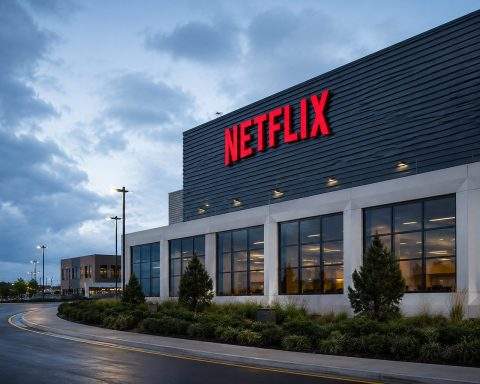

Netflix stock is having one of its most consequential trading days in years.
On December 5, 2025, shares of Netflix, Inc. NASDAQ:NFLX traded around $100–101, down roughly 2.8% on very heavy volume after the company confirmed an $82.7 billion deal to acquire Warner Bros. and its streaming assets.
At the same time, the stock is still digesting a 10‑for‑1 split that took effect on November 17, 2025, lowering the share price from over $1,000 to roughly $110 per share.
Below is a deep dive into today’s news, what it means for Netflix stock, and how Wall Street is recalibrating its NFLX forecast for 2026–2030.
1. Netflix Stock Snapshot – December 5, 2025
Based on real‑time market data:
- Last price: about $100.37
- Day change: about ‑2.8% vs. Thursday’s close of $103.22
- Day range: roughly $97.7 – $104.8
- 52‑week range: about $82.11 – $134.12
- Market cap: ≈ $426 billion
- Trailing P/E ratio: ~42x earningsStockAnalysis
The pullback comes despite strong underlying fundamentals and follows a year in which Netflix’s stock hit an all‑time high (on a pre‑split basis) before selling off after Q3 earnings and the Brazil tax surprise.
The 10‑for‑1 stock split
Netflix announced a 10‑for‑1 stock split on October 30, 2025, with trading beginning on a split‑adjusted basis on November 17, 2025.
- Each shareholder received nine additional shares for every one previously held.
- The split cut the per‑share price from above $1,000 to roughly $110, explicitly aimed at making the stock more accessible to retail investors.
Post‑split, analysts are quick to stress that while the share price is lower, Netflix’s valuation is not suddenly cheaper—its market cap and earnings power are simply divided across more shares.
2. Inside the $82.7 Billion Warner Bros. Deal
Deal structure and what Netflix is buying
Netflix has agreed to acquire Warner Bros. Discovery’s TV and film studios plus its streaming unit (including HBO / HBO Max) in a transaction that:
- Values Warner Bros. Discovery’s equity at about $72 billion, or $27.75 per share, paid via approximately $23.25 in cash and $4.50 in Netflix stock for each share.
- Implies a total enterprise value of $82.7 billion, once Warner’s debt is included.
- Is expected to close in late 2026, after Warner spins off its cable networks (CNN, TNT, HGTV and other linear channels) into a separate company called Discovery Global.
What Netflix actually gets:
- Warner Bros. film and TV studios
- HBO and HBO Max, with their premium series slate
- Massive IP catalogues including DC Comics (Batman, Superman, etc.), “Game of Thrones,” “The Sopranos,” “Harry Potter,” “Casablanca,” “Citizen Kane” and moreReuters+2AP News+2
- A proven gaming pipeline through Warner’s titles such as “Hogwarts Legacy,” which has generated over $1 billion in revenue.Reuters+1
Linear cable networks are not part of the deal; they remain with the spun‑off Discovery Global entity.
Why Netflix is doing this
In an investor call, co‑CEO Ted Sarandos framed the move as a rare but transformational acquisition, arguing that combining Netflix’s global streaming reach with Warner’s century‑deep IP library helps “define the next century of storytelling.”Reuters+1
Strategically, the deal aims to:
- Lock up premium franchises that competitors also covet
- Reduce reliance on third‑party licensors
- Deepen Netflix’s push into gaming, where Warner has shown it can turn IP into blockbuster titlesReuters+1
- Support Netflix’s expanding ad‑supported business and live events slate by providing more must‑watch content
Debt, valuation and why the stock is down
Wall Street is not blinking at the headlines—it’s staring at the bill.
- The acquisition implies about 25x Warner’s projected 2026 EBITDA of $3.3 billion before synergies, according to one detailed breakdown.
- Netflix argues that expected $2–$3 billion in annual cost synergies by year three post‑close would lift Warner’s EBITDA to around $5.5 billion, bringing the multiple down closer to 14x—but those savings will take time to materialize.
The bigger immediate concern:
- Netflix’s debt is projected to jump from roughly $16 billion today to around $76 billion once the deal closes, which could push its credit rating from single‑A to BBB according to some estimates.
This helps explain why NFLX stock dropped about 3% today and gapped down at the open (around $98.78 vs. a prior close of $103.22) on heavy volume.
Investors are weighing:
- Rich purchase price
- Sharp increase in leverage and integration risk
- Long regulatory review window (12–18 months) where anything can happen
3. Antitrust and Industry Backlash: The Big Overhang
The Warner Bros. deal doesn’t just reshape streaming—it lights up the antitrust radar.
Regulators and lawmakers
Both U.S. and European regulators are expected to scrutinize the combination of the world’s largest streaming service with another major player that includes HBO Max and roughly 130 million streaming subscribers.
Some U.S. lawmakers have already signaled concern that the deal could reduce competition and consumer choice in streaming and theatrical distribution.
Writers, unions and theaters
The backlash from Hollywood and exhibitors has been swift:
- The Writers Guild of America (WGA) says the Netflix–Warner Bros. merger “must be blocked,” arguing that a dominant streaming platform swallowing one of its largest rivals is exactly what antitrust laws are meant to prevent.Wikipedia+1
- Cinema United, a major exhibition trade group representing more than 30,000 U.S. screens, calls the proposed takeover an “unprecedented threat” to movie theaters globally, warning of fewer theatrical releases and growing pressure on independent cinemas.Cinema United+1
Netflix is trying to cool those fears. Sarandos has promised to keep releasing Warner Bros. films theatrically (though with relatively short windows), arguing that combined streaming services could lower prices for consumers through bundling.
Still, the antitrust path is a major swing factor for Netflix stock:
- If the deal is blocked on antitrust grounds, Netflix owes Warner Bros. a break‑up fee of about $5.8 billion in cash.
- If it goes through, Netflix must prove it can integrate a huge studio, manage a far larger balance sheet and still hit its growth and margin targets.
For investors, that means a long period where regulatory headlines could drive significant volatility in NFLX stock.
4. Netflix’s Core Business: Still Growing Fast
Amid the deal noise, Netflix’s underlying operating story remains strong.
Q3 2025 results
For the quarter ended September 30, 2025, Netflix reported:Poder360+3TheWrap+3Yahoo Finance+3
- Revenue:$11.51 billion, up ~17.2% year‑over‑year (its fastest growth in over a year)
- Operating margin:~28%, below the company’s 31.5% guidance due to a one‑off tax charge in Brazil related to a long‑running dispute
- Diluted EPS: around $5.87, up roughly 9% YoY
- Free cash flow (FCF): about $2.7 billion in Q3
- 2025 FCF guidance: raised to roughly $9 billion, up from a prior range of $8.0–8.5 billion
Management emphasized that excluding the Brazilian tax expense, operating margins would have exceeded guidance, and said the issue is not expected to materially impact future results.
Third‑party analysis of the quarter underscores that the sell‑off that followed was largely triggered by the headline earnings “miss” and margin impact, rather than weakness in the core business.MarketBeat+2Insider Monkey+2
The ad‑supported tier is gaining real traction
Advertising is crucial to Netflix’s long‑term growth thesis, and recent data is encouraging:
- According to Comscore’s 2025 State of Streaming report, 45% of Netflix’s U.S. household viewing hours now occur on its ad‑supported tier, up from 34% a year earlier.
- Netflix’s ad‑supported tier now reaches about 190 million monthly active viewers globally, based on a new “viewer” metric that counts co‑viewing in households.TheWrap
- Q3 2025 was Netflix’s strongest quarter ever for ad sales; the company says it remains on track to more than double ad revenue in 2025 vs. 2024.
Netflix is also testing interactive video ads and dynamic ad insertion (for WWE shows and upcoming NFL games), with broader rolls planned for 2026—features that could materially increase ad yields if they’re effective.
A bullish long‑term thesis
A recent bull case summarized by Insider Monkey highlights why many growth investors still like the stock:Insider Monkey
- Q3’s margin hit was driven by a non‑recurring Brazil tax issue, not operational weakness.
- Management is guiding for ~16% revenue growth in 2025, ~29% operating margin and FCF of about $9 billion.
- Ad sales are expected to double in 2025, while Netflix’s push into live sports and events expands its total addressable market.
- The thesis projects EPS growth above 20% per year through 2028, positioning Netflix as a “premier global media platform” even after its rapid recovery since 2022.
In other words, even before factoring in Warner Bros., Netflix’s organic story looked healthy: high‑teens revenue growth, expanding margins and a rapidly scaling ad business.
5. How Wall Street Sees Netflix Stock Now
Current analyst consensus
Data compiled by StockAnalysis and MarketBeat show that:StockAnalysis+1
- Around 34+ analysts cover Netflix.
- The average rating is “Buy” / “Moderate Buy.”
- Out of these, roughly:
- 2 rate the stock “Strong Buy”
- 31 rate it “Buy”
- 12 rate it “Hold”
- 1 rates it “Sell”
- The average 12‑month price target is about $134–135 per share.
- From today’s roughly $100 price, that implies about 30–35% upside over the next year.
Importantly, many of these targets were set before the Warner Bros. deal was finalized, and some analysts are already flagging the likelihood of revisions as they re‑run their models for the larger, more leveraged Netflix.
Longer‑term price targets and models
Beyond the standard 12‑month view, a number of research and forecasting shops have published longer‑term projections:
- 24/7 Wall St. models Netflix revenue growth slowing gradually but still sees the stock reaching around $154 in 2027, $166 in 2028, and $189 in 2029, assuming a P/E multiple around 40–42x.
- A valuation piece on TIKR argues that $141 per share by December 2027 is reasonable, implying about 33% total return from mid‑$100s levels (before today’s dip), or roughly 14% annualized, assuming continued subscriber growth, pricing power and ad expansion.
- Simply Wall St. forecasts Netflix’s earnings to grow about 17–18% per year and revenue about 10.5% per year, with return on equity projected around 46% in three years, which is unusually high even among premium growth stocks.
But algorithm‑driven and retail‑oriented forecast sites underline just how uncertain the future is:
- A detailed roundup from LiteFinance notes end‑of‑2025 targets around $137.7 (with some models as high as $171.8), and 2026–2030 scenarios that range from bearish dips into the $80s to extreme bullish cases above $1,800, depending on the source.
- CoinCodex’s technical model is far more conservative, seeing December 2025 trading in a narrow band around $101–105, only a few percent above current levels.
Taken together, Wall Street’s fundamental models still point to solid upside over the next few years, but quant and retail forecasts are all over the place—reflecting the genuine uncertainty around streaming competition, regulation, and now the Warner Bros. integration.
6. Key Drivers for Netflix Stock After Today
Whether NFLX ultimately moves toward those optimistic price targets or struggles under the weight of this megadeal will depend on several key variables.
1. Regulatory outcome for the Warner Bros. acquisition
- A clean approval could unlock the full value of Warner’s IP, provide scale advantages in content spend and ads, and potentially reinforce Netflix’s pricing power.
- A blocked deal would leave Netflix with a multi‑billion‑dollar breakup fee, some reputational bruising, and no major new assets to show for months of distraction.
Either path could meaningfully move the stock.
2. Integration, debt and credit ratings
Post‑close, Netflix will be managing:
- A far more complex portfolio (Netflix Originals + Warner studio + HBO)
- A much larger debt load (potentially $70–80 billion total)Barron’s
Execution errors could pressure margins and cash flow, while any credit downgrade could increase borrowing costs and reduce financial flexibility.
3. Growth of the ad business
Advertising has quickly become central to the Netflix investment thesis:
- Nearly half of U.S. viewing time is already on the ad tier.
- Netflix is counting on ad sales doubling in 2025, and a scaled HBO library plus major franchises should make its inventory even more attractive to advertisers.
If Netflix executes well on more sophisticated ad formats and measurement, the stock could benefit from a higher‑margin, diversified revenue mix.
4. Content hits, live events and churn
The streaming business is still hit‑driven. Upcoming catalysts include:
- Final phases of “Stranger Things”, new tentpole originals and big Warner films
- Expansion of live offerings like WWE “Raw”, NFL games and other events that play well in an ad‑supported environmentTheWrap+1
Strong, consistent hits can support higher pricing and lower churn; misfires will sting more as Netflix carries a larger balance sheet.
5. Broader macro environment
Like all growth stocks, Netflix is sensitive to:
- Interest rate expectations (today’s market is still betting on a Fed cut later this month)Investors
- Consumer discretionary spending trends
- Currency fluctuations, given its large international footprintStockAnalysis
Higher‑for‑longer rates or a sharp downturn in consumer spending could compress valuation multiples across the streaming and tech complex, Netflix included.
7. What Today Means for Different Types of Investors
Without giving personal investment advice, here’s how many market participants are framing Netflix stock after December 5, 2025:
- Growth‑oriented investors may see the Warner Bros. deal as a bold (if risky) way to extend Netflix’s moat, especially in premium IP, gaming and advertising, on top of already strong free‑cash‑flow generation.
- Value‑conscious investors are focused on the high acquisition multiple, the large increase in debt and the possibility that Netflix is paying peak prices for assets just as streaming growth moderates.
- Income or defensive investors might remain wary: Netflix still pays no dividend, runs a relatively high valuation multiple and is heading into at least a year of regulatory and integration uncertainty.
Regardless of camp, most agree on one thing: after today, Netflix is no longer “just” a streamer. If the deal closes, it becomes a vertically integrated entertainment giant with the scale—and the responsibilities—of a traditional Hollywood studio plus a global tech platform.
8. Final Word (and a Quick Disclaimer)
Netflix’s December 5, 2025 news flow—a historic Warner Bros. acquisition, a recently completed 10‑for‑1 stock split and strong but noisy earnings—puts the stock squarely in the spotlight for Google News, Discover and Wall Street alike.
- The long‑term fundamentals (revenue growth, margin expansion, ad‑tier traction) remain solid.
- The short‑term risks (antitrust scrutiny, debt load, integration complexity) are real and already influencing the share price.
- Analysts, on balance, still see upside, but the range of forecasts from $100 to nearly $200 (and algorithmic models even farther out) shows just how wide the cone of uncertainty has become.
As always, this article is for informational and educational purposes only and does not constitute financial or investment advice. Anyone considering investing in Netflix stock (NFLX) should carefully assess their own risk tolerance, time horizon and financial situation, and, if needed, consult a qualified financial advisor.
Related articles: NASDAQ:NFLX