
All figures and developments in this article are current as of the close on December 5, 2025.
1. iRobot Stock at a Glance (as of December 5, 2025)
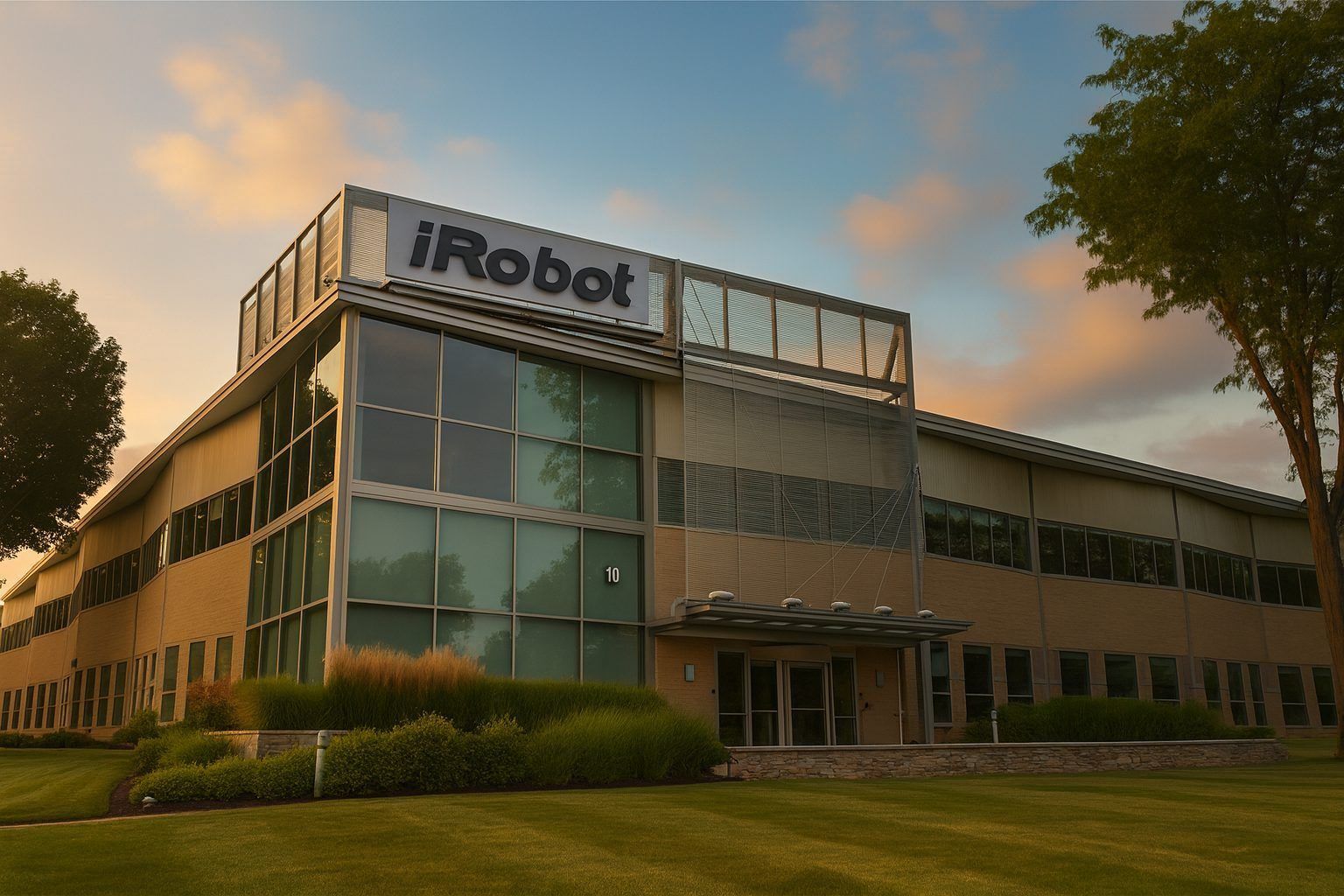
iRobot Corporation NASDAQ:IRBT, the maker of Roomba robot vacuums, is currently trading like a distressed penny stock with meme‑stock levels of volatility.
- Last close: about $3.69 per share on December 5, 2025
- After-hours: roughly $3.61
- 1‑year trading range: about $1.40 (low) to $13.06 (high)
- Market cap: under $100 million, versus a failed $1.4–1.7 billion takeover price Amazon once agreed to pay.
Despite a 21–22% gain on December 5 alone, IRBT remains down dramatically year‑to‑date and trades well below the $5 level many investors use as a penny‑stock threshold.
The stock’s behavior is being shaped by three big storylines:
- White House robotics hype that periodically sends robotics names sharply higher.
- A looming credit crunch and explicit bankruptcy warnings from iRobot itself.
- Ultra‑thin coverage and liquidity, with only one active Wall Street analyst and heavy short‑term trading in options.
2. December 2025: Why iRobot Stock Suddenly Spiked
2.1. White House robotics buzz
Over the last two weeks, iRobot has ridden a wave of headlines about U.S. robotics policy:
- Multiple reports say the Trump administration is considering a dedicated “robotics” executive order in 2026, after a series of AI- and tech‑focused orders this year. Humanoids Daily+2Roic AI+2
- An InvestorsObserver piece notes that just talk of a robotics executive order was enough to send sector stocks sharply higher: iRobot surged nearly 74% in one session, while Richtech Robotics and even Tesla also climbed.
- A Barchart column reports IRBT shares jumped as much as 70% intraday after a Politico story said Commerce Secretary Howard Lutnick is “all in” on supporting domestic robotics and has been meeting with industry CEOs. Barchart.com
These headlines piggy‑back on the “Genesis Mission” executive order signed on November 24, 2025, which launches a national initiative around AI and advanced technologies including robotics and advanced manufacturing. The White House+1
For traders, the story is simple: if Washington pours money into robotics, any stock with “robotics” in the story can squeeze higher, and iRobot has heavy short interest plus a tiny float.
2.2. December 5: Top gainer, options frenzy, and meme‑style moves
On December 5, 2025 specifically:
- ChartMill listed iRobot among the day’s top gainers, showing IRBT up about 43–44% intraday, trading around $4.23–$4.35 at mid‑session.
- MarketBeat flagged “unusual options activity”:
- Traders bought 13,098 call options, roughly 43% above iRobot’s average call volume.
- About 19.2 million shares traded versus an average of 3.8 million.
- The article also highlights that IRBT is trading close to its 52‑week low with negative margins and a consensus rating of “Reduce”. MarketBeat
Short‑squeeze dynamics are clear: high short interest, policy headlines, cheap absolute share price, and heavy call buying all feed into explosive intraday moves.
Key takeaway: The December rally is policy‑headline‑driven and technical in nature. It does not reflect a fundamental turnaround in iRobot’s balance sheet or business.
3. The Game‑Changing 8‑K: Chinese Supplier Takes Over iRobot’s Debt
The single most important fundamental development, just days before the robotics‑policy headlines, is a Form 8‑K filed on November 24, 2025, which radically reshapes iRobot’s capital structure.
3.1. Carlyle out, PICEA in
According to the 8‑K:
- Santrum Hong Kong Co., a wholly owned unit of Shenzhen PICEA Robotics, bought all rights under iRobot’s 2023 Credit Agreement from Carlyle affiliates.
- Santrum thereby assumed roughly $190.7 million in principal and interest outstanding under the term loan.
- PICEA is iRobot’s primary contract manufacturer. As of November 24, 2025, iRobot also owed PICEA $161.5 million for manufacturing, including $90.9 million past due, on top of the term loan.
In other words, the company that builds iRobot’s products is now also its main secured lender, controlling a large, senior claim over nearly all of iRobot’s assets.
3.2. Waiver extended—but only to January 15, 2026
The same filing describes Amendment No. 7 to the credit agreement:
- Santrum extended waivers on key covenants—
- a “going concern” covenant tied to the auditor’s opinion, and
- a minimum “core asset” requirement—
until January 15, 2026. SEC
- About $5.1 million of interest originally due on October 28, 2025 was also deferred to January 15, 2026.
After that date, if Santrum does not grant further waivers, failing those covenants would put iRobot into default, giving the lender the right to accelerate repayment and seize collateral (which is “substantially all” of iRobot’s assets). SEC
3.3. Explicit warning: a deal is “unlikely” outside bankruptcy
The risk‑factor update in the same 8‑K is unusually blunt. iRobot states:
- It is “unlikely” that its ongoing strategic review or discussions with PICEA will result in any transaction being completed outside of a bankruptcy process. SEC
- In a bankruptcy scenario, the company says it is unlikely that any proceeds would remain for common stockholders, who would “likely receive no recovery and will lose all of their investment”. SEC+1
- The company has fully drawn the $40 million in restricted Amazon break‑up fee cash that had been earmarked against the loan—meaning “no sources upon which [it] can draw additional capital” at this time. SEC
This is one of the clearest self‑authored bankruptcy warnings you will see from a listed company.
4. Q3 2025 Results: Shrinking Sales, Negative Equity, and Cash Running Out
The Q3 2025 earnings release and 10‑Q, published November 6, 2025, laid out a deeply stressed financial picture:
- Revenue: $145.8 million, down from $193.4 million a year earlier.
- Net loss: about $21.5 million, or –$0.62 per share.
- Operating loss: roughly $17.7 million in the quarter.
- Gross margin: about 31%, slightly down from 32.2% in Q3 2024.
- Cash and equivalents:$24.8 million, versus a term loan fair value of $205.3 million.
- Inventory: around $140.9 million, tying up capital in unsold product.
- Shareholders’ equity: negative, about –$26.9 million, meaning liabilities exceed assets on a book basis.
The filing explicitly acknowledges “substantial doubt” about the company’s ability to continue as a going concern and warns that without new capital or ongoing waivers, default and a bankruptcy filing are plausible outcomes. Stock Titan
Third‑party coverage—from The Verge, Business Insider, and Stocktwits News—has amplified these concerns, highlighting the collapsing cash balance, failed sale process, and the potential for Roomba owners to lose cloud‑based features if the company ceases operations.
5. How Amazon’s Failed Takeover and Antitrust Scrutiny Set the Stage
To understand why iRobot is now trapped between a new Chinese lender and an imminent waiver deadline, you have to rewind to the abandoned Amazon deal:
- Amazon agreed in 2022 to buy iRobot for about $1.4–1.7 billion (roughly $61 per share) but terminated the merger in January 2024 after facing opposition from EU and U.S. regulators.
- The FTC publicly welcomed the deal’s collapse, citing concerns that Amazon could favor its own products and disadvantage rival robot vacuums on its marketplace.
- While waiting for regulatory approval, iRobot took a $200 million term loan from Carlyle at a high effective interest rate (around 14% including SOFR) with minimum‑return and restrictive covenants.
After the deal died, iRobot laid off roughly 31% of its workforce, burned cash while revenues fell, and was left with expensive private‑equity debt and shrinking strategic options.
Policy think tanks and commentators have since used iRobot as a case study in merger policy:
- The Information Technology & Innovation Foundation (ITIF) calls iRobot’s predicament an “antitrust enforcement blunder,” arguing that blocking Amazon’s acquisition weakened U.S. robotics competitiveness against heavily subsidized Chinese rivals like Ecovacs and Roborock. ITIF
- A Reason article similarly argues that regulators and politicians—including Sen. Elizabeth Warren—helped kill an acquisition that might have stabilized iRobot, leaving the company to “die a slow and painful death.” Reason.com
Regardless of where you stand politically, the outcome for shareholders is clear: no Amazon deal, heavy debt, and intensifying competition.
6. Demand Is Real: The Roomba Brand Still Matters
Ironically, while the company struggles financially, Roomba remains one of the best‑known names in home robotics:
- Better Homes & Gardens named the iRobot Roomba Combo 10 Max its “Best Overall Robot Vacuum of 2025”, and as of December 4 it was on Amazon at around 58% off its $600 list price. Better Homes & Gardens
- A People.com Cyber Monday roundup highlighted deep discounts on an iRobot Roomba vacuum & mop combo, putting it front‑and‑center among Amazon’s robot vacuum deals.
On the other hand, reviewers and analysts also stress that:
- Competition from Chinese brands (Roborock, Ecovacs, Dreame, etc.) has eroded iRobot’s market share and price power, as noted by Business Insider, Reason, and others.
- Some independent reviewers no longer recommend many iRobot models as default picks, citing stronger functionality and value from competitors.
In short, the Roomba brand still has real consumer pull, but it’s no longer the only—or even the obvious—robot vacuum choice globally.
7. Industry Tailwinds: Robot Vacuums Are a Growth Market
From a top‑down perspective, the market iRobot helped create is still expected to grow quickly:
- Research Nester estimates the global robotic vacuum cleaner market was about $32.8 billion in 2025 and could reach $294.1 billion by 2035, a 27.6% CAGR between 2026 and 2035.
- A LinkedIn‑hosted summary of a Verified Market Reports study projects the robotic vacuum market rising from $15.5 billion in 2024 to $34.2 billion by 2033 (about 9.5% CAGR), naming iRobot, Ecovacs, Samsung, LG, and others as key players.
In parallel, the White House’s Genesis Mission and prospective robotics initiatives are meant to support AI, robotics, advanced manufacturing, and other strategic technologies, partly in response to China’s scale advantage.
The problem for iRobot shareholders is not that robot vacuums or robotics are dying—it’s that iRobot may not survive long enough in its current form to fully participate in that growth.
8. iRobot Stock Forecasts: Wall Street vs Algorithms vs Retail
8.1. Wall Street analyst coverage
Traditional analyst coverage of IRBT has thinned dramatically:
- StockAnalysis shows just one active analyst, Needham’s James Ricchiuti, rating the stock “Hold” and providing no current price target. StockAnalysis
- Aggregate services like StocksGuide and Fintel still display an average one‑year price target around $11.22, with a mix of Hold and Sell recommendations—but their data is based on a small set of older estimates, last updated in March 2025, well before the November 24 8‑K that warned a bankruptcy‑court deal is “likely” and equity recovery “unlikely”. StocksGuide+2Fintel+2
Investors should treat those $11+ targets as historical artifacts, not current, covenant‑aware valuations.
MarketBeat’s options article notes that, among the few firms still rating IRBT, the consensus is “Reduce”, reflecting a mix of Hold and Sell stances rather than any explicit Buy calls. MarketBeat
8.2. Quant and AI‑driven forecasts
Some algorithmic and technical services are far more upbeat—at least over the short term:
- Intellectia AI currently categorizes IRBT as a “Strong Buy” candidate, highlighting 5 bullish vs 3 bearish technical signals and noting that the price has recently surged on high volume. Intellectia
- Its moving‑average analysis still flags a longer‑term bearish structure, but near‑term momentum is positive.
- Intellectia’s model forecasts IRBT trading mostly between $1.84 and $3.57 over 2026, with many monthly forecasts clustering near $2.8–3.2 and longer‑term projections drifting closer to $1 by 2030.
These tools are price‑pattern‑driven and largely ignore messy details like covenant waivers and bankruptcy court dynamics. They can be helpful for short‑term traders but do not negate the fundamental risk that equity could be wiped out if the company restructures in court.
8.3. Independent fundamental analysis
A Simply Wall St breakdown, published on December 4, 2025, frames the investment case succinctly:
- The “core belief” for bulls must be that a shrinking, loss‑making, over‑levered consumer robotics brand can still find a path to survive and rebuild, potentially helped at the margin by federal robotics support.
- But the article stresses that policy news does not fix the immediate liquidity crunch, credit waivers, or bankruptcy risk; near‑term catalysts are dominated by debt negotiations and any strategic transaction.
Simply Wall St also notes that its user‑generated fair‑value estimates span roughly $5 to $16 per share, illustrating how wildly divided investors are on what iRobot could be worth if it survives.
9. Scenarios for iRobot Shareholders Going Into 2026
Based on company filings and public analysis, several broad scenarios stand out. These are not predictions, just logical possibilities:
9.1. Bankruptcy or in‑court restructuring (explicitly flagged by iRobot)
- iRobot’s own 10‑Q and November 24 8‑K stress that it is unlikely any strategic transaction will be completed outside of a bankruptcy process and that, in such a process, common equity is likely to receive no recovery.
- If waivers are not extended beyond January 15, 2026, Santrum can accelerate repayment and move against collateral. Given the gap between the loan’s $200+ million fair value and the firm’s $24.8 million cash, this would almost certainly drive a filing.
In a traditional Chapter 11, secured lenders and trade creditors would likely control the capital structure; current shareholders could be wiped out or left with a tiny fraction of the reorganized company.
9.2. Out‑of‑court deal or pre‑packaged restructuring
- PICEA/Santrum could agree to restructure debt into equity, extend maturities, or inject new capital, potentially in exchange for control.
- The 8‑K explicitly warns, however, that a deal outside a bankruptcy process is “unlikely”, and notes that the last serious bidder offered a price significantly below the then‑current trading price. SEC
Even a “good” out‑of‑court deal would probably heavily dilute existing shareholders.
9.3. Policy‑assisted lifeline
Could the White House’s robotics push or the broader Genesis Mission somehow “save” iRobot?
- Articles from Barchart, Simply Wall St, and others argue that federal robotics support will likely focus on industrial and strategic robotics, not on consumer robot vacuums.
- That said, a well‑designed program could still indirectly help by boosting U.S. robotics ecosystems, funding R&D partnerships, or making iRobot a more attractive acquisition candidate for a stronger industrial or tech player.
But even bullish commentators concede that policy tailwinds do not replace the need for immediate capital and a deal with PICEA/Santrum.
10. What This All Means for IRBT Investors
From an investment‑risk standpoint, several points are critical:
- Fundamental distress is not in doubt.
iRobot itself has acknowledged substantial doubt about its ability to continue as a going concern, fully drawn its restricted cash, and said equity is likely worthless in bankruptcy. - Volatility cuts both ways.
Recent 70–100% spikes driven by robotics policy rumors, options flows, and short‑squeeze dynamics can produce violent rallies, but they occur against a backdrop where the equity could still go to zero on news of a restructuring. - Wall Street coverage is thin and outdated.
A single active analyst with a Hold rating and stale $11+ targets from early 2025 are not a strong anchor for valuation after the November 24 8‑K. - Quant “Strong Buy” labels are about charts, not covenants.
AI‑driven tools like Intellectia AI see a technical rebound and call IRBT a “Strong Buy candidate,” but their own long‑term forecasts still cluster around low‑single‑digit prices and do not attempt to model bankruptcy risk. Intellectia - Long‑term upside, if any, likely hinges on a radical recapitalization.
For long‑horizon investors, the bull case is less about short‑term policy bounces and more about whether iRobot can emerge from restructuring (in or out of court) with a sustainable balance sheet, strong strategic partner, and the ability to win in a fast‑growing, highly competitive market.
11. Practical Notes for Readers
- This article is not investment advice. It is for informational and educational purposes only and does not take into account your personal financial situation, objectives, or risk tolerance.
- If you are considering IRBT, it is prudent to treat the position—if any—as highly speculative, size it accordingly, and assume that a 100% permanent loss of capital is a real possibility given the company’s own disclosures.
- For existing shareholders, upcoming milestones to watch include:
- Any January 2026 update on covenant waivers from Santrum/PICEA.
- Further 8‑K filings about strategic alternatives or financing.
- Signs of actual policy implementation, not just discussion, and whether consumer robotics is meaningfully included.
Staying close to primary documents—especially iRobot’s SEC filings—matters more here than following any single headline, algorithm, or opinion piece.
Related articles: NASDAQ:IRBT