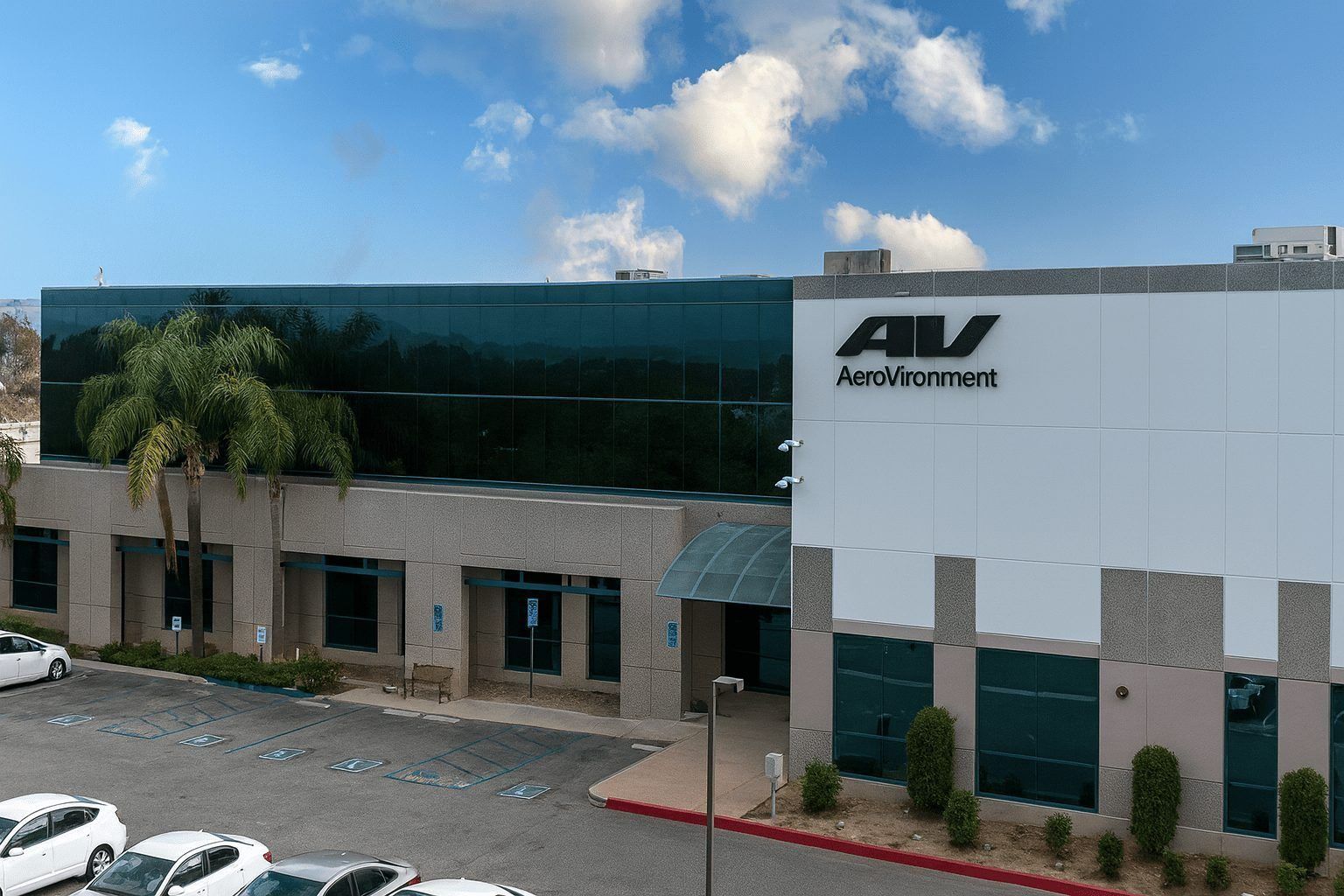

AeroVironment, Inc. NASDAQ:AVAV – the defense-tech company now branding itself simply as “AV” – had another news‑heavy week heading into its next earnings report on December 9, 2025. Product announcements, a high‑profile security hire, and fresh Wall Street research all hit the tape around December 5, even as the stock continues to trade well below its recent highs.
This article pulls together the key news, forecasts, and analyses as of December 5, 2025, and what they may mean for AeroVironment stock over the next 12–18 months.
AeroVironment Stock Snapshot on December 5, 2025
- Latest share price: AeroVironment closed around $278.39 on December 5, 2025, down roughly 3.1% on the day, with a small bounce in after‑hours trading to about $280.
- Market cap & balance sheet: At current levels, AV is valued at roughly $14.4 billion, with a debt‑to‑equity ratio near 0.16, and strong liquidity (quick ratio ~5.1, current ratio ~6.0).
- 52‑week range: The stock has traded between about $102.25 and $417.86 over the last year – a huge range that underlines how volatile the name has become.
From a performance standpoint, AeroVironment is still a big winner for long‑term holders:
- Over the last year, shares are up about 46.6%, versus roughly 14.2% for the S&P 500.
- Over three years, AVAV has returned about 203.8%, and over five years about 222.8%, far outpacing the S&P 500 over those periods.
That stellar record has come with stomach‑churning drawdowns. Motley Fool’s recent performance review highlighted how the stock was down about 45% at one point this year before roaring back, briefly topping $400 per share in October before sliding back into the high‑$200s.
In other words: AVAV is both a long‑term winner and a high‑volatility stock.
The December 5 News Flow: Security Leadership and Software‑First Drones
Several company announcements in the days leading up to and including December 5 have one common theme: AeroVironment is trying to cement its role as a software‑driven, all‑domain defense platform, not just a drone hardware vendor.
1. New Chief Security Officer: Milancy Harris
On December 5, 2025, AeroVironment announced that Milancy Harris has joined as Vice President and Chief Security Officer (CSO).
Key points:
- Harris previously served as Acting Under Secretary of Defense for Intelligence and Security, overseeing the Pentagon’s intelligence, counterintelligence, security, and law‑enforcement missions.
- She also held senior roles at the Defense Intelligence Agency, National Counterterrorism Center, and National Security Council, and spent time in the private sector helping stand up Meta’s independent Oversight Board.
Why it matters for the stock:
- AV is now a much more complex defense‑tech player after the $4.1 billion all‑stock acquisition of BlueHalo, which added space, electronic warfare, and counter‑UAS capabilities.
- That complexity also brings bigger security, compliance, and cyber risks. Hiring a CSO with deep Washington and intelligence‑community experience signals that AV is serious about safeguarding classified programs and managing the regulatory side of its new scale.
From an investor’s perspective, the hire doesn’t move near‑term earnings, but it strengthens the narrative that AV is evolving into a “prime‑like” defense tech platform with the talent to match.
2. Puma LE Gains GNSS‑Denied Navigation
On December 4, AeroVironment announced that its Visual Navigation System (VNS) kit has been integrated into the Puma Long Endurance (LE) small UAS.
Highlights:
- The VNS upgrade allows Puma LE to navigate accurately even when GPS (GNSS) is jammed or degraded, using downward‑facing sensors, cameras, and onboard compute to perform visual‑inertial odometry in real time.
- This extends VNS across the entire Puma family, making the platform more resilient in contested environments.
Given how much modern battlefields feature GPS jamming and spoofing, this capability is a competitive must‑have and helps justify AV’s premium positioning in tactical drones.
3. AV_Halo Software Expansion: CORTEX, MENTOR, and Ecosystem Plays
Just days earlier, AV announced an expansion of its AV_Halo unified software platform with new components CORTEX and MENTOR, aimed at AI‑driven intelligence and training.
At the same time:
- Hoverfly’s tethered drones have been whitelisted and integrated into AV’s command‑and‑control software ecosystem, making them natively supported and instantly deployable within AV_Halo Command.
Simply Wall St’s December 5 piece ties these moves together, noting that:
- AV is building a software‑centric ecosystem around AV_Halo, combining its drones, loitering munitions, and third‑party systems into a more interoperable, AI‑powered defense stack.
The takeaway for investors: the December 5–week news flow reinforces the idea that AV wants to be valued as a software‑driven defense platform, not just a hardware vendor – which is crucial to justifying the rich multiples the stock already commands.
The Big Bull Case Published on December 5
The most attention‑grabbing analysis on December 5 came from Insider Monkey / Finviz, summarizing a bullish thesis from the “Uncle Stock Notes” Substack under the headline:
“AeroVironment, Inc. (AVAV): A Bull Case Theory” Finviz
Key elements of that thesis:
- Bank of America already rates AVAV a “Buy” with a $300 price target, but the bull thesis argues this is too conservative and proposes a 12–18 month target of at least $380 per share, with a model‑based fair value of around $390 by FY28. Finviz
- The argument hinges on a structural shift in U.S. defense procurement, particularly:
- The Pentagon’s Replicator program and a July 2025 policy memo that push toward large quantities of lower‑cost, autonomous systems rather than a few exquisite platforms.
- The FY2025 defense budget, which allocates about $10.1 billion to unmanned vehicles and over $1.7 billion to counter‑UAS programs, areas where AV is heavily exposed – especially after acquiring BlueHalo.
- The BlueHalo acquisition is described as transforming AV into a “Defense Stack Prime” capable of delivering integrated solutions across:
- AI autonomy
- Counter‑UAS and the new Freedom Eagle (FE‑1) missile, which recently won a $96 million U.S. Army contract
- Space and cyber capabilities
Financially, the bull case leans on early post‑merger numbers:
- In the first quarter after closing BlueHalo, revenue reportedly surged 140% year‑over‑year to about $454.7 million, with a funded backlog of roughly $1.1 billion.
- While GAAP profitability is temporarily depressed by acquisition accounting charges, the thesis argues underlying margins are strong and should expand as those charges roll off.
On valuation:
- Private peers Anduril and Shield AI are cited as trading at ~30x and ~20x price‑to‑sales, respectively, versus AVAV at roughly 7–8x P/S, suggesting AV is cheap relative to high‑growth private defense tech comps.
Net effect: The December 5 bull case paints AeroVironment as a policy‑aligned, high‑growth defense platform with private‑market‑style upside and public‑market liquidity.
Simply Wall St: 2028 Fair Value vs. Margin Worries
On the same day, Simply Wall St published “How Investors Are Reacting to AeroVironment (AVAV) Expanding Its AI‑Driven, Interoperable Defense Ecosystem.” Simply Wall St
Their view is more nuanced:
- They agree the recent AV_Halo upgrades, Puma GNSS‑denied navigation, Hoverfly integration, and the security hire deepen AV’s positioning in AI‑enabled, interoperable defense systems.
- However, they highlight that post‑BlueHalo gross margins are significantly lower, leaving less room for error as AV tries to convert a much larger portfolio into consistent profits.
On the numbers:
- Their internal narrative projects AV to reach roughly $2.6 billion in revenue and $264.5 million in earnings by 2028.
- Based on those forecasts, they derive a fair value of about $404 per share, implying around 41% upside versus the current price band.
- But their community fair‑value estimates range widely from about $191 to $404, and they note some scenarios where the stock might be overvalued by roughly one‑third if growth or margins disappoint.
Earlier Simply Wall St valuation work, written when the stock was near its highs, had suggested:
- A DCF fair value closer to $180–$190 per share, implying the stock was 50–90% overvalued at that time, depending on the model.
The bottom line from Simply Wall St:
- Long‑term forecasts can justify much higher prices if AV executes on its AI‑software strategy and BlueHalo integration.
- But valuation is very sensitive to margins and growth, and there’s a real risk of overpaying if you assume too rosy a path.
Earnings Countdown: What Wall Street Expects for Q2 FY2026 and Beyond
A major pillar of current analysis is the upcoming Q2 FY2026 earnings release.
Earnings Date and Call
- AeroVironment will report Q2 FY2026 results (quarter ended November 1, 2025) after the market closes on December 9, 2025, with a conference call at 4:30 p.m. ET.
Zacks & Street Consensus
Several Zacks pieces aggregated via Finviz and other platforms outline the consensus:
For Q2 FY2026:
- EPS: Street expects about $0.85 per share, an ~81% year‑over‑year increase.
- Revenue: Consensus is roughly $477 million, up ~153% versus the same quarter a year ago – largely reflecting the BlueHalo acquisition and strong demand for AV’s systems.
For the full fiscal year (ending April 2026):
- EPS: Zacks Consensus stands around $3.62, implying roughly 10% earnings growth.
- Revenue: Full‑year revenue is projected near $2.0 billion, more than doubling (≈145% growth) from the prior year as BlueHalo is fully consolidated and new programs ramp.
Notably:
- On December 1, Zacks pointed out that AV had seen a sharp one‑month drawdown but still carried robust revenue expectations; at that time they rated the stock Zacks Rank #3 (Hold).
- By December 3, Zacks upgraded AVAV to Rank #2 (Buy), citing upward revisions in earnings estimates over the previous 90 days.
- A separate Zacks piece on drone technology stocks highlighted AeroVironment as a top pick, noting over 100% revenue growth and roughly 10% earnings growth expected for FY2026.
All of this sets up December 9 as a high‑stakes catalyst: the market will be looking for confirmation that AV can deliver on that ambitious growth curve while managing integration costs.
Street Price Targets and Ratings: Upside, but at a Price
Across Wall Street, AeroVironment is broadly viewed as a buy‑rated growth story – but opinions differ on how much of that story is already priced in.
Consensus Targets
- MarketBeat tracks 23 analysts with coverage on AVAV:
- Average 12‑month price target: around $358
- High target: about $430
- Low target: about $300
- That implies ~25–30% upside from the recent ~$278 share price.
- StockAnalysis.com, which aggregates a slightly smaller group of 14 analysts, shows an average target around $352, also pointing to mid‑20s percent upside.
Ratings Mix
According to MarketBeat’s latest breakdown:
- 3 analysts rate AVAV as Strong Buy
- 18 rate it Buy
- 1 rates it Hold
- 1 rates it Sell
Overall consensus: “Buy” with a tilt toward aggressive growth.
Valuation Metrics
Even after the pullback from October highs, AVAV still trades at rich multiples:
- Forward P/E: about 77x, versus about 36x for the broader Aerospace–Defense Equipment group.
- PEG ratio (P/E/G): roughly 3.9, compared with ~2.4 for the industry.
- Price‑to‑sales: varies by source, but most recent analyses place AV around 7–12x sales, depending on whether you use trailing or forward revenue.
That’s why you see such a split between:
- Bullish policy‑and‑growth‑driven targets in the $380–$400+ range, and
- DCF‑driven fair values that still cluster in the $180–$200 area under more conservative assumptions.
Institutional Flows: Who’s Buying and Who’s Taking Profits?
December 5 also saw fresh coverage of institutional positions in AeroVironment, based on recent 13F filings.
Alpha Wave Global: New Growth‑Focused Stake
MarketBeat reports that Alpha Wave Global LP initiated a new position in AVAV in Q2:
- ~13,264 shares
- Valued at about $3.78 million
- Accounts for 0.4% of its portfolio and ranks as its 18th‑largest holding
Several other hedge funds and wealth managers also added small positions, from ORG Partners to EverSource Wealth Advisors, signaling broad institutional interest in the name.
Franklin Resources: Trimming Exposure
In a separate December 5 piece, MarketBeat highlighted that Franklin Resources cut its AVAV stake by 43.3% in Q2, selling nearly 3,960 shares and leaving about 5,190 shares worth roughly $1.48 million.
At the same time:
- Insider selling over the last 90 days totaled about 3,228 shares (~$1.22 million), including sales from an internal business leader and the CFO, though insiders still only own about 0.8% of the company.
- Institutional investors as a whole own roughly 86% of AeroVironment’s shares.
Takeaway: The stock is institutionally dominated. Some large managers are taking profits after a massive run, while others – especially growth‑oriented funds – are initiating or increasing positions, betting on the long‑term transformation.
Valuation Tug‑of‑War: Growth Story vs. Rich Multiples
Recent analyses illustrate a real tug‑of‑war around AeroVironment’s valuation.
The “Too Expensive” Camp
- Simply Wall St’s November and early‑November work showed DCF‑based fair values around $182–$186 per share, implying the stock was 50–90% overvalued when it traded near $350–$400.
- Their valuation dashboard gave AeroVironment 0/6 or 1/6 on value checks at those prices, with P/S multiples over 12–16x versus implied fair ratios closer to 5–6x.
- Zacks notes that even now, AVAV’s forward P/E and PEG ratios are well above industry averages, suggesting the stock is priced for continued strong execution.
The “Still Undervalued vs. Peers” Camp
- The December 5 bull thesis compares AV to fast‑growing private defense‑tech names like Anduril and Shield AI, which reportedly trade at 20–30x sales, versus AV’s high‑single‑digit sales multiple.
- If AV truly is evolving into a scalable, software‑driven “Defense Stack Prime,” bulls argue it deserves a premium multiple and could re‑rate higher over time, especially if earnings ramp to something like $6 EPS by FY28 (as the Uncle Stock model assumes). Finviz+1
Realistically, both sides can be true:
- Versus traditional defense primes, AV looks expensive.
- Versus high‑growth private defense tech, it can look cheap – provided it hits the kind of growth trajectory those peers are priced for.
Key Catalysts and Risks After December 5
Near‑Term Catalysts
- Q2 FY2026 earnings (December 9, 2025)
- Confirmation (or disappointment) relative to the $0.85 EPS / $477M revenue consensus will likely drive the near‑term move.
- BlueHalo integration and margin commentary
- Investors will watch management’s comments on gross margins, integration synergies, and the pace of new program wins (including counter‑UAS and space).
- Program wins like Freedom Eagle
- The $96M Freedom Eagle C‑UAS missile contract, which originated at BlueHalo, could be an early indicator of franchise programs that justify a structural step‑up in revenue and valuation.
- Follow‑through on AV_Halo and ecosystem expansion
- Additional third‑party integrations (like Hoverfly), AI features, and training tools will shape how much of AV’s future revenue can be software‑ and services‑driven, which tends to carry higher margins.
Key Risks
- Execution and integration risk
- BlueHalo is a large, complex acquisition; missteps on integration, culture, or product overlap could pressure margins and cash flow.
- Valuation risk
- Even after the pullback, AVAV trades at premium multiples on earnings and sales. Any slowdown in growth, delays in contract awards, or guidance missteps could trigger sharp multiple compression.
- Defense budget and policy risk
- The bull case is heavily linked to U.S. defense policy (Replicator, unmanned and C‑UAS spending, etc.). Policy shifts, program delays, or a different budget environment later in the decade could reduce growth versus current expectations.
- Competition
- AV now competes with both legacy primes (RTX, LMT, NOC) and fast‑moving private defense‑tech firms. Sustaining its technological edge in autonomy, software, and missiles is critical.
What December 5, 2025 Really Means for AVAV Investors
Putting all of this together, the December 5 time‑stamp on AeroVironment looks like this:
- The business story is getting stronger, with:
- A high‑credibility CSO,
- Continued AV_Halo and drone capability upgrades, and
- Clear policy tailwinds in unmanned systems and counter‑drone tech.
- Analyst sentiment is broadly bullish, with:
- Street targets in the low‑to‑high $300s,
- Zacks upgrading the stock to Rank #2 (Buy), and
- A standout bull thesis arguing for $380–$390 over the next 12–18 months.
- Valuation remains the main pushback, with DCF and value‑oriented models still warning that AV could be overvalued if its ambitious growth and margin targets don’t materialize.
For different types of investors, that translates roughly into:
- Growth‑oriented, long‑term investors
- May see AV as a high‑beta, long‑run play on AI‑enabled defense systems, with policy support and early proof points from BlueHalo and Freedom Eagle.
- The December 5 bull case and Simply Wall St 2028 scenario both support the idea of meaningful upside if execution is strong.
- Value‑ or income‑focused investors
- Are likely to remain cautious. On conventional metrics, AVAV still trades at elevated earnings and sales multiples, and does not pay a dividend.
- Recent volatility – down over 24% in a single month at one point – shows how quickly sentiment can swing.
Final Note (Not Financial Advice)
This article summarizes publicly available news, forecasts, and analyses as of December 5, 2025, and is intended for informational purposes only. It is not investment, tax, or financial advice, and it doesn’t take into account your individual objectives or risk tolerance. Always consider doing your own research or consulting a qualified financial professional before making investment decisions.
Related articles: NASDAQ:AVAV