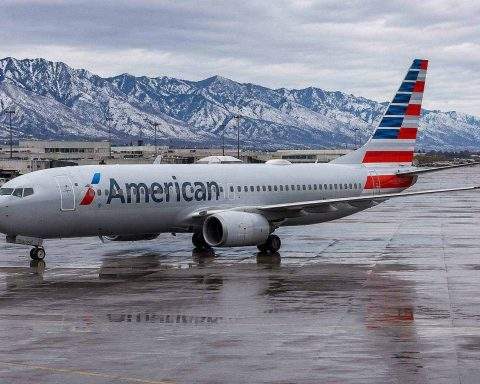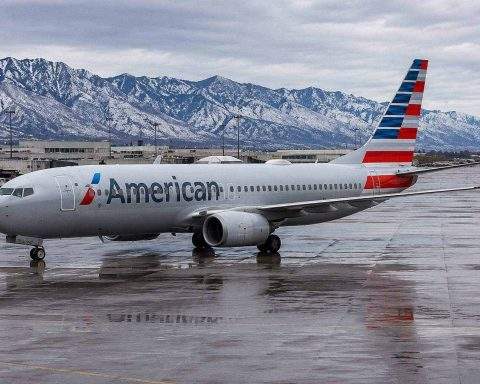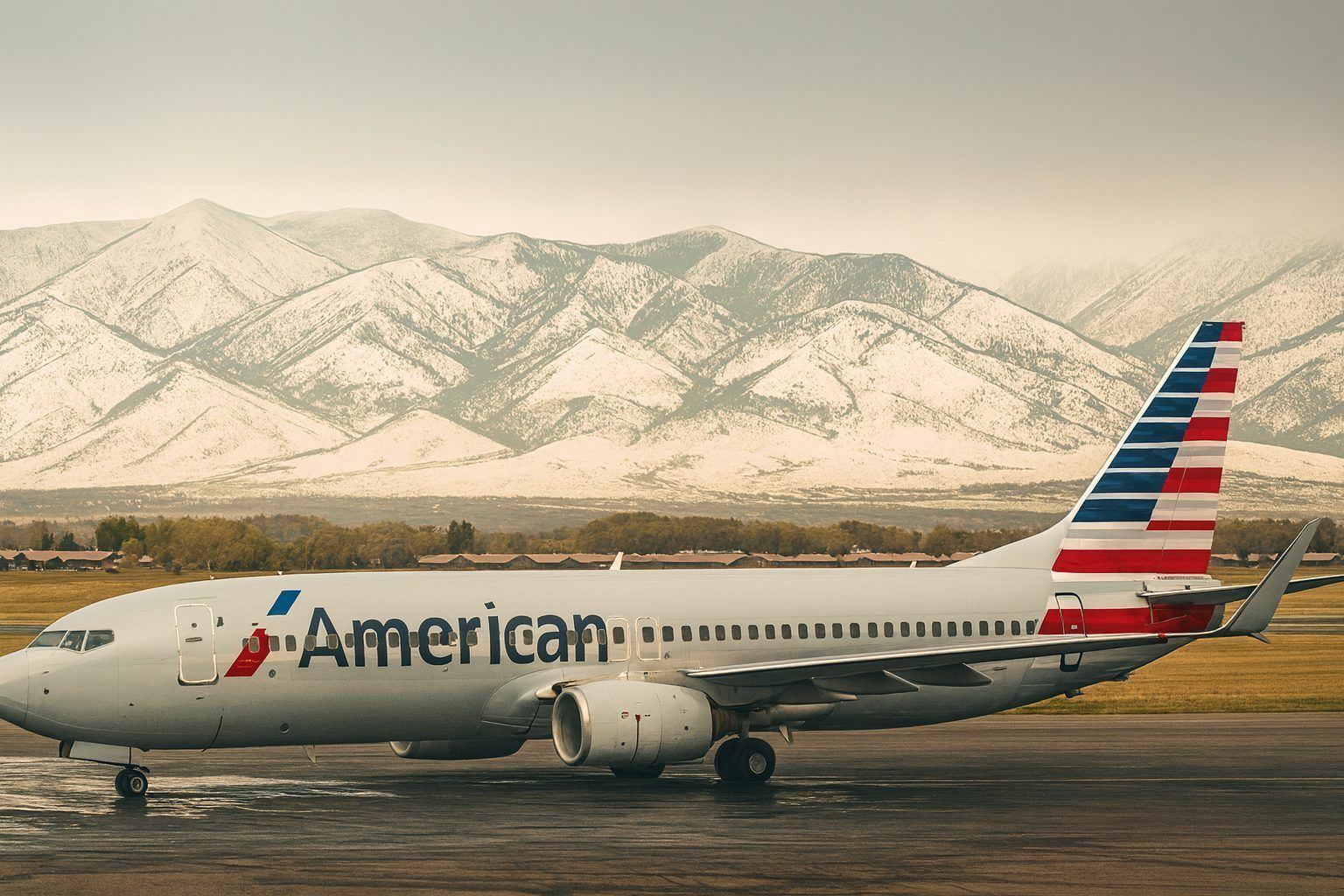

American Airlines Group Inc. NASDAQ:AAL is back on traders’ screens after a sharp rebound into early December 2025, powered by analyst upgrades, record U.S. travel volumes, and new growth initiatives ranging from premium aircraft to FIFA World Cup 26™ routes. At Friday’s close (December 5), AAL ended at $14.81, up about 3.3% on the day, with intraday volume over 56 million shares.
Below is a detailed look at the latest news, forecasts and analyses as of December 6, 2025, and what they could mean for American Airlines stock in 2026 and beyond.
American Airlines stock today: price, range and recent performance
- Last close: $14.81 (+3.28% on December 5, 2025).
- Market cap: about $9.8 billion.
- 12‑month trading range: roughly $8.50 (low) to $19.10 (high).
- Valuation snapshot: trailing P/E ~17x, PEG ratio around 2.1, beta ~1.26, signaling above‑market volatility.
Performance has been a tale of two timeframes:
- Over the last six months, American Airlines’ share price is up about 24%, outperforming the S&P 500 by nearly 10 percentage points.
- Yet for full‑year 2025 to mid‑November, AAL was still down more than 28%, according to Barchart, reflecting how deep the earlier sell‑off was before the recent rebound.
In other words, AAL has staged a significant rally off its lows but is still in a multi‑year turnaround story rather than a fully restored growth stock.
New catalysts since early December 2025
1. Government shutdown ends, flight restrictions lifted, stocks pop
On December 5, day‑trading and momentum outlets highlighted American’s 3–3.2% intraday surge, tying it to the end of a prolonged U.S. government shutdown and the lifting of related flight restrictions.
Key points from those reports:
- The FAA nullified prior flight‑reduction orders and the U.S. Department of Transportation moved to reopen capacity at major airports, supporting a return toward normal schedules.
- Traders also cited “government support news” and policy clarity as a sentiment boost for AAL and peers. Timothy Sykes
This comes on top of a broader macro tailwind: TSA data show a record 3.13 million passengers screened on Sunday, November 30 (the Sunday after Thanksgiving) — the busiest travel day in U.S. history, with all 10 of the busiest days occurring in 2024 or 2025.
Benzinga notes that this surge in traffic, arriving less than a month after the 43‑day shutdown ended, could help airlines offset earlier revenue disruption and sets up a potentially stronger quarter heading into 2026.
2. FIFA World Cup 26™: 27,000 extra seats and loyalty monetization
On December 4, American announced a major capacity and marketing push tied to FIFA World Cup 26™: American Airlines Newsroom
- The airline will add 27,000 extra seats across 12 routes between June 13 and July 17, 2026, using a mix of larger aircraft, more frequencies and new nonstop routes between host cities such as Boston, Dallas–Fort Worth, Atlanta, Kansas City, Los Angeles, Seattle, New York, Toronto and Vancouver.
- New temporary nonstops include Atlanta–Kansas City and New York–Kansas City, timed around key phases of the tournament.
- AAdvantage® members will be able to redeem miles for World Cup match tickets, with early‑access windows by status level from December 17–19, 2025.
- Every aircraft in American’s roughly 1,550‑plane fleet will receive a World Cup 26 decal, reinforcing the brand globally and driving fan engagement.
For investors, this move is less about short‑term EPS and more about:
- Showcasing network relevance across the U.S., Canada and Mexico.
- Deepening loyalty engagement, a key driver of high‑margin credit‑card revenue and premium demand.
- Signaling confidence that international and event‑driven travel will remain strong into 2026.
3. A321XLR and the premium cabin arms race
Another big strategic story this week is American’s push into premium narrow‑body long‑haul with the Airbus A321XLR.
An aviation industry report summarizes American’s plan as follows: Aviation A2Z+1
- American admits it trails Delta in profitability and loyalty monetization but is executing a plan to close the gap starting in 2026.
- The A321XLR, delivered in October, features:
- 20 lie‑flat suites
- 12 premium economy seats
- 123 economy seats
- American will be the first airline to operate the A321XLR commercially, starting December 18 on New York (JFK) – Los Angeles (LAX), with international routes (e.g., JFK–Edinburgh) to follow in March.
- By the end of 2026, the airline expects 15–16 A321XLRs in service, part of a plan to increase premium seating by 20% and lie‑flat seats by 50% by 2030.
At recent investor conferences, management has tied this to a broader financial strategy:
- Roughly $1.7 billion in free cash flow generated year‑to‑date through Q3 2025.
- Around $36–37 billion of total debt, with a goal to cut that to below $35 billion by the end of 2027.
- A plan to scale loyalty/credit‑card revenue from about $4.5 billion annually to as much as $10 billion by the end of the decade, helped by an exclusive Citibank credit‑card agreement starting in 2026.
In simple terms: American is betting on premium seats and loyalty economics rather than competing primarily on main‑cabin fares.
4. Brand and ESG profile: “Snowball Express” partnership
Also on December 4, American announced it will again partner with the Gary Sinise Foundation to host the 20th annual Snowball Express, donating 16 charter aircraft and millions of AAdvantage® miles to fly more than 2,600 family members of fallen U.S. service members and first responders to Walt Disney World.
While not directly financial, this kind of long‑running commitment to military and first‑responder families supports the airline’s brand, employee engagement and ESG narrative, factors increasingly watched by institutional investors.
Q3 2025 earnings: small loss, better guidance
American’s third‑quarter 2025 results on October 23 were a turning point for sentiment.
Headlines:
- Record Q3 revenue:$13.7 billion, roughly flat year‑over‑year but slightly above Wall Street expectations.
- GAAP net loss:$114 million, or –$0.17 per share, vs. consensus for a ~–$0.28 loss.
- Adjusted EPS: also –$0.17, beating estimates and signaling improving profitability despite persistent headwinds.
Guidance reset higher:
- Q4 2025 adjusted EPS: guided to $0.45–$0.75.
- Full‑year 2025 adjusted EPS: raised to $0.65–$0.95, from a prior range that even allowed for a loss.
- Free cash flow: expected to exceed $1 billion in 2025.
Operationally:
- Unit revenue (RASM) improved sequentially through the quarter, with September returning to positive growth, helped by industry‑wide capacity cuts that improved pricing power.
- Premium cabins outperformed main cabin, with premium unit revenue about 5 percentage points higher than main‑cabin.
- The AAdvantage® program continued to shine:
- Active accounts up 7% YoY
- Co‑branded credit‑card spend up 9% YoY American Airlines Newsroom+1
Balance sheet:
- Total debt: about $36.8 billion, with net debt ~ $29.9 billion and liquidity of $10.3 billion at quarter‑end.
- Management reaffirmed a target of < $35 billion total debt by year‑end 2027, emphasizing ongoing deleveraging.
This mix of better‑than‑feared results and higher guidance is a core reason analysts and hedge funds have revisited the stock in recent weeks.
Analyst ratings, price targets and earnings forecasts
Across Wall Street, American Airlines stock currently sits in “Hold, but improving” territory.
Consensus ratings and price targets
- MarketBeat aggregates 18 analyst ratings:
- 2 Sell
- 7 Hold
- 9 Buy (including 1 Strong Buy)
- Overall consensus rating: Hold.
- Average 12‑month price target: $16.38, implying ~10.6% upside from $14.81, with a range of $10 to $24.
- StockAnalysis, which tracks 12 analysts, also shows a “Hold” consensus with an average target of $15.25, just under 3% above current levels, and a similar $10–$22 range. StockAnalysis
In the very latest moves:
- Citigroup initiated coverage on December 4 with a “Strong Buy” (often reported simply as “Buy”) and a $19 price target, roughly 28% upside from current levels. GuruFocus+1
- UBS, Susquehanna, Jefferies and Evercore ISI all raised their price targets between $12 and $14 this autumn while generally keeping neutral or hold stances, reflecting cautious optimism.
Earnings outlook
According to StockAnalysis’ consolidated forecasts: StockAnalysis
- Revenue 2025: about $55.4 billion, up roughly 2.2% from 2024.
- Revenue 2026: projected around $58.9 billion, another ~6.3% growth.
- EPS 2025: consensus around $0.74, reflecting a still‑thin profit margin.
- EPS 2026: projected to jump to $1.84, implying a steep earnings ramp if guidance and cost control hold.
A separate MarketBeat note citing Zacks Research indicates FY 2025 EPS estimates nudged up to roughly the low‑$0.70s, with detailed quarterly projections extending into 2027.
Meanwhile, Barchart highlights a more aggressive scenario where analysts model EPS expanding from roughly $0.8 in 2025 to over $3 by 2028, suggesting AAL could potentially double if it maintains historical valuation multiples. That’s clearly a bullish, not guaranteed, scenario and underscores how wide the range of outcomes still is.
Valuation: undervalued opportunity or value trap?
DCF and relative valuation views
Several independent research platforms argue AAL looks undervalued at current prices:
- Simply Wall St estimates an intrinsic value around $23.37 per share using a two‑stage discounted cash‑flow model, implying the stock trades at about a 38–39% discount to fair value.
- They also note AAL’s current P/E of ~15.7x is:
- Above the airline industry average (~9x)
- Still below a “fair” multiple they estimate around 23.5x, once growth and risk factors are adjusted for. Simply Wall St
On the flip side, a detailed breakdown from Finviz/Stockstory is skeptical despite the recent rally: Finviz
- AAL’s 24.1% six‑month return has outpaced the S&P 500 by nearly 10 percentage points, raising the question of how much upside remains.
- Revenue passenger miles (RPMs) grew only about 4.4% annually over the last two years, signaling sluggish volume growth.
- Free cash flow margin has hovered near 1.6%, and analysts expect it to remain low in the near term.
- The airline carries roughly $36 billion in debt against about $6.9 billion in cash, with net debt around 7x EBITDA, a leverage level they describe as “overleveraged” and potentially vulnerable in a downturn. Finviz+1
Their conclusion: even at an 8.4x forward P/E, AAL may not offer enough margin of safety given its high leverage and cyclical exposure.
Institutional and hedge‑fund positioning
Recent filings show mixed but increasingly constructive institutional interest:
- Arrowstreet Capital increased its stake by 8.6% in Q2, now holding about 3.78 million shares worth roughly $42.4 million, and institutional investors collectively own about 52% of the float.
- A separate analysis from Barchart noted that billionaire David Tepper’s Appaloosa Management added 9.25 million AAL shares in Q3, a bold contrarian bet following the stock’s sharp YTD decline.
Institutional buying doesn’t guarantee success, but it’s a notable vote of confidence that the turnaround story may be gaining traction.
Key risks investors can’t ignore
Even as the narrative improves, several material risks remain:
- High debt and interest‑rate risk
- With total debt near $36–37 billion and net debt close to $30 billion, American’s balance sheet remains heavily leveraged.
- If travel demand softens again or interest rates stay elevated, refinancing and servicing this debt could pressure earnings and limit flexibility.
- Thin margins and cost pressures
- Q3 operating margin ex‑special items was only about 1–1.2%, down from ~4.7% a year earlier, with unit costs (CASM‑ex‑fuel) rising on higher labor and other non‑fuel expenses.
- Labor contracts, maintenance, airport fees and technology investments all add structural cost that can’t quickly be unwound.
- Cyclical and policy shocks
- The 43‑day U.S. government shutdown and associated flight cuts this year showed how fast airline demand and schedules can be disrupted by political and economic shocks.
- Tariff‑driven uncertainty earlier in 2025 forced airlines to cut fares and capacity before the recent recovery in pricing power.
- Competitive pressure, especially from Delta and United
- Delta and United currently generate a disproportionate share of industry profits, with Delta’s long‑standing Amex partnership a particularly powerful earnings engine.
- American’s A321XLR rollout and Citibank partnership are designed to close that gap, but execution risk is high: delays, cost overruns or weaker‑than‑expected premium demand could blunt the payoff.
- Execution on premium and loyalty strategy
- The plan to boost premium seat share and double loyalty‑related revenue by 2030 is ambitious. If consumer behavior or macro conditions change — for example, if high‑end leisure travel slows — the payback period could stretch, leaving AAL with higher capex and debt but less incremental profit.
What to watch next for AAL stock
For investors following American Airlines into 2026, a few key milestones stand out:
- Q4 2025 earnings (expected January 2026)
- Can management deliver somewhere inside the $0.45–$0.75 Q4 EPS range and maintain or lift its $0.65–$0.95 full‑year guidance? Fintool+2American Airlines Newsroom+2
- Watch for unit revenue trends, especially in domestic and Latin American markets, and whether CASM‑ex‑fuel moderates as promised.
- Debt trajectory and free cash flow
- Confirmation that 2025 free cash flow exceeds $1 billion and that total debt is clearly trending toward < $35 billion by 2027 would support the bull case that the balance‑sheet risk is gradually shrinking.
- A321XLR launch and early performance
- Customer reception, premium cabin load factors, and yields on the JFK–LAX and early transatlantic routes will be closely watched indicators of whether the premium narrow‑body strategy is working.
- World Cup 26 bookings and loyalty engagement
- As match schedules and fan travel plans firm up, investors will look for signs that the 27,000 additional seats and World Cup ticket redemptions are translating into higher yields, loyalty engagement, and upsell into premium cabins.
- Further analyst revisions
- Additional upgrades or target hikes, especially from large banks and brokers, could help re‑rate the stock — or, conversely, downgrades could signal doubts that the EPS ramp from 2025 to 2026 will materialize.
Bottom line: AAL is a high‑beta recovery play with real upside and real risk
As of December 6, 2025, American Airlines stock sits at the intersection of improving fundamentals and persistent structural risk:
- The company has raised guidance, cut capacity to restore pricing power, and is leaning hard into premium seats and loyalty economics.
- Industry data show record travel volumes and a supportive near‑term demand backdrop following the end of the government shutdown.
- Analyst targets point to modest average upside (3–11%), but individual views range from deep skepticism to aggressive buy‑the‑dip optimism, especially after Citigroup’s new $19 target.
- Independent valuation work and notable hedge‑fund buying suggest meaningful long‑term upside if management executes — but the heavy debt load and thin margins leave little room for error.
For investors, AAL today is best viewed as a high‑beta, cyclical recovery play rather than a stable compounder. The reward could be substantial if travel demand remains strong and American delivers on its 2026–2030 premium and loyalty strategy — but so is the downside if the economy stumbles or execution slips.
This article is for informational purposes only and does not constitute financial or investment advice. Always do your own research and consider consulting a licensed financial advisor before making investment decisions.
Related articles: NASDAQ:AAL