
Virgin Galactic Holdings NYSE:SPCE remains one of the market’s purest “moonshot” bets: a pre‑revenue space tourism company burning hundreds of millions of dollars a year while promising a commercial relaunch of flights from 2026 onward. As of the latest close on Friday, 5 December 2025, SPCE traded around $4.31 per share, giving the company a market capitalization of roughly $280–275 million and leaving the stock down more than 30% over the past 12 months despite a sharp rebound over the last few weeks. Stock Titan+1
Below is a deep dive into the latest news, earnings, forecasts and trading dynamics around Virgin Galactic stock as of 7 December 2025.
SPCE Stock Now: Price, Performance and Volatility
Recent data from multiple market trackers show SPCE hovering close to $4.31 per share as of 5 December, with a float of roughly 63 million shares and a market cap in the low‑$270–280 million range.
Performance metrics over various time frames underline just how turbulent this name remains:
- 1‑week move: roughly +11–12%
- 1‑month move: around +20%
- 1‑year move: about ‑30 to ‑33%
- 2025 year‑to‑date: down around ‑25 to ‑27% Ticker Nerd+1
Research service TickerNerd notes a 52‑week range from $2.18 to $6.82, meaning the current price is almost 98% above the low but still more than a third below the high.
On the risk side, Fintel calculates a beta of about 2.24, confirming that SPCE tends to move more than twice as much as the broader market, while implied volatility north of 100% underlines how aggressively options are pricing future swings.
In short: the stock is cheap in absolute-dollar terms, but not low‑risk. It behaves more like a small speculative tech option than a mature industrial name.
Q3 2025 Earnings: Smaller Loss, Same Story
Virgin Galactic reported third‑quarter 2025 results on 13 November 2025, and the headline numbers tell a familiar story: very small revenue, large operating losses, and a heavy cash burn rate.
Key figures from Q3 2025:
- Revenue: about $0.36–0.40 million, essentially flat versus Q3 2024 and primarily related to access fees from “future astronaut” customers. Virgin Galactic+1
- Net loss: roughly $64–64.4 million, an improvement from a $75 million loss in the prior‑year quarter as operating expenses declined.
- EPS: approximately ‑$1.09 per share.
- GAAP operating expenses:$67 million, down from $82 million in Q3 2024; non‑GAAP operating expenses about $58 million.
- Free cash flow: around ‑$108 million, versus ‑$118 million a year earlier.
On the balance‑sheet side:
- Cash, cash equivalents and marketable securities: roughly $424 million as of 30 September 2025.
- This breaks down to about $158.8 million in cash and $264.8 million in marketable securities.
- The company has leaned heavily on its at‑the‑market (ATM) equity program, raising roughly $109 million gross in the first nine months of 2025 by issuing about 30 million shares.
Management’s guidance for Q4 2025 calls for free cash flow in the range of –$90 to –$100 million, implying that the company expects to keep burning close to $100 million per quarter in the near term.
On very rough back‑of‑the‑envelope math, a ~$424 million cash-and-securities balance and a ~$90–100 million quarterly burn suggest roughly four quarters of runway at the current pace, unless Virgin Galactic continues tapping equity markets or pulls back on spending. That is not formal guidance, but it is the basic arithmetic most analysts are doing.
Business Update: No Paying Flights Until Delta-Class Ships
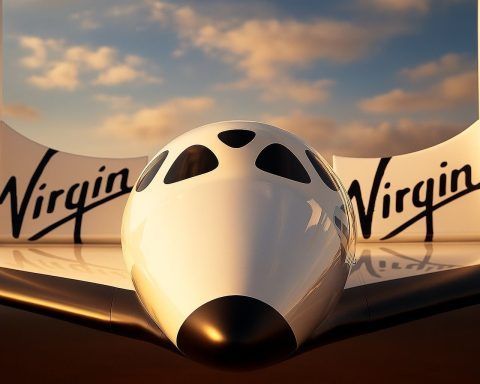
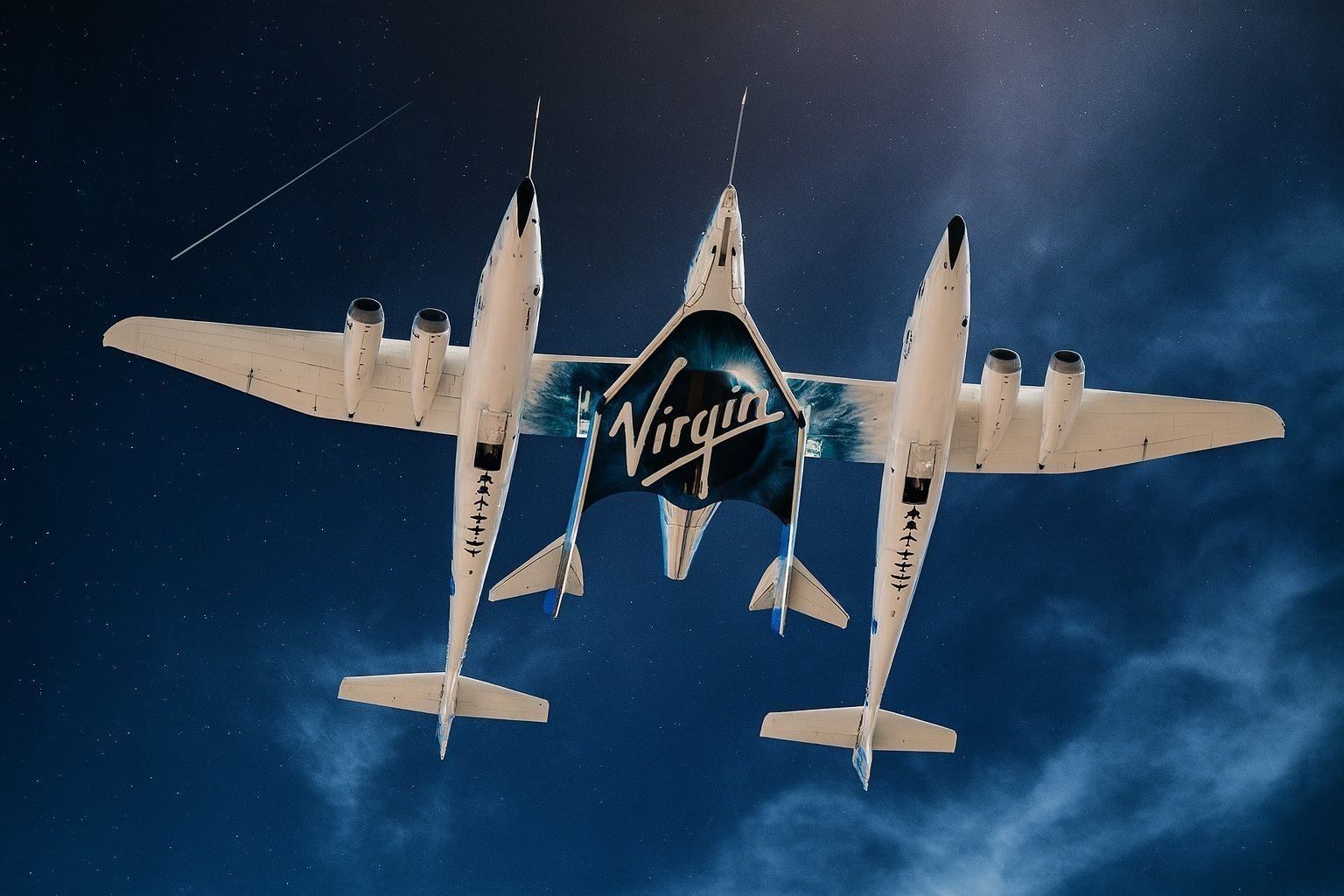
Operationally, the most important storyline is that Virgin Galactic is currently not flying paying customers at all. Commercial flights with the VSS Unity spaceplane were halted after the “Galactic 07” mission in June 2024 so the company could focus resources on building its next‑generation “Delta class” vehicles. TechStock²+1
From recent filings and updates:
- Virgin completed seven commercial missions with Unity between 2023 and mid‑2024 before the pause.
- The Delta‑class fleet is positioned as the workhorse of the future business, with higher flight cadence and better unit economics than Unity.
- In its Q3 2025 materials, the company reiterated that:
- Delta flight tests are targeted to begin in Q3 2026.
- The first commercial research spaceflight is planned for Q4 2026.
- Private astronaut flights are expected six to eight weeks after that first research mission.
Virgin also disclosed:
- Roughly 675 reservations representing about $189 million in potential future revenue when those flights eventually occur.
- A planned “Purdue 1” research mission in 2027 in partnership with Purdue University, marketed as the first fully university‑crewed suborbital flight. Virgin Galactic+1
The problem is timing. There are no material flight revenues expected until at least late 2026, but capital expenditures remain heavy: about $51 million in Q3 alone and nearly $156 million for the first nine months of 2025, primarily to fund Delta‑class development.
This long gap between spending and meaningful revenue is at the heart of both the bullish and bearish cases on SPCE.
Liquidity, Dilution and Legal Overhang
Analysts and independent researchers have focused heavily on Virgin Galactic’s liquidity profile:
- The Q3 2025 10‑Q summary stresses that the company’s reduced operating expenses have narrowed losses, but also highlights that cash resources are being sustained by equity issuance under the ATM program.
- Earlier in 2025, the company ended Q1 with ~$567 million and Q2 with ~$508 million in cash and marketable securities, sliding to $424 million by Q3 as burn continued.
Commentary summarized by TickerNerd from a recent Seeking Alpha review characterizes the liquidity situation as “tense,” citing low Q3 revenue, ongoing cash burn and risks tied to upcoming convertible debt and potential refinancing or further dilution. Ticker Nerd+1
There’s also a legal angle: Virgin Galactic has entered a memorandum of understanding to settle the “Lavin” class‑action lawsuit for $8.5 million, with roughly $6.1 million expected to be covered by insurers. A net settlement expense of about $2.4 million has been recorded year‑to‑date. Stock Titan
None of this is fatal on its own, but together it underlines that new capital raises are very likely if Delta-class development and the 2026–2027 spaceflight timetable are to be funded as planned.
How Wall Street Sees SPCE: Mostly Neutral, Deeply Divided
Across data providers, a clear pattern emerges: consensus is neutral, conviction is low, and dispersion is high.
Consensus ratings
- TickerNerd (updated 6 December 2025) aggregates 17 Wall Street analysts and finds a neutral consensus, with roughly 2 Buy, 4 Hold and 2 Sell ratings in the most recent batch it tracks.
- MarketBeat reports a “Hold” rating based on 5 analysts, with 1 Sell, 3 Hold and 1 Buy. MarketBeat+1
- Public.com notes that 4 analysts currently rate SPCE a Hold, with 25% calling it a “Strong Buy,” 50% Hold and 25% Sell. Public
- Barron’s research summary describes Virgin Galactic’s fundamentals as “very poor”, framing any investment as purely speculative, while still tagging sentiment as broadly neutral. Barron’s
In other words: most professional coverage is sitting on the fence.
Price targets
Price targets cluster slightly below or slightly above the current price:
- TickerNerd:
- Median 12‑month target:$3.97
- Range:$2.00–$8.00
- Implied downside vs. $4.31: about –8%.
- MarketBeat:
- Average target:$5.00
- Range:$3.00–$8.00
- Implied upside: about +16%.
- Fintel:
- Average one‑year target:$4.24,
- Range:$2.02–$8.40,
- Record date: 6 December 2025.
- Public.com:
- Analyst target:$4.25, essentially flat versus the current price as of 7 December 2025.
Some broader surveys, such as Benzinga’s November price‑prediction piece, still quote an older average target around $6.75 across 12 analysts, with extremes as high as $36 and as low as $0.75. Benzinga But newer aggregators like TickerNerd, Fintel and Public show the “live” range tightening into the low‑single digits.
Net takeaway: Wall Street as a group does not see obvious short‑term mispricing. Most forecasts cluster near the current price, with the big divergence in views showing up in the tails (optimists around $8, pessimists near $2).
A Rare Bright Spot: Zacks Rating Upgrade
One notable development in late November was a rating upgrade from Zacks Investment Research. On 18 November 2025, Zacks moved Virgin Galactic to a Rank #2 (Buy), placing it in the top 20% of its universe based on earnings estimate momentum.
Zacks highlighted that:
- The consensus EPS estimate for fiscal 2025, while still deeply negative at about –$6.39 per share, has improved by roughly 4.9% over the last three months.
This doesn’t change the fundamental picture — SPCE is still expected to lose substantial money this year — but it does suggest that, at the margin, analysts’ expectations are becoming slightly less pessimistic.
Technical View: Short-Term Uptrend, High Volatility
Short‑term technical analysis sites are more constructive than the long‑term fundamental story.
StockInvest.us, which runs a quantitative technical model on SPCE, notes that: StockInvest
- The stock rose about 25–26% over the last two weeks, even after a 4% pullback on 5 December.
- Trading ranges are wide: the most recent session saw a 6.5% intraday swing between the high and low.
- Moving‑average signals currently line up bullishly, leading its system to label SPCE a “Buy candidate” in the short term (recently downgraded from “Strong Buy”).
- Over the next three months, their model projects the stock most likely trading in a $3.65–$5.23 band, with a modest expected gain of roughly 7–8% from current levels if the short‑term trend persists.
These are purely statistical forecasts; they assume no major fundamental shocks. But they do echo what traders already know: SPCE can move 5–10% in a day without any company news, creating opportunities for nimble speculators and headaches for anyone trying to treat it like a steady industrial stock.
Short Interest and the “Meme Stock” Factor
One of the defining features of SPCE in 2025 is elevated short interest.
- Benzinga’s short‑interest update on 4 December 2025 reports approximately 10.95 million shares sold short, equal to 26.39% of the free float, with about 2.3 days to cover at recent trading volumes.
- Fintel’s data set, which uses a slightly different methodology and date, shows around 12.58 million shares sold short, equating to about 20% of the float, and roughly 4.7 days to cover, with a borrow rate of around 8.8%.
Both data sources agree on the core point: SPCE is heavily shorted compared with peers, whose average short interest is below 7% of float.
High short interest cuts both ways:
- It signals deep skepticism about the business model and/or valuation.
- It also creates the fuel for sharp rallies, as positive headlines can force shorts to cover quickly, amplifying moves — something seen during the 40%+ surge and subsequent reversal that SPCE experienced in October 2025.
For traders, SPCE remains a volatile playground. For long‑term investors, it is a reminder that the share price is not purely a reflection of discounted cash flows; positioning and sentiment matter enormously here.
Investment Case: Key Bull and Bear Arguments
Bullish themes
Supporters of the stock typically emphasize: Stock Titan+3Benzinga+3TechStock²+3
- First‑mover advantage in suborbital tourism: Virgin Galactic has already flown seven commercial missions and built a recognizable brand with hundreds of deposits and reservations.
- Large theoretical market: space tourism and microgravity research could become multi‑billion‑dollar industries by the 2030s if costs come down and demand materializes.
- High operating leverage: management has sketched scenarios where two Delta‑class vehicles flying regularly could generate hundreds of millions of dollars in annual revenue, far above today’s tiny revenue base.
- Improving cost discipline: operating expenses and free‑cash‑flow burn have trended modestly lower year‑over‑year, showing some control over spending.
From this perspective, SPCE at a sub‑$300 million market cap is a leveraged bet that the company bridges the next 18–24 months and that Delta‑class ships enter service reasonably close to plan.
Bearish themes
Skeptics focus on equally substantial issues: Nasdaq+5Stock Titan+5Ticker Nerd+5
- Persistent negative cash flow: even after cost cuts, Virgin Galactic is burning around $100 million of cash per quarter with essentially no flight revenue.
- Financing risk and dilution: ATM share sales have already raised more than $100 million in 2025; more equity (or potentially convertible debt) issuance seems likely, further diluting existing shareholders.
- Execution risk: the 2026 Delta‑class timetable leaves little room for delays; each extra quarter of slippage adds tens of millions of dollars of additional cash burn.
- Competitive pressure: Blue Origin and SpaceX continue to advance their own space‑tourism offerings, backed by far deeper pockets.
- Weak fundamentals: profit margins, return on equity and leverage metrics are deeply negative; Barron’s bluntly labels the fundamentals “very poor” and the stock “purely speculative.” Barron’s+1
Put simply, the bear case is that Virgin Galactic runs out of cheap capital before the business can scale, forcing either highly dilutive financing or a strategic reset.
Bottom Line: High-Risk, Binary Bet on 2026–2027
As of 7 December 2025, the market’s message on Virgin Galactic is remarkably consistent across data providers:
- The stock price has rebounded sharply in recent weeks but remains deeply below prior highs.
- Analyst consensus is neutral, with most 12‑month price targets clustered between $4 and $5, near today’s levels.
- The business remains pre‑scale, with almost no revenue until at least late 2026 and a heavy reliance on external capital to fund operations.
- Short interest is elevated, ensuring continued volatility and the occasional “mini‑rocket” move on headlines. Benzinga+2Fintel+2
For speculative investors who believe space tourism will become a real commercial market and that Virgin Galactic can execute its Delta‑class roadmap roughly on schedule, SPCE offers leveraged upside if the company survives to see that future.
For risk‑averse or income‑oriented investors, the combination of no near‑term profits, ongoing dilution, intense competition and binary execution risk will likely make the stock unsuitable.
Related articles: NYSE:SPCE