
Western Washington is cleaning up after a powerful December windstorm that cut electricity to tens of thousands of homes and businesses from Friday evening into Saturday, triggering at least one fatal crash and exposing long‑running weaknesses in Seattle’s power grid.
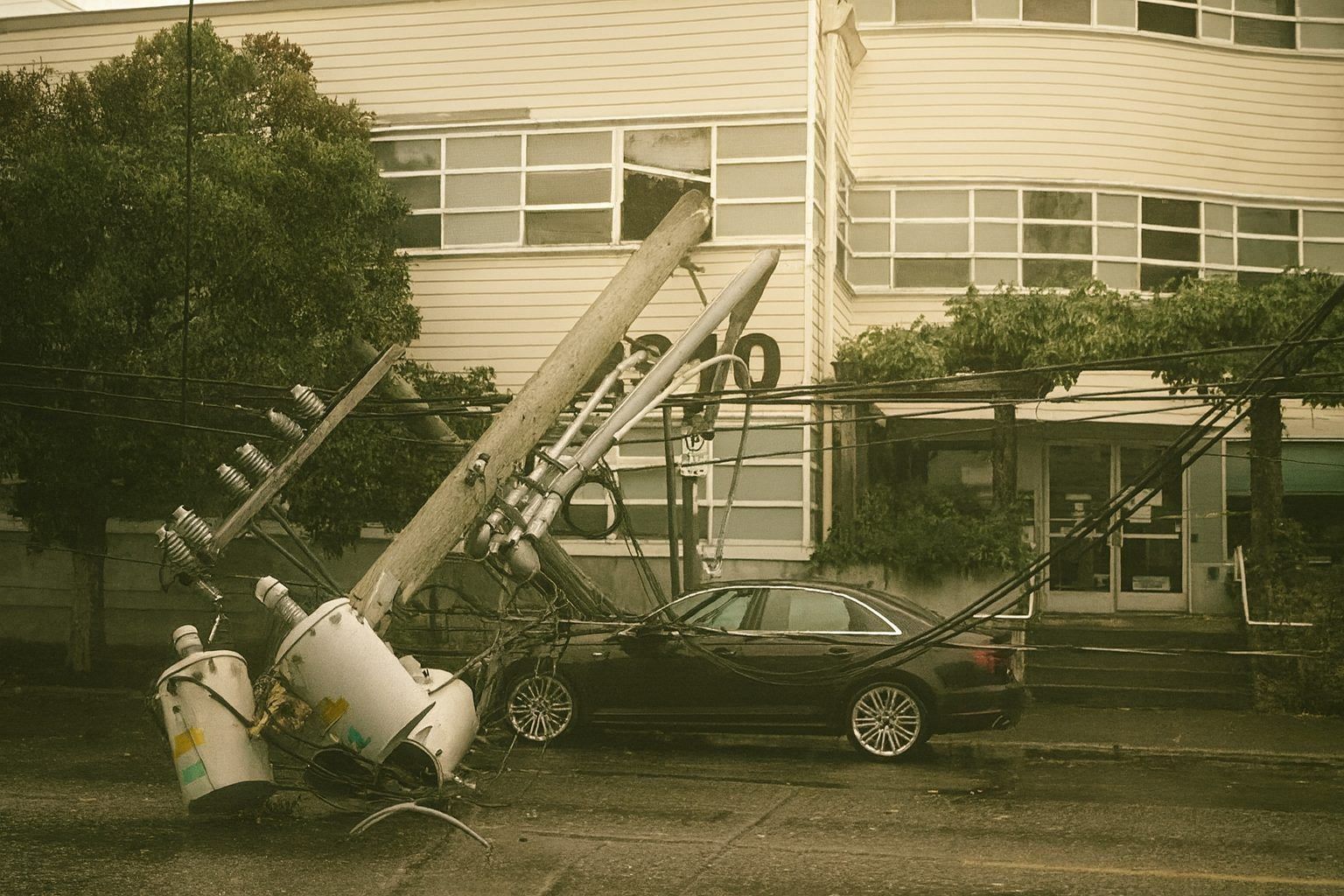
In one of the hardest‑hit pockets, nearly 5,000 West Seattle customers spent about five hours in the dark on Friday, while Seattle City Light and Puget Sound Energy together logged roughly 20,000 outages across the region at the peak of the storm.
As of Sunday, December 7, 2025, utilities say power has been restored, but forecasters warn that a series of incoming storms early next week could bring more wind, flooding and renewed outage risk.
Timeline: How the December 5 windstorm unfolded
Friday, December 5 – late afternoon and evening
- Around 5:45–5:50 p.m.: West Seattle residents from Alki to Morgan Junction begin reporting flickering lights, loud transformer booms and sudden blackouts. Local coverage from West Seattle Blog notes that more than 4,900 homes and businesses in northwest West Seattle lose power almost simultaneously.
- Early reports point to trees coming down in heavy gusts, including a large sidewalk tree at California Avenue SW and SW Alaska Street in the West Seattle Junction that crushed a row of rental bikes but spared nearby buildings.
- Shortly after 6 p.m.: Seattle City Light’s outage map shows a large cluster of customers without power stretching across parts of West Seattle, with additional outages in Tukwila and the Skyway area south of the city.
- 6:10 p.m.: After winds had already picked up noticeably, the National Weather Service issues a Wind Advisory for the Seattle metro, later extending it into the early morning hours and warning of gusts that could reach the mid‑50 mph range along parts of the coast and inland hills.
- By late evening: Seattle City Light reports 14 separate outage “events” with nearly 1,300 customers still without power at 11 p.m. Puget Sound Energy, which serves many suburban communities, logs 74 active outages affecting about 9,664 customers around the same time.KOMO
Saturday, December 6
- Overnight into Saturday morning: Crews restore power to the remaining Seattle City Light customers; by about 9:30 a.m. Saturday, the utility reports that everyone in its service territory has been reconnected.
- PSE’s outage count continues to fall through Saturday as damaged lines are repaired, though thousands of customers remain in the dark in scattered pockets across western Washington early in the day.
West Seattle: Five hours in the dark, 15th big outage this year
The most concentrated damage in Seattle occurred along the West Seattle peninsula, where residents once again found themselves lighting candles and digging out flashlights.
According to detailed live updates from West Seattle Blog, power failed for nearly 5,000 City Light customers a little before 6 p.m. Friday, primarily in the northwest part of the neighborhood.
A companion report from Westside Seattle describes the affected area stretching:
- From Alki Point south toward Fauntleroy Way SW,
- Along Beach Drive SW inland toward 49th Ave SW,
- Then east toward roughly 32nd Ave SW near SW Juneau Street.
Local outlets estimate that sustained gusts approaching 40 mph along the shoreline were enough to topple limbs and trees into overhead lines, severing power to entire blocks at once.
Over the next several hours, residents traded notes about loud pops from transformers, bright flashes on nearby hillsides and the eerie sight of some streets completely dark while homes just across an intersection still glowed. Many reported multiple brief flickers before the lights went out for good, a sign the grid was trying and failing to reroute power around damaged equipment.
By about 10:50 p.m., Seattle City Light’s map showed that service had been restored to almost everyone in West Seattle, with fewer than 100 customers still out — a roughly five‑hour blackout for most of the neighborhood.
West Seattle Blog notes that this was the 15th outage of 2025 in the area affecting at least 100 customers. Roughly half of those have been blamed on falling trees, with others linked to vehicle collisions, equipment failures and even an unlucky bird shorting a line earlier in the year.
Tukwila and Skyway: City Light’s outage map goes south
While West Seattle drew much of the early attention, Seattle City Light’s own outage map showed that the December 5 windstorm also hit communities south of the city center. KOMO News reports that outages Friday evening impacted customers in Tukwila and the Skyway area, in addition to West Seattle, with a map snapshot capturing a broad swath of darkened blocks across those neighborhoods.
Citywide, Seattle City Light and local TV coverage put the number of customers without power at around 10,000–10,600 at the evening peak. One City Light update on X (formerly Twitter) cited “around 10,600 customers” affected by multiple wind‑related outages, a figure mirrored by coverage on local stations and in KING 5’s report that noted “more than 10,000” City Light customers offline.X (formerly Twitter)+2King 5 News+2
The picture was similar just outside City Light’s territory. Puget Sound Energy listed roughly 7,000–9,600 customers without service Friday night, depending on the hour, bringing the regional total into the tens of thousands.
A story shared via KIRO 7 and MyNorthwest summarized the event as a windstorm in which close to 12,000 customers lost power at the peak, largely due to trees, branches and power lines brought down by the gusts.
Deadly consequences: Falling tree kills woman near Carnation
Beyond the outages, the unsettled weather turned tragic east of Seattle on Saturday afternoon. KOMO News reports that a tree fell onto a Subaru Forester traveling along Carnation‑Duvall Road NE near Fay Road NE (SR 203), killing a 44‑year‑old woman from Duvall and critically injuring a 49‑year‑old man from Skykomish who was driving.
According to the Washington State Patrol and Eastside Fire & Rescue:
- The tree shattered on impact and scattered debris across both lanes.
- The Subaru came to rest against a guardrail, blocking the southbound lane.
- A pickup truck with two adults and two children then struck the debris and stopped in the northbound lane, but everyone in that vehicle was unhurt.
- First responders used hydraulic rescue tools to reach the occupants of the Subaru. The driver was airlifted from a nearby school field to Harborview Medical Center in Seattle with life‑threatening injuries.
Despite the week’s blustery weather, a responding battalion chief told KOMO that there were no extreme gusts in that specific valley at the time of the accident. Instead, he pointed to saturated soil from recent heavy rain as the likely culprit, weakening the tree’s root system until it failed without much warning.
The crash underscored a key theme of the weekend: even when winds begin to ease, the combination of soaked ground and tall Northwest trees can keep the risk of falling timber, blocked roads and new outages elevated for days.
Storm recap: What the meteorologists are saying
Forecasters at the National Weather Service and local TV stations have spent the weekend parsing what went wrong in the models — and what could come next.
A detailed forecast discussion from FOX 13 meteorologist Abby Acone notes that Friday evening’s winds were stronger than early computer guidance suggested, with Sea‑Tac Airport recording a gust to 53 mph as the cold front swept through Puget Sound.
While Saturday brought only breezy conditions for most of the metro, the station’s forecast highlights a more serious concern:
- Multiple atmospheric rivers are expected to target Western Washington from Monday through Thursday,
- A Flood Watch is in effect from Sunday evening through Friday afternoon for much of the lowlands,
- Moderate winds on Monday could once again bring down limbs, clog storm drains with leaves and trigger additional scattered outages, even if the event doesn’t rise to the level of a classic “big windstorm.”FOX 13 Seattle+1
The takeaway for Puget Sound residents: the December 5 blast may have been only the opening act of a wet, unstable week.
“This is urgent”: Seattle City Light warns of an aging, underfunded grid
Ironically, as the windstorm was bearing down on Seattle, Seattle City Light leaders were already warning the City Council that the utility’s power system is not keeping up with the region’s needs.
In a briefing to the council’s Sustainability, City Light, Arts and Culture Committee on Friday morning, City Light executives described the situation as “urgent” and said they need almost $3.4 billion in capital spending to address a backlog of infrastructure issues and prepare for rapidly rising electricity demand.West Seattle Blog…
Key points from that presentation, as reported by West Seattle Blog:
- City Light acknowledged that outages are happening more often and lasting longer than its internal targets allow. Roughly 40% of outages are caused by the utility’s own infrastructure — equipment failures, aging cables and other hardware problems — separate from wind, trees and car crashes.
- One major weak spot is direct‑buried underground cable, older wiring installed without protective conduit. The utility estimates it still has about 330 miles of this type of cable, and at the current pace some segments would remain in service for close to a century before they could be replaced.
- Above ground, numerous small components — switches, insulators and connectors — have high failure rates. City Light says it needs to triple its current replacement pace to catch up.
- The system is also struggling with capacity as large customers electrify operations. The Port of Seattle alone is driving the need for a new Harbor Island substation expected to cost roughly half a billion dollars, and the utility may need an additional substation serving communities to the south. Future demand from light rail, electric buses, university expansion and new data centers compounds the challenge.
City Light’s CEO, Dawn Lindell, emphasized that the utility must “focus on not being the cause of our own outages,” even as climate‑charged storms make tree‑related failures harder to avoid. She and other executives traced some of today’s problems to decades of deferred maintenance and staff cuts, dating back to budget pressures in the wake of the early‑2000s energy crisis.West Seattle Blog…
Some West Seattle readers couldn’t miss the timing: the infrastructure article went live minutes before Friday’s neighborhood blackout, prompting comments about how clearly the outage illustrated the stakes.
Why West Seattle keeps going dark
Residents in West Seattle have long complained that their peninsula seems particularly vulnerable whenever the wind picks up, and this weekend’s storm strengthened that perception.
From local reporting and City Light’s own data, several patterns emerge:
- Tree‑lined streets plus overhead wires: Many West Seattle blocks still rely on above‑ground distribution lines threaded through mature trees. When roots are loosened by weeks of rain, even moderate gusts can bring limbs — or entire trunks — down across multiple spans of wire.
- Chokepoints in the network: A single failure in hilltop neighborhoods, like the slopes above Alki mentioned by several witnesses Friday night, can knock out service to entire grids below.
- A long list of past incidents: West Seattle Blog’s tally of 15 outages affecting 100+ customers so far in 2025 — half of them blamed on fallen trees — suggests a level of fragility that many communities would consider unacceptable, especially as more homes switch to electric heating and cooking.
- Slow modernization: City Light is exploring selective undergrounding and faster replacement of old components, but executives say the scope of work and shortage of specialized workers make it impossible to fix quickly without new funding and higher rates.
For residents who spent another evening without lights — or dinner stuck half‑cooked in an electric oven — those structural explanations may offer little comfort, but they do highlight why the debate over grid investment has become so heated.
What utilities recommend during outages
As storms continue to line up over the Pacific, both Seattle City Light and regional emergency managers are urging residents to treat outages and downed lines as an expected part of winter, not a surprise. On its outage information page, City Light offers several key safety tips:
- Report outages promptly: Call (206) 684‑3000 and have your account number or the phone number tied to your account ready.
- Stay away from downed lines: Assume any fallen wire is energized. Keep at least 30 feet away and call 911 rather than trying to move it yourself.
- Protect your food: Keep refrigerator and freezer doors closed as much as possible; federal food‑safety guidance says a full freezer can keep cold temperatures for many hours if left unopened.
- Use generators safely: Never run portable generators indoors or in enclosed spaces like garages because of carbon monoxide risks.
- Prepare in advance: Stock batteries, flashlights, blankets and a way to charge phones without grid power. Those items are far easier to organize before the next atmospheric river arrives.
Local public‑health and transportation officials also stress basic storm‑day precautions: avoid driving through standing water, watch for dark traffic signals at intersections and steer clear of hillside trails where saturated slopes could fail.
The bigger picture: Climate, infrastructure and what comes next
The December 5 windstorm was not unprecedented — longtime residents will remember the devastating Hanukkah Eve Gale of 2006, which cut power to more than a million customers across the Pacific Northwest — but it fits a pattern of more frequent, damaging shoulder‑season storms hitting an aging grid.
Climate scientists expect heavy rain events and some windstorms to grow more intense as warmer oceans feed extra energy into Pacific storms. At the same time, Seattle and its suburbs are rapidly electrifying transportation, heating and industry, leaving households and businesses more dependent on reliable power for basic needs.
This weekend offered a preview of that tension:
- A single tree can still take out service for thousands and even kill, as seen near Carnation.
- Even a “routine” December front can leave West Seattle without power for hours, the fifteenth such incident this year alone.West Seattle Blog…
- City Light is asking for multi‑billion‑dollar investments to harden and expand the grid, knowing those costs will ultimately appear in customers’ bills.
Related articles: Weather