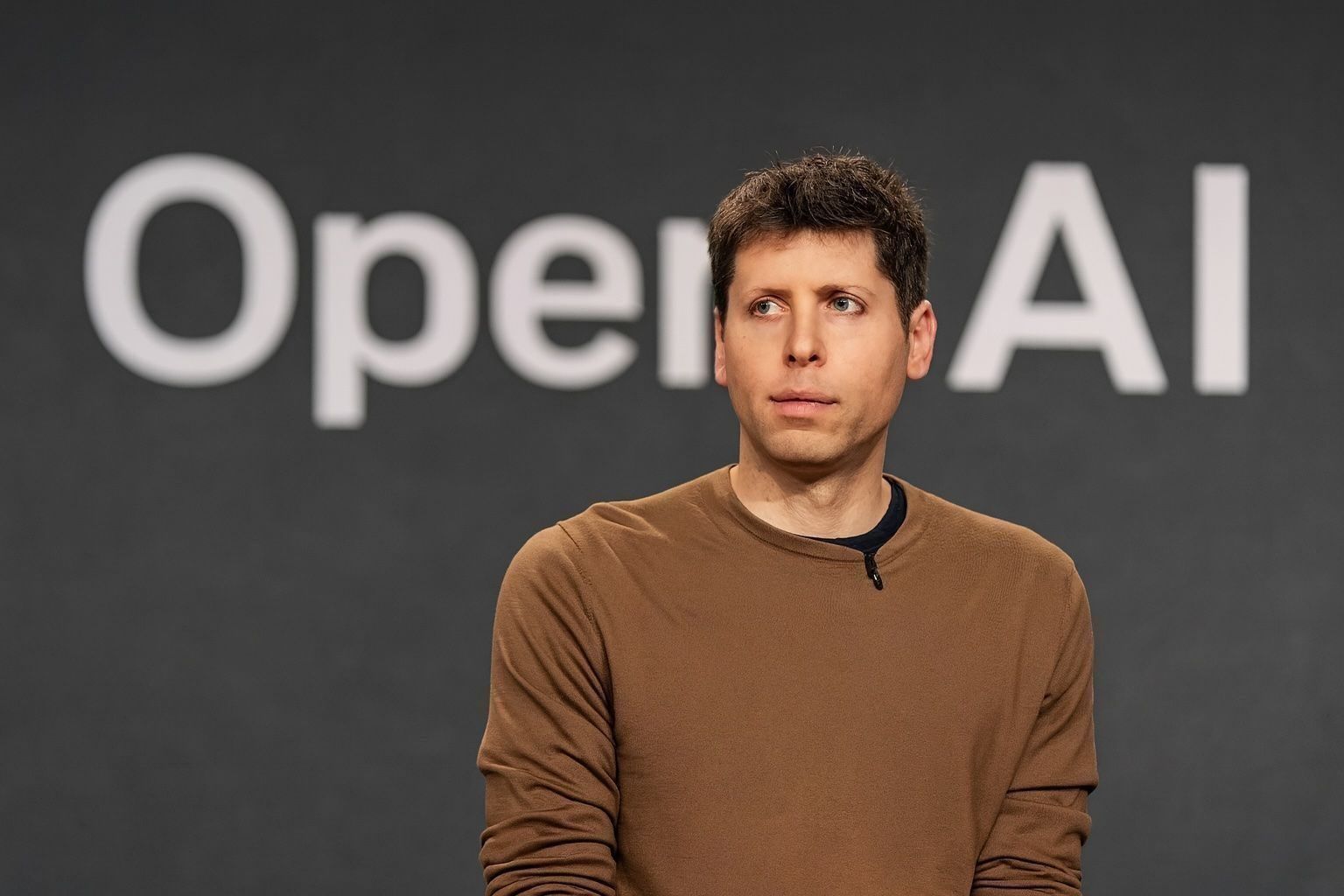

Over just three days, OpenAI has hurtled through a series of crises and high‑stakes bets: a “code red” scramble to catch Google’s Gemini 3, an accelerated new model called GPT‑5.2, angry users accusing ChatGPT of sneaking in ads, a multi‑billion‑dollar AI campus in Australia, and mounting questions on Wall Street about whether the numbers behind the AI boom actually add up.
Here’s what changed for the ChatGPT maker between 5 and 7 December 2025 – and what it signals about the future of OpenAI.
1. ‘Code Red’ and GPT‑5.2: OpenAI Rushes a Response to Google’s Gemini 3
On 5 December, The Verge reported that OpenAI is fast‑tracking the release of GPT‑5.2, a major update to power ChatGPT, as the company responds to Google’s widely praised Gemini 3 model.
According to that reporting:
- GPT‑5.2 was originally scheduled for later in December but is now penciled in for 9 December 2025.
- Internal evaluations at OpenAI reportedly show GPT‑5.2 beating Google’s Gemini 3 on key reasoning benchmarks, although no public test results have been released.
- The decision follows CEO Sam Altman’s internal “code red” memo earlier in the week, ordering teams to pause lower‑priority initiatives – including advertising – and refocus on core ChatGPT quality, speed, and personalization.New York Post+1
Additional coverage and leaks have filled in the technical and strategic backdrop. A detailed Medium explainer describes how OpenAI moved from an earlier “Code Orange” in October to full “Code Red” by early December after user complaints that ChatGPT felt slower, less capable and less reliable, especially compared to newer competitors.Medium
According to that analysis and other summaries of internal discussions:
- Four priority pillars now guide ChatGPT work: performance and reliability, better reasoning and accuracy, personalization, and broader coverage of user queries.
- OpenAI has asked staff to temporarily switch teams and join daily stand‑ups focused on ChatGPT improvements.
- A smaller, highly optimized reasoning model and a more ambitious architecture codenamed “Garlic” are in development; some reports suggest Garlic, or a related next‑gen system, could appear as GPT‑5.2 or GPT‑5.5 in 2026.The Information+2The Times of India+2
In short, OpenAI is treating the Gemini 3 launch as an existential challenge to ChatGPT’s leadership – and GPT‑5.2 is its first rapid counter‑strike.
2. ChatGPT’s User Growth Is Slowing – and Rivals Are Catching Up
The urgency behind “code red” isn’t just about prestige benchmarks; it’s about usage.
On 5 December, TechCrunch highlighted new Sensor Tower data showing that ChatGPT’s growth, while still strong, is slowing relative to key rivals:TechCrunch
- Over the last four months (August–November 2025), ChatGPT’s share of global monthly active users across leading AI chat apps fell by three percentage points.
- Over roughly the same period, Google’s Gemini gained three percentage points of share and saw its users’ daily time spent more than double to around 11 minutes.
- ChatGPT’s daily time spent per user increased by only about 6% – and actually declined in November compared with July.
Meanwhile, services like Perplexity and Anthropic’s Claude have posted triple‑digit year‑over‑year growth, intensifying competitive pressure from multiple directions.
The data reinforces something OpenAI’s own internal memos reportedly concede: ChatGPT still has enormous scale – roughly 800 million weekly users – but it is no longer the only game in town, and user engagement is no longer automatically compounding.
3. Ads or Not? ChatGPT App Suggestions Trigger User Backlash
If performance worries were one headache, perceived advertising was another – and it erupted right in the middle of the code‑red reset.
Earlier this week, screenshots went viral showing ChatGPT suggesting users connect apps like Peloton or Target inside unrelated conversations. For some Plus and $200‑per‑month Pro subscribers, the placements looked indistinguishable from ads.
Coverage across outlets paints the sequence like this:
- On 2 December, TechCrunch reported that users were seeing what looked like an in‑chat Peloton promotion, prompting fears that OpenAI had silently turned on ads even for paid accounts.
- OpenAI’s data lead for ChatGPT, Daniel McAuley, responded on X, insisting the placements were “not an ad”, had “no financial component”, and were simply early tests of an app discovery feature linked to the company’s new app platform. He conceded the execution was “bad/confusing,” especially given the irrelevance to the actual chat.TechCrunch+1
- On 6 December, Business Insider reported that ChatGPT’s head, Nick Turley, reiterated there were no live ads or ad tests running in ChatGPT, despite the rumors.
By 7 December, OpenAI had effectively hit the brakes. In a fresh piece, TechCrunch reported that the company turned off the controversial app suggestions that “look like ads,” with chief scientist Mark Chen admitting on X that OpenAI had “fallen short” of the experience users expect.TechCrunch+1
For now, OpenAI is adamant that:
- There are no paid ads in ChatGPT.
- The app suggestions were tied to surfacing third‑party apps on the ChatGPT platform, not to ad networks.
But the episode has sharpened a strategic dilemma that runs through much of this week’s news: how to monetize ChatGPT at scale without eroding user trust or cluttering the core experience – especially when user growth is already under pressure.
4. OpenAI for Australia: A $4.6 Billion Bet on Sovereign AI Infrastructure
While product teams fight fires, OpenAI’s infrastructure and international strategy took a dramatic step forward – and raised fresh questions – with the “OpenAI for Australia” initiative.
Over the last few days, OpenAI and Australian data‑center operator NextDC have announced a series of moves that, taken together, amount to one of the largest AI infrastructure bets in the Southern Hemisphere:
- OpenAI signed a Memorandum of Understanding with NextDC to co‑develop a “sovereign AI infrastructure partnership” centred on a hyperscale AI campus and GPU supercluster at NextDC’s planned S7 site in Eastern Creek, Western Sydney.OpenAI+1
- The project is valued at roughly US$4.5–4.6 billion (around A$7 billion) and is expected to deliver 550–650 megawatts of capacity, which would make it one of the largest data centers in the world when it comes online around 2027.
- News of the partnership sent NextDC’s shares up as much as 11%, briefly making it the top performer on Australia’s benchmark index.
On its own blog, OpenAI framed OpenAI for Australia as the first “OpenAI for Countries” program in the Asia‑Pacific region, promising to:
- Support sovereign AI infrastructure in Australia.
- Upskill more than 1–1.5 million workers in AI skills.
- Partner with major local enterprises – including Commonwealth Bank, Wesfarmers, Canva and Atlassian – on AI adoption.
At the same time, local media and energy experts have warned that a 650‑megawatt AI campus – consuming power equivalent to hundreds of thousands of homes – could strain Australia’s already stretched electricity grid and complicate its net‑zero targets.
In other words, the Sydney campus encapsulates the dual narrative of OpenAI in December 2025:
- A symbol of national‑scale ambition and economic opportunity.
- A flashpoint in a growing global debate about whether hyperscale AI infrastructure is compatible with existing power grids and climate goals.
5. People‑First AI: $40.5 Million in Grants to 208 Nonprofits
While the Sydney project dominated business headlines, OpenAI’s philanthropic arm also made news.
Between 3 and 5 December, the OpenAI Foundation announced the first recipients of its People‑First AI Fund, a $50 million commitment aimed at nonprofits working on AI literacy, community innovation, and economic opportunity.
Key details from the initial funding round:
- 208 U.S. nonprofits have been awarded $40.5 million in unrestricted grants, selected from nearly 3,000 applicants.
- Grantees range from news‑literacy organizations like the News Literacy Project – which disclosed a $500,000 grant – to local cultural and youth programs such as the Illinois Philharmonic Orchestra and the Youth Mental Health Academy.
- Separately, OpenAI’s core company arm is launching AI and mental health research grants, signalling a growing focus on how large language models intersect with wellbeing and clinical practice.
The People‑First AI Fund is being interpreted by many observers as an attempt to match OpenAI’s soaring commercial footprint with visible community investment – even as critics note that the philanthropic outlay is dwarfed by the sums being committed to data centers and compute.
6. The Numbers Behind the Hype: $13B Revenue, $1T Spend and a $207B Funding Gap
Behind the product launches and philanthropic press releases sits a stark and increasingly public question: can OpenAI’s business model support its infrastructure ambitions?
Updated on 7 December, a widely shared analysis from Tech Buzz draws on multiple banks’ research and OpenAI disclosures to paint the current picture:The Tech Buzz
- OpenAI is now generating roughly $13 billion in annual revenue, about 70% of which comes from consumer ChatGPT subscriptions (mainly the $20‑per‑month tier).
- Only around 5% of ChatGPT’s ~800 million weekly users currently pay, highlighting both the upside – and fragility – of its consumer monetization.
- The company has committed to more than 26 gigawatts of AI‑optimized compute capacity from vendors like Oracle, Nvidia, AMD and Broadcom, implying over $1 trillion in infrastructure spending over the next decade if fully built out.
HSBC’s research note – amplified by Fortune, the Financial Times, Indian and Korean business media and infrastructure trade press – argues that under realistic adoption scenarios, OpenAI could face a funding gap of around $207 billion by 2030:
- Analysts estimate cloud and AI infrastructure rental costs of roughly $792 billion between late 2025 and 2030, versus cumulative free cash flow that remains negative, at about –$282 billion over the period.
- Even with bullish assumptions about user growth (up to 2.6–3 billion weekly users) and conversion rates that rival Microsoft 365’s penetration, HSBC still projects OpenAI will not be cash‑flow positive by 2030 without substantial new funding or renegotiated data‑center commitments.
- A separate Deutsche Bank analysis, cited by MarketWatch on 6 December, suggests OpenAI could burn around $143 billion in negative free cash flow between 2024 and 2029, making its pre‑profit losses larger than Amazon, Tesla, Uber and Spotify’s early cumulative burns combined.
The result: OpenAI’s trillion‑dollar infrastructure vision is increasingly seen as a “scale or fail” scenario. Either the company dramatically grows revenue and diversifies – via enterprise deals, government contracts, ads and new platforms like shopping and video – or it may eventually be forced to pull back on its grandest data‑center plans.The Tech Buzz+1
7. Wall Street Mood Shift: From Market Savior to Risky “Anchor”
Those financial tensions are starting to reshape how investors view both OpenAI and the broader “AI trade.”
On 7 December, a new Bloomberg feature described OpenAI’s changing role in investor psychology: from “stock market savior” at the height of the AI boom to something closer to an “anchor” or “burden” as risks become clearer.Bloomberg+1
While the full article is paywalled, snippets relayed through finance portals and stock‑news feeds highlight several themes:
- A basket of stocks heavily tethered to OpenAI’s fortunes (such as key cloud, chip and infrastructure suppliers) has significantly underperformed a comparable basket more exposed to Google’s AI ecosystem in recent months.
- Analysts are increasingly questioning whether OpenAI’s heavy capex and cloud‑rental commitments will force it to dial back spending, which could ripple through chipmakers, data‑center REITs and hyperscalers that have been priced for relentless AI demand.
- At the same time, some investors are rotating toward “AI beneficiaries” like Alphabet and other diversified tech giants that enjoy AI upside without shouldering the same concentrated infrastructure risk.Bloomberg+1
In other words, Wall Street is beginning to treat OpenAI less as a one‑way bet on the future of AI – and more as a high‑beta, high‑risk core of the ecosystem, whose stumbles could reverberate across markets.
8. Long‑Term User and Revenue Forecasts: The 2030 Picture
Even as near‑term sentiment turns more cautious, many forecasts still assume enormous growth for OpenAI over the rest of the decade.
A late‑November Reuters report, based on internal projections described to The Information, said OpenAI expects:Reuters
- Around 2.6 billion weekly ChatGPT users by 2030.
- A conversion rate of roughly 8.5%, or about 220 million paying subscribers, by that time – making ChatGPT one of the largest subscription businesses in history if achieved.
- Roughly 20% of revenue coming from new “shopping‑ and advertising‑driven” products layered on top of the core chatbot.
Those projections help explain why OpenAI is experimenting with shopping features and app discovery – and why the ad‑like suggestions backlash this week matters so much. It also shows why Altman’s decision to halt ad roll‑out and protect the user experience, at least temporarily, is strategically significant: if users churn before those monetization layers mature, the whole forecast frays.
9. What the 5–7 December Storm Tells Us About OpenAI’s Future
Taken together, the developments from 5–7 December 2025 sketch a company at an inflection point.
9.1 Product and Competition
- Short‑term outlook: GPT‑5.2, if it genuinely narrows or surpasses Gemini 3 on real‑world tasks, could restore some of ChatGPT’s momentum and blunt user drift to competitors. The upcoming reasoning‑focused models and eventual Garlic‑class systems may be crucial to keeping developers loyal to OpenAI’s APIs.
- Risk: If GPT‑5.2 launches with only marginal improvements – or with new reliability issues – it could confirm a narrative that Google, Anthropic and open‑source challengers have pulled ahead, weakening OpenAI’s pricing power in both consumer and enterprise markets.
9.2 Monetization vs. Trust
- Ad‑like experiments show OpenAI is probing every possible revenue lever, from shopping to app platforms. But the furious reaction to Peloton‑style suggestions underlines just how fragile user trust is, especially among paying subscribers.
- The company’s decision – under “code red” – to delay full‑blown ads and refocus on core quality can be read as an admission that, in AI assistants, immediate monetization gains aren’t worth sacrificing the long‑term “feedback loop” of usage and data.Business Insider+1
9.3 Infrastructure and Geography
- The OpenAI for Australia initiative suggests that OpenAI sees sovereign infrastructure deals as a template it could replicate in other countries, blending training, enterprise partnerships and national‑scale data centers.
- But the power‑grid concerns raised in Sydney foreshadow similar debates everywhere hyperscale AI campuses appear. The company will be under growing pressure to pair expansion with credible renewable‑energy and sustainability plans.
9.4 Financial Sustainability
- HSBC, Deutsche Bank and other analysts are effectively saying that OpenAI has five to seven years to turn extraordinary expectations into equally extraordinary cash flow – or face tough decisions on spending, ownership and independence.
- The stakes extend beyond OpenAI itself. Because so many Fortune 500 companies are now building workflows, products and even national strategies atop OpenAI’s stack, any stumble in its ability to fund or operate its infrastructure could become a systemic business risk, similar to an outage at a dominant cloud provider – but with decisions and content generation on the line, not just hosting.
10. The Bottom Line
Between 5 and 7 December 2025, OpenAI has:
- Accelerated GPT‑5.2 in a bid to win back the AI performance crown.
- Pulled back from ad‑like features after a user revolt, even as it quietly tests new monetization paths.
- Committed to massive new infrastructure in Australia, tying its fate to local power grids and politics.
- Doubled down on philanthropy, distributing $40.5 million to 208 nonprofits through its People‑First AI Fund.
- And watched as Wall Street began to openly question whether its trillion‑dollar infrastructure dreams can be financed without breaking something.
The next week – and the actual launch of GPT‑5.2 – will start to reveal whether “code red” is a temporary sprint or the beginning of a longer, more turbulent chapter in the OpenAI story.
Related articles: NASDAQ:GOOGL