Anduril Industries – the defense-tech startup founded by Oculus creator Palmer Luckey – has spent early December 2025 doing two very different things at once:
- announcing an aggressive expansion into Japan with plans to spend hundreds of millions to billions of dollars on local manufacturing, and
- answering tough questions from investors and militaries about drone crashes and software failures in its autonomous systems.
Those cross‑currents have put Anduril squarely in the spotlight between 5–7 December 2025, with new reporting, policy appearances, and financial analysis reshaping how the company is perceived by allies, competitors, and investors.
What Changed for Anduril Between 5–7 December 2025
Across just three days, several storylines converged:
- Drone warfare race: A Business Insider feature on December 5 described a “fight to shape the future of drone warfare,” pitting agile startups like Anduril against legacy primes such as Lockheed Martin, Boeing, and General Atomics for billions in Pentagon spending on loitering munitions, collaborative combat aircraft, and mass-produced drones. Business Insider
- “Top disruptor” status: A long-form December 5 newsletter from the Center for the Study of the Presidency and Congress (CSPC) profiled Anduril as the defense industry’s “top disrupter”, highlighting its rise to the top of CNBC’s Disruptor 50 list and its big-ticket programs like Australia’s Ghost Shark autonomous submarine fleet and the YFQ‑44A “Fury” drone. thepresidency.org+1
- Japan expansion & ‘Arsenal J’: New coverage on December 6–7 expanded on earlier reporting that Anduril has opened a Tokyo office and is exploring a local manufacturing ecosystem under an “Arsenal J” factory concept, with planned investment from the hundreds of millions into the low billions of dollars. gbp.com.sg+1
- Risk‑focused investor analysis: On December 6, AInvest published a detailed case study, “Risks and Opportunities in Defense Tech Innovation: The Anduril Case Study,” arguing that Anduril’s technical failures, capital‑intensive factories and soaring valuation require more risk‑adjusted valuation frameworks than many investors are currently using. AInvest
- Policy influence at Reagan National Defense Forum: On December 6, Anduril CEO Chris Brose appeared as a panelist at the Reagan National Defense Forum (RNDF) in Simi Valley, on a session titled “Funding the Force: Aligning the Defense Budget with Global Priorities.” His presence alongside senior lawmakers and the U.S. Marine Corps commandant underlined how far Anduril has moved from outsider startup to policy insider. reaganfoundation.org+1
Taken together, those developments tell a story of a company trying to scale from hot startup to global defense prime—while the world debates whether its “move fast and break things” ethos is compatible with lethal systems.
Anduril’s Japan Push: Tokyo Office and the ‘Arsenal J’ Concept
The most concrete news item is Anduril’s formal move into Japan.
Tokyo becomes the Indo‑Pacific anchor
On 2–3 December 2025, Anduril officially launched Anduril Japan with a new Tokyo office. Subsequent reporting in the first week of December fleshed out the strategy:
- Tokyo office as regional hub: The Tokyo site is described as the centerpiece of Anduril’s Japan strategy, not just a sales outpost.
- Local leadership: Veterans defense official Patrick Hollen has been appointed Vice President and Head of Anduril Japan, bringing experience from the U.S. Navy, Raytheon, the Missile Defense Agency, and a fellowship focused on U.S.–Japan relations.
- Four strategic focus areas for Japan:
- Integrated air and missile defense
- Mass production of low‑cost, networked systems
- Maritime autonomy for the Indo‑Pacific
- Advanced human–machine teaming in multi‑domain operations
Reporting from Global Business Press adds that Anduril has already signed memorandums of understanding with major Japanese trading houses, including Sumitomo Aero‑Systems and Itochu, and is working with the Japan Maritime Self‑Defense Force (JMSDF) to demonstrate how its Lattice command‑and‑control software can integrate with Japanese and third‑party systems.
‘Arsenal J’ and co‑production with allies
Coverage drawing on Nikkei Asia and other sources describes Anduril’s plan to explore an “Arsenal J” factory concept in Japan, explicitly modeled as a local counterpart to its enormous Arsenal‑1 plant in Ohio. Red94+1
Key elements of the Japan plan:
- Repurposing existing industrial sites and building new facilities to produce drones and other autonomous systems on Japanese soil.
- Close coordination with Japan’s Ministry of Economy, Trade and Industry (METI) and defense authorities to align with Tokyo’s five‑year defense modernization plan starting in 2027.
- Emphasis on “true partnership” rather than export-only models, with Anduril promising to embed R&D, manufacturing, and software engineering talent in Japan.
Palmer Luckey is quoted as saying Japan combines “some of the most advanced engineering talent and manufacturing capabilities in the world” with Anduril’s rapid innovation culture—a combination he argues will “build a new model for defense development” and strengthen Japan’s sovereign capabilities. gbp.com.sg+1
In short, the Tokyo news isn’t just about adding a pin on the map. It’s about moving manufacturing and IP closer to frontline allies, which is strategically important in an Indo‑Pacific contingency where long supply chains may be vulnerable.
Arsenal‑1 in Ohio: Blueprint for ‘Affordable Mass’
The Japanese “Arsenal J” idea only makes sense in the context of Anduril’s huge domestic project: Arsenal‑1, a five‑million‑square‑foot factory being built in Pickaway County, Ohio.
- Announced in January 2025, Arsenal‑1 is billed as one of the world’s largest drone and autonomous weapons factories, capable of producing “tens of thousands” of military systems annually at full rate. Anduril+1
- Ohio officials say Anduril will invest around $900 million–$1 billion, create more than 4,000 jobs by 2035, and receive a $310 million state grant plus tax credits under a 30‑year development agreement.
- Production is scheduled to begin around July 2026, with the plant focusing on drones and other autonomous air platforms.
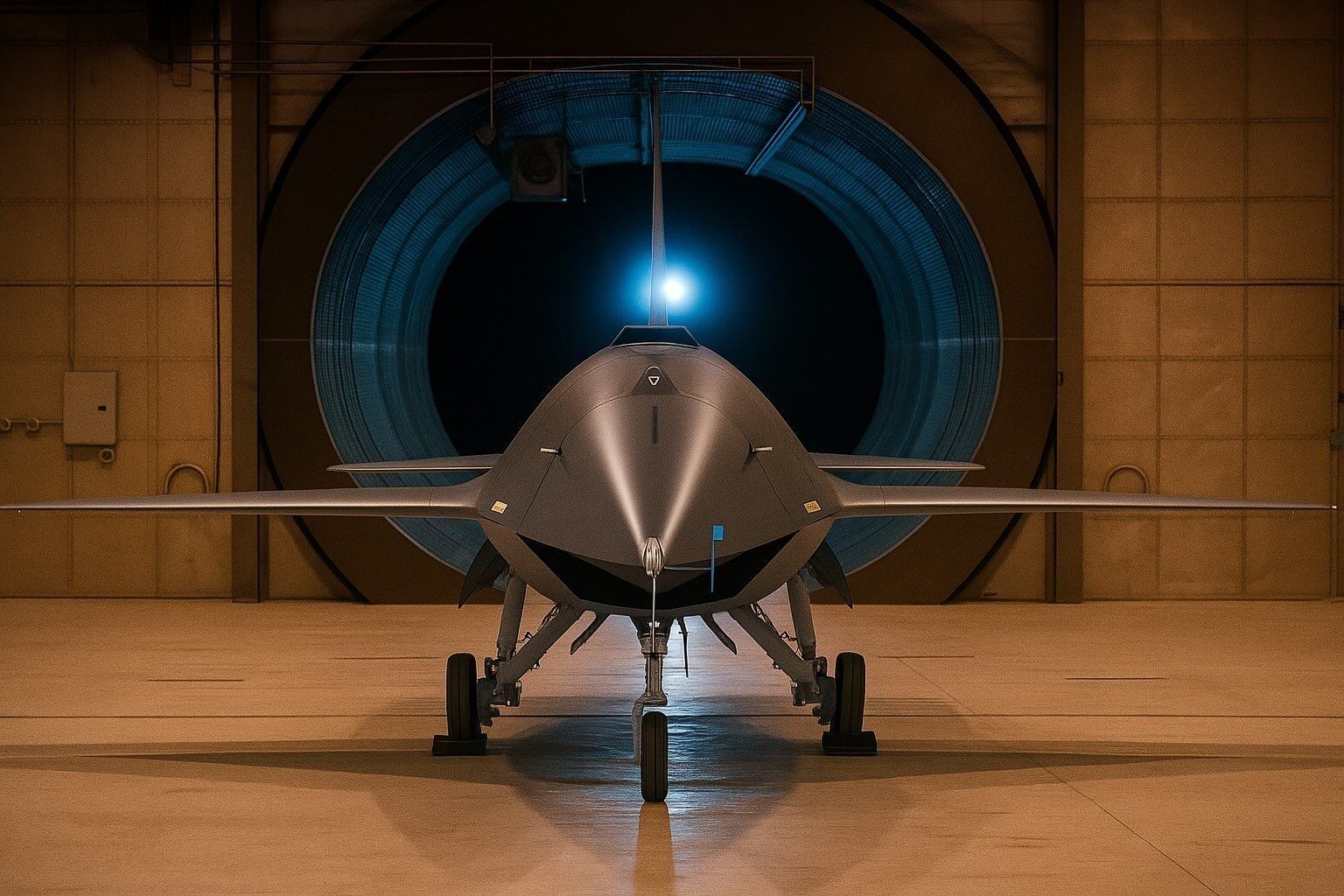
Aerospace Global News notes that Arsenal‑1 is expected to build prototype and then production units of the YFQ‑44A “Fury” collaborative combat aircraft, the loyal‑wingman drone that completed its maiden flight on October 31, 2025 after just 556 days from “clean sheet” to first semi‑autonomous flight. AGN
Anduril’s broader narrative is clear: defense products should be built like modern software and EV platforms—on hyperscale, flexible production lines that can be rapidly iterated and reconfigured. That same model is now being exported to Japan via “Arsenal J.”
Drone Warfare: Competing With the Primes
The December 5 Business Insider piece situates Anduril in a multi‑front battle over the future of drones:
- The Pentagon’s emerging drone strategy depends on mass, attritable systems—cheap, smart drones that can be fielded in large numbers, not just a handful of exquisite platforms.
- Startups like Anduril and Performance Drone Works are competing head‑to‑head with traditional giants (Lockheed Martin, General Atomics, Boeing, RTX) to supply loitering munitions, collaborative combat aircraft, and counter‑drone systems.
The CSPC Dispatch article on December 5 adds more color to how Anduril is positioning itself:
- Anduril moved from border surveillance towers to becoming a prime contractor with a reported valuation north of $30 billion and a $1.1 billion Ghost Shark contract with Australia for autonomous submarines.
- The company’s core thesis is “affordable mass”: using software‑centric designs and autonomy to coordinate thousands of unmanned systems, something a human commander cannot manage manually. Lattice, Anduril’s AI‑driven command‑and‑control platform, now integrates roughly 90 different software systems, according to the interview. thepresidency.org+1
In this framing, Fury, Roadrunner, Ghost‑X, Altius, and the various sea and ground platforms are all front‑ends on the same software stack—the real product is Lattice.
Technical Setbacks: Crashes, Fires and Software Glitches
The optimism around “affordable mass” has been tempered by a drumbeat of reporting on technical failures in Anduril systems—coverage that is still shaping analysis in early December.
Reuters on Altius and Ghost problems
A November 28 Reuters investigation, still widely cited in early December, revealed that two Altius drones crashed during U.S. Air Force tests at Eglin Air Force Base earlier in the month, with one nosediving roughly 8,000 feet into the ground and another spiraling to earth in a separate test.
The same piece highlighted:
- Earlier struggles of the Ghost drone system in Ukraine against Russian electronic warfare, leading to its withdrawal and subsequent redesign as Ghost‑X.
- A U.S. Army exercise in Germany where a Ghost‑X appeared to spin out of control and crash near soldiers, which Anduril attributed to a rotor issue later corrected.
Anduril told Reuters these were “isolated examples” across hundreds of tests and argued that pushing systems to failure is a deliberate part of its development process. Reuters
WSJ, TechCrunch and Reddit echo concerns
Follow‑on coverage, including a Wall Street Journal report and a late‑November TechCrunch summary, described other incidents:
- Over a dozen sea‑based drone ships running Lattice reportedly shut down during a U.S. Navy exercise, creating navigational hazards.
- A test of the company’s Anvil counter‑drone interceptor sparked a 22‑acre fire in Oregon.
These stories have spilled into retail‑investor discussions; Reddit threads on December 7, for example, were still quoting the WSJ’s description of Anduril’s “numerous setbacks during testing.” Reddit+1
AInvest’s December 6 framework: innovation vs reliability
The December 6 AInvest analysis uses Anduril as a case study in how traditional valuation models can underprice technical and operational risk in defense tech:
- It notes Anduril’s $30.5 billion valuation as of June 2025, built on roughly $1 billion in 2024 revenue and 40–45% gross margins, far above legacy defense primes that typically run under 10%.
- At the same time, it flags the risk that drone crashes, software bugs, or integration failures can lead to contract penalties, reputational damage, or operational pauses that classic revenue‑multiple models don’t capture well.
- The piece advocates applying frameworks like FAIR (Factor Analysis of Information Risk) and Annual Loss Expectancy (ALE) to model the financial impact of technical failures and cyber/operational risk.
In other words, the AInvest note reframes Anduril’s setbacks not just as isolated engineering problems but as inputs to valuation math.
Disruptor Status and Asia Strategy: Not Just Hype
Despite the scrutiny, the December 5 CSPC Dispatch makes a persuasive case that Anduril’s model is reshaping the industry:
- From startup to prime: Launched in 2017, Anduril has grown from border towers to a defense prime contractor operating across land, air, sea, space and cyberspace.
- CNBC Disruptor 50 #1: For the first time in the list’s history, a defense technology firm displaced Silicon Valley AI darlings to take the top slot, signaling mainstream recognition of defense tech as a frontier category.
- Ghost Shark & Fury as proof points: The article emphasizes Anduril’s Ghost Shark contract with Australia and the rapid development timeline of Fury, whose maiden flight in October 2025 underscored the company’s “556 days from sketch to sky” boast. thepresidency.org+2AGN+2
A separate July 2025 valuation snapshot from Premier Alternatives suggests that private markets are buying this story in a big way: it pegs Anduril’s implied valuation at roughly $68.4 billion, up from $30.5 billion at its June Series G round, making it one of the most valuable private defense companies in the world.
Combined with the Arsenal‑1 and Arsenal J manufacturing plans, the emerging picture is:
- Anduril wants to be the SpaceX of defense, using scale manufacturing and vertical integration to crush unit costs and saturate battlefields with smart, networked systems.
- The company is distributing that manufacturing base across Ohio, Australia, South Korea and now Japan, with Taiwan also in the mix for deployments and supply chain.
That’s why the Japan move is so important: it anchors the northern edge of an Indo‑Pacific production and deployment arc, rather than treating Asia merely as an export market.
Anduril at the Reagan National Defense Forum: From Startup to Power Broker
Anduril’s growing policy clout was on display at the 2025 Reagan National Defense Forum on 5–6 December:
- The official agenda lists Chris Brose, President and Chief Strategy Officer (often described now as CEO in some coverage) as a panelist on “Funding the Force: Aligning the Defense Budget with Global Priorities,” alongside senior members of Congress and the House Appropriations Defense Subcommittee chair. reaganfoundation.org+1
- Reuters’ photo wire from the event shows Brose speaking at the Ronald Reagan Presidential Library on December 6, categorized under both “Corporate Events” and “Defense.” Reuters Connect
This is symbolically important: Anduril is no longer just pitching prototypes at trade shows. Its leadership is literally on stage helping shape the narrative about the U.S. defense budget, at a time when allied militaries are scrambling to keep up with China, Russia, Iran, and North Korea.
Combined with Brose’s October 2025 podcast interview – “How Anduril Is Paving Its Path as the Next Defense Unicorn,” on DefenseScoop’s CTRL+ALT+DEFENSE – the impression is of an executive who is both selling products and arguing for a broader doctrinal shift toward software‑centric, autonomous warfare. DefenseScoop+1
Financial Picture: Revenue, Funding and IPO Talk
Even before the latest Japan and risk stories, Anduril’s numbers were eye‑catching:
- Revenue: Sacra estimates Anduril reached roughly $1 billion in revenue in 2024, up 138% from about $420 million in 2023, driven by more than $1.5 billion in new contracts in 2024 alone.
- Margins: Sacra and AInvest both cite 40–45% gross margins, far above traditional defense primes whose margins often sit in the single digits.
- Funding: A June 5, 2025 TechCrunch piece details Anduril’s $2.5 billion Series G round led by Founders Fund, doubling its valuation to $30.5 billion and described as more than 8× oversubscribed.
- Current valuation: Premier Alternatives now pegs Anduril’s secondary-market valuation around $68.4 billion as of November 10, 2025, reflecting strong demand for pre‑IPO shares.
Analysts at outlets like The Motley Fool have speculated that Anduril could pursue an IPO in the next few years, but the company has made no formal announcement and appears content to stay private while building out its global manufacturing footprint.
The December 6 AInvest note effectively asks investors to discount some of that optimism by explicitly modeling technical risk, cash burn from Arsenal‑1 and Arsenal J, and potential delays in revenue if programs slip.
What to Watch After This December News Flurry
For investors, policymakers, and allies trying to read Anduril’s trajectory after the 5–7 December news cycle, several themes stand out:
- Execution in Japan
- Can Anduril actually stand up “Arsenal J” facilities in partnership with Japanese industry, and how quickly will local production begin?
- How will Japanese regulators and political stakeholders respond to a U.S. startup embedding deeply in their defense supply chain?
- Reliability vs. speed
- Do Altius, Ghost‑X, Lattice and other systems demonstrate improved reliability in upcoming tests, or do more high‑profile failures surface?
- Watch for new DoD test reports, Ukrainian battlefield feedback, and Navy exercises that might leak into the press.
- Arsenal‑1 build‑out
- Is construction of the Ohio factory on track for mid‑2026 operations, and do early Fury and other drone production runs meet cost and schedule promises?
- Contract mix and geopolitics
- How Anduril balances contracts across the U.S., Australia, Japan, Taiwan, South Korea, and European allies will say a lot about its risk exposure and diplomatic footprint.
- IPO or extended private run?
- A move toward public markets would force deeper disclosure around finances and program risk—but it could also give Anduril a war chest comparable to legacy primes. For now, secondary‑market valuations suggest there is no shortage of private capital willing to fund the “defense unicorn” thesis. premieralts.com+2TechCrunch+2
Bottom Line
Between December 5 and 7, 2025, Anduril Industries has looked simultaneously like:
- a fast‑scaling AI defense juggernaut building out an Indo‑Pacific manufacturing arc from Ohio to Tokyo, and
- a high‑risk engineering story where drone crashes, software glitches, and cash‑intensive factories could still derail the narrative.
The outcome will hinge on whether Anduril can prove that its Silicon Valley mantra—“fail fast, iterate faster”—can be reconciled with the unforgiving standards of military reliability.
If it can, the Tokyo office, Arsenal‑1, and Fury’s rapid development may mark the beginning of a new industrial model for allied defense production. If it cannot, December’s wave of risk‑focused analysis will look like an early warning instead of a footnote.