
OMAHA / NEW YORK — Todd Combs, one of Warren Buffett’s most trusted investing lieutenants and the chief executive of GEICO, is leaving Berkshire Hathaway to lead a new $10 billion strategic investment group at JPMorgan Chase, underscoring how rapidly the conglomerate is being reshaped for life after Buffett.
Announced on December 8, 2025, in tandem press releases from Berkshire Hathaway and JPMorgan, Combs’ departure lands just weeks before Buffett hands the CEO role to Greg Abel at year‑end — a moment many investors have spent years anticipating.
Key takeaways
- Todd Combs is exiting Berkshire Hathaway and GEICO to join JPMorgan Chase in January 2026, where he’ll head the Strategic Investment Group within the bank’s new Security and Resiliency Initiative (SRI).
- Berkshire named GEICO COO Nancy Pierce as the insurer’s new CEO, while reiterating that Greg Abel will become President and CEO of Berkshire on January 1, 2026.
- The move is widely framed as part of Berkshire’s broader succession plan, alongside CFO and legal leadership changes, as Warren Buffett prepares to step down at the end of 2025.
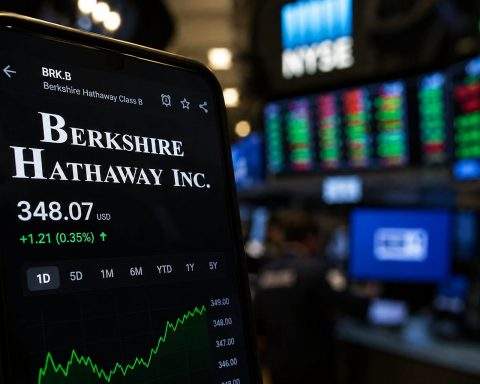
- Berkshire Hathaway stock dipped around 0.5%–0.6% in early trading after the announcement, suggesting investors see the exit as a negative but not a crisis.
Who is Todd Combs — and why his departure matters
Todd Anthony Combs is not just another executive rotating out of a Berkshire subsidiary. He has been central to the Berkshire story for more than a decade:
- A former hedge fund manager, he ran Castle Point Capital before being recruited by Buffett in 2010 as one of Berkshire’s first outside investment managers.
- Since 2010 he has managed a meaningful slice of Berkshire’s massive equity portfolio, working alongside fellow stock‑picker Ted Weschler, while Buffett continued to oversee the bulk of the holdings.
- In 2019, Berkshire announced that Combs would become CEO of GEICO from January 2020, adding operational responsibility for one of Berkshire’s crown‑jewel insurance franchises on top of his investing role.
- He joined JPMorgan’s board in 2016, deepening ties between Berkshire and one of the largest U.S. banks well before today’s move.
Over the last five years, Combs has been widely credited with helping engineer GEICO’s dramatic turnaround. Research from S&P Global and others shows the auto insurer’s combined ratio improving to roughly 81.5 in 2024 — its best trailing‑12‑month result in decades — after aggressive cost cuts, technology upgrades and tighter underwriting.
GEICO remained highly profitable into 2025, even as rising claim costs and investments in growth nudged the combined ratio slightly higher again.
In short: Combs isn’t just a portfolio manager walking out the door; he’s the architect of one of Berkshire’s most important operational turnarounds and a long‑time contender in the firm’s succession conversation.
What Berkshire announced on December 8, 2025
Berkshire Hathaway’s own press release framed Combs’ exit as part of a suite of leadership appointments across the conglomerate.
Key moves include:
- Nancy L. Pierce named CEO of GEICO, effective immediately. Pierce has spent nearly four decades at GEICO in roles spanning claims, underwriting, product management and regional operations.
- Todd A. Combs will “conclude his tenure at Berkshire Hathaway” and join JPMorgan Chase, where he has served as a board director since 2016. Warren Buffett praised Combs for “many great hires” at GEICO and said JPMorgan had “made a good decision” in hiring him. Business Wire+2Business Wire+2
- Greg Abel will become President and CEO of Berkshire Hathaway on January 1, 2026, while continuing to oversee major non‑insurance operations such as BNSF Railway and Berkshire Hathaway Energy.
- Adam Johnson, the long‑time CEO of NetJets, was promoted to President of Berkshire’s Consumer Products, Service and Retailing businesses, supporting 32 operating companies while retaining his NetJets role.
- CFO succession is underway: veteran finance chief Marc Hamburg will retire in 2027, with Charles Chang stepping in as CFO in June 2026 after a year‑long transition.
- Berkshire is adding its first in‑house General Counsel, Michael O’Sullivan, currently general counsel at Snap Inc.
Together, these moves read less like a single executive departure and more like the final cementing of Berkshire’s post‑Buffett management structure.
The JPMorgan job: A $10 billion bet on U.S. “security and resiliency”
On the other side of the table, JPMorgan Chase has created a role that looks tailored to Combs’ skills — and to the geopolitical tenor of the moment.
According to the bank’s December 8 press release, Combs will: JPMorgan Chase+2Reuters+2
- Head the $10 billion Strategic Investment Group within JPMorgan’s new Security and Resiliency Initiative (SRI).
- Oversee direct equity and venture investments aimed at boosting manufacturing, innovation and supply‑chain resilience in sectors like defense, aerospace, healthcare and energy.
- Serve as a Special Advisor to CEO Jamie Dimon and the firm’s operating committee on strategic issues.
- Sit on a high‑profile external advisory council that includes figures such as Jeff Bezos, Michael Dell, Jim Farley and Condoleezza Rice, which will help steer SRI’s long‑term investment priorities.
The SRI itself is framed as part of a $1.5 trillion, decade‑long plan by JPMorgan to support industries viewed as critical to U.S. economic and national security — echoing the “friend‑shoring” and industrial policy themes now common in Washington and on Wall Street. Reuters+2Reuters+2
For Combs, it’s a role that blends his deep experience in insurance, capital allocation and board‑level governance with a mandate to make large, long‑dated bets on strategically important companies.
How today’s commentary is reading the move
Across financial media on December 8, 2025, several themes have emerged:
- Part of a deliberate post‑Buffett reset: Barron’s and others describe Combs’ exit, together with the CFO and GEICO leadership changes, as Berkshire “preparing for life after Buffett,” with Greg Abel and a new generation of executives firmly in charge. Barron’s+2Barron’s+2
- A loss of visible investing talent: The Financial Times, Wall Street Journal and Reuters all highlight that Combs and Ted Weschler were long viewed as the natural heirs to Berkshire’s $300+ billion stock portfolio. Buffett has more recently suggested that Abel, as CEO, could ultimately control capital allocation, leaving Combs’ precise future role somewhat ambiguous — uncertainty that has now been resolved.
- A logical next step after the GEICO turnaround: Business Insider notes that Combs joined Berkshire in 2010, became GEICO CEO in 2020 and has presided over the insurer’s rebound in profitability, making his departure easier to contemplate from a business‑continuity standpoint.
- Alignment with U.S. industrial and “America First” strategies: FT coverage explicitly links JPMorgan’s SRI to a broader trend of channelling capital toward sectors tied to national security and domestic supply chains, suggesting Combs’ new role will sit at the intersection of finance and policy. Financial Times+2Reuters+2
In other words, analysts and commentators see Combs’ move less as a sudden rupture and more as the crystallisation of trends that have been building for several years: Abel’s rise, GEICO’s rehabilitation and a shift in how Berkshire thinks about who should wield the investment checkbook.
What it means for GEICO: Pierce takes the wheel
From an operating perspective, GEICO may be the least risky part of this transition — precisely because so much heavy lifting has already been done.
- Between 2022 and 2024, GEICO’s combined ratio improved into the low‑80s, driven by cost discipline, staffing cuts, pricing adjustments and a push to modernise underwriting and telematics. Buffett has publicly praised Combs for “repolishing” a once‑troubled “gem.” Hugging Face+3S&P Global+3Carrier Management+3
- Even in 2025, as GEICO spent more on customer acquisition and technology, the business remained strongly profitable, with several analyses still describing its performance as “spectacular” relative to the mid‑2020s trough. Kingswell+3ReinsuranceNe.ws+3Insurance Business+3
Nancy Pierce, the new CEO, is a classic Berkshire‑style internal promotion: a 1980s hire with deep experience across the insurer’s core functions. Ajit Jain, Berkshire’s vice‑chair for insurance, emphasised her practicality and results focus in today’s announcement.
Short‑term risk:
- Investor concern is likely to centre on whether Pierce maintains Combs’ tight cost discipline while spending enough to keep GEICO competitive in pricing, digital tools and AI‑driven claims — areas Buffett himself has said will be crucial in the Progressive‑GEICO rivalry.
Medium‑term opportunity:
- With GEICO’s turnaround largely complete, a CEO who is focused 100% on the business rather than splitting time with Berkshire’s equity portfolio could, in theory, react faster to competitive shifts in pricing and technology.
The bigger question: Who runs Berkshire’s money now?
Combs’ exit intensifies a debate that’s been simmering for years: who will oversee Berkshire’s enormous investment portfolio after Buffett?
Some relevant context:
- For more than a decade, Combs and Ted Weschler have each independently run a portion of Berkshire’s portfolio — roughly 10% combined by some estimates — while Buffett controlled the rest and made the blockbuster wagers such as Apple.
- Earlier reporting from Reuters and others noted that while Combs and Weschler were once expected to take over the entire equity portfolio as co‑CIOs, Buffett has in recent years mused that Greg Abel could ultimately handle capital allocation, reflecting the view that understanding businesses deeply is equivalent to understanding stocks.
- A May 2025 Barron’s analysis highlighted how Combs’ dual role — running GEICO and managing money — left him stretched, and speculated that his GEICO job might always have been temporary once the insurer was back on track.
With Combs leaving entirely, several implications come into focus:
- Ted Weschler’s role becomes more central.
Investors will look for signals — maybe in Berkshire’s next annual meeting or regulatory filings — that Weschler is taking on more capital allocation responsibility, perhaps with a larger share of the portfolio or a formal title. - Greg Abel is likely to be even more involved in big capital decisions.
Buffett has already delegated more capital allocation to Abel, particularly around large deals and share repurchases. Combs’ exit further nudges the centre of gravity toward Abel and the operating‑business CEOs. - The board may prefer a team‑based approach.
Rather than anointing a single “chief investment officer,” Berkshire could lean into a model where Abel, Weschler, and perhaps future hires or internal stars collectively drive investment decisions — both for listed equities and for wholly owned subsidiaries.
For shareholders, the key message from today’s announcements is that the post‑Buffett investment model is still evolving, and Combs’ departure removes one of the most visible pieces from that puzzle.
Market reaction: Mildly negative, not panicked
In early trading on December 8:
- Berkshire Hathaway Class B shares slipped around 0.5%–0.6%, according to market‑mover summaries from Investing.com and Barron’s, as investors digested Combs’ exit alongside the broader leadership reshuffle.
- The pullback is modest relative to Berkshire’s size and volatility, suggesting markets view the news as a meaningful but manageable change rather than an existential shock.
Analysts will watch whether the stock underperforms or recovers in coming days as more commentary emerges from Buffett, Abel, Weschler and external observers.
Why JPMorgan wants Todd Combs
From JPMorgan’s perspective, hiring Combs checks several boxes at once:
- Proven long‑term investor: He has spent 15 years investing alongside Warren Buffett, navigating zero‑rate environments, COVID‑era volatility and the AI‑driven tech boom.
- Deep insurance and risk expertise: Years at GEICO and earlier stints as an insurance analyst mean Combs understands underwriting, regulatory risk and long‑tail liabilities — valuable skills when evaluating companies in sectors like defense, healthcare or critical infrastructure.
- Inside knowledge of JPMorgan itself: After nine years on the bank’s board, Combs comes in knowing the firm’s culture, risk appetite and strategic priorities, which should shorten the learning curve for a role that cuts across multiple divisions.
The bank is essentially betting that Combs can apply Berkshire‑style long‑term thinking to a new, explicitly strategic mission: backing companies whose growth and competitiveness are intertwined with U.S. economic security.
What this means for Buffett’s legacy and the post‑Buffett era
Viewed through the broader lens of succession, today’s news does several things at once:
- It clarifies that the “Buffett bench” will not move in lockstep into the next chapter.
For years, investors imagined a simple hand‑off: Abel runs the operating companies; Combs and Weschler run the portfolio; Howard Buffett becomes non‑executive chair. Combs’ departure shows that reality will be messier. Wikipedia+3Reuters+3Reuters+3 - It underscores Abel’s centrality.
With Abel set to become CEO on January 1, 2026, the latest appointments reinforce that he’ll be surrounded by leaders he knows well: Pierce at GEICO, Johnson at NetJets and Consumer businesses, Chang at finance and O’Sullivan as Berkshire’s first in‑house general counsel. - It highlights Buffett’s enduring influence — even in absentia.
Buffett’s public praise of Combs’ GEICO work and his blessing of the JPMorgan job show him still shaping the narrative as he steps away. At the same time, his insistence that Abel can manage capital allocation is proving decisive in how the post‑Buffett structure is actually being built.
For long‑time Berkshire followers, the emotional sting is real: a figure many saw as “Buffett 2.0” on the investing side is leaving just as the founder himself bows out. But structurally, today’s announcements largely align with how succession has been described since Abel was formally confirmed as future CEO in 2021 and again in 2025. Wikipedia+2Reuters+2
What investors should watch next
Over the coming months, several questions will shape how significant Combs’ departure ultimately proves:
- How explicitly does Berkshire define Weschler’s role?
Look for any change in titles, disclosures or Buffett/Abel commentary around who is responsible for which parts of the equity portfolio. - Does Berkshire bring in new investing talent?
The company could hire another investment manager, promote from within one of its subsidiaries, or continue with a smaller, more centralized investment team. - How does GEICO perform under Nancy Pierce?
Metrics like combined ratio, policy growth and digital adoption will show whether the Combs era gains are being sustained — or if competitive pressures from Progressive and others are eroding the edge. - What deals does Combs strike at JPMorgan?
The first wave of SRI investments — and how concentrated they are in defense, energy, healthcare or frontier tech — will reveal how aggressively JPMorgan intends to lean into its “economic security” theme. JPMorgan Chase+2Reuters+2 - How does Berkshire deploy its enormous cash pile under Abel?
With Berkshire holding hundreds of billions of dollars in cash and short‑term investments, capital allocation decisions in the first few years of the Abel era will matter at least as much as who picks individual stocks.
For now, the headline is simple: Todd Combs, a central figure in Berkshire’s investing and insurance story, is leaving just as Warren Buffett’s own tenure ends. The deeper story — how Berkshire reinvents its investment machine, and how Combs reshapes JPMorgan’s strategic investing — will unfold over the rest of the decade.
Quick FAQ
Why is Todd Combs leaving Berkshire Hathaway?
Combs is leaving to head JPMorgan’s new Strategic Investment Group, a $10 billion arm of its Security and Resiliency Initiative that will invest in companies critical to U.S. economic and national security.
What will Todd Combs do at JPMorgan?
He will lead direct equity and venture investments under the SRI umbrella, focusing on sectors such as defense, aerospace, energy and healthcare, and serve as a special advisor to CEO Jamie Dimon and the bank’s operating committee.
Who replaces Todd Combs at GEICO?
Nancy Pierce, GEICO’s long‑time Chief Operating Officer, has been promoted to CEO, effective immediately.
Who will manage Berkshire’s investments now?
Ted Weschler remains as an investment manager, while Greg Abel is expected to play a larger role in capital allocation once he becomes CEO. Berkshire has not yet announced a direct replacement for Combs on the investment side, leaving open whether it will hire anew or concentrate responsibility among existing leaders.
Related articles: NYSE:BRK.B