
Published: December 8, 2025
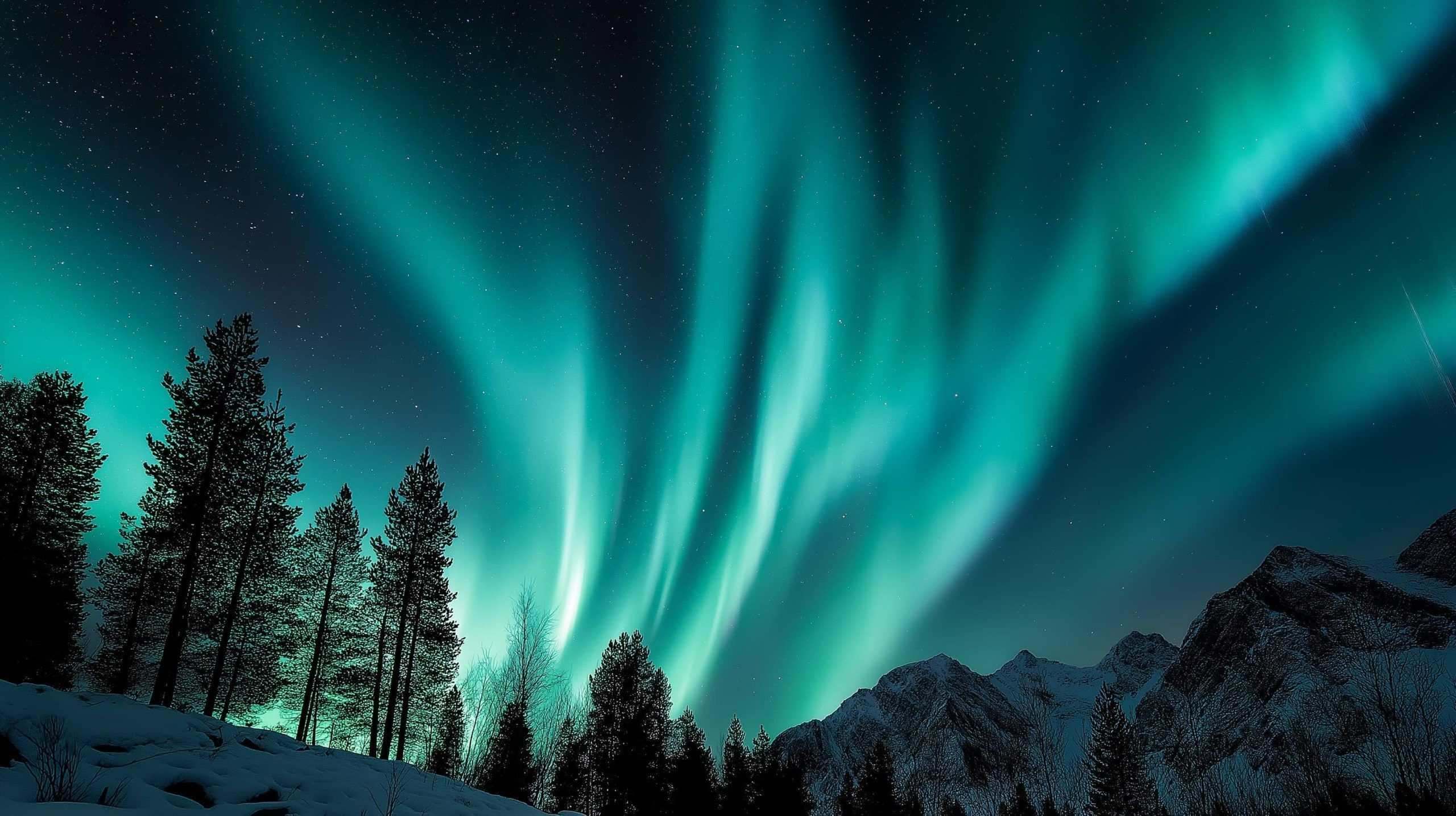
A powerful burst from the Sun has set up a Strong (G3) geomagnetic storm watch for tomorrow, December 9, 2025 – and many skywatchers are asking whether the Northern Lights could already be visible tonight, Monday, December 8.
Short version:
- A full‑halo coronal mass ejection (CME) from an M8.1 solar flare is on its way to Earth.
- NOAA’s Space Weather Prediction Center (SWPC) has issued a G3 (Strong) geomagnetic storm watch valid for December 9, with only G1 (Minor) conditions forecast today, December 8.
- That means auroras are likely tonight at high latitudes, with only a modest chance at mid‑latitudes unless the storm arrives earlier or stronger than expected.
What triggered the G3 geomagnetic storm watch?
On December 6, 2025, sunspot region AR 4299 unleashed a powerful M8.1‑class solar flare at about 20:39 UTC. Coronagraph images showed a full‑halo CME, meaning at least part of the eruption is heading straight toward Earth.
In response, the NOAA SWPC issued an official bulletin titled “Strong (G3) Geomagnetic Storm WATCH Valid for 09 Dec 2025.” The agency states that the CME is expected to impact Earth “early to midday” on December 9, with the potential to produce periods of G3‑level geomagnetic storming. NOAA Space Weather Prediction Center+1
Independent space‑weather outlets back this up:
- SpaceWeatherLive reports that the CME, traveling around 850 km/s, could arrive late December 8 to early December 9 (UTC).
- The Watchers notes that SWPC’s forecast calls for G1 (Minor) geomagnetic activity on December 8, G3 (Strong) on December 9, and G1 again on December 10.
Several newsrooms around the world have picked up the story. Outlets in the U.S., Europe and Asia describe a “strong geomagnetic storm” likely on Tuesday, fueled by this M8.1 flare and CME combination. TechStock²+3Українські Національні Новини (УНН)+3Daily Times+3
What does a G3 geomagnetic storm actually mean?
NOAA ranks geomagnetic storms from G1 (Minor) to G5 (Extreme). A G3 “Strong” storm sits in the middle of the scale but is still a big deal. According to NOAA’s Space Weather Scales: NOAA Space Weather Prediction Center+1
- Typical Kp index: around 7 (on a scale from 0 to 9).
- Power systems: voltage corrections may be required; some grid protection devices can trigger false alarms.
- Satellites: increased drag and surface charging; operators may need to adjust orientation or orbits.
- Radio & navigation: intermittent issues for HF radio and satellite navigation (GPS/GNSS).
- Auroras: have historically been seen as far south as U.S. states like Illinois and Oregon (around ~50° geomagnetic latitude) during G3 storms.
So if the storm reaches full G3 strength, Northern Lights could push well away from the polar regions – but that peak is forecast for tomorrow, December 9, not necessarily tonight.
Today’s official forecast (December 8, 2025)
While headlines talk about a “strong geomagnetic storm”, the day‑by‑day forecast matters for aurora hunters.
NOAA & space‑weather agencies
- The G3 watch is officially valid for December 9, tied to the expected CME impact window.
- Forecast products summarized by The Watchers and others show G1 (Minor) geomagnetic storming for December 8, G3 (Strong) for December 9, and G1 again on December 10.
On the aurora side:
- The NOAA Aurora Dashboard notes that the greatest expected 3‑hour Kp index for December 6–8 is around 5, which corresponds to G1 (Minor) conditions.
Ground‑level aurora forecasts
A few independent aurora‑forecasting sites give more localized hints:
- Soft Serve News’ “Aurora Borealis Forecast for Monday, December 8, 2025” currently reports the short‑term aurora outlook as “Quiet,” indicating very low activity right now, though that can change as the night progresses. Soft Serve News
- The Icelandic aurora forecast shows “Minor storm” conditions for tonight, with a predicted maximum Kp of 5 around 21:00 local time – consistent with a G1‑level event and good news for those already under the auroral oval. Aurora Forecast Iceland+1
- A Yukon (Whitehorse) forecast page lists current auroral activity level near zero earlier today, again pointing to quiet or only slowly increasing conditions so far.
Put together, the consensus for December 8 is:
Minor geomagnetic storming (G1) is possible today, with the main G3 action more likely tomorrow once the CME fully arrives.
So, can you see the Northern Lights tonight (December 8, 2025)?
Short answer
- High latitudes (near or above the Arctic Circle):
Yes – auroras are quite likely tonight if skies are dark and clear. - Northern mid‑latitudes (northern U.S., southern Canada, northern Europe/UK):
Maybe – there’s a chance of faint auroras, especially late tonight if the storm ramps up early. - Lower latitudes (most of continental U.S., central/southern Europe, much of Asia):
Unlikely tonight; your better shot is if tomorrow’s storm hits at full G3 strength.
Let’s break that down a bit more.
High‑latitude regions (best chances tonight)
If you’re in places like:
- Northern Norway, Sweden, Finland
- Iceland and Greenland
- Northern Canada (Yukon, Northwest Territories, Nunavut, northern Quebec)
- Alaska
…you’re inside or very close to the core auroral zone. Even with G1‑level Kp (~5), auroras are commonly visible overhead in these regions.
Given:
- The background forecast of minor geomagnetic storming today, and
- The approaching CME that may already be influencing the solar wind environment, The Watchers+1
your odds of seeing the Northern Lights tonight are good, provided:
- skies are dark (no midnight sun, minimal moonlight), and
- clouds cooperate.
Northern mid‑latitudes (Canada, northern US, northern Europe & UK)
This band includes areas like:
- Southern Canada and the northern tier of the U.S. (e.g., North Dakota, northern Minnesota, Montana, northern Washington, northern New England)
- Scotland, the far north of England, Denmark, the Baltic states, parts of Germany and Poland
Here, Kp 5 (G1) often means aurora is low on the northern horizon rather than overhead. To get dramatic, sky‑filling auroras, you typically want Kp 6–7 (G2–G3). NOAA notes that G3 storms (Kp≈7) have pushed auroras as far south as Illinois and Oregon in the past.
For tonight, December 8:
- With G1 conditions the official expectation, your chances at this latitude are modest but not zero.
- If the CME arrives earlier than modeled or if the magnetic field turns strongly southward (a key ingredient for intense auroras), activity could spike late at night and briefly favor these regions.
Realistically, for these locations, the bigger opportunity is tomorrow (Tuesday into Tuesday night) if the storm reaches full G3 strength as forecast.
Lower latitudes (rest of the U.S., central Europe, East Asia)
For places like:
- Most of the continental U.S. (e.g., Texas, California, the Southeast, mid‑Atlantic)
- Central and southern Europe (France, Spain, Italy, Balkans)
- Much of China, Japan, Korea at more southern latitudes
…it generally takes at least a strong G3 or even G4 storm to bring the auroral oval far enough equatorward. Historical G4 events have produced auroras as low as Alabama and northern California, but those are rarer and stronger than what’s currently forecast.
Tonight, with only G1 officially on the table, Northern Lights at these latitudes would be very unlikely. You’d be banking on:
- an unexpectedly early and strong CME arrival,
- plus favorable magnetic conditions.
That’s possible in principle, but not something forecasters are betting on right now.
What the media and agencies are saying today (8 December 2025)
A snapshot of today’s coverage:
- UNN (Ukraine) reports that the M8.1 flare and full‑halo CME could trigger a G3‑level storm on Tuesday, citing SWPC and The Hill, and notes that the Kp index could reach 7 around late morning local time on December 9 – though daytime skies will hinder aurora visibility there.
- Daily Times (Pakistan) highlights NOAA’s warning that a strong geomagnetic storm may hit Monday night, explaining that the CME is expected to reach Earth around 5 UTC on December 9, with about ±7 hours of timing uncertainty – translating to Monday night for North America and early Tuesday for Europe.
- Across the U.S. Hearst newspaper network, articles under headlines like “NOAA issues strong geomagnetic storm watch for Monday evening, December 8” show NOAA’s official aurora viewline map for Monday night and emphasize that the same sunspot region produced a G4 storm in November. Midland Daily News+2The Telegraph+2
- Geo News runs an “Aurora alert” piece suggesting a series of solar storms could push Northern Lights much farther south than usual on December 8, depending on how the CME interacts with Earth’s magnetic field. Geo News
- A detailed explainer from TS2 Tech walks through the G3 watch for December 9, impacts on satellites, power grids, and radio, and reiterates that high‑latitude regions have the best aurora chances, with mid‑latitudes favored if Kp hits 7.
Overall, newsrooms are aligned:
- Main event: Tuesday’s G3 watch,
- Side note: Tonight already offers decent aurora potential at high latitudes, with a “maybe” zone for northern mid‑latitudes.
What about the Southern Lights (Aurora Australis)?
This storm won’t only affect the Northern Hemisphere.
Coverage aimed at Southern Hemisphere observers notes that strong geomagnetic activity on December 9 could light up southern skies with aurora australis, especially across:
- Tasmania
- Southern New Zealand
- Far southern Australia and parts of southern Chile/Argentina, if the storm reaches full strength.
For tonight (December 8), the same logic applies in reverse: high southern latitudes have the best chance; more northern locations in the Southern Hemisphere will likely need tomorrow’s G3 conditions.
How to maximize your chances tonight and tomorrow
Wherever you are, a few practical steps help:
- Use real‑time aurora tools
- NOAA Aurora Dashboard – shows tonight’s and tomorrow night’s aurora viewline, plus a 30‑minute Ovation model animation.
- Local forecast sites such as Soft Serve News, auroraforecast.is (Iceland), and regional tourism or science pages for places like Yukon often give concise, location‑specific guidance.
- Watch the Kp index and Bz
- Kp ≥ 5: good news for polar and near‑polar regions.
- Kp 6–7: brings auroras into mid‑latitudes; this is what forecasters are eyeing for December 9.
- Pick your spot carefully
- Get far away from city lights and street lamps.
- Choose a location with a clear view toward the magnetic pole (north in the Northern Hemisphere, south in the Southern Hemisphere).
- Check your local cloud forecast – even the strongest storm won’t help if you’re under thick cloud.
- Photography basics
News articles covering this watch repeatedly recommend:- Tripod,
- High ISO (around 1600–3200),
- Longer exposure times to bring out color and structure.
Will this storm be dangerous?
For most people, geomagnetic storms – even G3 events – are not directly dangerous. The main concerns are technological:
- Power grids: operators may need to adjust voltages and monitor for induced currents.
- Satellites: increased drag and surface charging can disrupt operations; controllers often switch to safer modes during peak activity.
- Navigation & communications:HF radio and GNSS/GPS can suffer temporary degradation or outages in affected regions.
These effects are well‑studied and utilities and satellite operators routinely manage them during strong solar events.
Bottom line for December 8, 2025
- A full‑halo CME from an M8.1 solar flare is heading toward Earth.
- NOAA has a Strong (G3) geomagnetic storm watch in effect for December 9, with G1 (Minor) conditions forecast today, December 8.
- Tonight (Dec 8)
- High latitudes:Good chance of Northern Lights (and Southern Lights), even before the main storm peak.
- Northern mid‑latitudes:Possible but not guaranteed; any show will depend on how early and how strongly the CME couples with Earth’s magnetic field.
- Lower latitudes:Unlikely tonight – your best hope is if tomorrow’s storm reaches full G3 strength and the auroral oval surges equatorward.
If you’re under clear, dark skies in a high‑latitude region, tonight is already worth watching – and tomorrow night could be even better.
Related articles: Stock Market