
London – December 10, 2025
The United Kingdom stock market traded in a narrow range on Wednesday, with the FTSE 100 hovering just above the 9,650 level as investors weighed a heavy slate of corporate news against looming interest‑rate decisions from the US Federal Reserve and the Bank of England (BoE). European markets drifted lower, but London’s blue‑chip index managed modest gains, while mid‑caps lagged.
FTSE 100 edges up while FTSE 250 lags
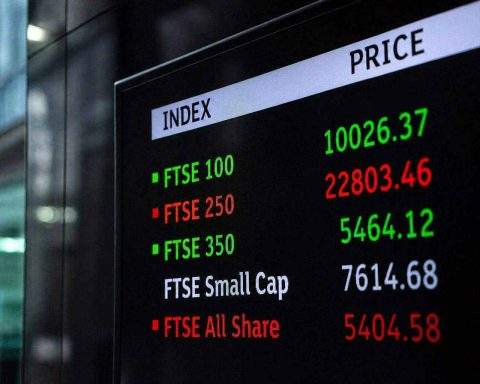
At the open, the FTSE 100 index ticked about 0.1% higher, near 9,650 , extending an attempted rebound after three straight sessions of losses. The more domestically focused FTSE 250 slipped around 0.1–0.2%, and the AIM All‑Share made small gains.
Through the morning, the FTSE 100 oscillated in a tight band, briefly dipping into negative territory before recovering to trade roughly 0.1–0.2% higher . By contrast, the pan‑European Stoxx 600 fell around 0.2%, with major eurozone indices like Germany’s DAX also in the red.
The tone follows a subdued session on Tuesday, when retail stocks dragged the FTSE 100 slightly lower and the index closed almost unchanged at 9,642.01 , as investors remained cautiously ahead of the Fed’s final policy call of 2025.
In short:
- Large caps (FTSE 100) – marginally higher, supported by energy, industrials and select financials.
- Mid caps (FTSE 250) – softer, reflecting UK-domestic growth concerns and ongoing takeover speculation in individual names.
- Broader Europe – in the red for a fourth straight day, underscoring global risk aversion ahead of central bank decisions.
Global backdrop: Fed cut expected, BoE path in focus
Fed decision tonight: rate cut largely priced in
The biggest macro story hanging over the UK stock market today is the US Federal Reserve’s December meeting , which concludes later on Wednesday. Futures markets and most economists now expect a 25 basis point rate cut – the Fed’s third cut of 2025 – with far more attention on how Chair Jerome Powell frames the outlook for 2026.
Global markets have responded with classic “pre-Fed” behavior:
- Asian indices mostly fell earlier in the day as investors waited for clarity on the US rate path.
- Wall Street closed slightly weaker on Tuesday, with the S&P 500 slipping as traders braced for a potentially hawkish tone even if rates are cut.
- Bond yields remain elevated, and traders are debating how aggressively the Fed will trim rates in 2026.
For UK investors, the Fed matters not just for global equity sentiment but also via the pound, dollar and gilt yields , which in turn feed into valuations for exporters, banks and rate‑sensitive sectors like housebuilders.
Bank of England: slower cuts, but easing still expected
At home, attention is already turning to the BoE’s December 18 meeting . The Bank Rate currently sits at 4% , following a series of cuts from last year’s peak, and markets have long expected another 25bp reduction to 3.75% this month.
However, fresh remarks from Deputy Governor Clare Lombardelli have injected a note of caution. Testifying to MPs this week, she argued for slowing the pace of rate cuts as inflationary pressures, especially in the labor market, remain a concern and policymakers approach the end of the easing cycle.
At the same time, Lombardelli and the BoE’s staff estimate that the recent budget from Chancellor Rachel Reeves will mechanically shave around 0.4–0.5 percentage points off UK inflation from 2026 , mainly via changes to energy and other regulated prices – a view that broadly matches the Office for Budget Responsibility’s forecasts.
Key macro signals shaping UK stock market forecasts include:
- Inflation: UK CPI inflation eased to 3.6% in October , marking the first decline in five months and moving closer to, but still above, the BoE’s 2% target.
- Growth: Q3 GDP expanded just 0.1% q/q , missing forecasts and highlighting a still‑fragile economy hit by factors such as the Jaguar Land Rover cyber‑attack.
- Gilt yields: After spiking earlier in the autumn, 10‑year gilt yields have eased back towards the mid‑4% area as investors warmed to the government’s tighter fiscal stance, though UK borrowing costs remain high versus many peers.
For equities, this mix – moderating inflation, weak growth and still‑restrictive real rates – tend to favor defensive dividend payers and global earners in the FTSE 100 over more domestically exposed mid‑caps.
Corporate movers: Berkeley, Volution, TUI, Shell, FirstGroup, Diageo and GSK
A busy news day for London‑listed companies is helping drive stock‑specific moves even as the indices tread water.
Berkeley Group: softer profits, stronger London story
Housebuilder Berkeley Group was a key focus for traders after releasing interim results for the six months to 31 October 2025:
- Pre‑tax profit: £254m, down about 8% year‑on‑year.
- Revenue: down roughly 4% , reflecting subdued demand ahead of the November budget and concerns over higher property taxes.
- Home completions: around 2,022 units, slightly below expectations.
- Outlook: Berkeley reaffirmed guidance and said it remains on track to meet its FY26 and FY27 pre-tax profit targets , while striking a notably more upbeat tone on the long-term prospects for London.
Despite the headline declines in sales and profit, the reaffirmed guidance and positive commentary on the capital’s housing market helped support the share price. The update feeds into a broader narrative that prime London housing may be stabilizing, even if the near-term remains challenging.
For the UK stock market , that matters: housebuilders are a significant component of mid‑cap indices and a key barometer for domestic sentiment.
Evolution: niche industrial champion outperforms
Ventilation specialist Volution Group delivered one of the day’s strongest moves among mid‑caps after saying that the first four months of its new financial year have started well:
- Organic revenue growth: around 5% at constant currency.
- Total revenue growth: just over 30% , helped by last year’s acquisition of Fantech in Australasia and FX tailwinds.
- New deal: Volution announced the purchase of Australia’s AC Industries for roughly £89.5m, funded from existing debt facilities, and said the acquisition should be immediately earnings‑accretive.
- Guidance: management expects another year of good growth in revenue, operating profit and cash generation .
Shares jumped about 7% in early trade, underscoring investor appetite for structural growth stories tied to energy efficiency and indoor air quality – themes increasingly important in both residential and commercial property markets.
TUI: record earnings but cooler 2026 outlook
Travel giant TUI , which trades in London as well as on European exchanges, reported record earnings for FY2025 :
- Revenue: around €24.2bn for the year.
- Underlying EBIT (at constant FX): roughly €1.46bn , a record and ahead of prior guidance.
- Dividend: TUI will pay shareholders a dividend for the first time since the pandemic , signaling confidence in its balance sheet.
However, guidance for 2026 revenue and profit growth was more modest than many analysts had hoped , with highlighting management macro uncertainty and cost pressures.
Even so, the backdrop for travel remains favourable: the global airline body IATA now expects record industry profits of around $41bn next year , underlining the resilience of leisure demand.
Shell: M&A ambitions and operational hiccups
Energy heavyweight Shell , one of the largest FTSE 100 constituents, is in focus on several fronts:
- Deal talk: Multiple reports suggest Shell is in advanced discussions to acquire US oil producer LLOG Exploration in a deal valued at more than $3bn , as it seeks to deepen its Gulf of Mexico footprint.
- Operational issues: Shell has temporarily shut down production at its Whale and Perdido platforms in the US Gulf after a pipeline outage, though output is expected to resume quickly.
- Legal dispute: The company also remains locked in a high‑profile LNG arbitration battle with US producer Venture Global, which has pushed back against Shell’s fraud allegations in new legal filings.
The net effect is a mix of strategic expansion, short‑term production noise and legal uncertainty – but with oil prices stable and energy stocks bid across Europe, the sector continues to offer earnings support to the FTSE 100.
FirstGroup: new London Overground contract
Transport operator FirstGroup saw renewed interest after being named preferred operator for London’s Overground suburban rail network in a contract worth around £3bn over an initial eight-year term.
Although the financial specifics will be ballotised, the deal reinforces FirstGroup’s positioning in UK passenger transport and adds a stable, long‑duration revenue stream – positive for mid‑cap income investors.
Diageo: Belfast strike looms but supply said to be safe
Around 90 workers at Diageo’s Belfast packaging site have voted to resume an eight‑day strike in December after rejecting an improved pay offer, seeking to narrow the pay gap with another UK plant.
The company insists the action will not disrupt supplies of Guinness and Guinness 0.0 over Christmas, though the dispute highlights ongoing wage and cost‑of‑living tensions that could feed back into inflation dynamics.
GSK: orphan drug boost for oncology pipeline
Pharma giant GSK added to a busy day of FTSE 100 stock news by announcing that its experimental small‑cell lung cancer therapy, GSK’227 (risvutatug rezetecan) , has received orphan drug designation from the US Food and Drug Administration.
Orphan status, which GSK’s drug already has in Europe, typically confers benefits such as market exclusivity and regulatory support. Investors see the move as another incremental positive for the company’s oncology pipeline, even though the stock traded slightly lower in early dealings.
Below the surface: buybacks, undervaluation and the London listings debate
Beyond day‑to‑day price moves, several structural themes continue to shape the UK stock market outlook .
Massive buybacks underline valuation gap
New analysis from Financial News suggests that FTSE 100 companies are on track to buy back £56.6bn of their own shares in 2025 , just shy of the 2022 record, with 55 blue-chips launching buyback programs this year.
This buyback boom reflects:
- The search for tax‑efficient ways to return cash in a relatively high‑dividend market.
- A perception among boards and bankers that UK equities remain undervalued relative to history and to global peers.
Analysts at Schroders, Fidelity and others have repeatedly noted that UK stocks trade at a marked price‑to‑earnings discount to US and many European markets, even after a strong 2025 rally.
Flows: locals selling, foreigners buying
Paradoxically, while the FTSE 100 is up more than 16% in 2025 , its best year since 2009, UK domestic investors have pulled a record ~£26bn from London-listed equities so far this year, according to recent Financial Times reporting. Foreign investors, attracted by low valuations and high dividend yields, have added roughly £15bn.
This divergence has revived the long‑running debate about London’s competitiveness as a listing venue . Recent pieces from Bloomberg and other outlets point to a shrinking share of global IPOs, a series of high‑profile firms choosing New York or other exchanges, and 18 months of net listing outflows from the London Stock Exchange.
In response, LSE boss Julia Hoggett has pushed back, arguing that some of the gloom around UK capital markets is driven by a negative media “narrative” rather than fundamentals, and pointing to reforms such as the upcoming Pisces private markets platform and efforts to unlock more retail equity participation.City AM+ 2City AM+ 2
Technical picture and short‑term FTSE 100 forecast
On the technical side, recent analysis of FTSE 100 futures shows a moderately bullish bias :
- The index remains in an uptrend on medium‑term charts after a 2025 gain of roughly 17%.
- Short‑term momentum indicators such as the RSI sit in neutral‑to‑positive territory, and several popular moving averages continue to trend higher, according to aggregated trading desk commentary.
At the same time, analysts at Aberdeen, Fidelity and others caution that:
- The valuation discount that once made UK equities look extremely cheap has narrowed but not disappeared.
- High‑yield UK stocks and more cyclical names have already enjoyed a period of outperformance versus US peers in 2025, helped by investors rotating away from stretched US mega‑caps.
Put simply, much of the “easy” re‑rating may be behind the market, and near‑term direction will hinge on:
- Whether the Fed and BoE deliver the rate cuts investors expect , without sounding too hawkish about inflation.
- The trajectory of UK growth , particularly consumer spending and investment after the budget.
- Ongoing M&A and buyback activity , which continues to provide a floor under many large‑cap valuations.
Medium‑term outlook: what the latest news implies for UK investors
Taking today’s news, forecasts and analysis together, several themes stand out for the UK stock market outlook into 2026 :
- Global earners vs domestic names: With UK growth sluggish but global trade forecast to grow around 7% this year and airlines set for record profits, exporters and internationally diversified groups remain in favour.
- Housing and infrastructure: Berkeley’s cautious optimism on London housing and FirstGroup’s Overground win support a constructive view on select housebuilders and transport/infrastructure plays – particularly if the BoE cuts rates again this month.
- Defensive income: With bond yields still relatively high but expected to drift lower as central banks ease, quality dividend payers in staples, healthcare and utilities (including names like National Grid) continue to look attractive to income-focused investors.
- Undervalued mid‑caps: Ongoing takeover interest in companies such as TT Electronics and sustained buyback activity across underline indices how private equity and overseas buyers still see UK valuations as cheap , even if local retail investors remain sceptical.
Of course, there are risks: a more hawkish‑than‑expected Fed or BoE, renewed spikes in gilt yields, or further disappointment in UK growth could all challenge the recent rally. But today’s combination of steady blue‑chip performance, resilient corporate earnings and still‑supportive valuations helps explain why several commentators note that, over the past year, the FTSE 100 has quietly outperformed the S&P 500 on a total‑return basis – a reversal of the pattern investors have grown used to.
Final word
Today’s session in London is more about positioning than drama : the FTSE 100 is holding firm, mid‑caps are mixed, and investors are waiting for the Fed – and then the BoE – to confirm that the long‑awaited pivot to easier monetary policy is real but not reckless.
For now, the United Kingdom stock market today remains a story of global‑tilted blue‑chips on attractive valuations , domestic cyclicals slowly digesting higher‑for‑longer rates, and a capital market that is still wrestling with its image even as foreign money quietly flows back in.
Related articles: FTSE 100