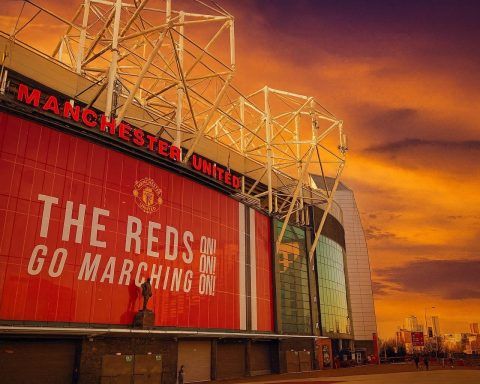

Manchester United’s New York–listed shares NYSE:MANU closed at $15.78 on 11 December 2025, up 2.5% on the day after a volatile session that saw the stock trade between $14.86 and $16.11 and leaves the club down about 10.6% over the past year.Investing.com That price values the club at roughly $2.7–2.8 billion, a significant premium to most football peers but below the levels seen during takeover speculation in 2023–24.
The move came as investors digested first‑quarter fiscal 2026 results, a deepening debt pile of around £1.29 billion, and management’s reaffirmed guidance – plus a surprisingly optimistic set of analyst price targets that still imply 40–50% upside from here.
Below is a full breakdown of what’s happening with MANU stock right now, and what it could mean for investors.
Share price snapshot: how MANU trades today
- Latest close (11 Dec 2025): $15.78, +2.53% on the day.
- Day’s range: $14.86–$16.11.
- 52‑week range: $12.05–$19.65.
- Market cap: about $2.73 billion with ~172.4 million shares outstanding.
- 1‑year performance: down ~10.6%.
- Valuation snapshot: negative trailing EPS (~‑£0.19 per share), P/E around ‑60x, EV/EBITDA roughly 14–15x and price/book just over 10x – metrics that reflect strong brand value but persistent losses and a thin equity cushion.
The stock is relatively low‑beta (≈0.6), meaning it tends to move less than the broader market, but day‑to‑day swings can still be sharp around results and ownership headlines.
Q1 FY26 results: operating turnaround, bottom‑line loss
Manchester United reported Q1 FY26 (three months to 30 September 2025) before the US market opened on 11 December.FT Markets The headline numbers:
- Revenue: £140.3m, down 2% from £143.1m a year earlier.
- Adjusted EBITDA: £26.9m, up 13.5% from £23.7m.
- Operating profit: £13.0m vs an operating loss of £6.9m in the prior‑year quarter.
- Net result: a £6.6m net loss, compared with a £1.4m profit a year earlier.
- Adjusted loss per share: 1.48p, worse than many data providers’ breakeven consensus.
Why is there a loss if operating profit is up?
The swing from profit to loss is almost entirely explained by finance costs and FX rather than the core business:
- Net finance swung from an £8.6m income to a £21.4m cost, mainly due to adverse foreign‑exchange movements on the club’s unhedged US‑dollar debt.
So on an operating basis, the quarter is clearly better; on a bottom‑line basis, it looks worse.
Segment breakdown: sponsorship drag, merch strength, no Europe
Revenue declined across all three segments:FT Markets+1
- Commercial: £84.2m (‑1.3% YoY)
- Sponsorship: £47.0m (‑9.3%), hurt by changes in the partner mix and the end of the Tezos training‑kit deal.
- Retail/merch/licensing: £37.2m (+11.0%), boosted by a fully ramped e‑commerce partnership with SCAYLE.
- Broadcasting: £29.9m (‑4.5%), reflecting the men’s team’s absence from European competition this season after last year’s Europa League run.
- Matchday: £26.2m (‑1.1%), with strong attendances offset by fewer high‑value European fixtures.
Costs, wages and headcount cuts
The Ratcliffe‑led “transformation plan” is very visible in the cost line:
- Total operating expenses fell 7.1% to £172.4m.
- Employee benefit expenses (wages) dropped 8.2% to £73.6m, pushing the wage‑to‑revenue ratio down to about 52.5% from 56%.
- Exceptional restructuring charges were nil this quarter, versus £8.6m last year, as the bulk of staff reductions were already booked.
These savings are driven by roughly 450–500 job cuts, the removal of staff perks (including free meals) and the termination of long‑standing roles such as Sir Alex Ferguson’s paid ambassador position.
Cash, borrowings and that £1.29bn debt figure
The Q1 balance sheet is where the alarms ring loudest:
- Non‑current USD debt: unchanged at $650m (about £481m at current FX).
- Revolving credit facility: drawn to £265m, up from £160m at 30 June 2025.
- Current borrowings (incl. interest): £268m vs £165.1m at year‑end.
- Total debt / borrowings and payables now sit around £1.29bn, a record high when transfer liabilities and other payables are included.
- Cash and cash equivalents: £80.5m, down sharply from £149.6m a year earlier.
Since much of the debt is US‑dollar denominated, swings in GBP/USD can materially distort reported finance costs and the net result – as Q1 just demonstrated.
How did the market react?
Coverage of the earnings versus expectations is mixed, depending on whose consensus you use:
- Investing.com highlighted a revenue miss versus a £141.05m consensus and adjusted loss per share worse than breakeven, noting shares fell about 4% in pre‑market trading.
- ChartMill, using different estimate data, framed the quarter as a beat on both revenue (£140.3m vs £137.7m) and EPS (adjusted loss 1.48p vs 6.12p expected), but still emphasised the net loss and higher debt.
- Benzinga focused on the wide dollar‑based revenue miss and the FX‑driven finance costs, pointing out that shares traded around $15.4 shortly after the open.
By the close, price action had flipped green, suggesting investors are weighing the improved operating performance and reiterated guidance against the higher leverage and loss.
Big picture: record FY2025 revenues, six straight annual losses
Zooming out, Q1 sits on top of a fiscal 2025 that was simultaneously a record revenue year and the sixth consecutive annual net loss.
From the FY2025 results (year to 30 June 2025):Yahoo Finance+4Business Wire+4Manchester United+4
- Total revenue: £666.5m, up 0.7% from £661.8m – a club record.
- Commercial revenue: £333.3m (+10%), powered by the first year of the Snapdragon front‑of‑shirt deal with Qualcomm and continued global sponsorship demand.
- Matchday revenue: £160.3m (+16.9%), helped by a Europa League run and robust hospitality sales.
- Broadcast revenue: £172.9m (‑22%), hurt by the absence of Champions League football and a campaign spent in the Europa League instead.
- Adjusted EBITDA: £182.8m (+23.8%).
- Net loss: £33.0m, sharply narrower than the £113.2m loss in FY2024 but still negative.
Since fiscal 2023, United has racked up roughly £175m of cumulative losses, yet the club insists it remains compliant with both Premier League Profitability and Sustainability Rules (PSR) and UEFA Financial Fair Play thanks to allowable adjustments and rising commercial income.
An Investing.com analysis piece titled “Manchester United Revenue Growth Masks Structural Losses in FY2025 Results”captured the core dilemma: high‑margin commercial and matchday revenues are surging, but operating and finance costs – particularly debt servicing – continue to eat those gains.Investing.com+1
Ratcliffe, INEOS and the ‘transformation’ era
Ownership and governance are central to the MANU story.
- In December 2023, United agreed a deal for Sir Jim Ratcliffe’s vehicle Trawlers / INEOS to acquire 25% of the club (via Class B shares from the Glazers and up to 25% of Class A shares), injecting $300m earmarked for infrastructure.
- By December 2024, an assignment and assumption agreement saw Trawlers transfer its shares to INEOS Limited; SEC filings confirm INEOS became the sole record and beneficial owner of those shares.
- Following a final instalment of investment, Ratcliffe’s effective stake rose to just under 29%, according to multiple reports, with the Glazer family retaining majority economic control but ceding football operations to the INEOS camp.
Under Ratcliffe, the club has:
- Hired ex‑City executive Omar Berrada as CEO and overhauled the senior football and commercial structure.
- Implemented sweeping cost‑cutting, including hundreds of redundancies and unpopular ticket price hikes, which Berrada argues have given United a “sustainably lower cost base.”The Guardian+2Reuters+2
- Green‑lit major infrastructure projects, including a redeveloped Carrington training complex (opened August 2025) and a proposal for a new £2bn, ~100,000‑seat stadium adjacent to Old Trafford.
These moves are intended to reset United’s cost structure and unlock new long‑term revenues – but they also tie the club more tightly to debt‑financed capital expenditure in the near term.
Commercial juggernaut, on‑field mid‑table
Financially, Manchester United remains one of world football’s commercial powerhouses:
- The club claims a global audience of around 1.1 billion fans and followers, monetised through sponsorships, retail and content.
- FY2025 saw record commercial and matchday income, aided by the Snapdragon shirt deal, a revamped e‑commerce model and strong hospitality demand.
- In August 2025, United announced a multi‑year global partnership with Coca‑Cola as its official soft‑drinks partner, adding another heavyweight brand to its roster.
On the pitch, though, the story is far less flattering:
- The men’s team finished 15th in the Premier League in 2024/25, their lowest top‑flight finish in over 50 years, though they did reach the Europa League final.
- As a result, there is no European football in 2025/26, directly weighing on Q1 broadcasting and matchday revenues.
- As of the Q1 release, the men’s team sits 6th in the Premier League, while the women’s team is 3rd in the WSLand has reached the league phase of the UEFA Women’s Champions League for the first time.
For stockholders, this means that commercial strength is fighting against sporting underperformance. Sponsorship and merchandise can carry the financials for a while, but lack of Champions League income caps upside and amplifies regulatory risk under PSR/FFP if spending is not carefully managed.
Street view: MANU price targets and rating consensus
Despite the noisy fundamentals, sell‑side analysts are, on average, bullish on the upside from here.
Traditional analyst targets
Different aggregators give slightly different numbers, but they cluster in the same ballpark:
- Investing.com: average analyst target around $22.43, implying about 42% upside vs $15.78.
- MarketBeat: two covering analysts with an average target of $23, roughly 45–46% above the current price, with an overall “Buy” skew.MarketBeat
- Seeking Alpha (sell‑side target page): average price target $22.42, about 45% upside.
- Yahoo Finance: lists a 12‑month target range with a low near $14.7, an average around $22.5 and a high just above $27, versus a mid‑teens spot price.
- StockAnalysis / Public.com / Alphaspread: variously cite single or small numbers of analysts with target prices around $23–$23.3, often highlighting ≈50% potential upside.
Jefferies, one of the more vocal banks on the name, reiterated a Buy rating with a $26 target earlier in 2025, underscoring the belief that restructuring and infrastructure investments can unlock value if sporting results normalise.
Recent qualitative takes
Several fresh pieces of analysis dropped alongside or just before the Q1 numbers:
- A Seeking Alpha article titled “Manchester United: An Institution Steeped In Legacy, A Business Stuck Mid‑Table”highlights the mismatch between global brand strength and middling financial returns, noting the sponsorship decline and lack of UEFA income as key vulnerabilities.Seeking Alpha
- ChartMill describes Q1 as a “mixed” quarter – beating some estimates, but with revenue down, cash depleted and debt higher – and frames the stock as dependent on execution of the transformation plan.ChartMill
- Investing.com’s FY2025 deep‑dive stresses that record revenues are being offset by structural costs, arguing that the investment case hinges on whether United can translate commercial dominance into sustainable profitability.
There are also more speculative AI‑driven forecasts that are far more cautious in the near term:
- Intellectia.ai models suggest a ~20% downside over the next month, based purely on pattern‑based signals rather than fundamentals.
- StockScan’s 30‑day projection sits around $12.15, implying roughly 23% downside from current levels.
These short‑term quantitative views clash with longer‑term fundamental targets, underlining how sentiment around MANU can swing sharply depending on the time horizon.
Guidance and earnings outlook
Management has reiterated full‑year guidance originally set with the FY2025 results and reaffirmed at Q1:Benzinga+3Business Wire+3FT Markets+3
- FY2026 revenue: £640–660m, slightly below FY2025’s £666.5m due to the lack of European football.
- Adjusted EBITDA: £180–200m, broadly in line with or slightly below FY2025’s £182.8m but on a leaner cost base.
Some analysts see net income remaining negative in 2026 but turning positive in 2027 as cost savings and higher‑margin commercial streams compound – though these forecasts are inherently uncertain and heavily dependent on on‑field performance and progress on stadium plans.
Key risks for MANU shareholders
For anyone considering or holding MANU, the main risk factors look something like this:
- Leverage and interest/FX risk
- The combination of $650m term debt and a heavily used revolving facility leaves the club sensitive to rates and currency swings, as Q1’s finance cost shock made clear.
- Regulatory constraints (PSR & FFP)
- With about £175m of cumulative losses since 2023, United is close enough to the Premier League’s PSR loss limits that missteps in transfer spending or wage growth could attract scrutiny, even if the club currently insists on compliance.
- On‑field performance
- Continued failure to qualify for the Champions League (or even Europa League) would depress broadcast and matchday income and make it harder to justify premium sponsorship pricing.
- Execution risk around the new stadium
- A £2bn stadium could transform matchday revenues, but it also concentrates risk in a single massive project that likely requires further financing or creative funding structures.
- Governance and ownership uncertainty
- While Ratcliffe/INEOS directs football operations, the Glazers still control the majority of voting power, and any future changes – a full sale, buyout, or further equity issuance – could materially affect minority shareholders.
Potential upside drivers
On the flip side, the bull case around MANU stock hinges on several catalysts:
- Infrastructure‑driven growth
- A modernised training complex and a potential new stadium could structurally lift commercial and matchday income over the next decade, particularly if exploited as multi‑use venues.
- Commercial expansion
- Deals like Snapdragon and Coca‑Cola, plus a future replacement for the terminated Tezos training‑kit deal, suggest there is still room to increase sponsorship rates globally if on‑field performance stabilises.
- Cost‑base reset
- The transformation plan has already slashed operating losses and wage ratios; if that continues without undermining competitiveness, more of every new pound of revenue will drop through to EBITDA and cashflow.
- Re‑entry into European competitions
- A return to the Champions League or even a deep Europa League/Champions League run would meaningfully boost broadcasting and matchday income and usually supports sponsorship renegotiations.
If these levers work, then current valuation – a mid‑teens share price vs analyst targets in the low‑ to mid‑20s – could indeed prove attractive.
What to watch next
For investors tracking MANU over the coming quarters, some signposts to monitor:
- On‑field form under the new football structure, particularly whether the men’s team can secure a European place for 2026/27.
- Progress (and financing details) on the stadium decision – refurbishment vs new build, funding mix and any impact on leverage.
- New commercial deals, especially a replacement training‑kit sponsor and any extensions with existing global partners.
- Debt trajectory and cash generation, including how much of EBITDA is swallowed by interest, FX and capital expenditure.
- Regulatory commentary from the Premier League or UEFA around PSR/FFP, especially as other clubs face sanctions, which could set benchmarks for enforcement.
Bottom line
Manchester United’s latest results show a club that is operationally improving but financially stretched: costs are coming down, commercial and matchday engines remain powerful, but debt and FX volatility are keeping net income in the red.
For MANU shareholders, that translates into a high‑beta narrative stock disguised as a low‑beta one. Analyst targets in the low‑ to mid‑20s highlight the upside if the INEOS‑era transformation and stadium plans succeed – but the path there runs through hostile territory: PSR rules, rising rates, and the unforgiving league table.
As always, none of this is investment advice. Anyone considering MANU should weigh these factors against their own risk tolerance, time horizon and portfolio needs, and, ideally, consult a qualified financial adviser before making trading decisions.