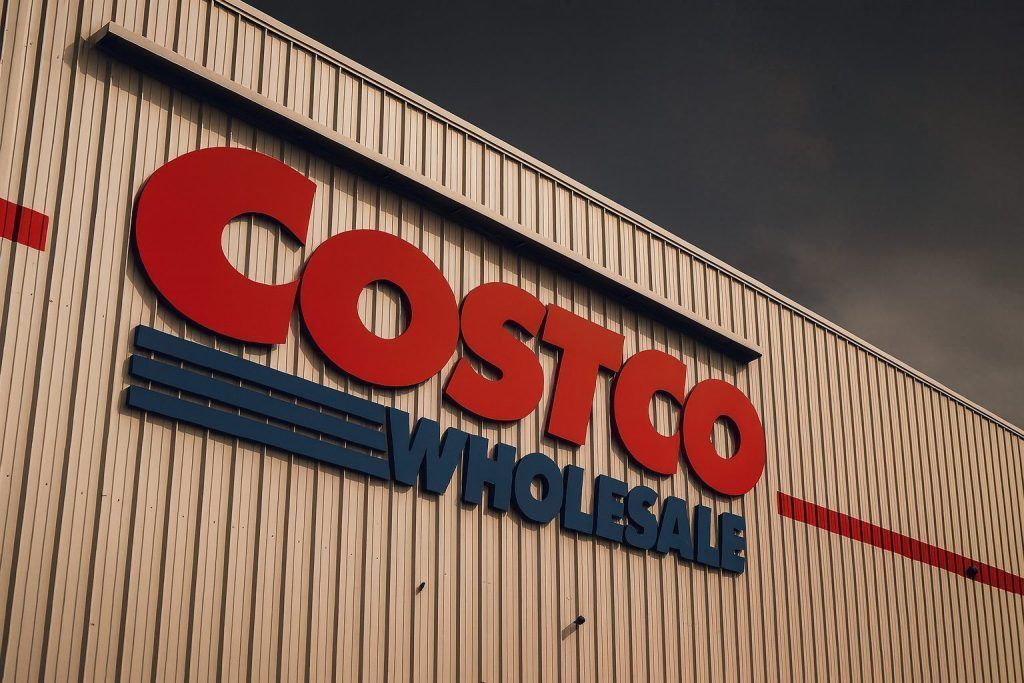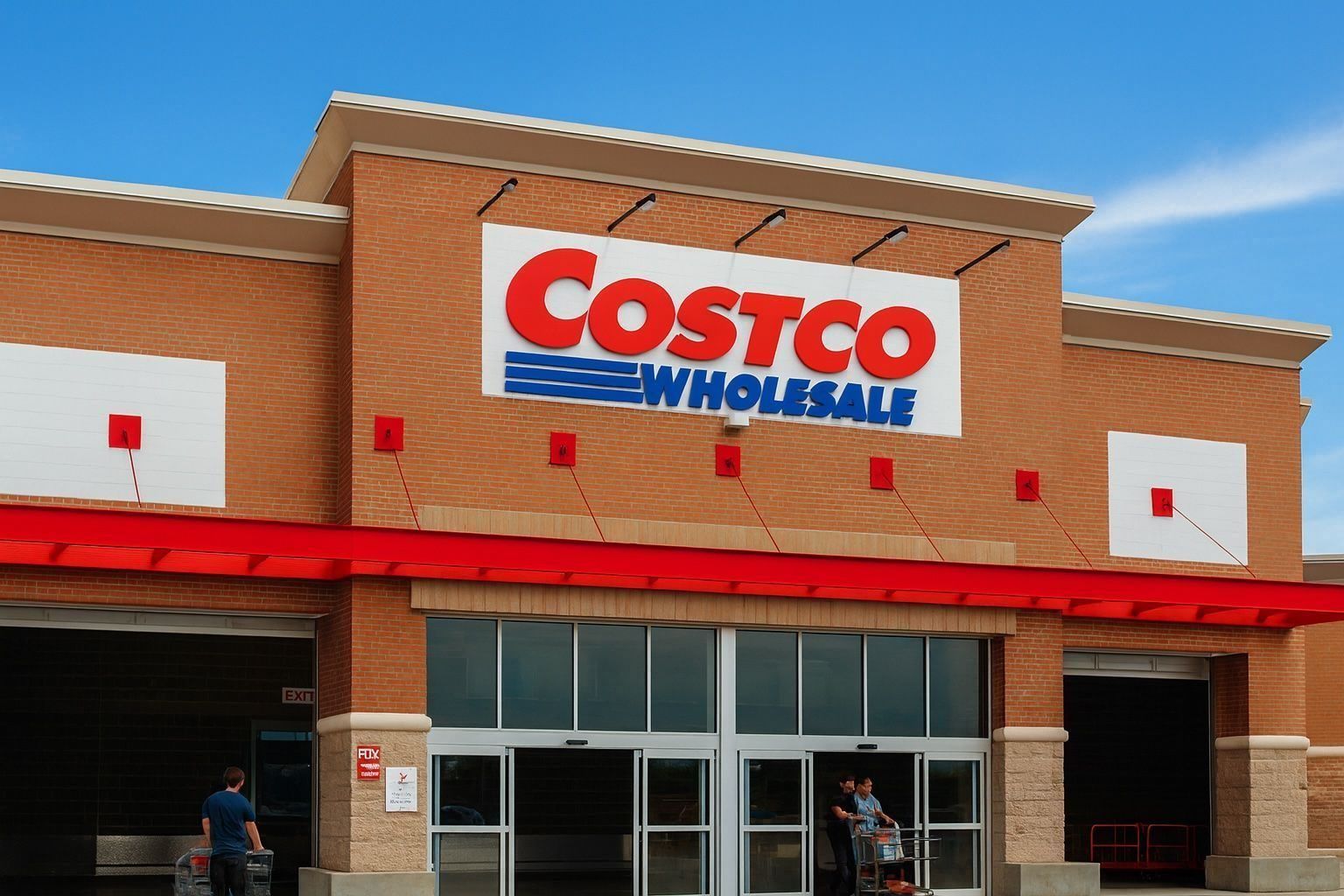

Costco Wholesale reported fiscal first‑quarter 2026 results after the closing bell on Thursday, December 11, delivering another earnings and revenue beat powered by resilient traffic, strong membership income and accelerating digital sales. Diluted EPS came in at $4.50 on $67.3 billion in total revenue, ahead of consensus estimates around $4.27 per share and $67.1 billion in revenue.
In regular trading, COST shares closed around $884.48, up roughly 1.1% on the day, but early after‑hours action was mixed, with the stock slipping modestly at times as investors digested the details. For 2025, Costco shares remain down about 2–3% year‑to‑date, even as the S&P 500 and Dow Jones closed at fresh record highs today.
Pre‑earnings buzz centered on the odds of another special dividend. While Costco’s cash position and history of occasional large special payouts kept hopes alive, today’s earnings release did not include a new special dividend announcement, in line with the cautious expectations flagged in recent coverage.
Key takeaways from Costco earnings and COST stock today
- Clean beat on earnings and revenue:
Q1 FY2026 (12 weeks ended Nov. 23) delivered net sales of $65.98 billion (+8.2% year over year) and total revenue of $67.31 billion, with net income of $2.0 billion and diluted EPS of $4.50. That’s comfortably above consensus revenue near $67.1 billion and EPS around $4.27–$4.28. - Comparable sales and digital outperformed:
Company‑wide comparable sales increased 6.4%, with U.S. comps up 5.9%, Canada 6.5% (9.0% adjusted), and Other International 8.8%. Newly highlighted digitally enabled sales jumped 20.5%, far ahead of mid‑teens growth expectations. - Membership machine still powerful – but renewal rates are a watch‑item:
Membership fee revenue rose to $1.329 billion, up about 14% year over year, helped by fee increases and growth in paid and executive members. Paid memberships grew about 6.3%, executive members around 9.3%, though the global renewal rate ticked down to roughly 89.8%, from about 90.2% last quarter, largely due to a mix shift toward online sign‑ups, which renew slightly less often. - Stock reaction: modestly higher, valuation still rich:
COST closed up about 1.1% near $884, after heavy pre‑earnings trading, but after‑hours moves have been muted to slightly negative despite the beat. The stock trades at roughly 48–49x trailing earnings and a forward multiple in the low‑40s, well above the broader market. - Wall Street still sees upside despite 2025 underperformance:
Across major data providers, 12‑month price targets cluster around $1,025–$1,090, implying roughly 17–23% upside from current levels. The analyst consensus rating ranges from “Moderate Buy” to “Buy,” with targets spanning roughly $900 to $1,220. Ticker Nerd+5MarketBeat+5MarketBeat+5 - Tariffs and special dividend odds remain key 2026 storylines:
Analysts are laser‑focused on Costco’s participation in a landmark Supreme Court case over Trump‑era tariffs, which could eventually unlock a significant refund of duties and potentially pave the way for another large special dividend—though none was announced today.
Q1 2026 earnings: another strong quarter for the Costco model
Costco’s Q1 FY2026 numbers reinforce the strength of its membership‑warehouse model amid a tricky consumer backdrop.
Headline numbers
- Net sales: $65.98 billion, up 8.2% vs. $60.99 billion a year ago
- Total revenue (including membership fees): $67.31 billion vs. $62.15 billion
- Net income: $2.001 billion vs. $1.798 billion
- Diluted EPS: $4.50 vs. $4.04 last year MarketScreener
On the top line, Costco slightly topped Wall Street’s revenue expectations around $67.12–$67.14 billion, driven by resilient demand across income tiers as value‑conscious shoppers seek savings on both staples and discretionary items.
Comparable‑sales performance
- Total company comps: +6.4% (reported and ex‑gas/ex‑FX)
- U.S.: +5.9%
- Canada (adjusted): +9.0%
- Other International: +8.8%
- Digitally enabled sales: +20.5% MarketScreener+2Quiver Quantitative+2
Those comp figures came in ahead of the ~5.5–6% range many analysts were modeling, and above the company’s long‑term average, a positive sign heading into the holiday season.
Profitability and margins
Costco’s operating income rose to $2.463 billion from $2.196 billion, despite cost pressures tied to wages and tariffs.
Analysts note that Costco’s ability to expand operating income while holding firm on its “value first” pricing underlines its pricing power and cost discipline, especially in categories like fresh food and sundries where spoilage and logistics can easily erode margins. 24/7 Wall St.+2AInvest+2
COST stock today: higher on the day, but still behind the market
On the equity side, Costco’s price action reflects a classic “great company, high expectations” dynamic.
- Regular session (Dec. 11): COST finished around $884.48, up roughly 1.1% as investors positioned into the print.
- After hours: Multiple reports put the immediate post‑earnings move in a narrow band from slightly positive to about 1% lower, suggesting that the beat was largely priced in.
- Year to date: The stock is down roughly 2–3% in 2025, even as the Dow and S&P 500 hit new record highs and many blue‑chip names have rallied sharply.
Recent downdrafts were driven in part by concerns over slowing U.S. sales trends and the stock’s sharp run‑up over 2023–2024. MarketWatch recently highlighted that Costco’s shares slipped into negative territory for the year as comps moderated and store traffic growth cooled, especially compared with Walmart and BJ’s.
Even after this pullback, valuation remains elevated:
- Trailing P/E ~48–49x, P/E/G above 6.0
- Dividend yield around 0.6%, based on a $5.20 annualized regular dividend
- Balance sheet remains conservative with a debt‑to‑equity ratio near 0.2 MarketBeat+1
That rich multiple helps explain why a strong quarter produced only a modest stock move: Costco already trades as though it will keep executing almost flawlessly.
Membership engine: strong growth, subtle renewal pressure
Membership economics are at the heart of the Costco story, and today’s numbers underline both the strength and the risks there.
What’s going right
- Membership fee revenue jumped to $1.329 billion, up roughly 14% year over year, well ahead of the ~10–11% growth many models used after the company’s recent fee hike.
- 24/7 Wall St.’s live coverage notes that paid memberships grew 6.3% and executive memberships 9.3%, reinforcing that Costco continues to convert shoppers into high‑value, higher‑fee tiers.
Those fees are Costco’s highest‑margin revenue stream, and the acceleration is a key support for its premium valuation.
Where investors are nervous
Several analyses today, including Barron’s and AInvest, point to a small but notable dip in renewal rates, from about 90.2% to 89.8% quarter‑over‑quarter. Management attributes this to a mix shift toward online sign‑ups, which historically renew at slightly lower rates.
UBS and other brokers have flagged this as one of the steepest quarterly declines in renewal rates in years, even if the absolute level remains above 89–90%, which is still exceptionally high by retail standards.
For long‑term Costco bulls, the key questions are:
- Does the renewal rate stabilize as online cohorts mature and auto‑renew adoption increases?
- Can Costco keep layering on fee increases every few years without eroding member loyalty?
So far, analysts broadly expect management to reiterate confidence that renewal rates will settle back into the familiar >90% zone, but this metric has clearly moved from “boring” to “must watch” heading into 2026. 24/7 Wall St.+1
Digital momentum and international strength
Alongside membership, Costco’s omnichannel build‑out was a standout theme in today’s reports.
- Digitally enabled sales grew 20.5%, an acceleration from the 13.6% growth cited for e‑commerce in the prior quarter.
- This metric now includes third‑party delivery platforms (Instacart, Uber Eats, DoorDash) alongside Costco’s own logistics, giving a more complete picture of how members shop both online and offline.
Internationally, Canada and Other International segments again outpaced the U.S.:
- Adjusted Canada comps of about 9%
- Other International comps of 8.8% MarketScreener+2Quiver Quantitative+2
This supports the thesis that Costco’s format still has plenty of room to run abroad, particularly as the company plans roughly 35 new warehouse openings in FY2026, up from 27 in FY2025.
Tariffs, special dividends and Costco’s cash puzzle
One of the most intriguing angles in today’s coverage has little to do with Q1’s numbers and everything to do with U.S. trade policy and the Supreme Court.
Costco is among the importers challenging Trump‑era tariffs imposed under the International Emergency Economic Powers Act (IEEPA). AInvest’s pre‑earnings analysis notes: AInvest+1
- U.S. importers overall have paid nearly $90 billion under the disputed tariff regime.
- Costco sources roughly one‑third of its U.S. products from abroad, with China accounting for about 8% of U.S. sales.
- Management has stressed that it absorbed much of the tariff impact to preserve member value instead of fully passing costs through to prices.
If the Supreme Court ultimately curbs or overturns that tariff framework and Costco receives a sizable refund, analysts see several potential outcomes:
- Structural margin lift, as tariff headwinds ease.
- More flexibility to fund another large special dividend (Costco’s last was a $15 per‑share payment in early 2024).
- Greater scope for accelerated CapEx and warehouse expansion without sacrificing shareholder returns.
However, with the legal process still in flux, several commentators argue that Costco is likely to stay conservative on special dividends until it has more clarity—which fits with the absence of a special payout in today’s release, despite pre‑earnings speculation.
How Wall Street is valuing Costco after today’s earnings
Across Wall Street research and data platforms, the core message is consistent: great business, premium price, still room for upside if execution stays flawless.
Rating and target consensus
- MarketBeat: “Moderate Buy” with an average target around $1,023, implying about 16–17% upside from the mid‑$880s. MarketBeat+1
- StockAnalysis: 23 analysts, “Buy” consensus with an average target of $1,071 (roughly 21% upside). StockAnalysis
- TipRanks and other platforms: average targets in the $1,050–$1,100 band, with highs around $1,218 and lows clustered just under $900.
Broker‑level highlights referenced in today’s coverage include:
- Telsey Advisory Group: Outperform, $1,100 target.
- DA Davidson: Neutral, $1,000 target.
- Gordon Haskett: Buy with a target trimmed to $1,000 from $1,100.
Despite recent share weakness, most firms emphasize Costco’s defensive growth profile, strong cash generation and membership‑driven visibility. But they also warn that with the stock still trading at more than double the market’s P/E, there is little room for error on comps, margins or membership trends.
What to watch next if you own (or are eyeing) COST
Today’s numbers answered some questions and sharpened others. Over the coming months, investors will be watching:
- Q1 earnings call commentary
- How management frames the renewal‑rate dip and whether it expects stabilization.
- Any updates on the tariff lawsuit and the potential timing or magnitude of refunds.
- Monthly sales and December results (Jan. 7, 2026)
Costco reports monthly sales, giving an early look at peak holiday trends. Investors will focus on whether Q1’s 6.4% comps and 20.5% digital growth can be sustained into Q2. - CapEx and store expansion pace
The plan for roughly 35 new warehouses in FY2026 suggests management still sees robust long‑term demand. How that CapEx profile interacts with free cash flow and potential capital returns will be a central theme on future calls. - Relative performance vs. Walmart, Target and dollar stores
With consumers trading down and looking for value, Costco is competing in a crowded “everyday low price” landscape. Recent quarters have seen Walmart and dollar stores also benefit from this trend. Reuters+2MarketWatch+2 - Macro backdrop and rate environment
Today’s Fed‑driven market rally shows investors rotating into value‑oriented blue chips while tech remains volatile. If 2026 brings slower growth or more rate cuts than expected, Costco’s steady cash flows and membership revenue could look even more attractive—provided the valuation doesn’t expand too far ahead of fundamentals again.
Costco’s Q1 FY2026 report largely validated the bull case: resilient comps, powerful membership fees, strong digital growth, and solid margins. The main challenge for shareholders is not whether the business is working—it clearly is—but whether today’s price already reflects years of future excellence.
For now, Wall Street’s view seems to be: COST is still a buyable compounder, but only if you can stomach a premium multiple and live with the occasional sideways year. This quarter’s beat hasn’t changed that story—it has simply bought Costco more time to prove it can keep compounding into 2026 and beyond.
Related articles: NASDAQ:COST