Updated: Friday, December 12, 2025 (after-hours)
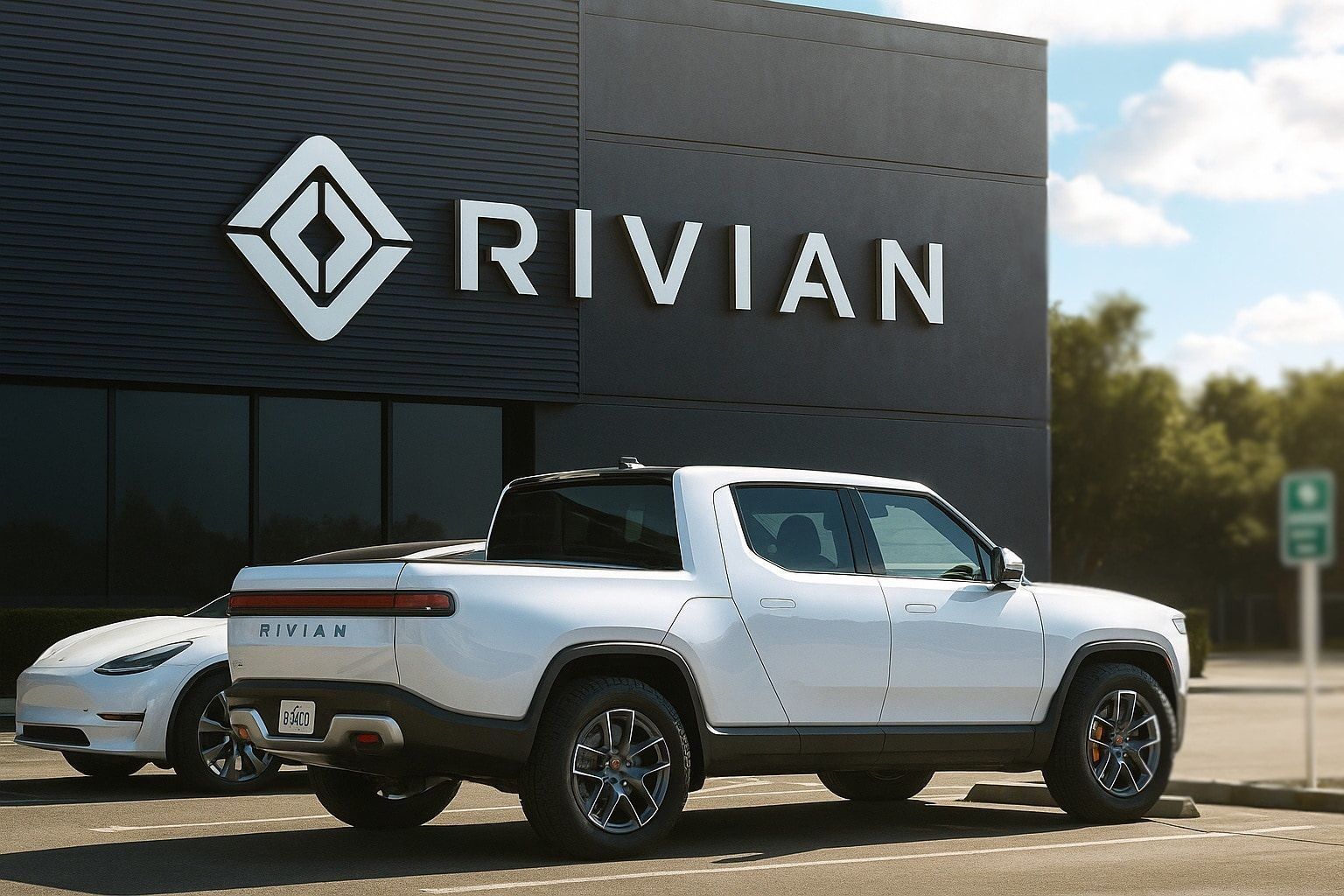
Rivian Automotive, Inc. (NASDAQ: RIVN) closed out Friday, Dec. 12, 2025 with a sharp rebound that flipped the narrative from Thursday’s selloff into a fresh “AI + autonomy” momentum trade—powered by upbeat analyst reactions to Rivian’s custom self-driving chip, a coming Autonomy+ subscription, and a broader roadmap to more advanced driver assistance.
RIVN finished the regular session at $18.42 (up roughly 12%) and traded slightly higher in early extended hours at about $18.45 as of 5:01 p.m. ET.
Below is everything investors and traders should know from today’s (Dec. 12) news cycle, what moved the stock after the close, and what matters heading into the next U.S. market session.
RIVN price action recap: close, after-hours, and the intraday surge
Rivian’s stock action on Dec. 12 was defined by aggressive upside volatility:
- Regular-session close:$18.42
- Early after-hours (extended trading): around $18.45 (+0.19%) as of 5:01 p.m. ET
- Intraday range: roughly $16.48 to $19.58 with heavy volume (~103M shares)
That intraday spike matters because it captures what the market was really doing: re-pricing Rivian on software, autonomy, and long-term margin potential, not just EV unit sales. Reuters reported the shares were up as much as ~18% and touched $19.37, described as the highest in nearly two years.
Why Rivian ripped higher on Dec. 12: Wall Street “cheers” the autonomy pivot
The big driver of Friday’s rally was a wave of analyst commentary after Rivian’s inaugural Autonomy & AI Day (held Thursday in Palo Alto). Rivian’s message: the company wants tighter control of the autonomy stack—hardware + software + data loop—and it intends to monetize that stack over time.
Reuters summed up the day’s mood clearly: analysts issued bullish commentary around Rivian’s custom self-driving chip and AI integration, reversing the stock’s Thursday drop.
A parallel consumer-tech angle also emerged: The Washington Post framed Rivian’s plan as an “ambitious” attempt to catch up in autonomous driving, rolling out enhanced driver assistance to existing vehicles in coming weeks, then pushing harder through 2026 with new chips, sensors, and LiDAR aimed at eventually reaching Level 4 autonomy in specific conditions. The Washington Post
The tech headlines that mattered today (Dec. 12)
1) Rivian’s in-house autonomy chip: “RAP1” and the Gen 3 compute platform
Rivian unveiled the Rivian Autonomy Processor (RAP1)—a custom 5nm processor designed to integrate processing and memory into a single multi-chip module. In Rivian’s third-gen autonomy computer (ACM3), the company cited specs including 1600 sparse INT8 TOPS and the ability to process 5 billion pixels per second, plus an interconnect it calls RivLink.
Why investors cared: chip ownership is often seen as a route to cost efficiency, iteration speed, and potentially future licensing—the same logic that has historically helped high-margin platform businesses.
Reuters also reported that Rivian’s custom chip will be produced by TSMC, reinforcing that this is meant to be a serious, scaled effort rather than a science project.
2) LiDAR is coming—but timing is nuanced
Rivian’s press-release details add an important timeline nuance: while Rivian’s R2 is expected to roll out in the first half of 2026, the company said its Gen 3 autonomy hardware (including ACM3 and LiDAR) is undergoing validation and is expected to ship on R2 models starting at the end of 2026.
Car and Driver offered a consumer-facing version of the same idea: the R2 Launch Edition may not include the new LiDAR hardware, while later versions would be equipped for more advanced autonomy via software updates.
3) Universal Hands-Free expands coverage dramatically
A key near-term catalyst is Universal Hands-Free driver assistance for Rivian’s Gen 2 R1 vehicles. Rivian described it as operating on more than 3.5 million miles of roads across the U.S. and Canada.
This “coverage expansion” became a talking point in analyst notes. Investopedia reported Barclays analysts said this move would bring Rivian closer to Tesla’s base Autopilot coverage footprint, while still acknowledging technical hurdles. Investopedia
4) Autonomy+ subscription pricing: $49.99/mo or $2,500 one-time
Rivian is also preparing to monetize advanced driver assistance through Autonomy+, which Rivian priced at $49.99/month or $2,500 one-time, with “continuously expanding capabilities.” Business Wire+1
Rivian’s own Autonomy page currently lists Autonomy+ availability in February 2026 and notes that deliveries include a 60-day trial, alongside feature rollouts and expansions planned through 2026 (e.g., auto parking, on-ramp to off-ramp).
5) Rivian Assistant and “Rivian Unified Intelligence”
Beyond autonomy, Rivian also described an AI architecture called Rivian Unified Intelligence (RUI) and a voice interface, Rivian Assistant, targeted for early 2026 on Gen 1 and Gen 2 R1 vehicles. Rivian said the first third-party integration named is Google Calendar.
This matters for valuation because “in-vehicle AI” and third-party integrations are often positioned as part of a higher-margin software layer—something Rivian bulls argue can diversify away from hardware-only economics.
The analyst and forecast round-up from Dec. 12: upgrades, targets, and what they imply
Friday’s stock move was amplified by high-profile analyst commentary:
The bull case (what powered the rally)
- Needham raised its price target to $23 (from $14) and kept a Buy rating, citing confidence in Rivian’s “software-defined vehicle” positioning. Reuters+1
- BNP Paribas analyst James Picariello said the event exceeded expectations and reinforced a view that Rivian could become a top North American EV player, even “leapfrogging” Tesla in certain AI-integration areas (per Reuters). Reuters
The “yes, but…” case (why some targets still sit below the current price)
Even after the rally, not all firms moved into outright bullish territory:
- Goldman Sachs raised its price target to $16 while keeping a Neutral stance (per Benzinga’s analyst ratings page).
- A TipRanks write-up highlighted RBC Capital concerns that Rivian’s new product offerings don’t fully address liquidity and the profitability profile of upcoming models, while RBC reiterated a $14 target.
What the broad “consensus” says right now
If you’re looking for a quick reality check after a big one-day move: consensus targets still lag the spot price.
- MarketBeat’s aggregation shows a Hold consensus rating and an average 12‑month price target around $14.86, implying downside from ~$18.42.
- TipRanks’ summary (as referenced in its coverage) similarly points to a Hold consensus and an average target in the mid‑$14s.
Translation: Friday’s move looks like a sentiment + narrative repricing, while the broader Street still wants proof on execution, adoption/take-rate, and cash profile.
Options market pulse: traders positioned aggressively into the move
One more factor that can matter after the bell—especially for Monday follow-through—is derivatives positioning.
TipRanks (via TheFly) reported bullish option flow with about 163,031 calls traded (~6x expected), implied volatility rising to roughly 70%, and a put/call ratio around 0.33. The most active strikes referenced were weekly $18 and $20 calls expiring 12/12.
That type of flow can amplify upside (and downside) moves as market makers hedge—especially around big resistance levels near recent highs.
What to know before “market open” on Dec. 13, 2025
A key calendar note: Saturday, Dec. 13, 2025 is not a U.S. stock market session (RIVN trades on Nasdaq). The next regular U.S. open after Friday is Monday, Dec. 15, 2025.
So the practical “before the open” checklist is really a weekend risk-and-catalyst list for Monday.
1) Watch for follow-on analyst notes (and target revisions)
Friday’s tape suggests that incremental sell-side commentary can still move the stock. If additional firms move targets or ratings over the weekend / early Monday, it could drive premarket action—especially given how widely targets currently diverge (mid‑teens consensus vs. $23 bull cases).
2) Focus on what’s near-term vs. “end of 2026”
The market can get sloppy about timelines in autonomy. The most important clarifications from today’s reporting:
- R2 launch window: expected first half of 2026 (Reuters)
- Gen 3 autonomy hardware shipping on R2 models: expected end of 2026 (Business Wire press release)
- Autonomy+ availability: Rivian’s site lists February 2026
If the market decides it got ahead of itself on timing, you can see fast profit-taking—especially after a 12% day.
3) The “monetization test”: take-rate and pricing power
Autonomy+ is priced well below Tesla’s headline FSD price, and that’s part of the story. But for financial modeling, the big unknown is how many owners will actually pay $50/month or $2,500 upfront—and how quickly the feature set improves.
4) The safety/regulatory narrative can cut both ways
Rivian (and media coverage) has emphasized that current systems require driver oversight, with bigger autonomy goals ahead. The Washington Post also noted a limitation Rivian discloses on its website: the system may not, for example, stop for traffic lights or stop signs.
Any public scrutiny, regulatory commentary, or competitor news in autonomy can influence sentiment quickly—particularly when a stock is being bid up on autonomy expectations.
5) Mark the next known “scheduled” catalyst: earnings timing
TipRanks/TheFly flagged Rivian earnings as expected around Feb. 19. TipRanks
Whether that date holds or shifts, the market will likely spend the coming weeks debating whether autonomy/software progress can change the company’s margin trajectory before (or at) the next earnings update.
Bottom line: what Friday’s after-hours action is signaling
As of early extended trading on Dec. 12, the market’s message looks like this:
- The Street likes the autonomy pivot, especially the vertical integration story (custom silicon + software stack).
- RIVN is being traded as an “AI/autonomy optionality” stock again, not just an EV manufacturer. Investopedia+1
- But consensus targets still imply downside from Friday’s close, meaning the rally still needs follow-through on execution, timing clarity, and monetization.