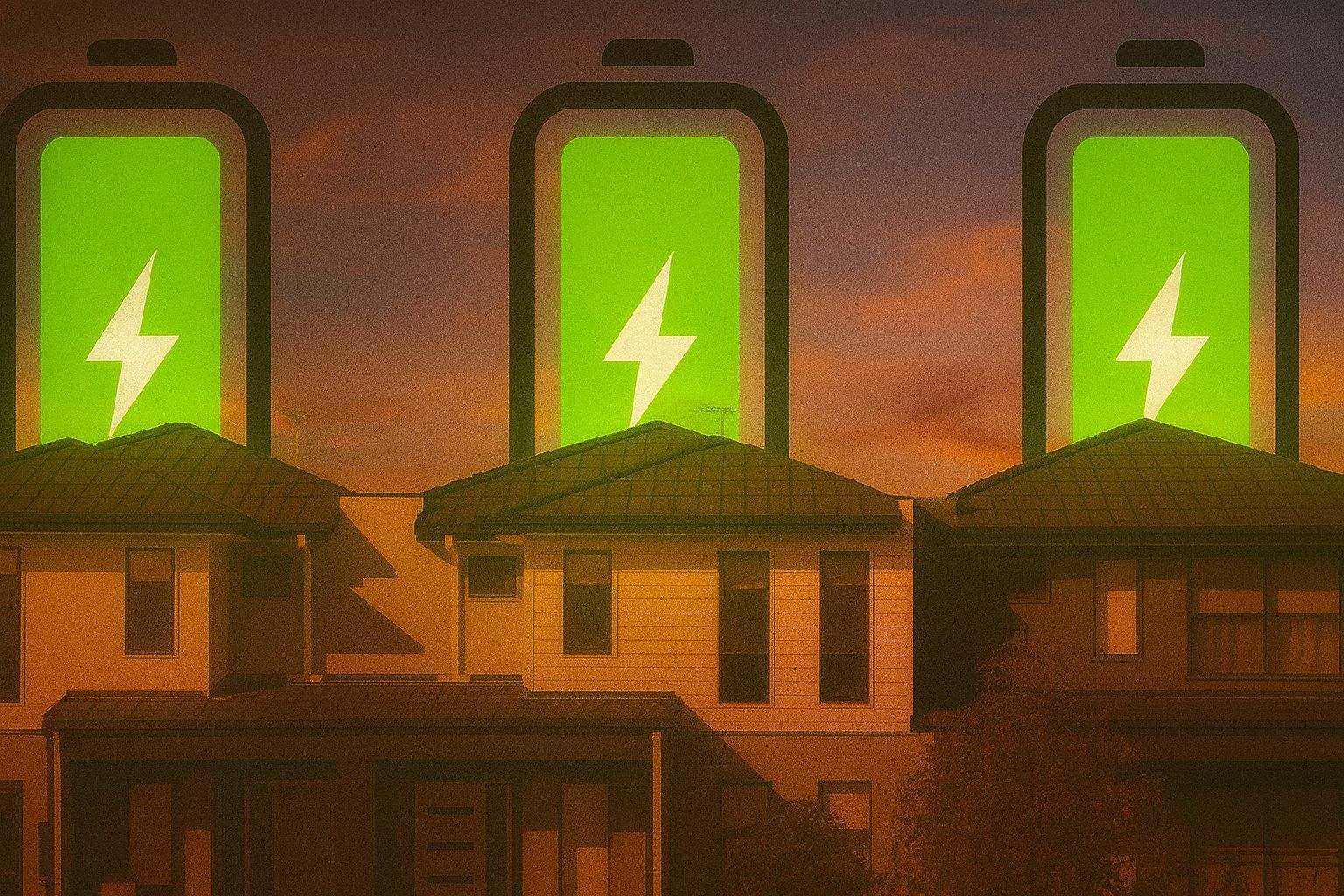

(SEO): Australia will boost its Cheaper Home Batteries Program by about $5 billion to an estimated $7.2 billion after runaway demand, introducing tiered rebates from May 2026.
SYDNEY — December 13, 2025 — Australia’s red‑hot home battery boom is forcing a major rethink of a flagship federal subsidy, with the Albanese government announcing a multi‑billion‑dollar funding top‑up and a redesigned discount structure aimed at slowing a rush toward oversized systems.
Federal Climate Change and Energy Minister Chris Bowen said on Saturday that the upcoming mid-year budget update (due next week) will include about $5 billion in additional funding for the Cheaper Home Batteries Program , expanding the scheme from its initial $2.3 billion estimate to about $7.2 billion over four years .
The government is also tightening the way the discount is calculated—without scrapping the scheme—after surging take-up sparked warnings the original funding pool could be drained far earlier than planned. The changes are scheduled to apply from 1 May 2026 , subject to regulations being made.
What the government announced on December 13, 2025
Saturday’s announcement has two headline elements:
- A major funding expansion: lifting the program’s forward budget to an estimated $7.2 billion over the next four years , after the government said uptake is far stronger than forecast.
- A redesigned subsidy model from 1 May 2026: introducing tiered support to reduce incentives for very large batteries while keeping support for smaller, “right‑sized” systems.Minister for the Environment+ 2DCCEEW+ 2
The government says the expansion is expected to help more than 2 million Australians install a battery by 2030 and deliver around 40 gigawatt-hours of additional behind‑the‑meter storage capacity—more than doubling the original election estimate.
Why costs “spiralled” and why the subsidy is being redesigned
The Cheaper Home Batteries Program was designed to knock roughly 30% off the upfront cost of eligible battery installations—often framed as about $4,000 off a typical household system.
But industry analysts and consumer advocates say a key design feature created a predictable pressure point: the subsidy is calculated per kilowatt-hour of usable storage , which can encourage retailers and customers to chase bigger systems to maximize the rebate.
In the ABC’s reporting, SolarQuotes founder Finn Peacock argued this “per kWh, not per battery” approach rewarded upsizing: a 10 kWh system might attract around $4,000 in subsidy, while a 50 kWh system could pull in about $18,000 —even if the household’s actual usage doesn’t justify that scale.ABC+ 1
That mismatch matters because the Australian Energy Regulator’s typical household usage is cited in the same reporting at 15–20 kWh per day , while critics say many homes use closer to 10 kWh overnight —meaning giant batteries may be under-utilized.
Minister Bowen rejected claims of a “design flaw,” calling the blowout a symptom of success and saying the government is “managing strength” by making the program “fair and sustainable.”ABC+ 1
The new tiered discount from 1 May 2026
From 1 May 2026 , the program will shift to a tiered approach so the rate of support per kWh drops as system size grows. The goal, according to the government, is to keep the scheme open to more households by discouraging “maximum-size” purchases that consume a large share of the subsidy pool.Minister for the Environment+ 2DCCEEW+ 2
Here’s how the tiering is set out in official program guidance and echoed by AAP coverage:
- Small batteries up to 14 kWh: eligible for the full support rate per kWh.
- Medium batteries 14–28 kWh: capacity above 14 kWh supported at 60% of the rate.
- Large batteries 28–50 kWh: capacity above 28 kWh supported at 15% of the rate (up to 50 kWh).
The government also states the program will continue to support installations up to 100 kWh , with the first 50 kWh of a system eligible for support—while the tiering changes how generous that support is as size increases.
The other big change: the subsidy will step down more often
The discount is delivered through Small‑scale Technology Certificates (STCs) under the Small‑scale Renewable Energy Scheme (SRES) —the same mechanism that has supported rooftop solar for years.
From May 2026, the government plans to adjust the STC Factor (the number of certificates created per kWh of usable battery capacity) so that it:
- declines every six months , not just annually, and
- declines at a higher rate .
Official guidance outlines the proposed step‑down schedule for the STC Factor after the changes begin, including:
- May–Dec 2026: 6.8 (proposed)
- Jan–Jun 2027: 5.7
- Jul–Dec 2027: 5.2
- Jan–Jun 2028: 4.6
- Jul–Dec 2028: 4.1
- Jan–Jun 2029: 3.6
- Jul–Dec 2029: 3.1
- Jan–Jun 2030: 2.6
- Jul–Dec 2030: 2.1DCCEEW+ 1
Bottom line: even with the extra funding, households and installers should expect the rebate to become less generous over time—especially for larger systems—while government aims to keep support flowing through to 2030.
How the Cheaper Home Batteries discount works right now
For consumers, the scheme is designed to feel like an “instant discount” rather than a complex grant application.
Official guidance says most households do not apply directly to government agencies. Instead, you typically access the benefit through an accredited installer/retailer , who may offer an upfront price reduction or a rebate after installation.
There is also an option to claim STCs yourself via the REC Registry (instead of assigning them to an installer/retailer), but that route is more hands‑on and may not suit most households.
Eligibility settings described in government program information include:
- batteries connected to new or existing rooftop solar
- typical eligible battery sizes 5 kWh to 100 kWh (with support rules applied to the first 50 kWh)
- products and installations meeting program and electrical safety requirements, including approved product lists and accredited installers.
The numbers behind the surge: 155,000 installs in under six months
The scale of uptake is the story behind the policy shift.
The minister’s office said the program has helped more than 155,000 households and small businesses install a battery in less than six months, with around three-quarters of installations in suburbs and regions .
That rapid deployment is also framed as a material grid resource: the government says 3.5 GWh of battery storage has been delivered over the period, lifting Australia’s home battery capacity to almost twice what it was before the program began.
AAP coverage carried by multiple outlets described installations running at roughly 1,000 systems per working day , underlining why officials feared the initial funding envelope could be consumed in around a year.
What this means for household power bills and the grid
Home batteries are often pitched as a cost‑of‑living tool: store solar generated in daylight, use it after sunset, and reduce exposure to high evening tariffs.
AAP coverage cited Australian Energy Market Commission figures suggesting households adding a battery could see $600–$900 per year in energy savings on top of solar’s bill benefits (actual savings vary widely by tariff, usage patterns, battery size, and solar output).
The government argues the grid benefit is broader than individual households. In its 13 December release, the minister’s office cited AEMC analysis suggesting increased home battery uptake could deliver a 3% reduction in bills annually across the energy system , even under a conservative outlook, by smoothing expensive peaks.
This is a key political selling point: the program is framed not only as a household rebate, but as an investment that can reduce peak pricing pressure—benefiting households with and without batteries.
Why “right-sizing” is becoming the central policy message
The redesigned subsidy is effectively trying to change consumer behavior: away from “biggest you can buy” and toward “battery that fits your home.”
Government program guidance is explicit: “Bigger is not always better,” warning that an oversized battery relative to your solar and inverter can limit the benefits to both the home and the grid.DCCEEW
ABC reporting also highlighted the concern from critics that oversized systems may be “upsold and under‑used,” soaking up taxpayer support while sitting partially empty.ABC+ 1
For households considering a purchase between now and May 2026, the practical takeaway is simple: don’t buy a larger battery only because the current rebate is more generous per kWh. A right‑sized system—matched to household load, solar generation, and tariff structure—often delivers better value than raw capacity.
Safety and quality concerns enter the debate
Another issue raised in Saturday’s reporting is the risk that subsidy design can unintentionally push buyers toward cheaper, lower‑quality equipment.
Peacock argued that “free” or ultra‑low midday electricity periods (used to soak up excess solar generation) can encourage households to charge large batteries aggressively—potentially stressing systems. He pointed to a recent voluntary recall involving Sigenergy inverters due to overheating plug concerns, as an example of why quality and safe installation standards matter.ABC+ 1
Government guidance strongly advises using reputable, accredited installers and approved products—and it outlines escalation pathways for consumers concerned about installation quality or safety.
Industry reaction: relief at more funding, support for tapering big systems
For the solar and storage industry, the fear wasn’t only a budget blowout—it was a “cliff” if the scheme suddenly ran out of money, triggering a boom-and-bust cycle.
AAP reporting quoted Smart Energy Council chief executive John Grimes calling the program a “smash hit,” while Sydney installer Jim Hill (Nepean Solar Solutions) described the changes as a “huge relief,” arguing predictable policy settings help businesses plan stock, training, and apprentices.The Nightly
Earlier in the week, RenewEconomy reported industry calls for “urgent” tweaks to avoid a harmful boom‑bust cycle—signalling that some of the pressure for reform was coming from within the sector itself, not just from budget watchdogs.Renew Economy+ 1
The political angle: support with questions about fairness
While the government frames the subsidy as a widely accessible next step after rooftop solar, critics have long warned that rebates tied to property ownership can raise equity questions—especially for renters and households without capital to invest.
In a 13 December press-conference transcript, Coalition senator James Paterson said it was sensitive to support household batteries, but endorsed that subsidies should not come “at the expense” of taxpayers who can’t afford solar—reflecting the broader debate about who benefits most from energy incentives.Senator Paterson
What happens next
Two timelines now matter:
- Next week: Bowen says the additional funding will be set out in the mid‑year budget update , formalizing the program’s expanded cost.
- 1 May 2026: the tiered model and faster step‑downs are scheduled to begin, subject to regulations being made , meaning the final settings will depend on the legal and administrative process over the coming months.
For households considering a battery in 2026, the message is clear: the federal discount is not disappearing, but it is becoming more targeted—rewarding “right‑sized” systems and reducing the subsidy windfall for the biggest batteries.Minister for the Environment+ 2DCCEEW+ 2








![UK Stock Market Today 08.22.2026 [UPDATE: 08.22.2026 08:47 BST] [Miners Salvage FTSE Gain: Weekly Recap and Week Ahead]](https://ts2.tech/wp-content/uploads/2026/08/UK-market-dashboard-2026-08-22-0847-480x384.jpg "UK Stock Market Today 08.22.2026 [UPDATE: 08.22.2026 08:47 BST] [Miners Salvage FTSE Gain: Weekly Recap and Week Ahead]")