NVIDIA Corporation NASDAQ:NVDA stock is in focus on Monday, December 15, 2025, as investors weigh a trio of high-impact developments: NVIDIA’s new Nemotron 3 open-model release, renewed attention on potential H200 AI chip shipments to China, and a wave of analyst commentary after a bruising AI-led selloff late last week.
In early U.S. trading, Nvidia shares were higher alongside a broader market that steadied ahead of a data-heavy week (jobs and inflation reports). The Associated Press noted Nvidia up about 1.5% in early trading as the market stabilized.
Below is what’s driving NVDA today, what Wall Street is forecasting now, and what investors will be watching next.
What’s moving NVIDIA (NVDA) stock on December 15, 2025
1) NVIDIA launches Nemotron 3 open-source AI models — a strategic expansion beyond chips
NVIDIA announced Nemotron 3, a new generation of open AI models aimed at writing, coding, and other tasks — positioning itself as a major U.S. open-model provider as open offerings from Chinese labs proliferate. Reuters reported that Nemotron 3 Nano is available now, while two larger variants are expected in the first half of 2026.
NVIDIA’s own press release adds detail: Nemotron 3 is positioned for agentic AI (multi-agent systems), and the company says it’s releasing not only models, but also datasets and tools to support customization and evaluation.
Why it matters for the stock: Investors typically value NVIDIA as the “arms dealer” of AI. Nemotron 3 reinforces a broader thesis: NVIDIA is also trying to own more of the AI software stack, making its platform harder to displace even if customers diversify hardware over time. WIRED framed Nemotron 3 as a move that could help NVIDIA remain central as large AI labs increasingly design (or adopt) their own chips. WIRED
2) H200 and China: strong demand signals collide with policy and approval uncertainty
The second catalyst is the market’s renewed focus on NVIDIA’s H200 — and what changed (and what hasn’t) regarding China.
Reuters reporting (updated Monday) says NVIDIA told Chinese clients it is evaluating adding production capacity for H200 AI chips after orders exceeded current output levels.
The same Reuters reporting highlights the key catch: Chinese government approval is still pending for purchases, and officials discussed potential conditions (including bundling requirements tied to domestic chips, according to sources).
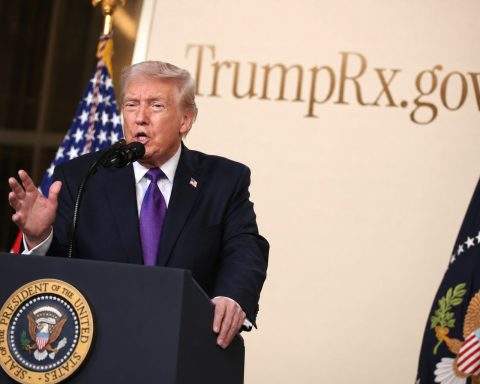
Markets also continue to digest the U.S. policy backdrop. Reuters previously reported that President Donald Trump said the U.S. would allow H200 shipments to China with a 25% fee, with shipments subject to vetting and review.
Why it matters for NVDA: If H200 shipments expand meaningfully, it could be an incremental revenue tailwind. But the situation remains a two-sided trade: positive demand signals are being offset by policy complexity and regulatory uncertainty on both sides of the Pacific.
3) “AI trade” volatility is still the macro backdrop — and NVDA remains a bellwether
NVIDIA is also rebounding in the context of last week’s sharp rotation out of mega-cap AI winners. Reuters noted that Oracle and Broadcom sold off hard late last week, dragging down “kingpin Nvidia,” before sentiment stabilized into Monday. Reuters
The takeaway for NVDA investors: even with strong company-specific headlines, NVIDIA stock is still highly sensitive to “AI capex confidence” across the broader ecosystem — hyperscalers, enterprise spending, and the market’s willingness to pay premium multiples for AI growth.
Nemotron 3: what NVIDIA actually launched — and why Wall Street cares
NVIDIA’s Nemotron 3 announcement is not just a branding refresh; it’s a deliberate bid to shape where AI developers build and deploy agents.
According to NVIDIA, the Nemotron 3 family includes:
- Nemotron 3 Nano (30B parameters), positioned for efficiency and cost-effective inference
- Nemotron 3 Super (~100B parameters), for higher-accuracy reasoning in multi-agent applications
- Nemotron 3 Ultra (~500B parameters), positioned as a large reasoning engine for complex workflows
Super and Ultra are expected in H1 2026.
NVIDIA also emphasizes a 1-million-token context window for Nemotron 3 Nano and claims substantial throughput and inference-cost improvements versus the prior generation.
From an adoption standpoint, NVIDIA says early adopters integrating Nemotron models include firms such as Accenture, CrowdStrike, Deloitte, EY, Oracle Cloud Infrastructure, Palantir, Perplexity, ServiceNow, Siemens, Synopsys, and Zoom (among others).
Reuters adds a key market-structure angle: NVIDIA is pushing Nemotron 3 amid a surge in open-source offerings from Chinese AI firms (and as some U.S. entities have restricted use of Chinese models over security concerns).
In plain English: Nemotron 3 is designed to make “open + customizable” a first-class option for enterprises and governments — potentially reinforcing NVIDIA’s position not only as a chip supplier, but as a platform provider for the next phase of AI (agents doing work, not just chatbots).
H200 to China: the bull case, the bottlenecks, and the biggest unanswered questions
The H200 storyline has become a near-term swing factor because it mixes three things markets react to immediately: policy, supply, and demand visibility.
The bull case for NVDA
- Demand signals appear strong: Reuters reports Chinese tech firms have sought clarity and large orders, with NVIDIA evaluating additional capacity.
- Any incremental approvals could open a meaningful market segment that has been constrained by export controls.
The bottlenecks and risks
- Approval uncertainty remains: Reuters reports the Chinese government has not yet greenlit purchases and officials debated conditions.
- Supply-chain reality: H200 capacity is not unlimited, and Reuters notes NVIDIA faces constraints while ramping its most advanced product lines and competing for advanced manufacturing capacity.
- Political scrutiny: Reuters notes the policy has drawn national-security debate in the U.S. around advanced chips and military modernization concerns.
For investors, the key is not “China yes/no” in isolation — it’s whether policy clarity improves enough to support real, durable guidance (and whether NVIDIA can expand supply without compromising its ability to serve U.S. and other customers).
Analyst forecasts and NVDA price targets: what Wall Street is signaling now
J.P. Morgan: “buying opportunity” framing — and a specific options strategy
One of the most widely circulated NVDA notes today came from J.P. Morgan commentary reported by Barron’s. The firm maintained an Overweight rating and reiterated a $250 price target, characterizing the recent pullback as an opportunity and pointing to NVIDIA’s order pipeline.
Barron’s also reported a tactical trade idea from the same note: selling March 2026 $160 strike puts, collecting roughly $8.50 in premium per share, implying an effective entry around $151.50 if assigned. Barron’s
(That’s a sophisticated strategy and not suitable for everyone — but its inclusion underscores how elevated volatility has become around the AI complex.)
Consensus targets cluster in the mid-$250s
Across widely followed analyst-aggregation services, the “center of gravity” for NVDA targets remains well above spot levels:
- MarketBeat lists an average price target around $258.65 across a large analyst set (with a wide range between low and high targets).
- TipRanks reported an average Nvidia price target around $258.45 and a “Strong Buy” consensus (as of its recent coverage). TipRanks
These figures are not guarantees — but they show that, despite volatility, many analysts still model substantial upside tied to continued AI infrastructure buildout.
The bigger 2026 debate: “AI stays dominant” vs. “AI boom turns to bust”
Today’s NVDA conversation isn’t happening in a vacuum. The market is actively debating whether AI investment is entering a new durable phase — or whether it’s starting to resemble a capex bubble.
The constructive view: AI remains a central theme
A Reuters report on Citi’s 2026 outlook said Citi expects AI to remain a key theme, while noting a likely shift from “AI enablers” toward “AI adopters” in market leadership. Reuters
That framing matters for NVIDIA: NVDA is the quintessential “enabler,” so even if AI continues, relative performance could hinge on whether investors rotate toward downstream beneficiaries.
The cautious view: a forecaster warns of an AI “bust”
MarketWatch summarized a BCA Research outlook warning that the AI boom could turn into a bust in 2026, weighing on tech and broader equities (with an expressed preference trade of shorting Nasdaq exposure and favoring Treasuries).
For NVDA investors, this is the core tension: NVIDIA can execute exceptionally well, but valuation and returns may still be shaped by whether the market believes AI capex will keep compounding at current rates.
Fundamentals check: NVIDIA’s latest results still frame the bull thesis
While today’s headlines are about Nemotron 3 and China/H200, NVIDIA’s most recent financial disclosures remain the anchor for many long-term models.
In its Q3 fiscal 2026 release (reported Nov. 19, 2025), NVIDIA reported:
- Revenue of $57.0 billion (record), with Data Center revenue of $51.2 billion (record)
- Q4 fiscal 2026 revenue outlook of $65.0 billion ±2%
- Commentary highlighting extremely strong demand and ongoing platform ramps
These numbers help explain why many analysts remain constructive even as the stock experiences short-term drawdowns: the earnings base and guidance remain enormous, and the company continues to position itself at the center of training, inference, networking, and now more “model stack” components.
What to watch next for NVDA investors
Here are the near-term catalysts likely to drive NVIDIA stock volatility from here:
- Macro data this week: AP highlighted the market focus on the delayed November jobs report (Tuesday) and inflation data (Thursday) — both crucial for rate expectations and growth-stock multiples.
- Any incremental clarity on H200 licensing and approvals: Markets will watch for concrete signals on how approvals work in practice and what volumes are realistically deliverable. Reuters reporting makes clear there are still unresolved regulatory questions.
- Follow-through on Nemotron 3 adoption: Today’s launch is a platform signal; investors will look for evidence of enterprise uptake, ecosystem integration, and whether it strengthens NVIDIA’s software moat.
- AI capex sentiment: After last week’s AI stock shakeout, Reuters notes the “dominant artificial intelligence theme” is entering year-end in a shakier mood — making any capex guidance from AI-adjacent firms a potential catalyst. Reuters