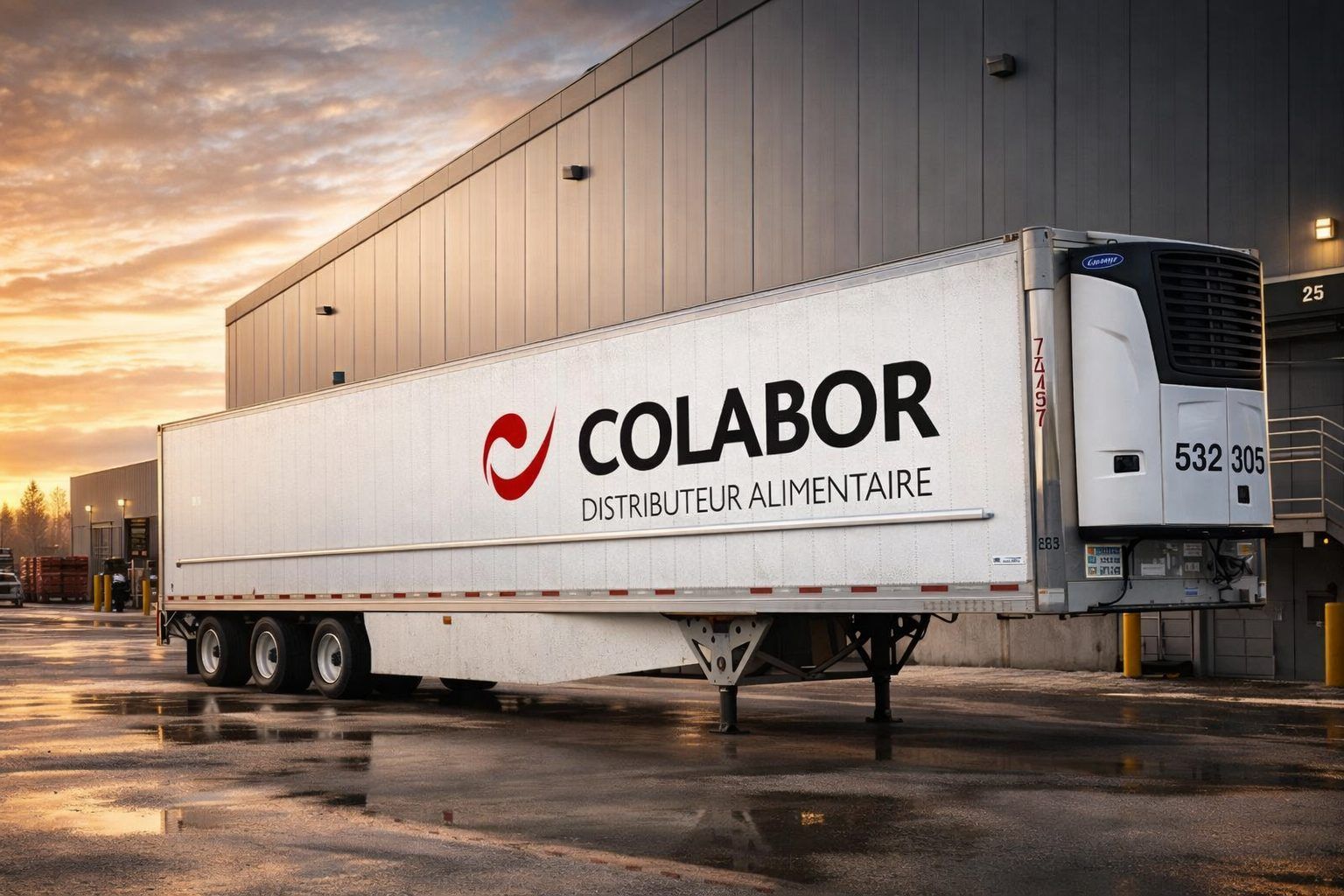

SAINT‑BRUNO‑DE‑MONTARVILLE, Quebec — December 15, 2025 — Colabor Group Inc., a Quebec-based food distributor that supplies restaurants, hotels, institutions and retailers, says it is weighing creditor-protection options after it failed to deliver the refinancing commitments its lenders required by December 15—a setback that immediately rattled markets and reignited concerns about the company’s ability to stay afloat.
In a corporate update released Monday morning, Colabor said it has not provided—and does not expect to be able to provide—non-binding letters of intent that would satisfy its senior lenders and Investissement Québec for a refinancing package, including an equity raise of at least $15 million. The company also warned that, if no strategic alternative materializes, its operations could be “seriously affected,” and it is considering “all available alternatives,” including seeking protection under applicable creditor-protection laws. GlobeNewswire
The news sent Colabor’s stock sharply lower in early trading, adding to a turbulent year for the TSX-listed company.
What Colabor announced today: missed refinancing letters, talks continue with lenders
Colabor’s December 15 statement is centered on a key milestone tied to its ongoing negotiations with creditors.
According to the company, an earlier amendment to its forbearance arrangements required Colabor to:
- Maintain at least $1 million in liquidity, and meet a minimum trailing 12-month EBITDA threshold (tested monthly); and
- Provide, by December 15, 2025, non-binding letters of intent acceptable to lenders for a refinancing of credit facilities and the raising of at least $15 million in equity (the company collectively referred to this as a “Refinancing”). GlobeNewswire+1
Colabor now says it cannot meet that December 15 requirement.
The company is nevertheless continuing discussions with its main senior lenders and Investissement Québec to further amend the forbearance arrangements and to obtain additional short-term liquidity to keep operating while it pursues strategic alternatives through to January 30, 2026—the current forbearance end date mentioned in the update. Colabor cautioned there is no assurance that long-term arrangements can be reached or that any strategic alternative will be successfully implemented.
Media coverage: “approaching bankruptcy” as stock drops hard
French-language business coverage on Monday framed the update in stark terms: Colabor is “moving closer to bankruptcy,” with the company publicly acknowledging it could seek creditor protection. TVA Nouvelles+1
Le Journal de Montréal reported that Colabor’s shares fell more than 60% within minutes of the press release, touching about $0.065.
Market data cited by Investing.com also showed the stock trading around $0.06 on December 15, with a prior close of $0.19 and an intraday range of roughly $0.04 to $0.14, underscoring the day’s extreme volatility.
Why Colabor is under pressure: cyberattack fallout, rising debt, and lender forbearance
Today’s developments did not emerge in a vacuum. Colabor has been contending with a cascade of operational and financial shocks throughout 2025, including a cybersecurity incident and intensified debt pressures.
Cyberattack impact and revenue disruption
The Journal de Montréal report pointed to a cyberattack in July that the outlet said cost the company $8 million in lost revenue, contributing to a rapid deterioration in its debt position.
Colabor itself has previously disclosed that it identified a cybersecurity incident on July 20, 2025, which impacted its internal IT systems.
Forbearance agreements: time bought, but conditions tightened
In September, Colabor announced it had entered into forbearance agreements with its principal lenders—including The Toronto-Dominion Bank, Bank of Montreal, and The Bank of Nova Scotia—as well as separate forbearance arrangements with Investissement Québec tied to subordinated credit facilities. Those agreements temporarily restricted lenders from exercising remedies related to anticipated covenant defaults.
While such agreements can provide breathing room, they also often come with strict operational and financial covenants—and looming deadlines. In Colabor’s case, one of those deadlines was December 15, 2025, when the company was supposed to deliver lender-satisfactory indications of a refinancing and equity raise.
Financial strain: debt up sharply, major impairment charge
Colabor’s most recent quarterly reporting before today’s announcement showed how quickly leverage had climbed.
In its third-quarter 2025 results (for the quarter ended September 6, 2025), the company reported:
- Sales up 31.1% year-over-year to $212.5 million
- Adjusted EBITDA down to $5.8 million (2.7% margin versus 5.9% a year earlier)
- Net loss from continuing operations of $74.4 million
- Net debt of $112.1 million, up from $47.8 million at year-end 2024
- A $75.0 million impairment charge allocated to goodwill GlobeNewswire
The same release also described the lender forbearance extension running to January 30, 2026 and explicitly flagged the December 15 refinancing-letter requirement—making today’s failure to deliver those letters a significant escalation point.
Who Colabor is—and why its situation matters beyond Bay Street
Colabor is not a household consumer brand, but it sits in a crucial place in the supply chain.
The company describes itself as a distributor and wholesaler of food and related products serving the hotel, restaurant and institutional (HRI) markets in Quebec and Atlantic Canada, as well as parts of the retail market. It also supplies specialty products including meat, fish and seafood, alongside broader “broadline” food distribution. GlobeNewswire
That footprint means any disruption—whether from constrained credit, supplier terms tightening, or restructuring actions—can ripple through customers that depend on reliable, just-in-time deliveries (restaurants and institutions in particular), and through suppliers that depend on predictable payment cycles.
What “creditor protection” typically means in Canada—and what Colabor has (and hasn’t) said
Colabor has not announced that it has filed for creditor protection. What it has said is that it is considering that option if strategic alternatives fail.
In Canada, creditor-protection processes for companies commonly involve court-supervised restructuring frameworks such as the Companies’ Creditors Arrangement Act (CCAA) (often used by larger companies) or proceedings under the Bankruptcy and Insolvency Act.
While each case is fact-specific, the broad mechanics of CCAA-style creditor protection are widely understood:
- The goal is generally to allow a financially distressed corporation time to restructure through a court process rather than immediately liquidating.
- A court can grant an initial stay of proceedings—often described as a period of protection from creditor enforcement actions—while a plan is developed.
- A monitor (an independent third party) is typically appointed to oversee and report on the process.
Importantly, informational guidance from restructuring professionals emphasizes that a company under CCAA protection is insolvent but not necessarily “bankrupt” in the everyday sense, because bankruptcy in Canada is associated with specific proceedings under the Bankruptcy and Insolvency Act, and the stay can prevent creditors from forcing immediate bankruptcy. KPMG Assets+1
For Colabor stakeholders, that distinction matters: creditor protection can sometimes mean continued operations during restructuring, but it can also lead to asset sales, contract renegotiations, or a recapitalization that significantly dilutes existing shareholders.
What happens next: the January 30 deadline and the paths in front of Colabor
As of December 15, Colabor says it is still negotiating with its senior lenders and Investissement Québec and seeking additional liquidity to continue operating while it evaluates strategic alternatives through to January 30, 2026.
From here, Colabor’s near-term outlook is likely to hinge on a few developments that investors, suppliers, and customers will watch closely:
1) A revised deal with creditors
Colabor may secure amendments that extend forbearance or provide short-term liquidity, effectively buying more time to complete a transaction or restructuring plan.
2) A refinancing / recapitalization—on different terms
Even though the company does not expect to provide lender-satisfactory letters of intent now, a refinancing or equity transaction could still emerge later—often at steep cost, such as higher interest rates, tighter covenants, or meaningful shareholder dilution.
3) Sale of assets or business lines
Strategic-alternative reviews frequently include divestitures, sales of divisions, or a whole-company sale—particularly when debt levels limit flexibility. Colabor has not detailed specific options, but it confirmed it is considering “all available alternatives.” GlobeNewswire
4) Filing for creditor protection
If Colabor cannot secure a workable path with lenders, it may pursue creditor protection, which would shift the situation into a court-supervised environment and could dramatically reshape the company’s capital structure and stakeholder relationships.
Bottom line
On December 15, 2025, Colabor delivered two messages that rarely appear together in a public-company update: it missed a refinancing milestone demanded by lenders, and it openly flagged creditor protection as a possible next step—warnings that quickly reverberated in the stock price and in the wider Quebec business community.
For now, Colabor says it is still operating and still negotiating. But with a key deadline now behind it and the next major marker at January 30, 2026, the coming weeks will be pivotal for the company’s lenders, customers, suppliers, employees, and shareholders alike.
Related articles: Bankruptcy