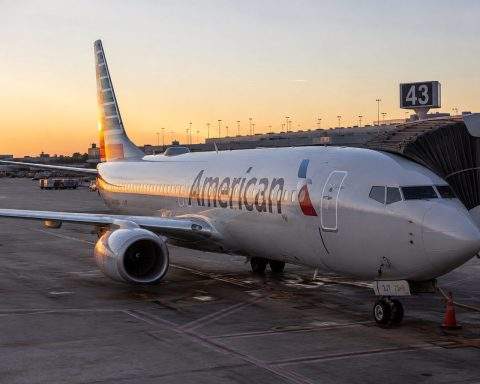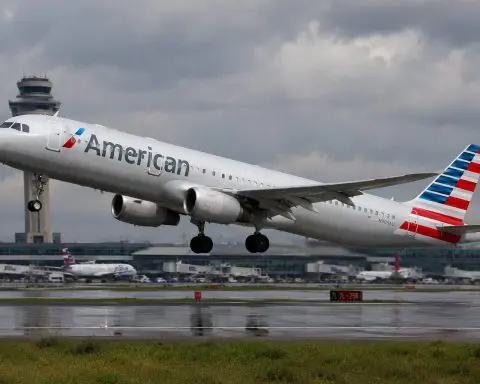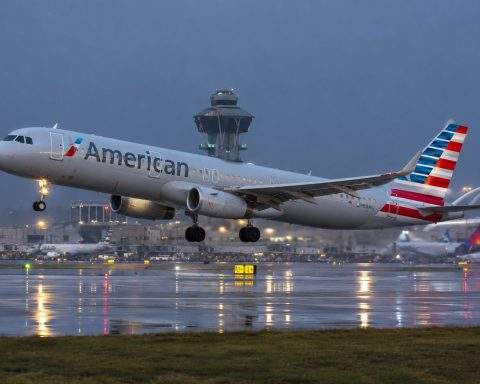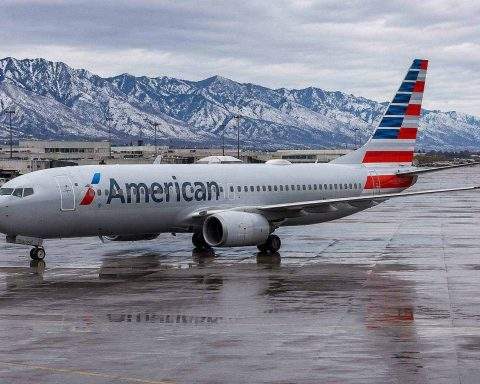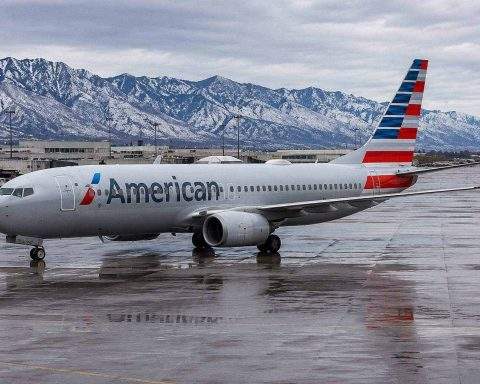

American Airlines Group Inc. NASDAQ:AAL is back on investors’ radar on Tuesday, December 16, 2025, as the carrier heads into a high-stakes holiday travel stretch while fresh updates from credit markets and Wall Street analysts reshape the near-term narrative.
After closing Monday, Dec. 15 at $15.33 (+2.47%)—with a session range of roughly $14.86 to $15.35 on heavy volume—AAL entered Tuesday’s session with momentum and plenty of headline gravity.
Below is a full, up-to-date roundup of the current news, forecasts, and market analysis shaping American Airlines stock as of 16.12.2025—and what investors are watching next.
AAL stock snapshot: what the market just did
AAL’s latest move wasn’t subtle: shares finished Dec. 15 up 2.47% at $15.33, a notable outperformance versus a slightly down broader market session (based on same-day sector comparisons reported in market coverage).
In early trading conditions on Dec. 16, premarket data showed AAL last trading around $15.12 with early volume logged in the hundreds of thousands of shares—useful context, though premarket price action is often noisy and can reverse quickly once liquidity deepens.
Today’s key headline: S&P upgrades American Airlines aircraft-backed debt (EETCs)
One of the most market-relevant developments hitting on Dec. 16 is a credit-market positive: S&P Global Ratings upgraded ratings on four American Airlines enhanced equipment trust certificates (EETCs)—a common airline financing structure backed by aircraft collateral.
What S&P upgraded—and why it matters
According to reporting published Dec. 16, the upgraded EETCs include American Airlines Inc. 2016-1A, 2016-2A, 2019-1A, and 2021-1B, lifted to ‘BBB+’ from ‘BBB’, with S&P citing improved loan-to-value (LTV) ratios based on updated collateral appraisals and scheduled amortization (paydown).
The coverage notes S&P’s view that aircraft collateral values have been more resilient than expected, supported by a fleet mix including Airbus A321, Boeing 737-800, and Boeing 787-8 aircraft.
Why equity investors care about “bond math”
Even if you never plan to touch a bond, this kind of action can matter for the stock because:
- Lower perceived financing risk can translate into better access to capital or more favorable future funding terms (especially in asset-backed markets airlines frequently use).
- It reinforces a broader theme investors track obsessively in airlines: deleveraging + collateral value stability.
- It’s also a subtle sentiment signal: when credit markets get more comfortable, equity markets often relax a little too.
Notably, the same coverage says S&P affirmed other EETC ratings and did not change the issuer credit rating on the parent—so it’s not a sweeping “everything’s fixed” moment. It’s more like: this specific chunk of the capital stack looks safer today than it did yesterday. Investing.com Australia+1
S&P’s own regulatory press release listing also shows the action posted on Dec. 15 in its releases feed, aligning with the timing of market pickup into Dec. 16 coverage.
Regulatory overhang update: DOT converts fines into mandated accessibility investment
A second major storyline still influencing sentiment around AAL is the U.S. Transportation Department’s decision to waive $16.7 million in remaining fines tied to disability-related enforcement—but require the airline to spend $16.8 million on accessibility improvements instead.
What’s in the deal
Reuters reports that DOT’s revised approach requires American Airlines to invest in tangible changes including:
- Buying 119 wheelchair lifts at airports including Miami, Philadelphia, and Chicago O’Hare
- Upgrading systems so the airline can track passenger wheelchairs point-by-point through the handling process
DOT’s posted enforcement order explains the structure in more formal terms: it amends the earlier penalty schedule and substitutes remaining Treasury payments with required expenditures that go “above and beyond” baseline legal requirements, while also crediting compensation already provided to affected passengers. Department of Transportation
Stock impact: not a pure “win,” not a pure “loss”
From an investor standpoint, this is nuanced:
- It can reduce the optics of a large fine payment, since money is redirected to operational improvements rather than the Treasury.
- But it’s still real spending—and airlines live and die by cost discipline.
- Longer term, improvements that reduce wheelchair mishandling claims could potentially lower disruption, complaints, and reputational drag—though translating that into clean financial ROI is harder.
Either way, it keeps AAL in the conversation investors now track closely: regulatory risk + service quality + operational reliability.
Holiday travel catalyst: American expects 12 million customers and 119,000+ flights
If you want the simplest near-term “why this week matters” answer for American Airlines stock, it’s this: the airline is entering a massive operational stress test—the winter holiday peak.
American says it expects to carry more than 12 million customers across more than 119,000 flights during the winter holiday season period, describing it as a larger schedule than 2024 and highlighting winter operations readiness (deicing prep, winterization, coordination with FAA/TSA/CBP).
Operational upgrades American is highlighting
In its holiday operations update, American points to several experience and throughput improvements, including:
- Expansion of TSA Touchless ID at major hubs and gateways
- “Connection-saving technology” now active at multiple hubs (intended to reduce missed connections when feasible)
- Continued investment in Wi‑Fi fleet capability and premium onboard partnerships
The new plane headline: A321XLR debuts Dec. 18
American is also tying holiday season buzz to a product and fleet milestone: the Airbus A321XLR enters service on Dec. 18, beginning with a New York (JFK) to Los Angeles (LAX) inaugural flight.
In the company’s A321XLR fleet announcement, American emphasizes premium seating upgrades (including Flagship Suite positioning) and notes the aircraft’s early deployment on transcontinental routes before expansion to other routes, including international service in 2026.
Why this matters to AAL stock: airlines can’t “market” their way out of operational failure during peak weeks. If execution holds—especially on completion factor, baggage, and customer recovery—investors often read it as a proxy for management competence and systems maturity. If execution fails, airline stocks have a long history of getting punished fast.
Analyst forecast: UBS upgrades American Airlines to “Buy” with a $20 target
On the “Wall Street forecast” front, one of the most important recent moves still shaping Dec. 16 positioning is UBS upgrading American Airlines to Buy from Neutral, reported by Nasdaq content sourced from Fintel. Nasdaq
The same report states UBS lifted its view alongside broader analyst forecast context, including:
- A referenced average one-year price target figure (from Fintel’s dataset) near the mid-teens
- A price target range spanning roughly low double-digits to low 20s
- Options sentiment data including a put/call ratio figure (dataset-based)
Where the broader consensus sits right now
Across widely followed consensus trackers, AAL’s analyst targets remain clustered around the mid-teens, with notable dispersion between bulls and bears:
- MarketBeat lists an average target around the mid-$16s with highs into the $20s and lows around $10.
- TipRanks shows a similar shape: an average target in the mid-$15s, with a high forecast of $20 and a low around $10.
- Investing.com’s analyst consensus page also indicates a “Buy”-leaning mix of ratings and a mid-teens average target area. Investing.com
Translation: analysts aren’t unified on a breakout story, but they’re also not pricing in a collapse. The “center of gravity” forecast is basically: AAL is investable, but the balance sheet and cyclicality keep it from getting a clean premium multiple.
Broader industry analysis: safety scrutiny and U.S. aviation policy remain in the background
Not every aviation headline is company-specific, but some still matters to airline equities—especially when it affects operations, air traffic control constraints, or public perception of safety.
Reuters reported Dec. 16 coverage around FAA testimony and reforms following a deadly January collision involving an American Airlines regional jet and an Army helicopter, describing efforts under a “Flight Plan 2026” initiative (safety integration, risk mapping, transparency, and accountability). Reuters
For AAL shareholders, headlines like this can influence sentiment in two ways:
- Operational constraints risk: regulatory responses can shape route structures, ATC flow programs, and airport-specific restrictions.
- Reputation risk: even when fault isn’t legally assigned in a headline, public association can create a narrative drag.
This isn’t a “trade this now” signal—it’s a reminder that airlines operate inside a policy and infrastructure machine that can change the game suddenly.
Strategic angle: American and United to invest in Brazil’s Azul after court approval
American Airlines also remains tied to a notable Latin America headline: Reuters reported that a U.S. bankruptcy judge approved Brazilian airline Azul’s debt restructuring, and that American and United agreed to invest up to $300 million in Azul’s equity as part of the plan.
Why it matters for AAL stock:
- It potentially strengthens American’s position in a strategically important region (Brazil is huge in both literal and network terms).
- It signals a willingness to deploy capital where it can reinforce network partnerships and connectivity—though investors will watch structure, governance, and any commercial tie-ins closely.
(Separate coverage also indicates governance and partnership details, but the core investment commitment is clearly stated in Reuters’ report.)
Technical and momentum read: strength is improving, but “extended” risk is real
Momentum-focused investors have also been tracking AAL’s relative performance.
Investor’s Business Daily reported that American Airlines Group’s Relative Strength (RS) Rating rose to 82, a level often associated (in that framework) with stronger recent performance versus the broader stock universe. The same coverage also notes the stock had moved beyond an ideal “buy range” after surpassing a chart buy point—i.e., strength is present, but chasing can carry pullback risk. Investors.com
This lines up with what the price action has been showing recently: AAL has been moving like a stock that’s being re-rated… but still inside a sector where reversals happen fast when fuel prices spike, weather hits, or demand wobbles.
Putting it together: the bull case vs. the bear case for American Airlines stock
Here’s the cleanest way to think about AAL as of Dec. 16, 2025, using the headlines and forecasts currently on the tape.
The bull case (why investors are buying)
- Credit conditions look a bit friendlier with the S&P EETC upgrades tied to better collateral coverage (LTV improvement).
- Analyst sentiment is firming, highlighted by UBS moving to a Buy stance and lifting its view meaningfully.
- Holiday peak season is a near-term catalyst: strong execution can support revenue quality, customer loyalty, and 2026 confidence.
- Product story is improving with premium aircraft deployment (A321XLR launch on Dec. 18), aligning with the industry-wide shift toward premium revenue.
The bear case (why skeptics aren’t gone)
- Regulatory scrutiny is not theoretical: the DOT wheelchair enforcement history is real, and the new structure still requires substantial spending and multi-year implementation.
- Airline earnings remain cyclical and fragile, sensitive to macro demand, weather disruption, and operational constraints (and the broader safety/infrastructure environment is under the microscope).
- Analyst targets still cluster in the mid-teens, suggesting many pros see limited upside unless execution and margins materially improve.
What to watch next for AAL stock this week
With the news flow concentrated around operations and capital markets, the next few “investor checkpoints” are pretty clear:
- Holiday travel performance (Dec. 18 onward): irregular operations, weather response, and customer recovery can shape near-term sentiment.
- A321XLR entry into service (Dec. 18): investors will watch for operational smoothness and whether premium cabin strategy continues to gain traction.
- Any follow-through from credit markets: S&P’s EETC action is specific, but investors will watch whether it foreshadows broader funding flexibility.
- Additional analyst revisions: UBS may not be the last to adjust targets if holiday operations and early 2026 demand signals stay firm.
Bottom line
As of Dec. 16, 2025, American Airlines stock is being pulled by three forces at once: (1) a constructive credit signal (EETC upgrades), (2) improving analyst tone (UBS upgrade), and (3) a major operational catalyst (holiday travel + A321XLR debut).
The setup is compelling—but airlines are never a “set it and forget it” story. They’re more like flying a spaceship through weather: the route is planned, the physics are real, and turbulence does not care about your spreadsheet.
Related articles: NASDAQ:AAL