
Published: December 17, 2025
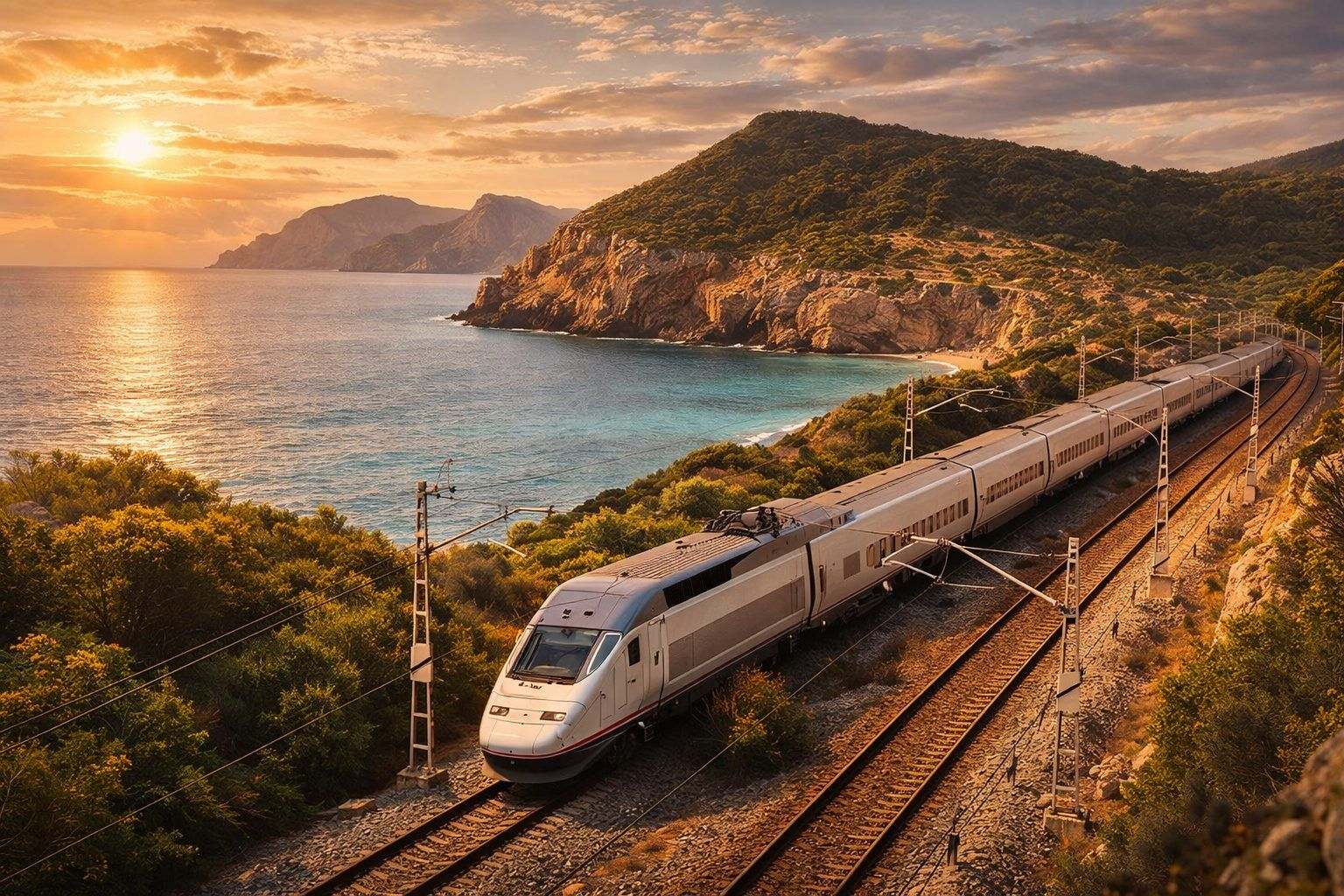
Spain is preparing to roll out one of Europe’s most talked-about mobility policies: a flat-rate, nationwide public transport pass designed to make everyday travel cheaper and to push more people out of cars and onto trains and buses.
The headline numbers are simple: €60 per month for adults and €30 per month for anyone under 26—with the Spanish government now confirming the start date as 19 January 2026.
But the fine print matters. This is not a “ride anything everywhere” ticket from day one—at least not yet. Here’s what today’s reporting (17 December 2025) reveals about the pass, who benefits most, and how Spain’s plan stacks up against similar schemes already running in Germany, Portugal, Switzerland and Hungary.
The big update today: the launch date is now set
Prime Minister Pedro Sánchez unveiled the nationwide pass earlier this week, initially describing a rollout in the “second half of January.” The Guardian+1
Now Spain’s Transport Minister Óscar Puente has put a specific date on it: 19 January 2026, and he has stressed that the pass won’t replace existing tickets and discounts—it will be an additional option.
That detail is important for commuters who already rely on subsidised local or regional tickets, and for anyone hoping the new pass will instantly unlock every metro, tram and city bus in the country.
What the €60 “abono único” includes at launch
Multiple outlets reporting on the government’s plan converge on a key point: the first version focuses on state-managed services—the parts of Spain’s transport system that Madrid can implement quickly without negotiating fare systems city-by-city.
At launch, coverage is expected to include:
- Renfe Cercanías / Rodalies (commuter rail)
- Renfe Media Distancia (regional / middle-distance rail)
- State-run long-distance intercity bus services
- Some reporting also lists Avant services among the included rail products RailTech.com+2RTVE+2
In practical terms, this makes the pass most powerful for:
- Regular commuters who cross municipal or even regional lines using Cercanías/Media Distancia,
- Inter-regional travellers who don’t need high-speed rail and can use conventional services,
- Younger travellers (under 26) for whom €30/month could be transformative on a student or early-career budget.
What the pass does not include (at least for now)
The biggest limitation is also the most misunderstood: Spain’s fastest intercity rail services are not part of the initial offer.
- High-speed AVE and other long-distance commercial rail services are excluded in early reporting and policy explainers.
- Local transport (metros, trams, and many city bus networks) is not guaranteed at launch because those systems are typically controlled by regional governments and municipalities, not the central state.
That means the pass, on day one, may feel less like Germany’s “one ticket for everything local” model and more like a national rail-and-bus backbone—with local networks joining later if agreements are reached.
Will metros and city buses be added later?
The government’s ambition is clear: a single ticket that eventually works across urban and inter-urban transport nationwide, similar to the best-known European examples.
But Spain’s transport governance is fragmented, so integration requires deals. Minister Puente has said the plan involves a framework agreement (“convenio”) for administrations that want to opt in, and acknowledged that some obstacles are technical and others political. RTVE+1
Euronews likewise notes that regional and municipal authorities are being encouraged to gradually opt into the scheme so that local metros and city buses can be added over time.
Existing discounts will continue alongside the new pass
A major point of confusion is whether the €60 ticket replaces today’s subsidies. The answer—based on the minister’s remarks and multiple policy explainers—is no.
Puente has explicitly said the new pass is an “additional” product and will not affect existing discounts (including Cercanías products). RTVE+1
Separately, Spain’s public broadcaster reports that current transport discounts include:
- 40% discounts on many urban/interurban season tickets and multi-journey tickets (with co-funding structures)
- Rail discounts that vary by service and age group (including higher reductions for young people) RTVE
Rail-focused reporting also highlights ongoing reductions such as discounts on Media Distancia and Avant, plus continued support for commuter rail passes.
Bottom line: in 2026, Spain’s fare landscape is shaping up to look like a menu—with the €60/€30 nationwide pass sitting alongside discounted local and regional products, rather than replacing them overnight.
Why Spain is doing this now
The policy is being framed as both:
- a cost-of-living measure, and
- a sustainable mobility strategy designed to reduce private car dependence.
Government messaging has repeatedly pointed to potential savings of up to 60% for some regular travellers, and Spanish media reporting cites an estimate of around two million potential beneficiaries.
The announcement also lands during a politically turbulent period for Sánchez’s minority government—context noted prominently in international coverage.
What this means for visitors (including Britons)
If you’re reading this from outside Spain, the key question is: Can tourists buy it?
As of today’s coverage:
- Spain’s government messaging often speaks broadly about “citizens,” and many reports focus on residents and commuters. RTVE+1
- Some European comparison reporting highlights that eligibility rules vary widely by country (for example, Portugal’s cheapest rail pass is explicitly resident-only—see below).
Because Spain has not yet published a fully detailed, final consumer rulebook in the reporting cited today, the safest takeaway is:
The €60 pass is confirmed, the start date is confirmed, and the core coverage is becoming clearer—but purchase requirements and “tourist usability” may depend on the final implementation details and sales channels. RTVE+2Europa Press+2
For Britons planning rail-heavy trips inside Spain, one practical implication is already clear: you should not assume the pass covers high-speed AVE routes between the major cities. Plan itineraries around commuter + regional services and state-run buses, or budget separately for high-speed tickets.
How Spain’s pass compares with other European monthly travel schemes
Spain is joining a growing European club of “flat-rate mobility” offers—though each country draws the coverage boundaries differently.
Germany: the benchmark “one ticket” model (but getting pricier)
Germany’s well-known Deutschlandticket currently costs €58/month, and Deutsche Bahn’s official information states it will rise to €63/month from 1 January 2026.
Spain’s own policy conversation repeatedly references Germany as the inspiration—but Germany’s ticket is famous for including local and regional public transport nationwide (not long-distance high-speed rail), whereas Spain’s first-stage roll-out is expected to be more limited to state-controlled networks.
Portugal: Europe’s cheapest—but residents only
Portugal’s Green Rail Pass is a standout on price: €20 for 30 days (with 60- and 90-day options) according to Comboios de Portugal.
However, CP’s English-language page is explicit that it is valid for Portuguese and foreign residents in Portugal—not short-term tourists.
Switzerland: premium coverage, premium price
Switzerland’s all-in-one offers are often considered the gold standard for coverage—but not affordability. The Swiss Federal Railways (SBB) lists a monthly-billed GA Travelcard at CHF 355 for adults (2nd class).
Euronews notes that Switzerland’s monthly options are among Europe’s priciest (and often suggests tourists consider alternative products).
Hungary: a national pass with broad validity
Hungary’s national pass is frequently cited as another “flat-rate” example. Euronews reports the Hungary Pass at roughly €49 for 30 days and notes its broad validity across public transport and designated rail services. euronews
Quick FAQ for December 17, 2025
When does Spain’s €60 nationwide transport pass start?
The confirmed start date being reported is 19 January 2026.
How much will it cost?
€60/month for adults and €30/month for under-26s.
Does it include AVE high-speed trains?
Reporting indicates no—high-speed AVE and long-distance commercial services are excluded from the initial scope.
Does it include metro and city buses everywhere in Spain?
Not automatically. Local networks may be added later if regions and cities opt in via agreements.
Will current discounts disappear?
No—today’s reporting quotes the transport minister saying the new pass won’t affect existing discounts and will coexist with current products.
Related articles: Stock Market