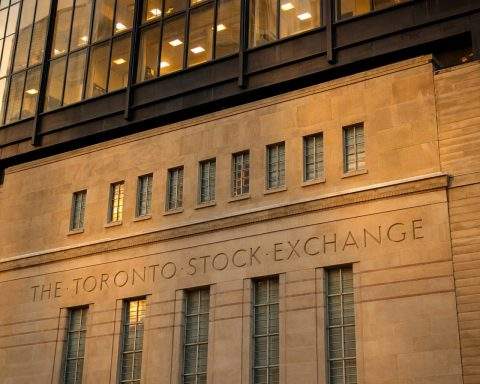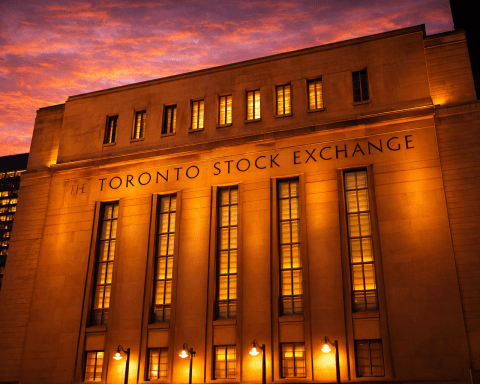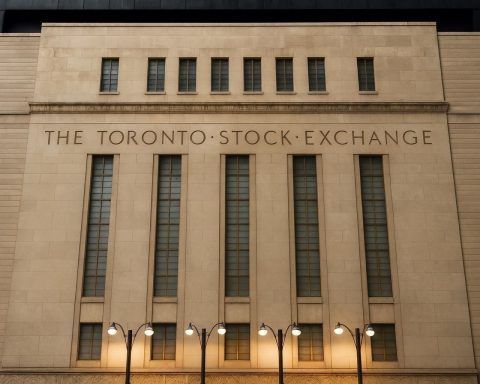

As of 6:15 a.m. EST on Wednesday, December 17, 2025, Canada’s stock market setup is being pulled in two directions: year-end profit-taking after a blockbuster 2025 run and a fresh commodity-driven tailwind led by a sharp rebound in oil prices overnight.
The early read is cautiously constructive. S&P/TSX 60 December futures were modestly higher in overnight trading, pointing to a steadier start for Bay Street after three straight down sessions on the TSX. Barchart.com But today’s tone may hinge less on “risk-on/risk-off” headlines and more on how traders digest three immediate catalysts:
- Oil’s surge on geopolitics (again)
- A busy global central-bank week shaping rate expectations
- Canada’s incoming data on cross-border capital flows
Below is what matters most for Canadian stocks today—what’s driving the pre-market narrative, what data could move the loonie and bond yields, and which TSX sectors look most sensitive to the next headline.
TSX Snapshot: What Happened in Canada Stocks in the Last Session
Canada’s main index is coming into Wednesday from a softer footing. On Tuesday, the S&P/TSX Composite ended down 0.7% at 31,263.93, its third straight decline and a one-week low. The pullback was largely commodity-led: energy fell 3.7% as oil slid, while tech also lost ground.
That weakness fits a broader late-December pattern: after strong annual gains, portfolios tend to rebalance, winners get trimmed, and liquidity can thin out—amplifying sector moves.
But the most important context for today is this: despite the recent dip, the TSX is still up roughly 26% in 2025, positioning it for its biggest annual advance since 2009. Reuters That’s why traders are watching whether this pullback becomes a normal year-end shakeout—or the start of a deeper rotation out of commodity exposure.
Premarket Drivers: Oil Rebounds Hard, Metals Stay Strong
Oil jumps on Venezuela blockade headlines
The biggest overnight change for Canadian markets is oil. Crude prices rallied after U.S. President Donald Trump ordered a “complete blockade” of sanctioned oil tankers entering and leaving Venezuela, injecting a geopolitical risk premium back into a market that had been sliding on demand concerns. Reuters
In the latest Reuters pricing, Brent rose to about $60.33 a barrel and WTI to around $56.69. Reuters Reuters also reported that U.S. inventory data from the American Petroleum Institute showed a larger-than-expected draw, adding another boost to prices.
For the TSX, this matters immediately because energy is a heavyweight. After Tuesday’s steep sector drop tied to falling crude, even a partial oil rebound can change the tone at the open—especially for integrated producers and oil sands names that tend to trade like a levered oil proxy in the short run.
What to watch today: if oil holds above key psychological levels (near $60 Brent), the TSX may find support early. If crude fades back quickly, traders may treat the bounce as a headline spike rather than a trend shift.
Metals: “commodity-linked” support remains in play
Canada’s market is also sensitive to metals, and global pricing remains supportive. Reuters reported silver pushing past $65/oz (a fresh record) and gold trading above $4,300/oz in the latest global-market wrap.
That backdrop typically benefits TSX-listed miners and materials names—though stock performance can still diverge based on company-specific costs, jurisdictions, and hedging. In other words: the tape may be favorable for the group, but it likely won’t be uniform.
Rate Outlook: BoC on Hold at 2.25% While the Market Debates “What’s Next”
Bank of Canada: the policy anchor for Canadian valuations
The Bank of Canada’s target rate is currently 2.25%, following its last decision on December 10. Bank of CanadaThat level has become the valuation “gravity” for Canadian equities—especially banks, utilities, telecoms, REITs, and other rate-sensitive sectors.
In market commentary this week, Governor Tiff Macklem has emphasized that inflation pressures appear contained and that the current rate setting is appropriate to keep inflation near the 2% target, according to reporting from The Wall Street Journal.
The loonie: firming, but still headline-sensitive
The Canadian dollar has been strengthening into late December. Reuters reported the loonie near a three-month high around 1.3743 per U.S. dollar in the latest session, aided by shifting rate expectations and U.S. data uncertainty.
For TSX investors, the currency channel matters in two ways:
- A stronger CAD can be a headwind for exporters and companies reporting in U.S. dollars, but
- It can also signal improving risk sentiment and/or firmer commodity pricing.
If oil stays bid today, it could keep the loonie supported—though U.S. rate expectations remain a major swing factor.
Fed cut bets and global risk appetite
Overnight, global markets remain focused on U.S. monetary policy expectations. Reuters’ market wrap noted that futures pricing still implies roughly two U.S. rate cuts next year, with attention turning to upcoming inflation data.
Separately, Reuters’ U.S. futures report said traders were still looking for two 25-basis-point cuts next year, with the first expected around June, and highlighted a slate of Fed speakers due later today.
This is important for Canada because the TSX often trades as a “hybrid” market: part global cyclicals (commodities), part rate-sensitive domestic financials. If rate-cut expectations firm up globally, it can help broad equity multiples—unless inflation surprises force a re-think.
Forecast check: RBC sees a steadier BoC, cautious Fed path
For a Canadian-specific macro lens, RBC’s weekly preview this week said it expects no additional BoC rate cuts in the year ahead given underlying inflation and improving conditions, and it laid out a scenario where the Fed delivers one more cut before pausing (a more cautious path than some market pricing).
That gap—between “market pricing” and “economist forecasts”—is a key reason markets can stay choppy even without a major shock.
Canada Economic Calendar Today: The Data That Can Move Bay Street
While U.S. headlines often dominate, Canada has meaningful releases scheduled today that can affect rates, the loonie, and equity leadership.
Statistics Canada’s official release schedule shows that Canada’s international transactions in securities (October 2025) are due today (Dec. 17), alongside population estimates and other publications.
Scotiabank’s December calendar also flags International Securities Transactions (8:30 a.m. ET) as Canada’s key scheduled release for Wednesday.
Why it matters: International securities flows can influence the Canadian dollar and domestic bond yields, especially if the numbers suggest a shift in foreign appetite for Canadian assets (or Canadian buying abroad). That, in turn, can tilt leadership between banks, defensives, and commodity cyclicals.
TSX Sectors and Stocks to Watch Today
Here’s how the main TSX groups line up heading into Wednesday’s session.
1) Energy: set up for a rebound attempt
- Oil is higher on Venezuela blockade headlines.
- The TSX energy group was hit hard Tuesday as crude fell.
Market read: If crude holds gains into the North American morning, Canada’s energy complex could lead any TSX bounce—especially the large-cap producers and integrated names that dominate index weightings.
Policy backdrop: Canada also unveiled new methane regulations targeting a large long-term reduction by 2035, with rules taking effect in 2028—an added medium-term theme investors may weigh when valuing Canadian oil and gas producers.
2) Materials and miners: supported by record silver and firm gold
Reuters flagged fresh strength in precious metals, including silver above $65/oz and gold above $4,300/oz.
Market read: That kind of move can pull TSX materials higher, particularly precious-metals miners and royalty companies. But watch for volatility: these stocks can gap at the open and then retrace quickly if metal futures cool.
3) Financials: watching yields, the loonie, and “risk tone”
Canadian banks tend to do best when:
- credit fears are muted,
- yields are stable, and
- recession odds feel low.
The loonie’s recent strength and the BoC’s steady-rate messaging are constructive, but global rate expectations (and U.S. inflation data tomorrow) could keep the group range-bound.
4) Healthcare/cannabis: momentum traders still circling
One of Tuesday’s standouts on the TSX was healthcare, boosted by cannabis-related moves. Reuters noted TSX healthcare surged and highlighted Curaleaf’s sharp jump tied to expectations around U.S. policy.
Market read: If the broader market is choppy, traders often gravitate to “theme” momentum (like cannabis) because it can move independently from oil and rates.
5) Technology: sensitive to global risk appetite
Canadian tech is smaller than U.S. tech, but it still tends to track global growth sentiment. With U.S. futures slightly higher and markets watching inflation and central-bank guidance, tech may trade more on macro tone than on Canada-specific news today.
TSX Forecast for Today: Three Scenarios for the Session
Because it’s still early (pre-open) and today’s drivers are headline-heavy, it’s useful to think in scenarios rather than a single-direction call.
Scenario A: Commodity-led rebound (most likely if oil holds gains)
If crude stays elevated and metals remain firm, TSX leadership could rotate right back into energy and materials, helping the broader index stabilize after Tuesday’s slide.
Scenario B: Choppy, range-bound trade (if oil fades and data is “neutral”)
If the Venezuela premium cools and Canada’s securities-flow data doesn’t surprise, the TSX could drift—caught between year-end profit-taking and supportive macro conditions.
Scenario C: Risk-off resumes (if rates re-price or geopolitical risk broadens)
If markets suddenly re-price inflation risk ahead of the next U.S. inflation print, or if geopolitical tensions widen beyond oil shipping, defensives could outperform while cyclicals slip.
One technical tell: TSX 60 futures were slightly higher overnight—helpful, but not a guarantee of follow-through once cash equity volumes hit the tape.
Bottom Line for Canada Stocks Today
Canada’s stock market enters December 17 with a clearer near-term playbook than it had 24 hours ago:
- Oil is no longer a drag this morning—it’s a support, at least early.
- Global rate expectations remain the swing factor, with investors watching central banks and incoming inflation data.
- Canada’s data focus today is international securities transactions, a release that can move the loonie and subtly reshape TSX sector leadership.
With the TSX still sitting on big 2025 gains, the key question for Wednesday isn’t just “up or down.” It’s whether the market shifts back into commodity leadership—or keeps rotating toward more defensive, rate-sensitive parts of the index as investors protect year-end performance. Reuters+1
Related articles: TSX