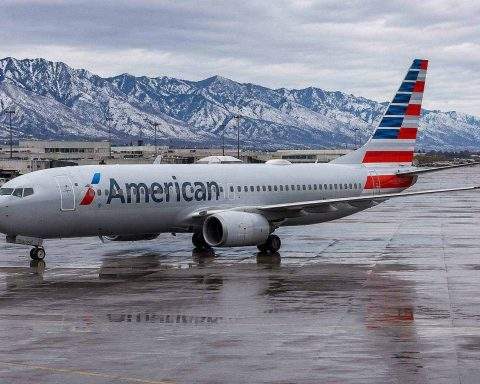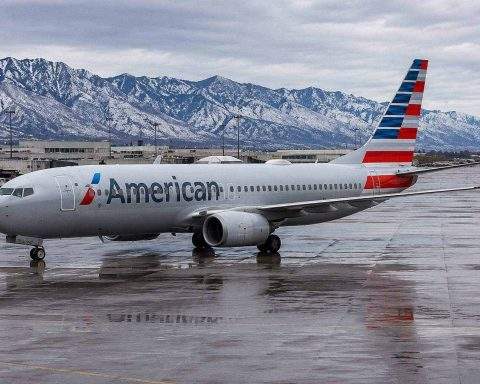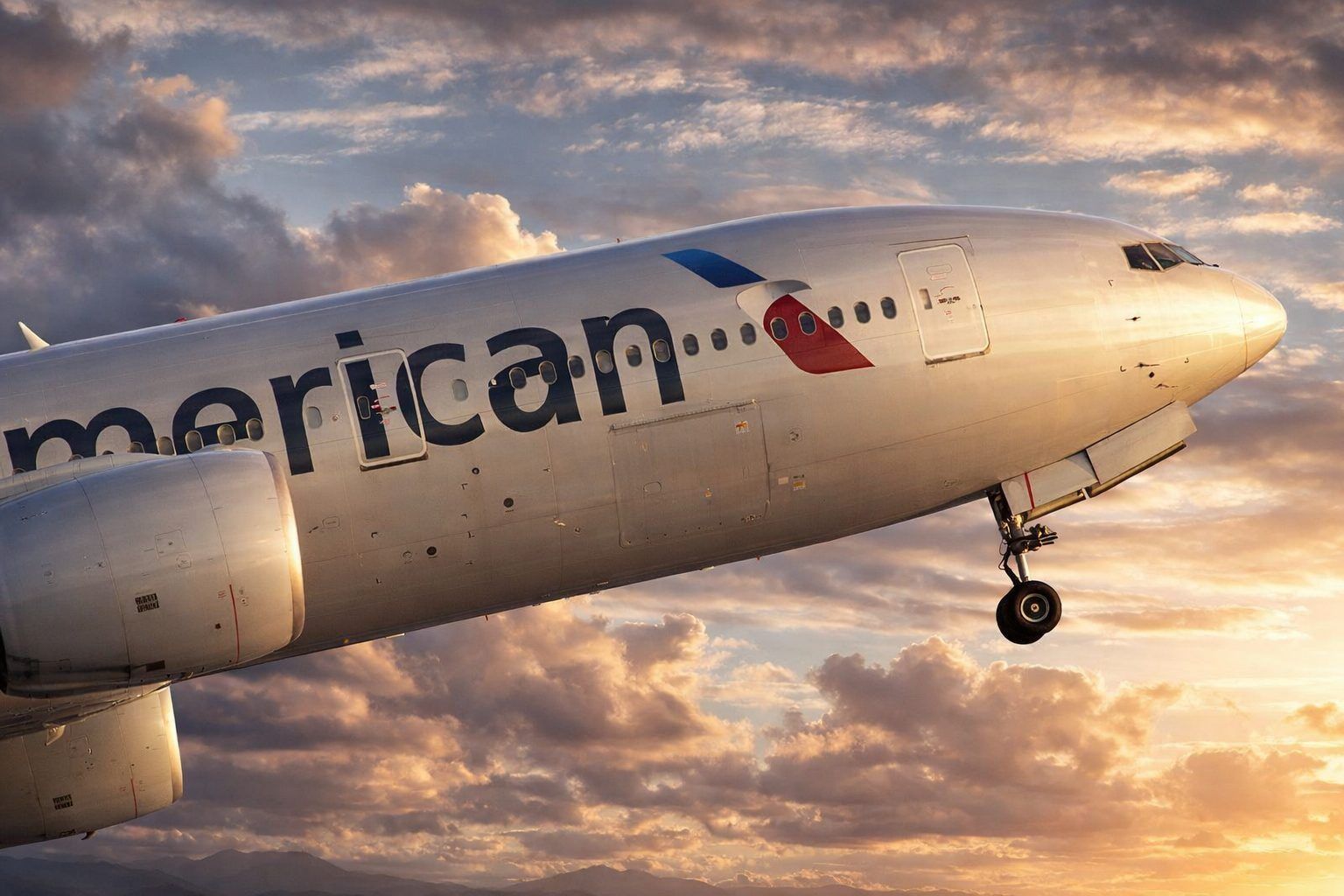

American Airlines Group, Inc. NASDAQ:AAL ended Wednesday’s session lower and stayed mostly flat in after-hours trading, as investors weighed a sweeping “premium” makeover against a risk-off tape and a late-day rebound in oil prices.
The backdrop matters: U.S. equities sold off broadly on Dec. 17, with tech weakness pressuring major indexes, while crude oil jumped on geopolitical headlines—two crosscurrents that can influence airline shares via sentiment and fuel-cost expectations.
Below is what happened after the bell on Wednesday, Dec. 17, 2025, and what investors may want on their radar before Thursday’s (Dec. 18) opening bell.
AAL stock: after-hours check and Wednesday close
American Airlines shares closed at $15.51, down $0.48 (-3.00%) on Dec. 17. The session range was roughly $15.45 to $16.00, with about 55.24 million shares traded.
After the bell, trading was little changed. MarketWatch showed AAL around $15.51 in after-hours with modest volume, while a separate delayed after-hours update showed about $15.52—effectively flat either way.
Why this is notable: Wednesday’s decline followed a sharp airline-sector move the prior day amid falling oil—suggesting at least some of the action may have been profit-taking and macro-driven rotation, not only company-specific headlines.
What moved American Airlines stock today
1) Reuters: American Airlines is “betting big on luxury” to close the gap with Delta and United
A major driver of attention on Dec. 17 was a detailed Reuters report outlining American’s broad premium strategy—an explicit pivot away from years of cost discipline and “fill the plane” tactics toward higher-yield customers. Reuters described a “customer reimagination” push that spans:
- Cabin upgrades (lie-flat seats, privacy doors/suites in long-haul premium cabins)
- Onboard product upgrades (premium food-and-beverage cues and faster Wi‑Fi)
- Network and fleet deployment focused on monetizing premium demand
- Loyalty and co-brand credit card economics (where airlines often generate high-margin cash flows)
Reuters also highlighted how wide the performance gap has been: American posted only $12 million in profit over the first nine months of 2025, versus $3.8 billion for Delta and $2.3 billion for United over the same period.
Market implication: Premiumization is a proven playbook in U.S. aviation—but it’s expensive, takes time, and success depends on execution (fleet timing, operational reliability, and customer perception).
2) The premium rollout is tied to specific aircraft—and a near-term debut
Reuters reported that American’s plan leans heavily on newer aircraft, including the Boeing 787-9 and Airbus A321XLR, with management expecting meaningful revenue improvement beginning in 2026 as the changes scale. Reuters also noted the A321XLR’s debut on the New York–Los Angeles route on Thursday (Dec. 18)—a high-profile corridor where premium demand can be strong.
What traders may do with that: A single route debut isn’t usually a one-day stock catalyst, but it’s a concrete “proof point” for the broader narrative—and it can drive incremental coverage and analyst commentary.
3) AAdvantage change: Basic Economy tickets stop earning miles and Loyalty Points (starting Dec. 17)
A second, very current headline is a new restriction for Basic Economy: as of Dec. 17, American’s no-frills tickets no longer earn AAdvantage miles or status-earning Loyalty Points for new bookings. The change was reported by The Points Guy and is also spelled out directly on American’s website.
Why investors should care:
This looks like a classic revenue-management lever.
- Bull case: It nudges customers toward higher fare classes (better unit revenue), while reinforcing the value of premium cabins and paid loyalty engagement.
- Bear case: It risks customer dissatisfaction, potentially pushing price-sensitive flyers to competitors—especially if the “gap” between Basic and Main Cabin pricing widens.
Either way, it fits the same strategic direction Reuters described: American is trying to monetize premium and loyalty more aggressively.
4) American’s own press release: Admirals Club expansion and lounge investment
On Dec. 17, American also announced plans to renovate and expand an Admirals Club lounge at Reagan National (DCA), increasing seating by about 50% in a redesigned space and targeting construction in early 2026.
Why it matters to the stock story: Lounges are part of the premium ecosystem (high-value flyers, co-brand cards, and business travel). Investments like these support the premium thesis—but they also reinforce that this strategy requires capital spending.
Legal and regulatory headlines in the background: DCA crash developments and aviation safety focus
Late Wednesday, The Washington Post reported that, in a court filing, the federal government accepted liability in the Jan. 29 collision near Reagan National involving an Army Black Hawk helicopter and an American Airlines regional jet, potentially clearing the path toward settlements for families. The report also described alleged failures involving the helicopter crew and air traffic control warnings.
Separately, Reuters reported that the U.S. Senate unanimously passed legislation aimed at improving military helicopter safety standards, including requiring broader adoption of ADS‑B by the end of 2031 and tightening oversight of flight routes near commercial airports.
What this means for AAL investors:
These aren’t “earnings tomorrow” catalysts, but they’re the kind of headline risk that can shape sentiment and introduce uncertainty around legal exposure, insurance dynamics, and regulatory scrutiny.
Macro forces that can move airline stocks before the opening bell
1) Oil rebounded—fuel is a key swing factor
Reuters reported oil prices rose after President Donald Trump ordered a blockade targeting sanctioned oil tankers moving to and from Venezuela, adding supply-risk uncertainty. In Asian trading early Thursday, Reuters cited WTI around the mid‑$50s per barrel and Brent around the low‑$60s.
Why AAL cares: Fuel is one of the largest airline costs. Even if jet fuel doesn’t move one-for-one with crude every session, rising oil can pressure airline stocks quickly—especially after airline shares just benefited from earlier declines in crude.
2) The market sold off Wednesday—risk sentiment can spill into cyclicals
The Associated Press reported the S&P 500 fell 1.2%, the Dow fell 0.5%, and the Nasdaq fell 1.8% on Dec. 17.
Airlines often trade as economically sensitive cyclicals. If Thursday’s premarket futures remain under pressure, it can be harder for AAL to rally—even on “good company news.”
Forecasts and analyst expectations: what Wall Street is looking at now
There’s no single “official” forecast, but here’s what’s shaping the narrative heading into Thursday:
- Turnaround expectations are measured. Reuters cited analyst expectations that American’s EBITDA margin could rise to about 9% in 2026 from 7.3% this year—still below Delta and United estimates (per LSEG data referenced by Reuters).
- Street price targets cluster in the mid-teens, with a wide range. MarketBeat’s consensus data shows an average target around $16.42, with targets spanning roughly $10 to $24 (illustrating disagreement on how successful—and how costly—the premium pivot will be).
Takeaway: Investors appear to be pricing AAL as a “prove it” story: real upside exists if premium initiatives lift unit revenue and reliability improves, but skeptics point to execution risk, labor tensions, and a still-heavy turnaround workload.
What to watch before the market opens on Thursday, Dec. 18
Here are the practical checkpoints that could matter most for AAL at the open:
- Premarket and after-hours follow-through:
With after-hours action mostly flat, the next directional signal is whether U.S. premarket trading shows buyers stepping in—or whether the stock tracks broader market weakness. - Oil and energy headlines (and jet fuel sensitivity):
If crude continues to rise on Venezuela-related developments, airline stocks may remain under pressure. - Fresh commentary on the premium strategy:
Reuters’ report is detailed enough that it can spur overnight analyst notes and investor chatter—especially around cost, timing, and whether premium wins can outpace capital and labor costs. - Reaction to the Basic Economy loyalty change:
Watch for consumer/industry response. This is the kind of policy shift that can improve revenue quality—but also generate backlash among price-sensitive travelers. - U.S. labor-market data at 8:30 a.m. ET:
Weekly initial jobless claims are scheduled for release on Dec. 18 (per FRED’s release calendar). Big surprises can move rates, the dollar, and risk appetite—inputs that feed into cyclical names like airlines. - Any updates related to the Reagan National crash litigation and safety scrutiny:
The legal and regulatory arc remains a background risk factor, and headlines can hit at any time.
Bottom line
American Airlines closed down 3% on Dec. 17 and traded essentially flat after hours around $15.5. The day’s story is less about a single datapoint and more about positioning: the company is openly leaning into a premium-and-loyalty playbook that has worked for rivals—while investors weigh the cost, timeline, and execution risk of catching up.
For Thursday’s open, the biggest “swing factors” are likely to be macro sentiment and oil, with company-specific headlines (premium rollout details, loyalty restrictions, and any legal/regulatory updates) acting as accelerants. AP News+2Reuters+2
Related articles: NASDAQ:AAL