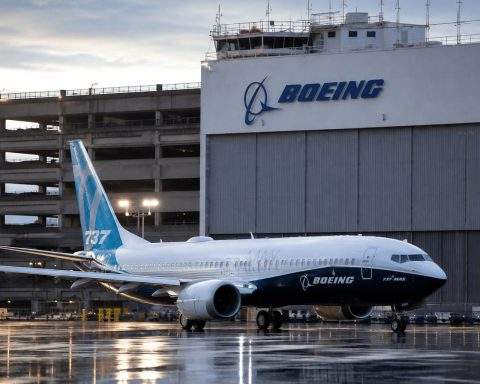

Boeing Company (The) stock NYSE:BA finished Thursday’s regular session higher and then stayed relatively calm in the first stretch of after-hours trading—setting up a Friday open (Dec. 19, 2025) where headline risk, options-expiration volatility, and a few scheduled macro releases could matter more than any single chart pattern.
Below is what moved Boeing’s narrative on Dec. 18, 2025, what analysts and market models are saying right now, and what investors should keep on their radar before the bell Friday.
Boeing stock price after the bell: where BA stands tonight
BA closed Thursday, Dec. 18 at $208.27, up $1.94 (+0.94%), after trading between $207.66 and $210.55 with reported volume around 5.64 million shares.
In extended trading shortly after the close, Boeing shares were largely unchanged to slightly higher, with after-hours indications around the $208.27–$208.40 area depending on timestamp and venue.
Why this matters going into Friday:
- After-hours stability often signals “no fresh shock” in the immediate post-close news flow.
- But Boeing is a headline-driven name—meaning pre-market news (labor, FAA, defense contracts, supplier updates) can still swing the open quickly.
The Boeing headlines investors are digesting from today (Dec. 18)
1) Labor + Spirit integration: Boeing and SPEEA pause contract talks until Jan. 5
One of the most material Boeing-specific stories on Thursday involved labor relations tied directly to the recent Spirit AeroSystems integration.
Reuters reported that Boeing and the Society of Professional Engineering Employees in Aerospace (SPEEA) paused negotiations covering about 1,600 Wichita, Kansas white-collar workers (formerly Spirit employees) until Jan. 5, 2026. The current contract is set to expire Jan. 31, 2026, and the union criticized Boeing’s preparedness for talks.
SPEEA’s own bargaining update similarly states it agreed to Boeing’s request to pause talks and that negotiations will resume Jan. 5, while highlighting frustration from the bargaining team.
Why markets care:
Boeing’s operational recovery thesis depends heavily on execution and stability across the supply chain and workforce. Labor disruption risk doesn’t have to be a strike to matter—uncertainty itself can affect production planning, costs, and investor confidence in delivery ramps.
2) Defense catalyst: Boeing teams with Anduril for an Army interceptor bid
On the defense side, a notable headline broke Thursday: Boeing and Anduril are teaming up for the U.S. Army’s Integrated Fires Protection Capability (IFPC) Increment 2 Second Interceptor competition.
Aviation Week reports the companies announced the teaming agreement Dec. 18, with Anduril providing the rocket motor while Boeing brings interceptor experience. The report also notes the Army expects to select companies to build prototypes in 2026, and that Boeing received an Other Transaction Authority (OTA) project agreement for the interceptor effort on Dec. 5.
Bloomberg Government similarly framed the move as part of a broader push to broaden the solid rocket motor industrial base and speed production.
Why markets care:
Even though Boeing’s stock often trades primarily on commercial aerospace momentum, defense wins can support the investment case by:
- adding program visibility,
- improving mix and backlog quality,
- and reinforcing Boeing’s relevance in faster-moving defense “new entrant” ecosystems.
3) Commercial recovery narrative: Boeing deliveries up sharply year-to-date
AviTrader published a data-driven look at the Airbus–Boeing delivery race, citing IBA analysis and reporting that through November 2025 Boeing delivered 537 aircraft, a 69% increase versus 318 in the prior year period, helped by higher 737/787/767 deliveries.
The same piece notes Boeing recorded 55 net orders in November (with 13 cancellations) and frames year-end delivery performance as crucial.
Why markets care:
For Boeing, deliveries are closely linked to cash flow and balance sheet repair. A strong year-end “delivery push” can shape sentiment heading into early 2026—especially if investors believe the trajectory is sustainable, not just seasonal.
4) Boeing-backed Wisk: autonomous eVTOL momentum stays in the conversation
While not a direct driver of BA’s next-quarter cash flow, Boeing’s exposure to advanced air mobility keeps showing up in investor narratives.
Wisk’s official release states it completed the first flight of its Generation 6 autonomous eVTOL, describing it as a major step in its FAA certification effort, following a long history of test flights across earlier generations.
A market-focused writeup published today highlighted that milestone in the context of broader air-taxi progress (along with other names in the space).
Why markets care:
This is more “option value” than core valuation today, but it reinforces Boeing’s involvement in next-gen aviation—something long-duration investors sometimes cite when weighing the company against pure-play defense peers.
Fresh forecasts: what analysts and models are projecting now
No forecast is a promise, but the market does use consensus targets to frame upside/downside—especially into year-end positioning.
Wall Street price targets (consensus snapshots)
Different aggregators show different averages based on who they include and how often they update, but the broad picture is consistent: most tracked analysts lean bullish, with wide dispersion between low and high targets.
- MarketWatch’s estimates snapshot lists an Average Target Price around $247.52 (with 30 ratings shown).
- MarketBeat shows an average price target of about $232.96, with a high of $275 and low of $140.
- Investing.com’s consensus page shows an average target around $244.33 (high $285, low $150) based on its tracked analysts.
- StockAnalysis shows a consensus average target around $240.89 with a “Strong Buy” consensus (as reported by that site’s coverage set). StockAnalysis
How to interpret this heading into Friday:
Analyst targets are typically 12‑month views, so they don’t “call” tomorrow’s open. But collectively they suggest the Street still sees Boeing’s story as recovery + execution rather than “no hope / structurally broken.”
Technical/quant-style signals (short-term framing)
Technical dashboards are inherently model-driven, but they can influence short-term trading flows.
- Investing.com’s technical summary shows Boeing’s daily indicators in a “Strong Buy” posture, with RSI and MACD-based signals cited on that page. Investing.com India
- StockInvest’s summary for Dec. 18 notes BA rose 0.94% on the day and highlights the recent two-week upward drift, presenting it as a trend-following signal rather than a fundamental call.
Use these as context, not gospel—especially on a day with options expiration (more on that next).
What to know before the stock market opens tomorrow (Friday, Dec. 19, 2025)
1) Tomorrow is quadruple witching: expect higher “mechanical” volatility
Friday, Dec. 19, 2025 is a quadruple witching date (major derivatives expirations happening simultaneously), which can lead to elevated trading volume and sharper intraday moves—sometimes without a clean fundamental headline.
For Boeing specifically, that can matter because BA is heavily owned, widely traded, and actively used in options strategies—meaning price can be influenced by positioning flows as well as news.
2) Key scheduled data: sentiment + housing at 10:00 a.m. ET (and what’s not coming)
Two releases investors often watch (especially in rate-sensitive markets):
- University of Michigan Surveys of Consumers (Final December) is scheduled for 10:00 a.m. ET on Dec. 19.
- Existing Home Sales for November 2025 is also slated for 10:00 a.m. ET on Dec. 19 (per the National Association of Realtors release notice).
And one important clarification for Friday morning:
- The BEA’s Personal Income and Outlays (which includes PCE inflation) is not on the Dec. 19 slate anymore. The BEA schedule shows “Personal Income and Outlays, November 2025” moved to Dec. 23 at 8:30 a.m. Bureau of Economic Analysis
Why Boeing investors should care:
Even though Boeing isn’t a “macro stock” in the way banks are, rates and growth expectations still influence:
- airline capacity planning and financing conditions,
- the market’s appetite for cyclical industrials,
- and multi-year discount rates applied to recovery stories.
3) The three Boeing-specific things most likely to move BA at Friday’s open
A. Any update on Spirit integration and labor posture
Today’s pause in negotiations is real and documented; the market will watch for signs the situation stabilizes rather than escalates.
B. Follow-through on defense headlines (Anduril / IFPC interceptor)
The teaming announcement is fresh, and defense news can sometimes create a “bid” under the name if investors see improving competitive positioning. Aviation Week Network+1
C. Delivery/cash-flow narrative into year-end
With delivery momentum framed as sharply improved year-over-year through November, investors will watch for any incremental reporting or credible channel checks that hint at how strong December deliveries might be.
4) Practical price levels traders may reference at the open
Even fundamental investors often note these levels because they can shape short-term order flow:
- Thursday close: $208.27 FinancialContent
- Thursday intraday high: $210.55 FinancialContent
- Thursday intraday low: $207.66 FinancialContent
If BA opens above the prior day’s high, it can trigger momentum interest; if it breaks below the prior low, traders may treat it as a failed push and look for the next support zone.
Bottom line for Boeing stock tonight
Boeing stock ended Dec. 18 on a positive note in the regular session and then stayed relatively steady after hours—suggesting no immediate new shock after the close.
But Friday’s setup isn’t just about Boeing—it’s about flow and volatility (quadruple witching), plus whether Boeing-specific headlines (labor integration, defense programs, and delivery momentum) continue to support the broader recovery narrative.
Related articles: NYSE:BA